On September 9, a cryptography blog run by security researcher Bruce Schneier posted something that should have been a bigger story than it was: an AI system had solved a cipher that had defeated codebreakers since 1899. The Cyphral Distich, a 64-number cryptogram tucked into the back of Sir Thomas Urquhart's 1653 book Logopandecteision, had sat on cryptographer Klaus Schmeh's list of the world's top unsolved encrypted messages for years. A researcher at Vals AI gave Anthropic's Claude Fable 5.1 an open-ended goal, find an unsolved historical cipher and crack it, and the model did it in 44 minutes and roughly 176,000 tokens, with zero human intervention, succeeding where frequency analysis, substitution attempts, and homophonic-cipher approaches had failed for well over a century. The result went viral on Hacker News, and the pushback that followed wasn't really about whether the model was clever. It was about verification, whether a surviving 1653 copy at the National Library of Scotland actually confirms the finding or whether the whole thing needs another round of archival cross-checking. That tension, spectacular capability paired with a nagging verification problem, is the story of AI and history right now, and it is playing out across an astonishing range of cold cases. In Naples, the Vesuvius Challenge has spent three years trying to read the only intact library to survive from the ancient world: roughly 1,800 carbonized scrolls from Herculaneum, sealed by volcanic debris when Vesuvius erupted in AD 79 and too fragile to physically unroll without destroying them. Researchers have used particle accelerators and machine learning to virtually unwrap the papyri, and in 2026 a scroll catalogued as PHerc. 1667 became the first to be read end to end, revealing 70 newly recovered columns of On Vices, Book 1, a previously unknown work by the Epicurean philosopher Philodemus of Gadara. Just this month, a new study published in PLOS One found that lead in some of the ancient ink produces a far stronger X-ray signal than carbon-based ink, meaning a cheap handheld scanner could soon tell researchers which of the hundreds of unopened scrolls are worth the expensive, months-long process of high-resolution scanning and AI reconstruction. Ancient languages that have resisted every human decoder for a century are the next frontier, and here the picture is messier. Linear A, the script of the Bronze Age Minoan civilization on Crete, has no known bilingual anchor and no confirmed relative, living or dead, which is why linguists call it a language isolate. In June 2026, a self-taught engineer used AI-built scripts to systematically test a single hunch, that one unknown word derived from a Semitic root meaning to dwell, against the entire known Linear A corpus, and claimed to have assigned values to 40 signs and compiled a 408-word lexicon arguing the language belonged to the same family as Hebrew and Aramaic. Scholars are still picking that claim apart. The pattern is instructive either way: the AI didn't have the idea, the human did, but it let one person test a hypothesis against a full corpus in an afternoon instead of a career. The Voynich manuscript, the illustrated 15th-century codex at Yale's Beinecke Library that has never yielded to a single decoding attempt, shows both the promise and the noise problem starkly. A more careful 2025 study proposed that the text could have been generated by a medieval card-game cipher called Naibbe, and found that applied to sample texts, the cipher produces outputs matching many of the manuscript's statistical fingerprints, symbol frequency, word length, positional patterns. Separately, a viral claim in May 2026 that a private, unnamed AI research institute had decoded significant portions of the manuscript using a custom-trained model spread fast online; the researchers behind it declined to be named pending peer review, and nothing has been independently confirmed since. The 2026 International Conference on the Voynich Manuscript is now explicitly soliciting papers on machine learning approaches to the text, a sign the field wants to bring the AI hype under proper scrutiny rather than let it run wild on YouTube. Seen from above, AI is proving even more effective. Archaeologists led by Masato Sakai at Yamagata University partnered with IBM Research to run an AI system across the entire Nazca Pampa in Peru, a UNESCO World Heritage site where it had taken nearly a century of manual aerial survey to identify 430 figurative geoglyphs. The AI system flagged the most promising shapes for human inspection, and in six months of fieldwork researchers confirmed 303 new figures, nearly doubling the total, including a 72-foot orca wielding a knife. Southampton archaeologist Alexandra Karamitrou, who builds these detection tools, is blunt about the limits: AI is not perfect, especially in this field, and every flagged discovery still has to be verified on the ground. False positives remain a real problem, but the scanning speed it delivers, terabytes of satellite and drone imagery processed in a fraction of the time manual survey would take, is reshaping what a survey season can achieve. Criminal cold cases are following the same trajectory, with the same caveats. Law enforcement agencies are increasingly feeding decades of scanned case files into conversational AI tools; in one recent case a sheriff's office uploaded more than 2,000 pages of evidence into a system called Centerline AI and queried it in plain language to get up to speed on three decades of material in a fraction of the usual time, contributing to an arrest. The nonprofit Cold Case Foundation has partnered with data company Veritone to deploy an AI-powered evidence management system across older, unsolved violent crimes where evidence is scattered across paper reports, recordings and digital files that were never designed to talk to each other. But the most famous unsolved case in criminal history, the 1888 Whitechapel murders attributed to Jack the Ripper, shows why AI alone can't rescue bad forensic foundations. A 2019 genetic analysis of a shawl allegedly found near victim Catherine Eddowes pointed to suspect Aaron Kosminski, but critics say the evidence isn't strong enough to declare the case closed, and one of the scientists involved has since acknowledged that the chain of custody for the shawl was broken and that some of the DNA analysis was flawed. A victim's family is now demanding a formal police investigation into the claims. Nobody has yet turned serious AI resources on the actual primary-source record, the hundreds of letters sent to police and newspapers claiming to be from the killer, most fake but some potentially genuine, alongside thousands of pages of Victorian police files. Large language models built for stylometric and handwriting analysis are exactly the kind of tool that could finally sort signal from the noise there, if anyone builds the case-specific system rather than leaning on a contested shawl.
 🔬 science
AI Is Quietly Cracking History's Coldest Cases
A machine cracked a 370-year-old cipher in 44 minutes this month. Researchers have read a sealed Roman scroll for the first time since Vesuvius buried it. Historical mysteries that outlasted centuries of human effort are suddenly breaking, and the list of what's next is longer than anyone expected.
Fact checked - 13 claims 25 Sept 2026 · 12 with sources
My Take
The honest takeaway from all of this is that AI's real superpower in historical mysteries isn't insight, it's stamina. Every genuine breakthrough in this piece follows the same shape: a machine did in hours or months what would have taken a human specialist a career, not because it out-thought them but because it could read every page, test every hypothesis, and flag every anomaly without getting bored, tired or precious about a pet theory. That is a genuinely enormous unlock for fields that have always been bottlenecked by the sheer number of hours a trained human is willing to spend squinting at 2,000-year-old carbon on carbon. The Herculaneum library alone has 1,800 scrolls and only a handful have been meaningfully read; that bottleneck was never really about intelligence, it was about labor. But the Voynich manuscript should be the cautionary tale bolted to every one of these stories. A viral claim about an unnamed lab decoding a 600-year-old book spread through social media faster than any actual scholar could evaluate it, while the more careful, peer-reviewed cipher research got a fraction of the attention. That is the actual danger here, not that AI will get history wrong, but that AI-flavored hype will get amplified faster than AI-assisted rigor can be checked. The same Hacker News crowd cheering the 370-year-old cipher solution is arguing, correctly, that a model producing a plausible-looking answer is not the same as a verified one. History rewards patience and cross-checking against physical archives; AI rewards speed and confident output. Those two instincts are going to keep colliding, and journalists, archivists and the public need to get much better, fast, at telling a genuine breakthrough from a compelling-sounding hallucination. Where this gets genuinely exciting is the cases nobody has properly pointed AI at yet. Jack the Ripper's identity has been fought over for 138 years using a single contested shawl, while a mountain of primary text, letters, police reports, coroner's records, sits comparatively under-mined by the pattern-matching tools that just cracked a 17th-century cipher in under an hour. The same goes for plenty of other cold cases in aviation, espionage and disappearances where the bottleneck was never the mystery itself, it was the sheer volume of paper nobody had time to read. That is precisely the problem this generation of AI is built to solve.
What Happens Next
The Vesuvius Challenge is moving into its next phase, attempting to read multiple entire Herculaneum scrolls rather than isolated fragments, with the new lead-ink detection method potentially letting researchers triage which of the roughly 1,800 surviving scrolls to scan first. The 2026 International Conference on the Voynich Manuscript will put machine-learning decipherment claims, including the Naibbe cipher theory, in front of peer reviewers for the first time, which should separate the credible research from the viral social media claims. The Cyphral Distich verification fight will likely continue on cryptography forums and Hacker News as researchers try to track down physical copies of Urquhart's 1653 text to confirm or refute the AI's reading. On the ground, Purdue Research Foundation and the Archaeological Legacy Institute are sending an expedition to Nikumaroro Island in Kiribati in October 2026 to investigate the Taraia Object, a satellite imagery anomaly they suspect could be a remnant of Amelia Earhart's Lockheed Electra, nearly 90 years after her disappearance. Law enforcement's use of conversational AI tools on cold case files is expanding through partnerships like the Cold Case Foundation's deal with Veritone, whose stock trades as a small, thinly-capitalized bet on the sector. Expect more contested claims before more confirmed ones, and expect the loudest AI-history stories on social media to keep outrunning the quieter, slower peer-reviewed confirmations for the foreseeable future.
What History Tells Us
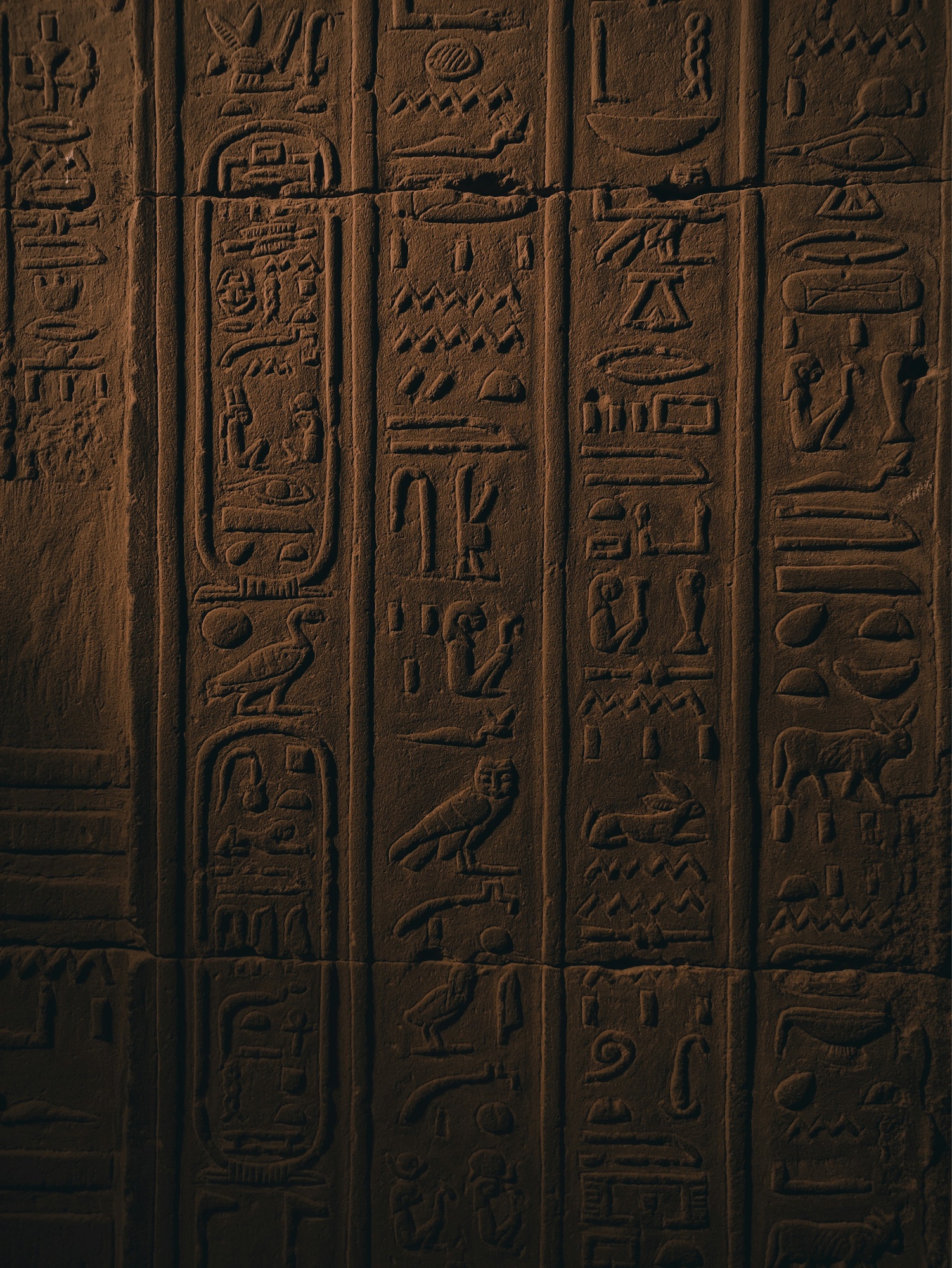
Every previous decipherment breakthrough in history needed what linguists call an anchor: a bilingual text like the Rosetta Stone, which cracked Egyptian hieroglyphs, or a known relative language, which is how Michael Ventris cracked Linear B in the 1950s by recognizing it as an early form of Greek. Linear A and the Voynich manuscript have resisted decipherment for exactly that reason, they have no anchor, and AI's pattern-matching abilities hit a wall without one. That is why the genuine AI breakthroughs so far, the cipher, the scrolls, the Nazca geoglyphs, all involve problems with a findable structure to exploit, while the true language isolates remain as stubborn as ever.
Market Impact
There's no single publicly traded pure-play on AI-history research, but the money trail is visible. The Vesuvius Challenge has been funded by a roster of tech figures including Nat Friedman and the Musk Foundation, treating scroll-reading as a prize competition rather than a grant program. On the forensic side, Veritone, the AI company partnering with the Cold Case Foundation on cold-case evidence management, trades on the Nasdaq under the ticker VERI and closed recently around $1.17 to $1.25 a share with a market capitalization near $125 million, a reminder that this remains a niche, speculative corner of the AI market rather than a mainstream investment story. Expect continued private philanthropic and prize-based funding for heritage-AI projects rather than a wave of new public listings.