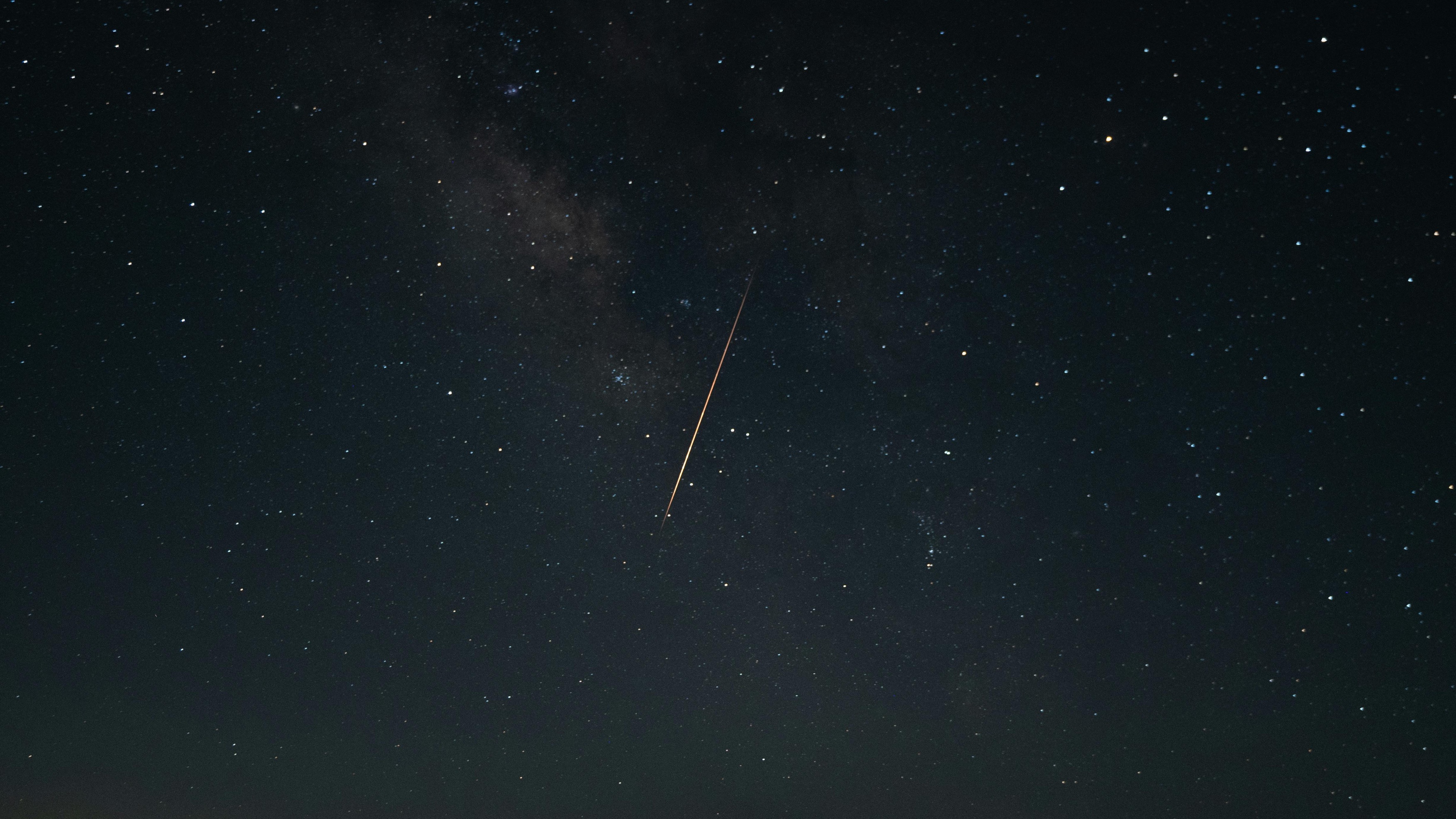
The Lyrids have been showing up like clockwork every April since at least 687 BCE (Before Common Era), when Chinese astronomers first recorded the shower in their star charts. That makes this one of humanity's oldest documented celestial events - older than the Roman Republic, older than Buddhism, older than written Greek philosophy. The meteors are debris from Comet Thatcher, a chunk of ice and rock that orbits the sun every 415 years and leaves a trail of cosmic dust in its wake. When Earth plows through that debris field each spring, the particles burn up in our atmosphere at 110,000 miles per hour, creating the streaks of light we call shooting stars. Timing matters enormously for meteor watching, and this year the cosmos is cooperating. The moon sets around 1:30 AM to 2:30 AM across most of the United States on April 22, leaving a solid two to three hours of darkness before dawn light starts washing out the sky around 5:00 AM. That darkness window is critical because even a quarter moon can drown out fainter meteors. Urban light pollution remains the bigger enemy - city dwellers might spot five meteors per hour if they're lucky, while observers who drive an hour outside town into proper darkness could see triple that number. The meteors appear to radiate from the constellation Lyra (hence the name), but you don't need to find Lyra to see them. They streak across the entire sky. The Lyrids aren't the flashiest meteor shower on the calendar - that honor goes to the Perseids in August or the Geminids in December, both of which can produce 60 to 120 meteors per hour under ideal conditions. But the Lyrids have staying power in human culture precisely because they've been reliably visible for millennia. Ancient Korean records from 687 BCE describe the shower as "stars fell like rain." American newspapers in 1803 documented a Lyrid outburst so intense that observers in Richmond, Virginia counted hundreds of meteors per hour. In 1982, amateur astronomers in Florida and Georgia recorded rates briefly spiking to 90 meteors per hour. The shower occasionally surprises us with these outbursts, though predicting them remains impossible with current models. Weather will make or break tomorrow morning's show. Clear skies are forecast across much of the western United States, the Great Plains, and parts of the Southeast. The Pacific Northwest and upper Midwest face cloudier conditions that could obstruct viewing. No special equipment is needed - telescopes and binoculars actually narrow your field of view too much for meteor watching. The technique is dead simple: find the darkest spot you can reach, bring a reclining lawn chair or blanket, dress warmer than you think necessary (pre-dawn temperatures drop hard even in spring), lie back, and let your eyes adjust for 20 minutes. Then just watch the sky. The meteors can appear anywhere, though more will be visible if you orient yourself away from the radiant point in Lyra. The broader significance extends beyond pretty lights. Meteor showers give astronomers a way to study the composition and distribution of ancient cometary material without expensive space missions. Each meteor's color and brightness reveals information about the chemical makeup of Comet Thatcher's dust - sodium produces yellow streaks, magnesium burns blue-white, iron creates orange flashes. Multi-station camera networks now track meteor trajectories with precision, allowing scientists to calculate pre-atmospheric orbits and link specific meteors back to their parent comet with certainty. This data helps refine models of how the solar system formed 4.6 billion years ago and how cometary material may have delivered water and organic compounds to early Earth.
 🔬 science
Ancient Meteor Show Peaks Tomorrow Before Dawn
The Lyrid meteor shower, documented for 2,700 years by civilizations from ancient China to classical Greece, hits peak visibility in the early hours of April 22. Moonset timing gives American stargazers a rare window of pitch-black sky before sunrise - your best shot at catching 15 to 20 meteors per hour without light pollution.
رأيي
We live in an age where you can watch high-definition footage of galaxies 13 billion light-years away on your phone, yet most people have never actually seen a meteor shower with their own eyes. That's a tragedy of modernity. The Lyrids offered the same spectacle to Babylonian priests, Han Dynasty scholars, and medieval monks that they offer to you tomorrow morning - this is one of the few experiences that genuinely connects you to the unbroken chain of human curiosity stretching back 2,700 years. No app can replicate lying on your back in the cold darkness watching ancient comet dust vaporize overhead. The real story here isn't the meteors themselves but what they represent: cosmic clockwork you can set your calendar by across millennia. We obsess over technological disruption and rapid change, but the Lyrids keep showing up every April like they have since before recorded history. That reliability is increasingly rare in our world, and it's worth celebrating. Set your alarm, drive away from the city lights, and participate in a ritual older than any religion still practiced on Earth. You won't regret the lost sleep.
ماذا سيحدث بعد ذلك
Amateur astronomer networks across North America will flood social media with time-lapse photography and meteor count data throughout Tuesday morning, creating a real-time map of where the shower performed best. The International Meteor Organization (IMO) will compile observer reports over the next week to determine if 2026 produced any surprise outburst activity - those unpredictable rate spikes that make the Lyrids occasionally punch above their weight class. Citizen science apps like NASA's Meteor Counter will aggregate thousands of observations to refine trajectory models. The bigger question is whether this year's Lyrid coverage drives any measurable uptick in dark-sky tourism. Rural communities from West Texas to rural Montana have started marketing themselves as "meteor shower destinations," building simple amenities like heated observing platforms and all-night diners to capture astronomy tourism dollars. If the Lyrids deliver a strong show and good weather Tuesday morning, expect regional tourism boards to push hard on the Perseids in August with packaged "meteor weekend" deals. The economics of dark-sky preservation increasingly depend on proving that unpolluted night skies have monetary value - every successful meteor shower viewing becomes ammunition in fights against light pollution ordinances.
ما يخبرنا به التاريخ
The 1803 Lyrid outburst occurred during a golden age of American amateur astronomy, when scientific observation was still accessible to educated laypeople without institutional backing. Newspaper accounts from Richmond describe residents flooding into the streets in terror, convinced the end times had arrived as "stars fell like rain." That same meteor shower helped convince scientists that meteors were extraterrestrial rather than atmospheric phenomena - a debate that sounds absurd now but was hotly contested in the early 19th century. The 1803 Lyrids, along with the great Leonid storm of 1833, fundamentally changed humanity's understanding of our place in the solar system by proving that space wasn't empty but filled with debris that regularly intersected Earth's orbit.