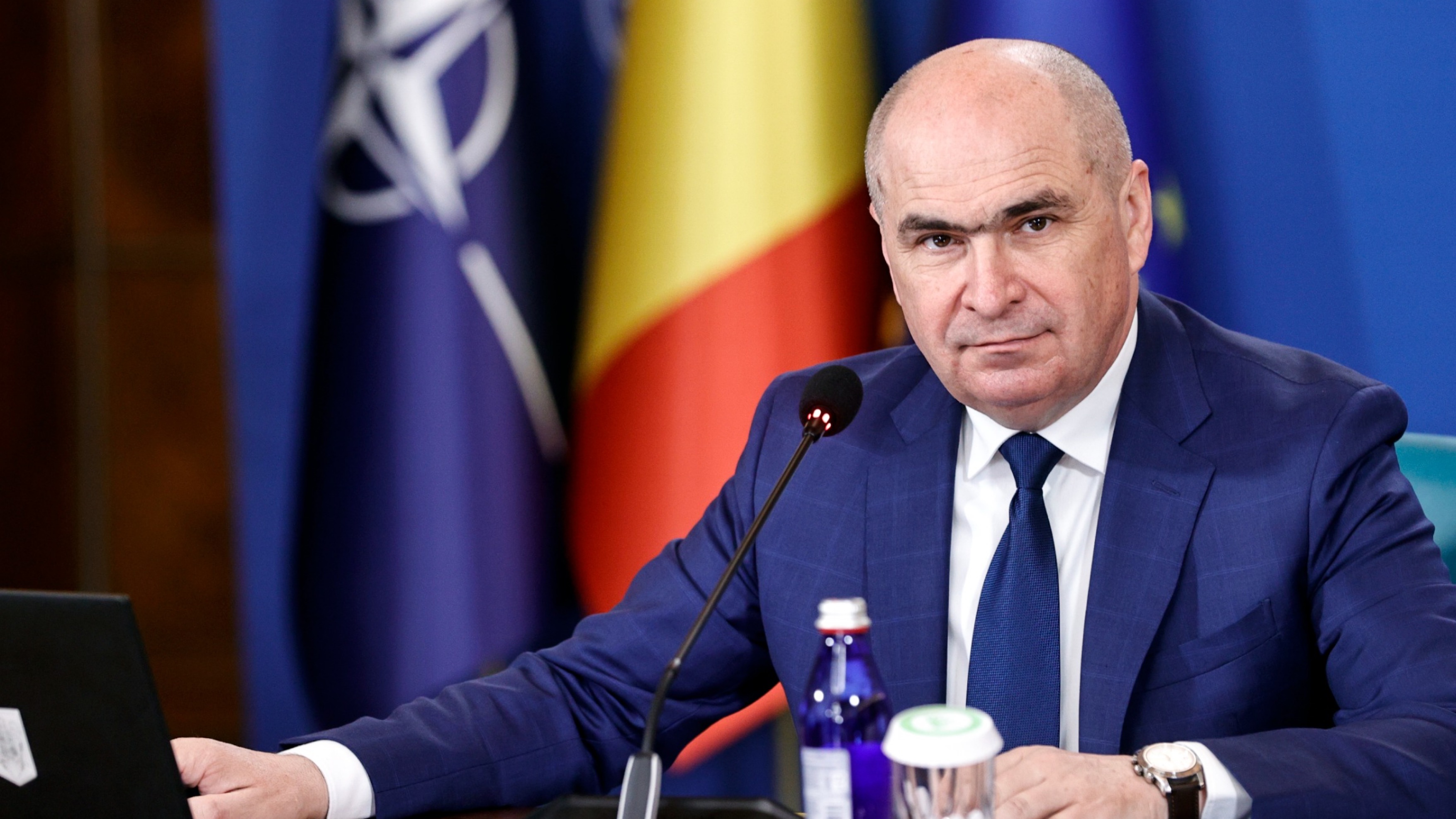
Parliament pulled the plug on Bolojan's government Tuesday, with lawmakers voting to oust the prime minister after the coalition splintered beyond repair. The trigger? Austerity measures that proved so toxic the Social Democratic Party (PSD) - one of Romania's two major political forces - walked out of the coalition and led the charge to bring down their own government. The irony is brutal: a pro-European Union alliance designed to stabilize Romania amid regional turbulence just became another casualty of the same economic pressures squeezing governments across the continent. The timing could not be worse for Bucharest or its allies. Romania shares a 650-kilometer border with Ukraine and has become a critical logistics hub for Western military aid flowing to Kyiv. The country hosts NATO (North Atlantic Treaty Organization) infrastructure, American troops, and recently upgraded air defense systems meant to deter Russian aggression in the Black Sea region. Political chaos in Romania means potential delays in defense coordination, budgetary uncertainty for military commitments, and a vacuum that Moscow will absolutely exploit in its information warfare campaigns. Bolojan's coalition was barely out of its political diapers - sworn in less than a year ago with promises to clean up corruption, modernize the economy, and keep Romania firmly anchored in Western institutions. Instead, it face-planted over the oldest problem in democratic politics: nobody wants to pay for the reforms everyone agrees are necessary. Romania's budget deficit has been running hot, EU officials have been sending stern letters about fiscal discipline, and the government tried to thread the needle with spending cuts. The Social Democrats read the room, decided austerity was electoral poison, and jumped ship before voters could blame them. What makes this collapse particularly messy is the broader European context. Right-wing populists are gaining ground across the EU, often by weaponizing economic anxiety and promising to ditch Brussels-mandated fiscal rules. Romania's mainstream parties just demonstrated they can't hold a coalition together long enough to implement those same rules, which hands a perfect talking point to nationalist challengers. The pro-EU consensus that's dominated Romanian politics since the country joined the bloc in 2007 suddenly looks a lot more fragile. Now Romania enters a period of constitutional limbo. President Klaus Iohannis will need to nominate a new prime minister, who then has to cobble together a parliamentary majority willing to actually govern. Given that the Social Democrats just nuked their own coalition over policy disagreements that haven't gone anywhere, it's unclear what magical compromise will suddenly make a new government viable. Early elections become more likely by the day, which means months of caretaker government while Romania's regional security responsibilities and EU commitments sit in a holding pattern.
 🌍 world
Austerity Backlash Blows Up Romania's Government in Under a Year
Romania's coalition government just imploded after parliament booted Prime Minister Ilie Bolojan in a no-confidence vote. The Social Democrats bailed on their coalition partners over budget cuts nobody wanted to swallow, leaving a NATO member state on Ukraine's doorstep in full-blown political crisis less than 12 months after the government was sworn in.
My Take
Here's what Brussels won't say out loud but everyone knows: the EU's austerity-first economic ideology is a political suicide pact for any government stupid enough to actually implement it. Romania's coalition didn't collapse because politicians were corrupt or incompetent - it collapsed because voters have zero appetite for belt-tightening while watching their own living standards stagnate. The Social Democrats made the coldly rational calculation that staying in government meant owning those cuts, and owning those cuts meant electoral annihilation. So they bailed, consequences be damned. The larger question is whether Western-style liberal democracy can survive its own economic orthodoxy. Romania is supposed to be a success story - EU member, NATO ally, functioning democracy in a rough neighborhood. But if the price of EU membership is permanent austerity that makes your government unelectable, what exactly is the sales pitch? Populists and nationalists don't need to convince voters that Brussels is the enemy when mainstream parties keep implementing policies that make everyone poorer in the name of fiscal rectitude. This isn't a Romanian problem, it's a systemic crisis that's going to keep devouring governments until someone figures out how to sell economic reform without committing political suicide.
What Happens Next
The Social Democrats are about to discover they've created a monster they can't control. Within 72 hours, President Iohannis will start consultations with parliamentary factions, and the PSD will face an impossible choice: participate in another coalition where they'll own whatever unpopular policies come next, or force early elections where they'll have to explain why they blew up a pro-EU government during a regional security crisis. Neither option is pretty, and the party's internal divisions over whether to tack left toward economic populism or stay centrist will tear them apart in public. Meanwhile, Romania's far-right Alliance for the Unity of Romanians (AUR) is already drafting campaign materials that write themselves - mainstream parties can't govern, Brussels' demands are unrealistic, and only nationalists have the guts to put Romanian interests first. If Iohannis can't broker a new coalition within three weeks, snap elections become inevitable, probably scheduled for late summer. Those elections will be a referendum on EU integration itself, and based on polling trends across Eastern Europe, the populists have momentum. The wildcard nobody's watching: what if the Social Democrats and the opposition National Liberal Party (PNL) cut a grand bargain that freezes out the smaller parties entirely? It would be a cynical power-sharing deal that postpones the reckoning, but Romanian politics has a history of backroom compromises that look impossible until they suddenly aren't. If that happens, expect the new government to quietly shelve the austerity measures, blow past EU deficit targets, and dare Brussels to actually enforce consequences. Because the one lesson every European politician has learned in the past decade is that the EU will always blink first when faced with a real constitutional crisis in a member state.
What History Tells Us
Romania's coalition collapse echoes the Italian government crisis of 2011, when Prime Minister Silvio Berlusconi was forced out amid a debt crisis and austerity demands from the EU and European Central Bank (ECB). Italy's mainstream parties installed technocrat Mario Monti to implement unpopular reforms, which temporarily stabilized markets but poisoned Italian politics for a generation. Monti's austerity government paved the way for the rise of the Five Star Movement and Matteo Salvini's far-right League, both of which built their brands by attacking EU-imposed economic policies. Romania appears to be entering the same doom loop: austerity breaks governments, broken governments empower populists, and populists promise to burn down the system that demanded austerity in the first place. The difference is that Romania sits on a geopolitical fault line where Italian-style political chaos has much higher stakes for NATO and regional security.
Market Impact
Romanian sovereign bonds are about to get hammered. The country's 10-year government bonds were already trading at yields around 6.8% earlier this week, reflecting investor nervousness about the fiscal trajectory. Political instability in a nation already running a budget deficit north of 6% of GDP (gross domestic product) - well above the EU's 3% limit - means that yield is heading toward 7.5% or higher as bond traders price in governance risk and potential credit rating downgrades. The broader Central European trade is turning bearish. Look at iShares MSCI Poland ETF (EPOL), currently around $18.50, and iShares MSCI Czech Republic ETF (ECRO), trading near $22.40 - both have regional exposure that gets hit when one of the larger economies in the neighborhood shows political cracks. Romanian banking stocks listed on the Bucharest Stock Exchange will take the hardest hit, but this is also a headwind for multinational banks with significant Romanian operations like Austria's Erste Group Bank AG (EBS.VI on Vienna Exchange), currently trading around €50. The euro (EUR=X) might catch a slight bid against the Romanian leu in the short term, but this isn't big enough to move the EUR/USD pair meaningfully unless it spirals into a broader Eastern European crisis. The real market tell will be credit default swaps on Romanian sovereign debt - if those spreads blow out past 150 basis points in the next week, traders are pricing in genuine default risk and the situation is worse than headline political drama. Watch Polish zloty and Hungarian forint volatility as contagion indicators; if those currencies start selling off hard despite their own domestic fundamentals, markets are pricing in regional instability premium.