 ❤️ health
By WNT
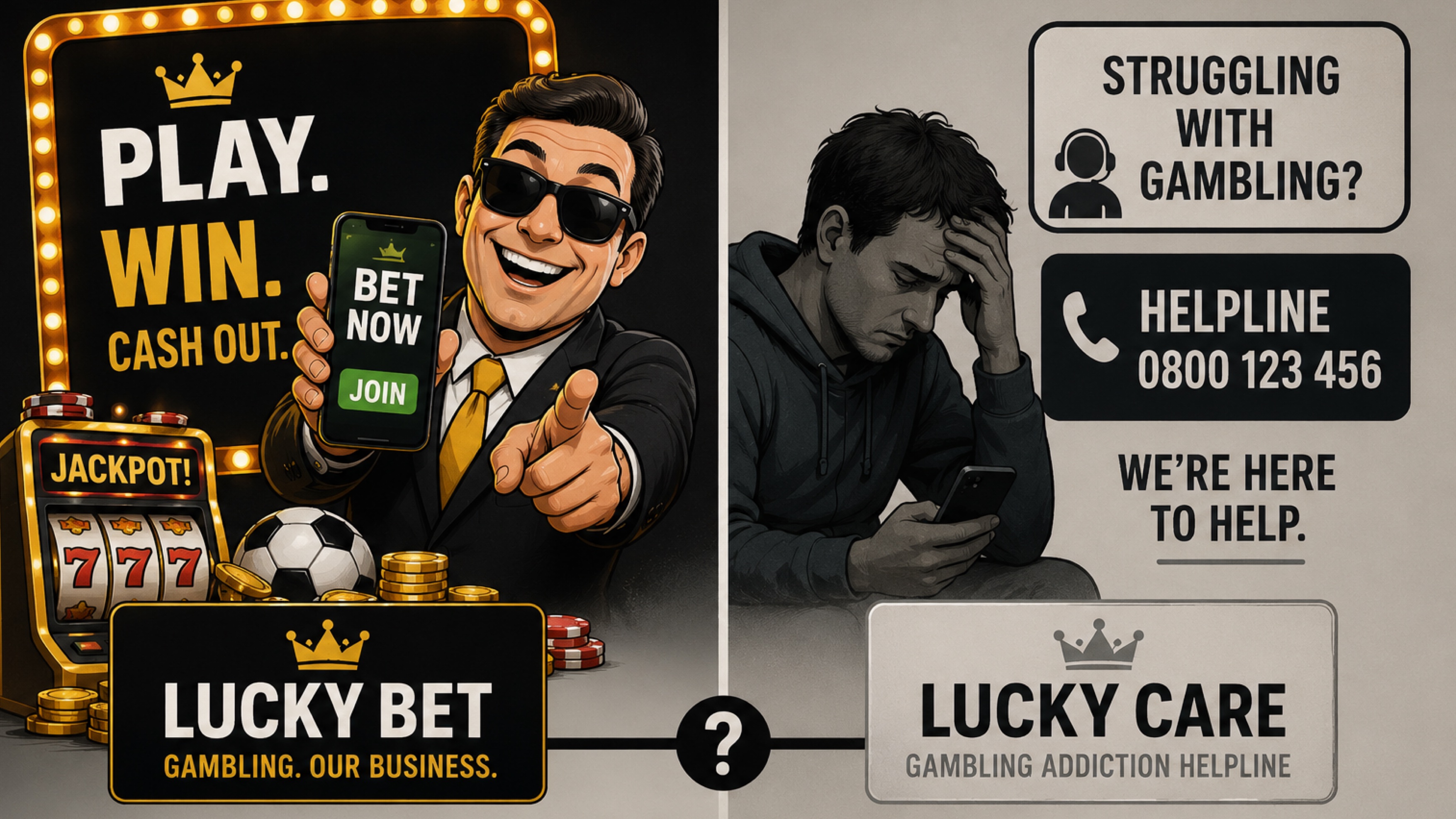
Bet Now, Call This Hotline: The Suicide Pact
Gambling companies spent $527 million on ads in 2023, hooking vulnerable punters with flashy promotions while slapping a tiny helpline number at the bottom. It's like Marlboro sponsoring lung cancer wards. The hypocrisy is killing people, and the statistics prove it.
Picture this: a gleaming advert scrolls across your screen during Sunday football. A celebrity grinning, confetti exploding, a voiceover promising riches beyond your wildest dreams. "Bet $10, get $200 in bonus bets!" flashes in neon letters. Then, for exactly 1.5 seconds at the bottom of the screen in font size 6: "If you or someone you know has a gambling problem, call 1-800-GAMBLER." This is the gambling industry in 2026, a $130 billion American enterprise that has perfected the art of selling addiction while pretending to care about the carnage.
The numbers are staggering and grim. Research from the University of Bristol published in 2024 found that gambling advertising increases both participation rates and problem gambling severity, with young adults particularly vulnerable to sports betting promotions. In the United Kingdom, where gambling advertising has saturated media for years, gambling-related suicides have reached epidemic proportions. The National Health Service (NHS) reported in 2023 that gambling disorder is now linked to approximately 400-500 suicides annually in England alone, a rate higher than deaths from meningitis. In Australia, where per capita gambling losses are the highest in the world at $1,200 per adult annually, crisis centers report that gambling problems are a factor in 1 in 6 suicides among men aged 25-44. The Gambling Commission in the UK found that 55,000 children aged 11-16 have a gambling problem, many of them hooked through online betting apps advertised relentlessly during sporting events.
Let's talk about the sheer absurdity of this "responsible gambling" charade. Imagine these parallel universes:
- McDonald's running ads for triple bacon cheeseburgers, then whispering "Call 1-800-HEARTATTACK if you have cardiovascular disease" in tiny print
- Budweiser sponsoring the Super Bowl halftime show with "Drink responsibly" scrolling beneath images of people shotgunning beers
- Philip Morris plastering Times Square with Marlboro billboards, then adding "Smoking kills, visit quit-smoking.gov" in 8-point font at the corner
- Purdue Pharma advertising OxyContin with "If you become addicted to opioids, please seek help" as the disclaimer
Wait, we already tried some of those. They were called public health catastrophes. Big Tobacco paid $206 billion in the Master Settlement Agreement. The opioid crisis has cost pharmaceutical companies over $50 billion in settlements. Yet gambling companies operate with impunity, spending more on advertising than ever while problem gambling rates climb year after year.
The advertising tactics are predatory by design. DraftKings and FanDuel, which together control 80% of the US sports betting market, spent a combined $1.1 billion on marketing in 2023. Their ads specifically target moments of heightened emotional vulnerability: halftime when your team is losing, commercial breaks during playoff games, even push notifications when a bettor hasn't placed a wager in 24 hours. The apps use the same dopamine-triggering design principles as social media platforms, with bright colors, celebratory sounds, and "near-miss" animations that make a loss feel almost like a win. A 2025 study from the University of Nevada, Las Vegas found that sports betting apps employ an average of 14 different "nudge" techniques per session to encourage continued betting, including false urgency timers, social proof notifications, and loss-disguised-as-win celebrations.
The regulatory response has been pathetic. In the United States, the American Gaming Association's voluntary guidelines suggest that gambling ads include "responsible gaming messages," but there's no enforcement mechanism, no minimum font size, no required airtime. The Federal Trade Commission (FTC) has done precisely nothing to regulate gambling advertising, despite having clear authority to prevent deceptive marketing practices. In contrast, the UK Gambling Commission announced new rules in 2025 that ban gambling ads during live sports broadcasts before 9 PM and prohibit celebrity endorsements in betting promotions, but even these measures are considered insufficient by public health advocates. The National Council on Problem Gambling estimates that only 2-3% of people with gambling disorder ever seek treatment, meaning those tiny helpline numbers in the ads reach virtually no one who needs help.
The financial incentives are simply too massive for the industry to self-regulate. Flutter Entertainment (which owns FanDuel) reported $11.8 billion in revenue in 2024, with a net profit margin of 23%. DraftKings generated $4.1 billion in revenue the same year. These companies have successfully lobbied 38 US states to legalize sports betting since the Supreme Court overturned the federal ban in 2018. They've donated millions to political campaigns, hired former regulators as consultants, and funded university research centers that produce suspiciously industry-friendly findings about gambling's economic benefits. The American Psychological Association has called for a complete ban on gambling advertising, citing the same evidence base that led to tobacco advertising bans in 1971. But Congress remains silent, state legislatures remain captured, and the bodies keep piling up.
My Take
This is one of the most brazenly cynical industries operating in plain sight today. At least Big Tobacco eventually faced consequences. At least opioid manufacturers are paying billions in settlements. The gambling industry has learned from those mistakes: they co-opted the language of harm reduction and "responsible gambling" before regulators could force them to. They slap a helpline number on every ad and call it corporate responsibility, while their entire business model depends on creating and exploiting addiction.
The comparison to other vice industries isn't hyperbole, it's a roadmap. We know how this story ends because we've seen it before. The research is overwhelming: gambling advertising increases problem gambling, problem gambling destroys lives and families, and people die. The UK's 400-500 annual gambling suicides would be a national emergency if they were caused by terrorism or a contaminated drug. But because the deaths are diffuse, often ruled as generic suicides without gambling listed as a contributing factor, and because the industry has billions to spend on lobbying and public relations, nothing changes.
The solution is obvious: ban gambling advertising entirely, just as we banned cigarette ads in 1971. Not "restrict it to late-night TV." Not "make the disclaimers slightly bigger." Ban it. Let casinos and betting apps exist for adults who seek them out, but stop the relentless psychological warfare designed to create new addicts. The fact that we even debate this shows how thoroughly the industry has captured the conversation.
What Happens Next
The industry's current strategy, betting that voluntary measures will prevent regulatory crackdown, is about to backfire spectacularly. A coalition of state attorneys general, emboldened by successful opioid litigation, is already exploring coordinated legal action against DraftKings and FanDuel for deceptive advertising practices. The key moment arrives in late 2026 when Massachusetts files the first lawsuit alleging that gambling companies knowingly target vulnerable populations while using responsible gambling messages as legal cover. Discovery in that case will be devastating, revealing internal documents that show executives knew their marketing created addiction.
Meanwhile, the first wrongful death lawsuit linking gambling advertising directly to a suicide is working through the courts in Nevada. If that plaintiff wins, even a modest verdict, it opens the floodgates for thousands of similar cases. Insurance companies will start pricing in litigation risk, making liability coverage for gambling operators prohibitively expensive. Some smaller operators will exit the market entirely rather than face potential lawsuits.
The wildcard nobody's watching: a bipartisan Senate bill introduced in early 2027 by an unlikely alliance of progressive Democrats concerned about predatory advertising and conservative Republicans worried about moral decay. It won't ban gambling outright, that's political suicide, but it could ban all gambling advertising on television, radio, and digital platforms, mirroring the 1971 tobacco ad ban. The American Gaming Association will spend $200 million fighting it, but public opinion is shifting fast. When suburban parents start seeing their teenagers betting on high school basketball games via apps advertised during March Madness, the political calculus changes overnight. By 2028, half the states that legalized sports betting are considering advertising bans at the state level, and the federal bill gains momentum. The industry's $527 million annual ad spend becomes their Achilles heel, the most visible evidence of their predatory intent.
What History Tells Us
The gambling industry's "advertise the vice, disclaim the harm" playbook is ripped directly from Big Tobacco's 1950s-1970s strategy. Cigarette companies ran glamorous ads featuring doctors and athletes while funding "independent" research claiming smoking wasn't addictive. When evidence mounted, they added tiny Surgeon General warnings to packages and ads, claiming they were being responsible. The Federal Cigarette Labeling and Advertising Act of 1965 required health warnings, but smoking rates kept climbing. It wasn't until the 1971 total ban on broadcast tobacco advertising that consumption began its long decline.
The parallels are eerie. In 1964, the Surgeon General's report definitively linked smoking to lung cancer, but tobacco ads continued for seven more years. In 2024, meta-analyses from universities worldwide have definitively linked gambling advertising to increased problem gambling and suicide, yet the ads continue unabated. The tobacco industry paid $206 billion in the 1998 Master Settlement Agreement after state attorneys general sued for healthcare costs. We're watching the same movie again, just with different actors and a 50-year time lag. The question isn't whether gambling companies will eventually face massive legal consequences, it's when.
Market Impact
Flutter Entertainment (FLUT.L on the London Stock Exchange, currently trading around £185 per share) faces the most immediate downside risk. Any movement toward advertising restrictions in major US markets would hammer their US-focused growth story, which Wall Street has priced in at a premium. A federal advertising ban would likely shave 15-20% off their market cap within weeks as growth projections collapse. DraftKings (DKNG on NASDAQ, trading around $37) is even more vulnerable, as they're still burning cash on customer acquisition and depend entirely on advertising to maintain growth. A credible regulatory threat could send DKNG below $25.
Conversely, traditional casino operators like Las Vegas Sands (LVS, trading around $48) and MGM Resorts (MGM, trading around $42) could benefit from a sports betting advertising ban. Their physical properties don't rely on TV ads, and reduced competition from online operators would drive more customers to brick-and-mortar casinos. If advertising restrictions pass, look for LVS and MGM to gain 10-15% as investors rotate out of online platforms and into physical gaming assets. The real long-term play is shorting DKNG and FLUT while going long on diversified entertainment companies with casino exposure but minimal reliance on sports betting advertising.