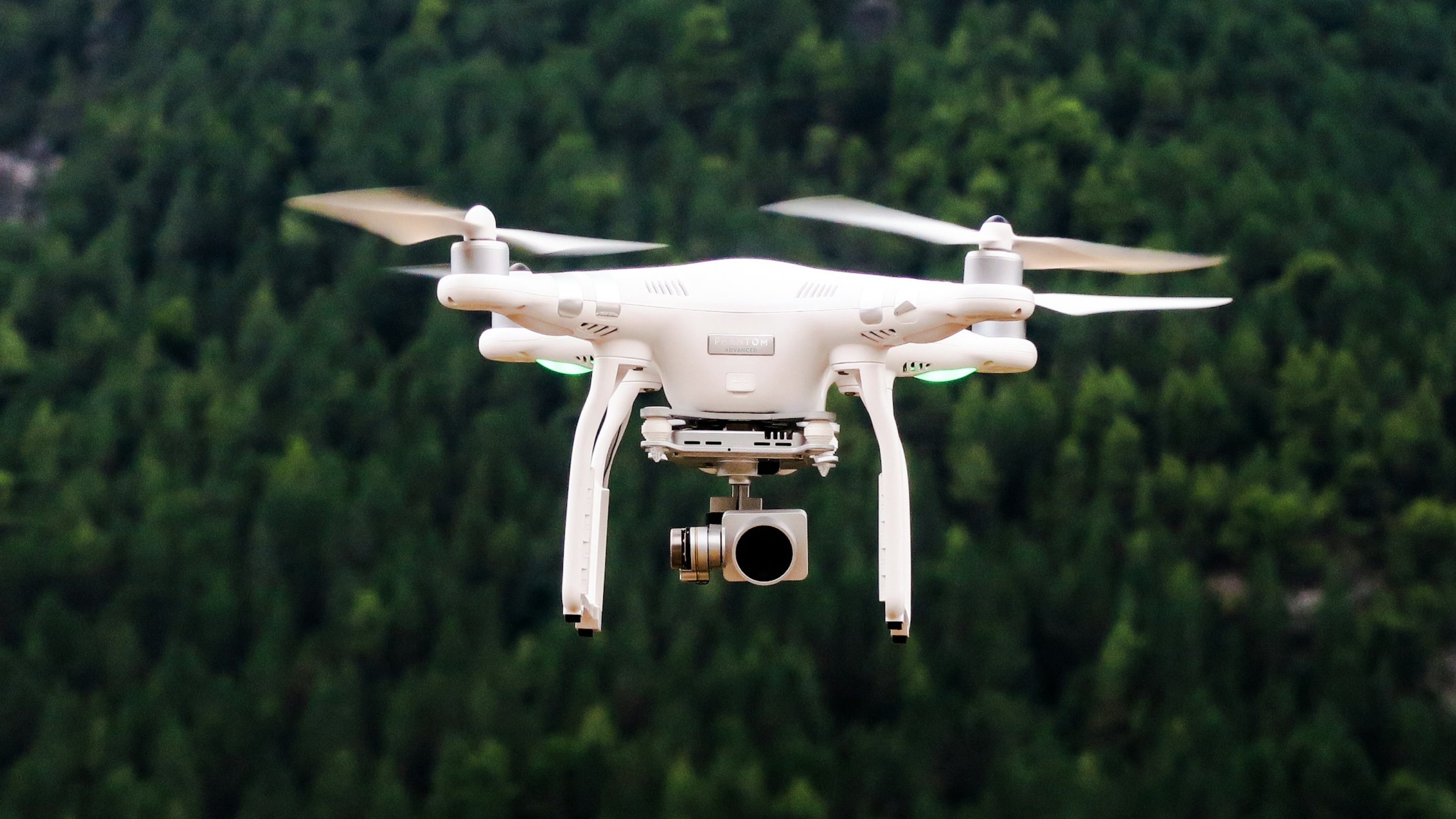
Here's something nobody's noticed: Commissioner Sir Mark Rowley's grand drone strategy isn't actually about the drones at all. It's about establishing a precedent for how quickly police can adopt surveillance technology without parliamentary debate, public consultation, or meaningful oversight. While everyone focuses on the flying cameras themselves, the real story is the regulatory framework Rowley wants to dismantle, and he's using London as the test case. Rowley claims that law enforcement can no longer lag in technological agility if they hope to outwit criminals who are already leveraging cutting-edge tools like encrypted messaging and burner phones. The fascinating part is that he's framing this as a fairness issue, arguing that police forces have less technology spending power than other public sector bodies. But London already ranks among the world's most surveilled cities with an extensive web of 627,000 CCTV (Closed-Circuit Television) cameras. The proposed drones will contribute to a nearly omnipresent surveillance presence that envelops the city, raising questions about what problem this technology actually solves that 627,000 cameras cannot. The Met's drone deployments aren't typical remote-controlled toys; they feature advanced capabilities like thermal imaging, facial recognition, and autonomous navigation. This tech is being tested in a legal grey area ripe with regulatory ambiguity under current UK data protection laws, which weren't designed to handle such pervasive monitoring. What makes this particularly interesting is that Rowley is explicitly asking for the freedom to move faster than regulations can keep up, essentially requesting permission to experiment on Londoners in real-time. Rowley's appeal to tech funding disparities taps into a fragmented truth. Under austerity, the police have seen budget cuts, yet contrasting police tech budgets with entities like the National Health Service (NHS) misleads. The real issue is the Met's desire for high-tech capabilities devoid of the accountable oversight expected in democratic societies. It's worth noting that this push comes at a time when the Met's crime clearance rates remain stubbornly low, suggesting that the problem might not be a technology gap but something more fundamental about investigative capacity and resources. Adding another layer, this drone push aligns at a time when global discourse on police use of artificial intelligence (AI) is fraught with ethical questions. European counterparts are wary, enacting strict regulations on real-time biometric surveillance. As London charts this controversial course, it opens a Pandora's box on the balance between technology and civil liberties, and Rowley seems to be betting that London can set the precedent before Brussels tightens the rules.
 💻 technology
Big Brother's Eye in the Sky Comes to London
Metropolitan Police Commissioner Sir Mark Rowley wants drones patrolling every corner of London, arguing cops need the same tech freedom as criminals. He's pitching it as a turning point in urban policing, but it's really about surveillance saturation in a city already drowning in CCTV cameras.
My Take
Rowley is selling a solution in search of a problem. London doesn't have a drone shortage. It has a trust shortage, a corruption problem, and a clearance rate that's embarrassing for a force this size. Throwing surveillance tech at the symptom doesn't fix the disease. The Met has spent years failing to properly investigate burglaries, sexual assaults, and fraud cases, but now they want unfettered access to fly cameras over every park, protest, and pub in the city? That's not policing. That's theater. Here's the uncomfortable truth: criminals aren't outsmarting cops because they have better gadgets. They're winning because the criminal justice system is underfunded, courts are backlogged for years, and the Met keeps stepping on its own scandals. Drones won't solve any of that. What they will do is normalize permanent aerial surveillance, train people to accept being watched constantly, and create a massive trove of biometric data with almost zero legal protection once it's collected. Rowley wants the freedom to move fast and break privacy, Silicon Valley-style, but police aren't startups and citizens aren't beta testers. The real test will come when the first wrongful arrest happens because a drone's facial recognition system matched the wrong person, or when footage of a peaceful protest gets shared with immigration enforcement, or when we learn that officers have been using drones to surveil ex-partners. Because that's not hypothetical. That's the pattern with every surveillance tool that gets deployed without robust oversight. The technology always gets used in ways the public was never told about, and by the time we find out, it's too late to put the genie back in the bottle.
What Happens Next
The Metropolitan Police will likely launch a pilot program in high-crime boroughs like Newham or Lambeth within the next six months, framing it as a limited trial to build public support. Expect glossy press releases with stats about faster response times and successful suspect apprehensions, carefully curated to show drones in the best light. What won't make the press releases is how many innocent people get flagged by faulty algorithms or how much footage gets retained indefinitely. Privacy groups like Big Brother Watch and Liberty will file legal challenges under the UK's Data Protection Act and potentially the European Convention on Human Rights, arguing that pervasive drone surveillance violates Article 8 protections against interference with private life. Those cases will take years to wind through courts, and in the meantime, the Met will expand the program incrementally, borough by borough, until drone patrols become the new normal and rolling them back becomes politically impossible. The wildcard is a major public backlash triggered by a single viral incident. Imagine drone footage of a celebrity in their backyard leaking online, or a protestor getting arrested based on aerial facial recognition at a climate march. One high-profile misuse could turn public opinion hard enough to force Parliament to act. But more likely, Londoners will grumble, privacy advocates will sue, and the drones will keep flying because stopping them requires the kind of sustained political will that rarely materializes until after the damage is done.
What History Tells Us
London's surveillance escalation follows a pattern set during the Troubles in Northern Ireland, when British security forces pioneered modern urban monitoring techniques including CCTV networks, vehicle checkpoints, and aerial reconnaissance. By the 1990s, the Ring of Steel, a network of cameras and barriers around the City of London financial district, became a template for surveillance-heavy policing exported worldwide. What started as a counter-terrorism measure became permanent infrastructure that nobody bothered to dismantle once the threat receded. The same mission creep happened in New York after September 11, 2001, when the NYPD built the Domain Awareness System, a real-time surveillance network initially justified for preventing terrorist attacks but routinely used for everyday policing. Critics warned that temporary emergency powers have a habit of becoming permanent, and they were right. London's drone push is the 2026 version of that playbook: sell it as a response to rising crime, deploy it while the public is still spooked, and normalize it before anyone realizes the scope of what they've accepted.
Market Impact
Defense and surveillance tech contractors stand to profit significantly if the Met's drone program becomes a model for police forces across the UK and Europe. AeroVironment Inc. (AVAV), currently trading around $185 per share after a volatile year in the small-cap drone sector, supplies tactical drones to military and law enforcement globally and could see increased orders if the London program scales. The stock jumped 12% in early 2026 on stronger-than-expected defense contracts, and a major European police adoption could extend that momentum. Axon Enterprise Inc. (AXON), trading near $430 and up roughly 35% year-to-date, dominates the police tech market with body cameras, tasers, and cloud-based evidence management. They've been aggressively expanding into drone-integrated systems and AI analytics, positioning themselves as a one-stop-shop for surveillance infrastructure. A high-profile London deployment would validate their strategy and likely push the stock higher, especially if it triggers procurement from other major European cities. On the bearish side, watch privacy-focused tech firms and secure communication platforms. If drone surveillance proliferates, consumer demand for encrypted messaging and anti-surveillance tools could spike, benefiting companies in that space but creating regulatory headwinds for mainstream social platforms. The broader trend favors surveillance tech manufacturers in the near term, with a 6-12 month bullish outlook for AVAV and AXON if the Met program launches without major legal setbacks.