Andrew Murray Burnham was born on January 7, 1970, in Aintree, Liverpool, into a working-class Catholic family. His father worked as a telephone engineer, his mother as a receptionist. Growing up in the shadow of Thatcherism's assault on northern industry, Burnham witnessed firsthand the deindustrialization that hollowed out communities across Merseyside and Greater Manchester. He attended St Aelred's Catholic Technology College in Newton-le-Willows before studying English at Fitzwilliam College, Cambridge, graduating in 1991. After university, he worked as a researcher for then-MP Tessa Jowell and later as administrator for the Football Task Force, where he developed his lifelong passion for football governance reform. Burnham entered Parliament in 2001 as MP for Leigh, a traditional Labour seat in Greater Manchester. He quickly rose through New Labour's ranks during Tony Blair's government, serving as Parliamentary Private Secretary (PPS) to Culture Secretary Chris Smith, then to Chief Secretary to the Treasury Paul Boateng. By 2005, he'd become Minister of State at the Home Office, and in 2007 Gordon Brown appointed him Culture Secretary at just 37 years old. His biggest role came in 2009 when Brown made him Health Secretary, where he navigated the Mid Staffordshire NHS scandal and championed elderly care reform. He was the youngest member of Brown's cabinet, often touted as a future leader even then. After Labour's 2010 election defeat, Burnham ran for party leader but finished second to Ed Miliband, securing 28.3% of the vote in the final round. He served as Shadow Health Secretary from 2010 to 2015, where he became Labour's chief attack dog against the Conservative-Liberal Democrat coalition's NHS reforms. He positioned himself as the defender of the NHS's founding principles, though critics noted he'd never fully confronted his own government's Private Finance Initiative (PFI) legacy. When Miliband resigned after the 2015 election loss, Burnham ran again for leader but came second to Jeremy Corbyn in a landslide, managing just 19% as the Labour left surged. In 2017, Burnham pivoted away from Westminster, winning election as the first Mayor of Greater Manchester with 63% of the vote. This move proved transformational for his political brand. As mayor, he championed regional devolution, pushed for Greater Manchester to control its own transport budget, and fought successfully for the government to fund the £1.5 billion renewal of Manchester's bus network through the "Bee Network" franchise system launched in 2023. He became the face of northern resistance to London-centric policy, clashing publicly with Boris Johnson's government over COVID-19 restrictions and funding in October 2020, demanding proper financial support for businesses forced to close. That confrontation turned him into a folk hero across the North, with his approval ratings soaring above 70%. Burnham was re-elected as Greater Manchester Mayor in 2020 with 67.3% of the vote. His policy platform consistently focused on transport reform, housing affordability, and what he called "levelling up done properly." He pushed for public control of bus services through franchising, a London-style integrated transport system with capped fares, housing policy prioritizing affordability over developer profits, devolved powers over skills training, NHS integration with social care at the regional level, and football governance reform including independent regulators and supporter representation on club boards. Keir Starmer led Labour to victory in the 2024 general election, ending 14 years of Conservative rule with a substantial parliamentary majority. However, Starmer's tenure as Prime Minister proved shorter than expected. Facing internal party pressures and reportedly struggling with the demands of high office, Starmer resigned in late 2024. The Parliamentary Labour Party, seeking unity and a leader with proven executive experience, turned to Burnham. In an unusual move, Burnham was appointed to a safe Labour seat through a by-election and quickly elevated to the leadership, becoming Prime Minister without ever serving in Starmer's cabinet. Burnham's arrival at Number 10 represents a seismic shift in how British politics operates. He's the first Prime Minister in modern history to have built his political base primarily through regional elected office rather than climbing the Westminster ladder. His mayoralty gave him something most PMs lack when they take office: a track record of actually delivering services to millions of people. The Bee Network, housing initiatives, and integrated transport systems weren't policy papers or white papers but functioning realities that voters could see and use. As Prime Minister, Burnham has moved quickly to implement his vision of radical devolution. His government has announced plans to create elected regional assemblies across England with real tax-raising and spending powers, effectively ending the over-centralization that has defined British governance for centuries. He's pushing for a "proportional property tax" system that would replace both council tax and stamp duty with an annual levy based on property values, designed to redistribute wealth and remove the transaction barrier that freezes the housing market. This puts him at odds with Conservative opposition and even some cautious Labour backbenchers who fear electoral backlash from homeowners. Burnham married Marie-France van Heel in 2000, and they have three children together. He's a devout football fan, particularly of Everton FC, and has been a vocal advocate for the Hillsborough families' campaign for justice following the 1989 disaster that killed 97 Liverpool fans. His Merseyside roots and Greater Manchester base give him credibility across the northwest's fierce local rivalries. He's also been open about his Catholic faith, though he supports women's reproductive rights and same-sex marriage, putting him in the liberal Catholic tradition. The Burnham government's early priorities include nationalizing Britain's railways under a new public ownership model called "Great British Railways," implementing regional NHS commissioning to address health inequalities, and pushing through planning reform that would make it easier to build affordable housing while protecting green spaces. He's also committed to maintaining Labour's workers' rights package while seeking closer alignment with the European Union on trade and regulatory standards, without reopening the Brexit debate directly. Burnham's governing style differs markedly from his predecessors. He holds regular town halls across the country rather than governing exclusively from Westminster, deliberately spending time in post-industrial towns and cities that feel abandoned by London politics. His cabinet includes several former regional mayors and council leaders, signaling a shift toward valuing executive experience over parliamentary seniority. Critics argue he lacks foreign policy experience and hasn't been tested on the international stage, but supporters counter that his domestic focus is precisely what Britain needs after years of Brexit drama and constitutional chaos.
 🏛️ politics
Burnham's First 100 Days: Labour's Northerner Takes Power
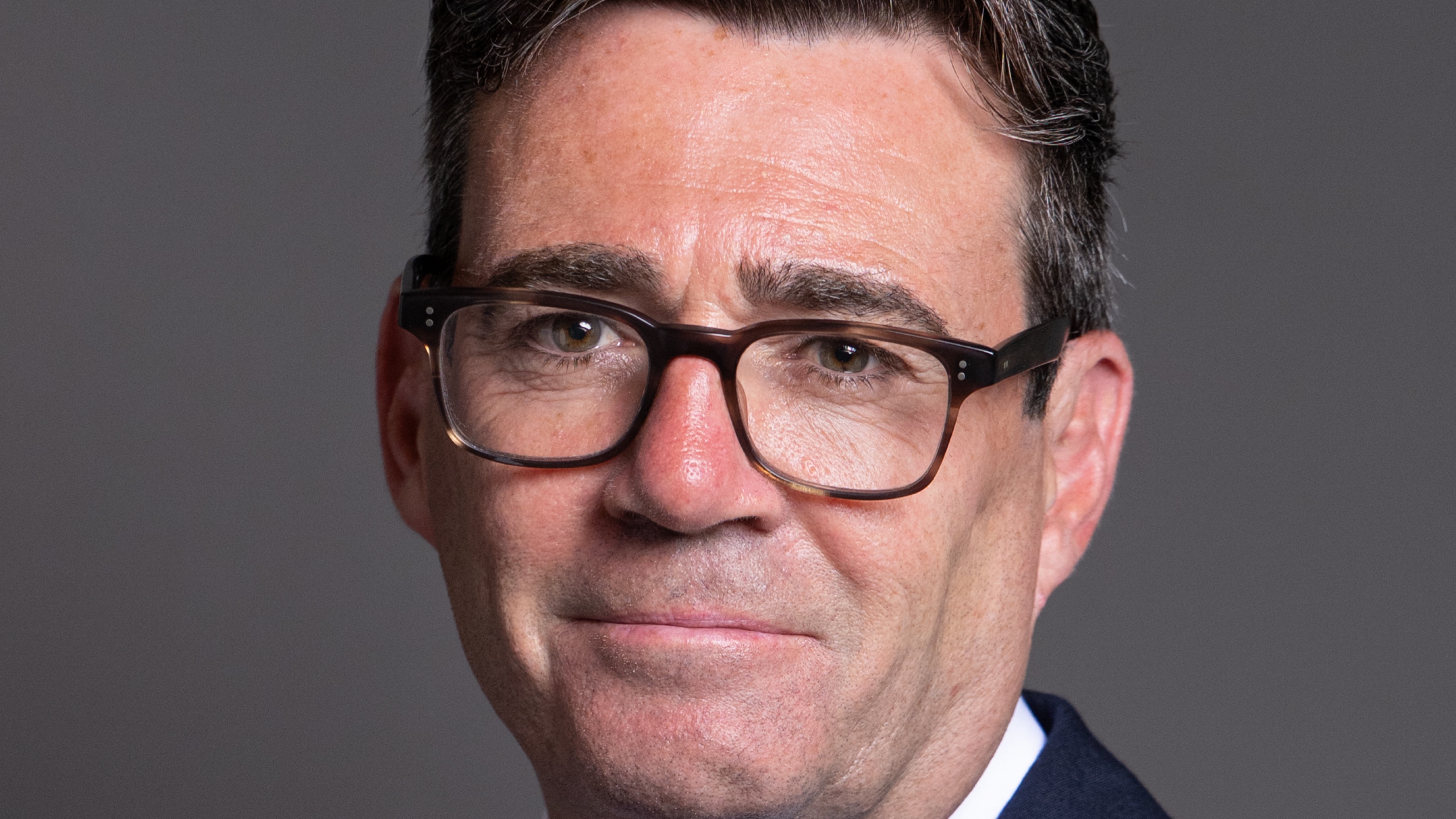
Andrew Murray Burnham became Prime Minister in 2024 after Keir Starmer's surprise resignation, making him the first former regional mayor to reach Number 10. The ex-Greater Manchester chief now leads Labour's government with a focus on devolution, transport reform, and rebalancing power away from London.
My Take
Burnham's journey from Greater Manchester Mayor to Prime Minister vindicates a theory about British politics that few believed possible: you can build genuine power outside Westminster's traditional pathways. For decades, the conventional wisdom held that regional politics was a dead end, a place where ambitious politicians went to fade into obscurity or nurse their wounds after losing leadership battles. Burnham proved that wrong by actually governing, by delivering tangible improvements to transport and housing that millions of people experienced daily, and by building political capital that eventually exceeded what most cabinet ministers possess. What makes Burnham's premiership genuinely interesting is that he brings a completely different skill set to Number 10 than the typical PM. He's not a career parliamentarian who spent twenty years mastering Westminster's arcane procedures and factional politics. He's an executive who ran a £6 billion budget, negotiated with private companies and unions, delivered major infrastructure projects, and faced voters in direct elections where his record was the only thing that mattered. That experience shows in how he's governing: less focus on parliamentary theater, more emphasis on delivery and measurable outcomes. The property tax reform he's pushing represents exactly the kind of political courage Britain needs but rarely gets. Stamp duty creates a massive barrier to labor mobility, trapping people in houses that no longer suit their needs because moving costs tens of thousands in transaction taxes. Council tax is a regressive poll tax in all but name, charging similar amounts to people in vastly different financial circumstances. Burnham's proportional property tax would fix both problems while raising the same revenue, but it requires telling wealthy homeowners they'll pay more. That's electoral poison, which is why no PM has dared touch it. If Burnham pulls it off, he'll have done something genuinely transformative. If he fails, it'll be because he overestimated how much political capital his mayoral success actually gives him at the national level.
What Happens Next
Burnham's first major test comes with the 2026 local elections in May, which will serve as a referendum on his radical devolution agenda. If Labour holds its ground in traditional strongholds while making gains in southern England, he'll have the political capital to push through the proportional property tax and regional assembly reforms. If Labour loses council seats, particularly in the "red wall" constituencies that backed the party in 2024, the parliamentary party will start questioning whether Burnham's regional focus translates to national appeal. The property tax legislation is scheduled for introduction in autumn 2026, giving him a tight window to build public support. The international dimension represents Burnham's biggest vulnerability. He's never been Foreign Secretary, never negotiated trade deals, never sat across from world leaders at G7 summits. His first major foreign trip to Washington in August 2026 will be closely watched, as will his handling of any international crisis that inevitably emerges. Conservative opponents are already painting him as a "regional politician out of his depth," and one serious foreign policy misstep could make that attack line stick. Burnham's counter-strategy appears to be doubling down on domestic delivery while relying on Foreign Secretary David Lammy to handle the diplomatic heavy lifting. The wildcard is Scotland. If Burnham's English regional assemblies succeed in giving genuine power to the North, Midlands, and South West, it could defuse Scottish independence sentiment by demonstrating that constitutional reform can happen within the Union. Scottish Labour leader Anas Sarwar has been quietly supportive of Burnham's federalism agenda, seeing it as a way to outflank the SNP's centralization under Holyrood. But if the regional assemblies turn into expensive talking shops without real power, it'll hand the SNP evidence that Westminster can't reform itself and independence is the only route to genuine self-governance. Burnham's premiership could either save the Union or accidentally accelerate its dissolution.
What History Tells Us
Burnham's trajectory mirrors that of Herbert Morrison, the Labour politician who served as Leader of London County Council (LCC) from 1934 to 1940 before joining Churchill's war cabinet. Morrison built his reputation by actually governing London, delivering the Green Belt, expanding public transport, and demonstrating Labour's competence at municipal socialism. He was seen as a Prime Minister-in-waiting throughout the 1930s and 40s but never quite made it, losing out to Clement Attlee in 1935 and again in 1945. Morrison's LCC success gave him political capital, but it also kept him away from Parliament during crucial leadership moments. Burnham's mayoralty could be following the same pattern: building an impressive regional record that makes him a perpetual leadership contender without quite positioning him for the final leap. The comparison also extends to Ken Livingstone, who left Parliament in 2001 to become London's first directly elected mayor after being blocked by Tony Blair's Labour machine. Livingstone won as an independent, introduced the congestion charge, and proved that a politician could build a power base outside Westminster that rivaled the influence of cabinet ministers. His eight years as mayor (2000-2008) made him a national figure and gave him the political leverage to shape London's future, even though he never returned to frontline parliamentary politics. Burnham's Manchester mayoralty is the northern equivalent, demonstrating that regional elected mayors with real budgets and powers can rival MPs in political impact. The difference is that Burnham never burned his bridges with the party establishment the way Livingstone did, leaving his route back to Westminster open if he chooses to take it.