Data center construction spending reached a seasonally adjusted annual rate of more than $75 billion in July 2026, nearly 60% higher than July 2025, according to the U.S. Census Bureau. Texas leads with 140 facilities under construction, Virginia follows with 136, and the frenzy shows no signs of stopping despite mounting backlash. Communities from Festus, Missouri to Yukon, Oklahoma are literally voting their mayors out of office for approving these projects. Yet the bulldozers keep rolling. The pitch is always the same: jobs, economic development, tax revenue. The numbers tell a different story. A typical 100 megawatt (MW) hyperscale data center employs 850 construction workers during an 18-month build, then settles into permanent operations with 100 to 200 staff. That's it. A single facility outside Reno operated by Vantage Data Centers projects 73 permanent jobs over the next decade after creating 4,000 temporary construction positions. In Virginia, the data center industry added 1,610 jobs in fiscal year 2025 while receiving $1.9 billion in tax benefits, which works out to $1.2 million per job created. Compare that to manufacturing. Research shows that a $1 million investment across key economic sectors supports an average of 17 jobs. Virginia's data center projects create one direct permanent job for every $54 million invested. A $10 billion data center may employ 300 people; the same capital in manufacturing would support thousands. The gap is staggering, and communities are waking up to it. Meanwhile, AI (Artificial Intelligence) is shredding the job market these data centers were supposedly created to boost. In March 2026, AI led all reasons for job cuts in the United States, with 15,341 positions eliminated that month alone, representing 25% of total cuts according to the Society for Human Resource Management (SHRM). Goldman Sachs estimates AI eliminated roughly 16,000 U.S. jobs net per month in 2026, with 25,000 positions automated and only 9,000 created. Stanford's 2026 AI Index confirmed a nearly 20% drop in software developer employment for workers aged 22 to 25 since 2024. Customer service roles face up to 80% automation potential, data entry and clerical positions are vanishing by the millions, and retail cashiers along with bank tellers show 60 to 65% automation exposure. Here's what nobody wants to say out loud: data centers are monuments to stolen human consciousness. Every word you've written online, every creative thought you've shared, every forum post and blog entry and social media update has been scraped, ingested, and transformed into training data for large language models without your permission or compensation. The EU AI Act, which began enforcement on August 2, 2026, now requires companies to respect copyright opt-outs and disclose training data sources, but in the United States, corporations are still operating in a regulatory gray zone where your intellectual output becomes their property the moment you hit publish. Courts are wrestling with this. Multiple lawsuits against OpenAI, Google, Meta, and Anthropic are grinding through the system, with judges divided on whether training AI on copyrighted material constitutes fair use. The TRAIN Act (Transparency and Responsibility for Artificial Intelligence Networks Act), introduced on January 22, 2026, would grant copyright holders unprecedented rights to verify whether their works were used without authorization, but it's still early in the legislative process. California's Assembly Bill 2013 took effect January 1, 2026, requiring mandatory disclosure of training data, but that's one state against a $3 trillion global spending wave over the next five years, according to Moody's projections. The construction costs keep climbing. Data centers now average $960 per square foot in 2026, up sharply from $630 in 2025. AI-optimized facilities cost $15 million to $20 million per megawatt, compared to $11.3 million for standard builds. Total U.S. data center investment is forecast to approach $700 billion in 2026, an 81% jump over 2025. The Stargate Project, announced by President Donald Trump on January 21, 2025, with initial equity funders SoftBank, OpenAI, Oracle, and MGX plans to invest $500 billion over four years into AI infrastructure. Microsoft forecast capital expenditures of approximately $175 billion to $190 billion for fiscal 2026. Communities are fighting back, but slowly. New York enacted the country's first statewide moratorium on data center approvals in July 2026, with Texas following less than a month later. Temporary bans are in place in cities across Missouri, Indiana, Georgia, Colorado, North Carolina, and Washington state. Residents complain about constant humming noise reaching 96 decibels, the equivalent of a gas-powered lawn mower running 24/7, along with headaches, vertigo, nausea, sleep disturbances, and hypertension. Then there's the electricity drain. A single megawatt of data center capacity consumes as much power as approximately 700 Virginia houses, and AI-optimized chips require 10 to 14 times more power than traditional processors. Northern Virginia, known as Data Center Alley, now has power wait times averaging seven years for large loads, pushing developers to West Texas, the Midwest, and Latin America. ERCOT's (Electric Reliability Council of Texas) large-load interconnection queue stood at approximately 410 gigawatts as of April 2026, with data centers accounting for roughly 73% of that pipeline. The grid can't handle it. Neither can the labor market. Construction sites are hitting 4,000 to 5,000 workers instead of the 750 that was standard just two years ago, and skilled tradespeople are relocating from Arizona to Dallas chasing wages while operators establish on-site housing with high-end amenities just to attract bodies. A study published in Nature Cities on July 31, 2026 found that 97.5% of U.S. data centers are located in cities, not rural areas as commonly believed, though new construction is shifting, with 67% of the 1,500 facilities in development heading outside urban areas where land is cheaper. Research from Georgia Tech and Brookings Institution shows that counties receiving their first large data center see total private employment rise by 4% to 5% over five to six years, translating to about 100 to 200 additional jobs at a typical county. Wages were largely unchanged, and home prices saw a modest 2% to 5% increase. That's the honest economic impact: marginal at best, and certainly not worth the tax abatements measured in billions.
 🌍 world
Data Centers Are Monuments to Stolen Human Consciousness. Built in Your Back Yard
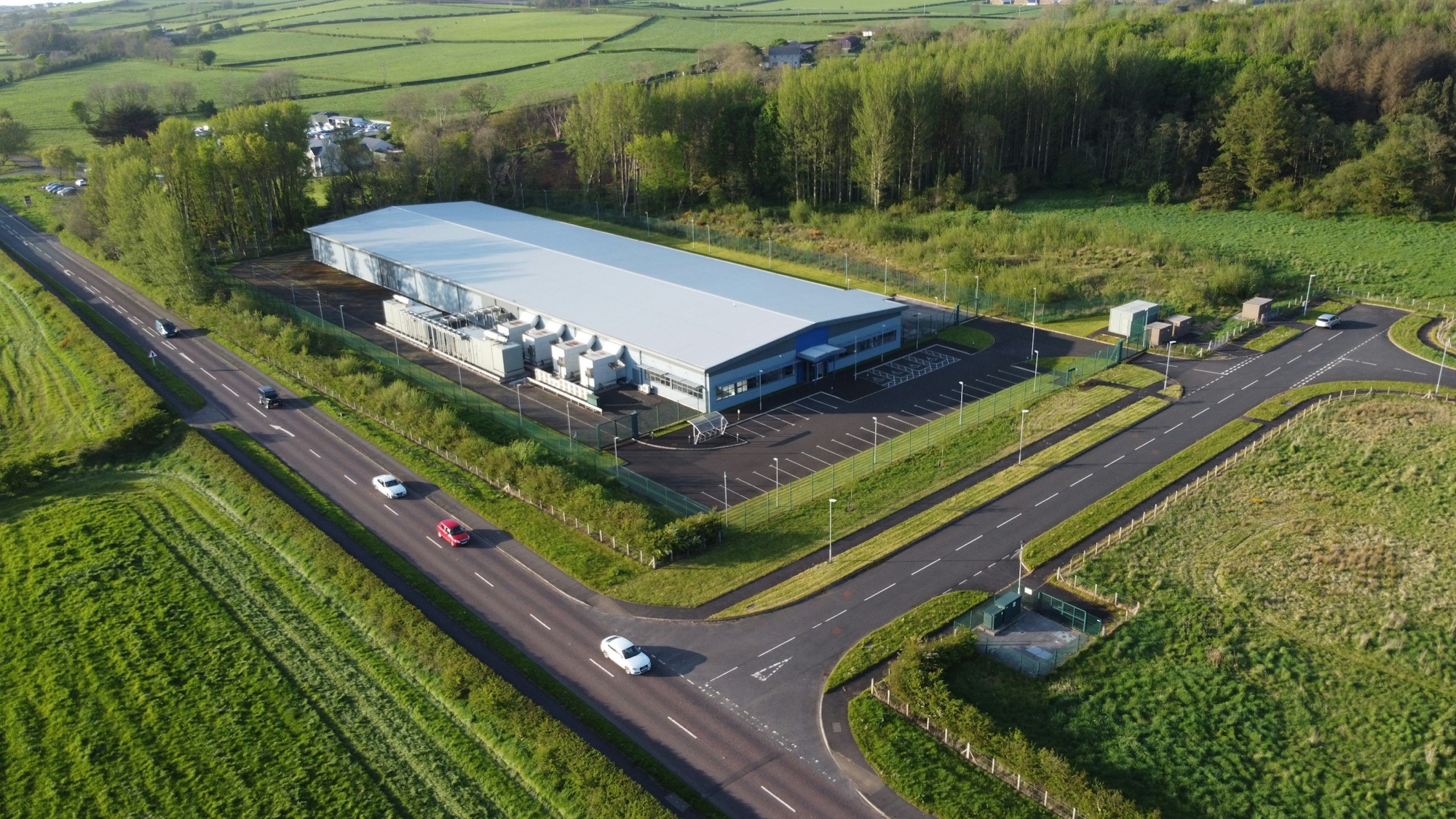
Data centers are sprouting across America at a record pace, pitched to desperate towns as economic salvation. The reality? A $700 billion construction boom in 2026 that creates thousands of temporary jobs but leaves behind facilities employing 50 to 200 people, running 24/7 to power the very AI systems eliminating millions of careers. And here's the part they don't mention: these windowless fortresses house your stolen thoughts, creativity scraped from the internet without permission, monetized by corporations who convinced your mayor to give them tax breaks.
Fact checked - 16 claims 3 Sept 2026 · 12 with sources
My Take
This is the greatest bait-and-switch in modern economic development. Towns hemorrhaging manufacturing jobs are so desperate for anything that looks like investment, they're handing out tax breaks worth millions per permanent position to companies building the infrastructure that will automate away what's left of their economies. It's not just ironic. It's obscene. And the theft angle isn't hyperbole. These models were trained on human creativity, scraped without consent from billions of people who never agreed to become unpaid data laborers. Every artist whose style gets mimicked, every writer whose voice gets synthesized, every programmer whose code gets regurgitated contributed to a system that's now being used to undercut their own livelihoods. The data centers going up in your community aren't neutral infrastructure. They're the physical manifestation of the largest unlicensed appropriation of intellectual labor in history, and they're being sold to you as job creation. The real story is power, literal and political. Tech giants are spending three-quarters of a trillion dollars in 2026 to control the means of AI production, and they're doing it with public subsidies in communities that will see almost no lasting benefit. When the construction crews leave and the noise starts and your electricity rates climb because the grid is maxed out serving a building that employs 50 people, remember: your mayor called this progress.
What Happens Next
The construction wave won't stop in 2026, but the backlash is building momentum. New York's statewide moratorium and Texas's move to follow set a precedent that other states are watching closely. Expect more recall elections, more organized community opposition, and potentially federal legislation if the TRAIN Act or similar bills gain traction in 2027. The EU AI Act's enforcement, which began August 2, 2026, is forcing American companies operating in Europe to disclose training data and respect copyright reservations, creating a two-tier regulatory system that may eventually pressure U.S. lawmakers to act. On the ground, Northern Virginia's seven-year power wait times are already redirecting billions in investment to Georgia, Indiana, Ohio, and West Texas. Texas alone has 6.5 gigawatts (GW) under development and is set to overtake Virginia as the largest data center hub by 2030. Watch for grid failures, electricity rate spikes, and infrastructure crises in these emerging markets as demand outpaces capacity. ERCOT's 410 GW interconnection queue is a powder keg. The job displacement numbers will get worse before stabilization. SHRM estimates about 7.9 million U.S. jobs face high displacement risk right now, concentrated in customer service, data entry, retail, and increasingly white-collar knowledge work. The World Economic Forum projects 92 million roles displaced globally by 2030 against 170 million created, but those new jobs require completely different skills in different locations, leaving millions stranded. Communities that gave away tax breaks for data centers in 2025 and 2026 will spend the next decade reckoning with what they actually received: temporary construction employment, permanent noise pollution, strained electrical grids, and a handful of specialized tech jobs that went to out-of-state hires. The construction spending will eventually plateau, probably around 2028 to 2029 as the first wave of AI infrastructure reaches saturation, and that's when the real political reckoning begins.
What History Tells Us
This mirrors the big box retail land grab of the 1990s and 2000s, when Walmart and other chains convinced towns to offer massive tax incentives and infrastructure upgrades in exchange for jobs that turned out to be low-wage and often part-time, while simultaneously destroying local businesses that provided better employment. The data center boom is that playbook on steroids, with even fewer permanent jobs and even larger public subsidies. It also echoes the automation waves that gutted American manufacturing from the 1970s onward. The difference is speed and scale. Previous automation cycles took decades to reshape labor markets. AI is compressing that timeline into years. We're watching entire job categories evaporate in real-time while the physical infrastructure enabling that displacement gets built with taxpayer support, often in the same communities losing the most jobs. The irony would be funny if it wasn't devastating.
Market Impact
Construction and electrical infrastructure suppliers are printing money. Companies providing transformers, switchgear, liquid cooling systems, and copper-intensive components are seeing unprecedented demand as data center construction hit $49.5 billion in the first four months of 2026, nearly four times the pace of the same period in 2025. Modular construction firms are benefiting as developers try to compress timelines. On the flip side, commercial real estate in saturated markets like Northern Virginia is facing a reckoning as power constraints force cancellations and delays. Land values in emerging markets like West Texas, Indiana, and Georgia are spiking as developers scramble for sites with available power. Utility companies in Texas, Georgia, and Ohio are seeing massive capital expenditure requirements to build out grid capacity, which will translate to rate increases for all customers, not just data centers. Expect political fights over who pays for grid upgrades in 2027. The AI displacement impact is already showing up in labor market data. Software developer hiring for entry-level positions is down nearly 20% since 2024. Customer service employment is contracting. Workers with automation exposure are seeing wage stagnation even as data center construction workers command premium pay. That divergence will widen, creating a two-tier labor market of specialized tech infrastructure jobs paying six figures and everyone else competing for fewer positions at flat or declining wages.