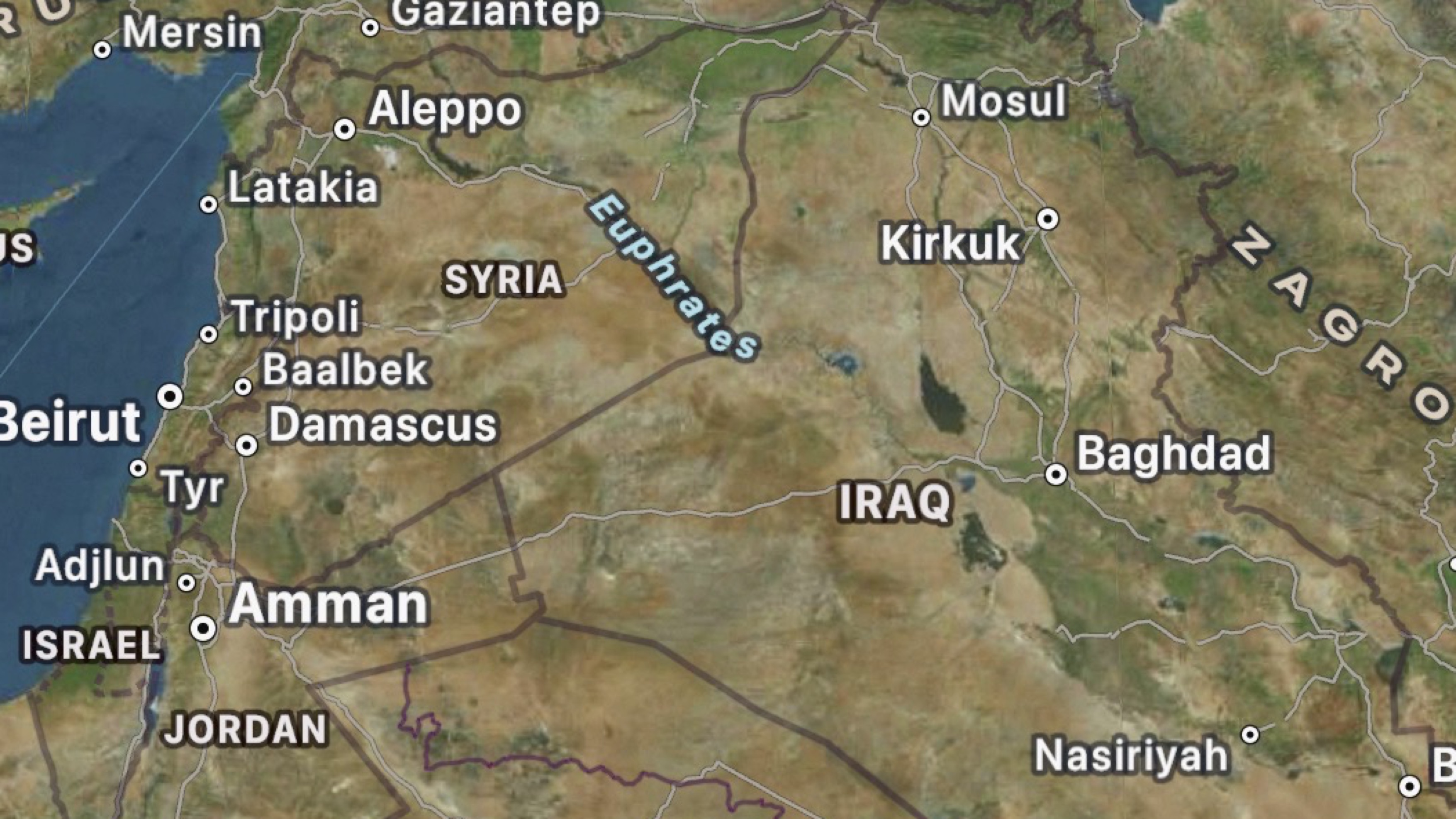
The Euphrates River, stretching 1,740 miles through Turkey, Syria, and Iraq, is facing an existential crisis. Satellite data shows the basin has lost over 34 cubic miles of freshwater since 2003, a staggering decline driven by climate-fueled droughts, rising temperatures, and relentless agricultural and municipal demand. The 2007 drought proved particularly devastating, and water levels in many areas never recovered. Now researchers are issuing stark warnings: if current trends continue, significant portions of this historic waterway could effectively cease to exist by 2040. This isn't some distant environmental problem for policy wonks to debate at conferences. The Euphrates crisis is already killing people. In Iraq, where the river provides drinking water and irrigation for agriculture that feeds millions, communities are grappling with collapsing infrastructure and contaminated water supplies. Naseer Baqar, a climate activist and field coordinator at the Tigris River Protectors Association, reports that waterborne diseases including diarrhea, typhoid, and cholera are spreading across Iraq, exacerbated by a government that has stopped providing vaccines to citizens. A study published in the British Medical Journal confirms the public health nightmare unfolding in real time. The geopolitical dimension adds another layer of complexity. The Euphrates doesn't respect borders, and Turkey, Syria, and Iraq have never managed to coordinate water management effectively. Different interpretations of international water law mean upstream dam construction and diversion projects in Turkey directly impact downstream communities in Syria and Iraq, who have far less political leverage. Jay Famiglietti, a hydrologist at the University of California, Irvine, pointed out that demand for freshwater keeps rising while the region remains unable to manage its shared resources cooperatively. This is a recipe for conflict, not just environmental degradation. The river's decline is erasing ecosystems that have existed for thousands of years. The Mesopotamian Marshes between the Tigris and Euphrates, once the largest wetland system in Southwest Asia and a critical habitat for migratory birds and endemic species, are drying out. These marshes are home to the Marsh Arabs, indigenous communities whose way of life depends entirely on the water. As the wetlands shrink, so does their ability to sustain fish populations, water buffalo, and the delicate ecological balance that has persisted since ancient Mesopotamia. The Euphrates occupies a unique place in human history. Genesis names it as one of four rivers flowing from the Garden of Eden. Revelation describes its drying as a prelude to Armageddon, when the sixth angel pours out a bowl of judgment and the river disappears to "prepare the way for the kings from the East." For centuries, scholars have debated whether to read this passage literally or symbolically. The river once served as a natural barrier against eastern invasions, so its disappearance in biblical prophecy signifies the removal of that protection before a final great conflict. Social media has predictably seized on the apocalyptic angle, but the real story is far more immediate: one of civilization's foundational rivers is vanishing, and millions are already living with the consequences.
 🔬 science
Euphrates Could Vanish by 2040, Apocalypse Fans Lose It
The Euphrates River, the lifeline of Western Asia for millennia, is shrinking so fast that scientists warn large sections could dry up within 14 years. Climate change, droughts, and water mismanagement are draining a river that millions depend on. And yes, some people are freaking out about biblical prophecies.
My Take
Let's be clear: the Euphrates isn't drying up because some cosmic timer hit zero. It's dying because humans are terrible at managing shared resources and even worse at confronting climate change. Turkey builds dams upstream, Syria diverts what's left, Iraq gets the dregs, and nobody coordinates because national interests trump regional survival every single time. This is what happens when short-term politics collide with long-term ecological collapse. The biblical prophecy angle makes for great social media content, but it obscures the real tragedy. The Euphrates sustained the cradle of civilization for five thousand years. Babylon, Ur, Nineveh, all rose along its banks. Now we're letting it die within a single human lifetime because we can't figure out basic water diplomacy. If there's an apocalypse coming, we're engineering it ourselves through incompetence and greed, not divine judgment.
What Happens Next
Iraq faces a choice it can't afford to make: keep pumping whatever water remains for agriculture and risk leaving cities without drinking water, or prioritize urban populations and watch the agricultural economy collapse. Neither option prevents mass migration. Expect hundreds of thousands of rural Iraqis to flee toward cities that already can't provide basic services, creating the kind of displacement crisis that destabilizes governments. Turkey will face international pressure to release more water from upstream dams, but Ankara has its own drought problems and zero incentive to sacrifice domestic water security for downstream neighbors it barely cooperates with. The wildcard is Syria. If the Assad government, still rebuilding from years of civil war, decides it needs every drop for reconstruction and diverts even more water, Iraq could face a choice between diplomatic complaints and military action to secure water access. That sounds extreme until you remember that water wars have precedably destroyed entire civilizations. The Euphrates doesn't care about borders or prophecies. It's a hydrological system responding to physics, and the physics say it's running out of water faster than any agreement can replace it.
What History Tells Us
The Euphrates has witnessed the rise and fall of empires since the Bronze Age. The Akkadian Empire collapsed around 2200 BCE during a severe drought that disrupted agriculture along the river. The Neo-Assyrian Empire built elaborate canal systems to control Euphrates water in the 9th century BCE, using hydraulic engineering as a tool of imperial power. More recently, Saddam Hussein weaponized water in the 1990s by draining the Mesopotamian Marshes to punish Marsh Arabs who opposed his regime, causing one of the 20th century's worst environmental disasters. The current crisis echoes these historical patterns: when the Euphrates fails, civilizations fracture.