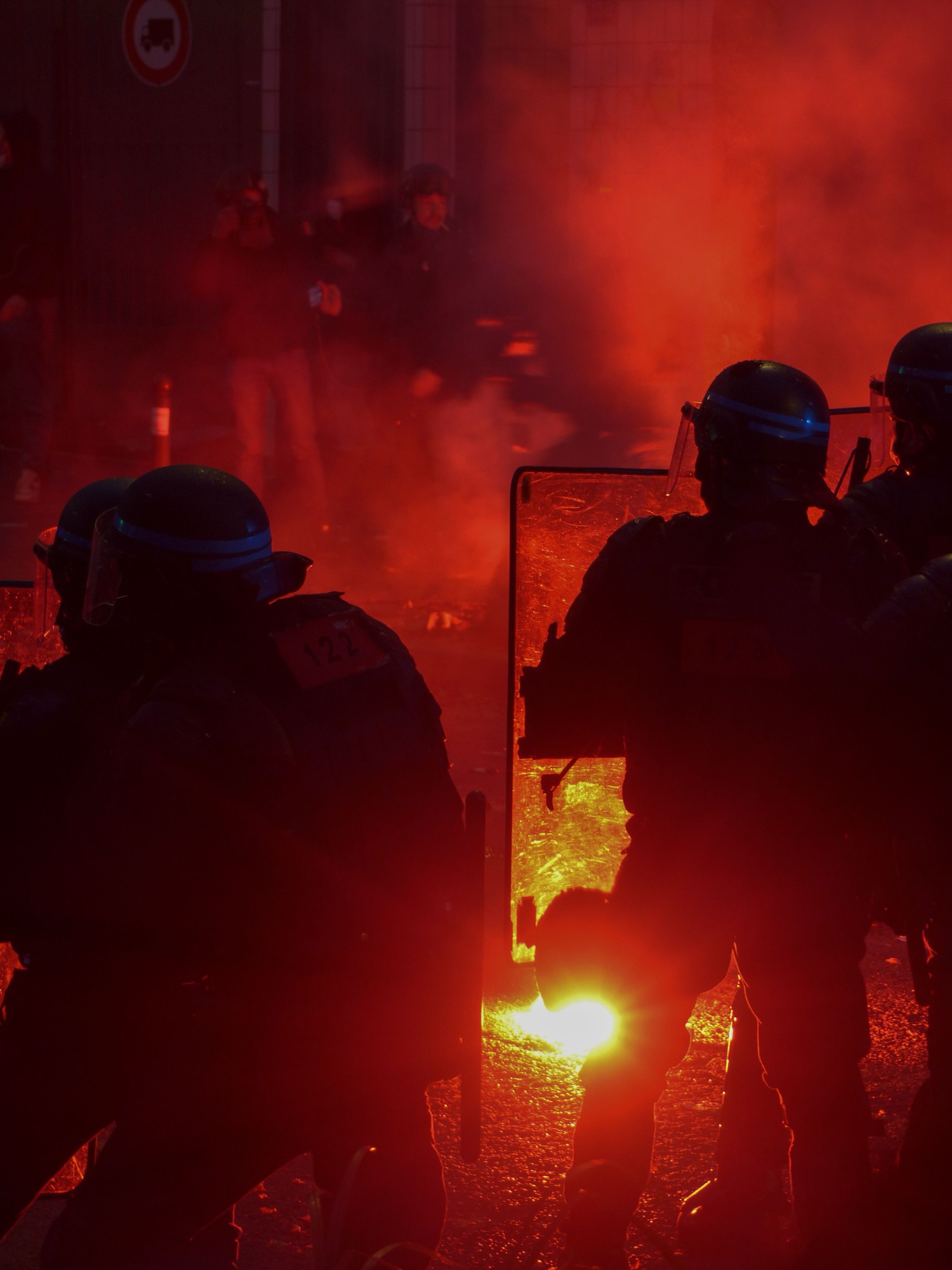
France entered the weekend of October 3, 2026 with its school protest movement unresolved. Education Minister Édouard Geffray counted 735 establishments affected on October 2, while roughly 400 high schools remained closed. Those figures describe disruption, not 735 riots. The movement developed in Paris-region schools during September before spreading nationally and into universities. Peaceful demonstrations, entrance blockades, attacks on buildings and confrontations with police now coexist. Treating all four as interchangeable obscures both legitimate grievances and serious violence. The latest nationwide figures available for this article concern Friday, October 2, not a fresh Saturday count. The central demands are stubbornly practical. Pupils want teachers in their classrooms, replacements when staff are absent, usable buildings, smaller classes and less punishing timetables. Student organisations also challenge Parcoursup, the undergraduate admissions platform, and Mon Master, its postgraduate counterpart, which they argue reinforce social exclusion. These grievances have converged with the argument over next year’s spending. The Education Ministry’s October 1 budget dossier proposes a net reduction of 1,588 full-time-equivalent teaching posts, while presenting an increase in overall employment that includes other staff and trainee teachers. The government invokes falling pupil numbers; protesters describe shortages where they actually study. Both claims can coexist: a national demographic trend does not establish whether a particular classroom has a teacher. High school pupils remain the movement’s starting point, but university students have joined. Union Étudiante, a university student union, claimed more than 30 universities and 640 high schools were blocked on October 1. The Education Ministry’s figures reported that day counted more than 1,020 affected high schools, including 222 blockades. The disagreement is substantial, but the categories also differ: an affected institution is not necessarily blocked, and a blocked building does not mean every enrolled student supports the action. Neither tally is a national crowd count. Independent reporting confirms the geographical spread, but the sources reviewed do not establish a comparable, independently audited nationwide turnout. Paris 8 University separately confirmed that its Saint-Denis campus was inaccessible on October 2. (union-etudiante.fr) The mobilisation is organised, but organisation should not be confused with central control. Union Syndicale Lycéenne, the high school student union, and Union Étudiante issued joint calls for blockades and an October 6 demonstration. Union Étudiante published mobilisation materials, while teaching unions have called strikes and encouraged adults to accompany pupils. School-specific messages also circulate through social platforms. These networks can coordinate dates, publicise demands and send representatives into meetings; that does not demonstrate that they command every school gate or every person throwing a projectile. Nor is the student population unanimous. The right-wing Union Nationale Inter-universitaire, the National Inter-University Union, is campaigning against blockades in the name of access to education. Its opposition demonstrates a political division, not a representative survey of pupils staying away. (union-etudiante.fr) The violence is real, and the numbers require careful labels. Interior Minister Laurent Nuñez reported 1,747 arrests on October 2 and more than 5,000 since September 28. Arrests are not convictions or proof that every detainee committed violence. Figures reported on October 1 put injuries at 170 pupils and 65 education staff since the movement began; the Interior Ministry counted 305 injured officers that Thursday. These are official counts covering different populations and periods, not an independently reconciled casualty register. Police conduct also requires scrutiny. Teaching unions accuse officers of disproportionate force, while simultaneously condemning violence against pupils and staff and warning about outsiders seeking confrontation. Acknowledging attacks on schools does not settle whether each police intervention was necessary or proportionate. The educational damage extends beyond a missed morning. An entrance-hall fire at a high school in Nantes led to a closure expected to last until the autumn holiday; elsewhere, institutions have attempted to move classes online. Paris 8’s closure notice demonstrates the university disruption without relying on an organiser’s estimate. Published testimony also explains why some adults have joined rather than simply demanding that pupils return home: Spanish teacher Juliette Estiville described attending to stand between police and students. Paris pupil Salama Gargouri identified overloaded schedules and the admissions process among the grievances. Those accounts illuminate individual experiences, not the views of every family. The available evidence is stronger on closures and confrontation than on the cumulative consequences for residents, student jobs or household spending. Participation also carries unequal practical risks. Union Étudiante’s September 10 guidance explicitly warned scholarship recipients that unjustified absences could threaten their grants. The government’s student guide likewise links scholarship payments to attendance and examinations. That is an attendance issue, not evidence of an automatic penalty for holding a political opinion. The union’s September 17 statement also opposed proposed changes to housing assistance, connecting education protests with living-cost anxiety. Neither statement measures how many students have stayed away because they cannot risk income or support. No protest-specific automatic loss of housing or immigration status was established in the sources reviewed; claims of such consequences should not be confused with documented policy. (union-etudiante.fr) Online imagery needs the same discipline as arrest totals. Reporting on the movement’s early spread identified videos mixing archive footage with images of the first blockades. That supports caution about individual clips, not a sweeping claim that the present violence is fabricated. Meanwhile, Geffray met education-community representatives on October 2 and proposed faster teacher replacements and work on school schedules. Student representatives judged the response insufficient and maintained the next mobilisation. As of October 3, there was dialogue but no agreed settlement. The movement’s different demands also make a single off-switch unlikely: repairing a building, replacing an absent teacher and changing an admissions system are different negotiations. (lemonde.fr)
 🌍 world
France’s School Revolt Cannot Be Policed Away
France’s education protests have become a public-order crisis, but calling the entire movement a riot erases the dispute underneath: overcrowded classes, missing teachers and exhausted pupils. Student organisations and teaching unions are preparing another mobilisation for October 6, not announcing an end.
My Take
The most useful distinction is not between being for students and being for order. It is between protecting education and damaging it. Burning a school cannot improve its classrooms. Equally, a security operation cannot substitute for a staffing plan. Both propositions deserve to survive the political shouting. A credible response would separate peaceful participation from individual violence, publish clear information about injuries and police interventions, and attach deadlines to educational commitments. Protest organisers should defend access to learning as fiercely as the right to demonstrate. Ministers should recognise that restoring quiet outside a school is not the same achievement as restoring confidence inside it.
What Happens Next
Tuesday, October 6 is the next confirmed national mobilisation date. Union Syndicale Lycéenne and Union Étudiante have called demonstrations, with teaching unions also calling strike action. Geffray’s proposed work with regional education chiefs on speeding up replacements is expected during the week beginning October 5. Those developments create an immediate test: whether concrete commitments can emerge while the movement is still expanding its alliances. (union-etudiante.fr) The school calendar supplies a possible pause, not a guaranteed ending. The official mainland autumn holiday runs from October 17 until classes resume on November 2. Reduced activity around schools could weaken mobilisation, but unresolved demands could survive the break. A durable settlement would plausibly require measurable staffing commitments, a credible process for addressing school conditions and de-escalation on the streets. Those are conditions for a possible outcome, not a confirmed timetable for peace. (service-public.gouv.fr)
What History Tells Us
Union Étudiante has compared its October 1 tally with the opening mobilisation against pension reform in 2023, when it says seven universities and 200 high schools were blocked. That is an organiser’s comparison with one selected earlier day, not proof that the current movement exceeds an entire previous protest cycle. Comparable nationwide turnout, injury and damage datasets were not established by the material reviewed. Historical superlatives would outrun the evidence. (union-etudiante.fr)