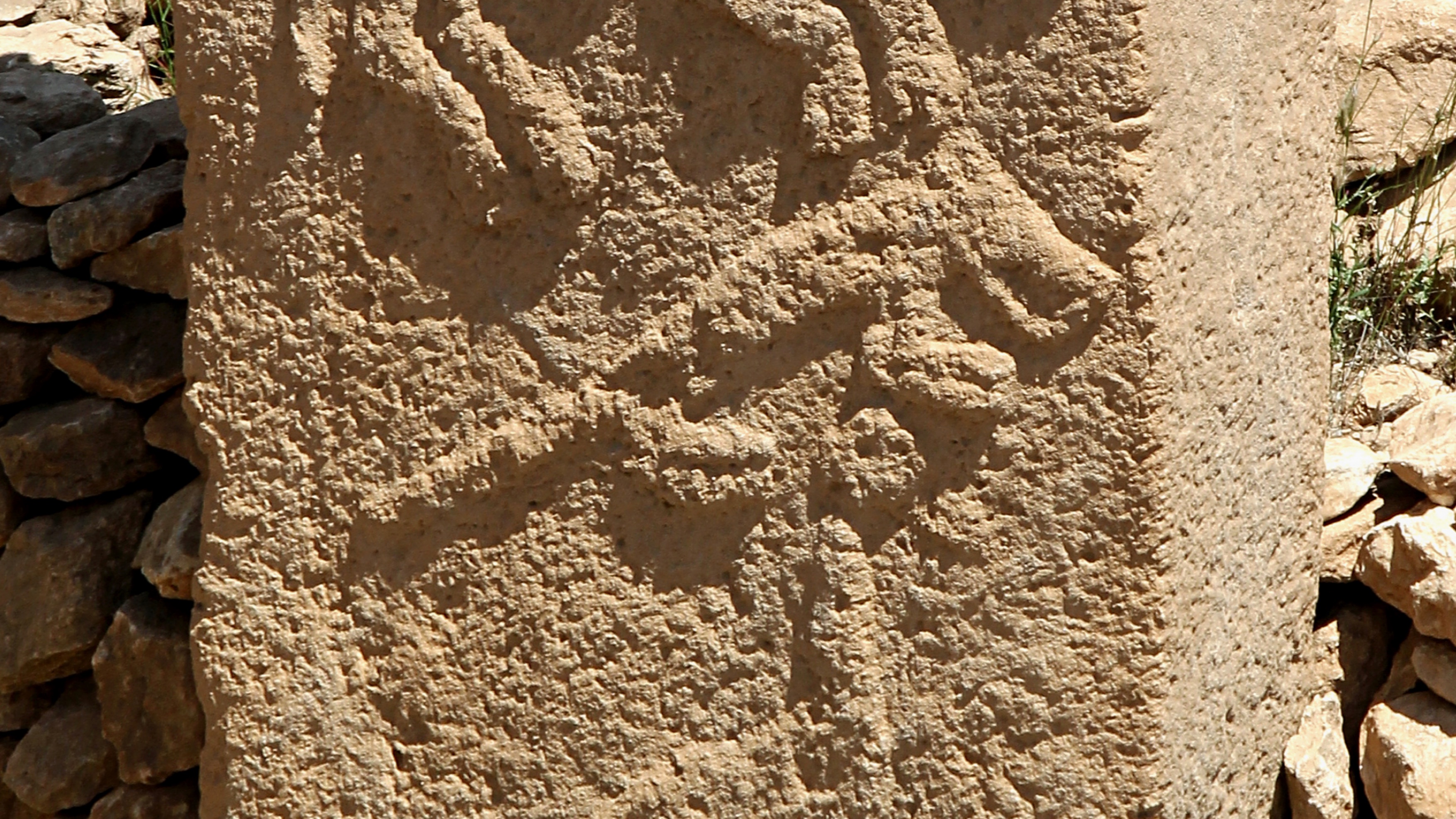
In 1963, a University of Chicago survey team noted a weird limestone outcrop on a hill in southeastern Turkey near the Syrian border. They marked it as a Byzantine cemetery and moved on. In 1994, German archaeologist Klaus Schmidt looked at the same hill and thought, that's not a cemetery. He started digging and found what might be the most important archaeological site on Earth: massive carved limestone pillars arranged in circles, decorated with elaborate reliefs of animals, built roughly 11,600 years ago by people who weren't supposed to be capable of anything more sophisticated than chasing gazelles with pointy sticks. Göbekli Tepe (Potbelly Hill in Turkish) predates Stonehenge by 6,000 years, the Egyptian pyramids by 7,000 years, and agriculture itself by at least 1,000 years. It shouldn't exist, but here it is, rewriting every textbook about how civilization began. The site covers roughly 22 acres and contains at least 20 circular structures made from T shaped limestone pillars, some weighing up to 20 tons, carved from bedrock quarries 1,000 feet away and transported uphill without wheels, metal tools, or domesticated animals. The pillars stand up to 18 feet tall and feature intricate carvings of lions, foxes, boars, vultures, snakes, and scorpions rendered with artistic sophistication that wouldn't look out of place in a modern art museum. Each enclosure appears to have been deliberately buried after use and a new one built on top, creating artificial mounds that preserved the structures for millennia. Whoever built this wasn't scratching stick figures on cave walls. These were artists, architects, and engineers operating at a level of cultural complexity that predates everything we thought was required for cultural complexity. Here's why this breaks the standard story: For over a century, archaeologists taught that civilization emerged through a predictable sequence. First, humans domesticated plants and created agriculture around 10,000 years ago. Agriculture created food surpluses. Surpluses allowed specialization. Specialization enabled organized religion, monumental architecture, and complex societies. Göbekli Tepe flips this entire sequence upside down. The people who built these temples were hunter gatherers. No evidence of agriculture. No evidence of permanent settlement. No domesticated animals except dogs. They shouldn't have had the surplus labor, social organization, or motivation to quarry, transport, carve, and erect multi ton limestone pillars into ceremonial complexes that would make Stonehenge's builders jealous. Yet they did it anyway, which suggests that maybe organized religion and monumental architecture came first, and agriculture developed afterward to support the religious centers. Maybe humans didn't settle down to farm and then invent civilization. Maybe they invented civilization and then settled down to farm so they could keep doing civilization. Klaus Schmidt, who directed excavations until his death in 2014, estimated that building Göbekli Tepe required hundreds of workers laboring for decades, possibly centuries. Where did these workers come from? How were they fed? Who organized them? The site sits in the headwaters of the Fertile Crescent, where wild wheat, barley, and legumes grew abundantly. Schmidt's theory: mobile hunter gatherer groups from across the region gathered at Göbekli Tepe for seasonal feasts, rituals, and construction projects. The need to feed these massive gatherings may have driven experimentation with plant cultivation, accidentally inventing agriculture. Genetic studies of domesticated wheat support this: the earliest domesticated varieties trace back to this exact region, at roughly this time period. Maybe our ancestors didn't build temples because they had agriculture. Maybe they invented agriculture because they needed to feed temple builders. Since Schmidt's death, excavations under Turkish and international teams have accelerated. Ground penetrating radar suggests the buried structures may extend far beyond what's been excavated, with estimates ranging up to 200 stone pillars still underground. The Turkish government invested heavily in site infrastructure, building a massive protective roof structure and visitor facilities, because Göbekli Tepe attracts hundreds of thousands of tourists annually and counting. In 2018, UNESCO (United Nations Educational, Scientific and Cultural Organization) designated it a World Heritage Site. Archaeologists have found similar sites nearby, including Karahan Tepe and Harbetsuvan Tepe, suggesting Göbekli Tepe wasn't unique but part of a broader Stone Age cultural complex we're only beginning to understand. Each new discovery pushes the timeline of human sophistication further back and makes the standard story of civilization look more like a convenient fiction we told ourselves when we had less data.
 🔬 science
Göbekli Tepe Rewrites Human History Before Writing Existed
A Turkish hillside hides 11,000-year-old temples built by hunter-gatherers who supposedly couldn't organize large-scale construction. Göbekli Tepe predates agriculture, pottery, and metalworking, forcing archaeologists to admit civilization's origin story was backwards all along.
My Take
What drives me crazy about Göbekli Tepe is how long it sat there, partially visible, before anyone recognized what it was. Multiple surveys documented the site and dismissed it. This happens constantly in archaeology: paradigm-breaking discoveries get ignored because they don't fit prevailing theories. If it contradicts the textbook, it must be wrong, misidentified, or an anomaly. Except sometimes the textbook is garbage and the anomaly is the actual story. The deeper issue is what Göbekli Tepe reveals about human nature: we built temples before houses. We created art before agriculture. We organized massive communal projects for religious or ceremonial purposes thousands of years before we figured out plumbing. This suggests that meaning, ritual, and transcendence aren't luxuries that emerge after basic needs are met. They're fundamental human drives that motivated our ancestors to do impossibly hard things with Stone Age technology. Maybe civilization didn't emerge from material necessity. Maybe it emerged from spiritual yearning, and everything else followed.
What Happens Next
Turkish authorities face a delicate balance: exploit Göbekli Tepe's tourist potential versus preserve an irreplaceable archaeological resource. Every visitor adds wear to the structures. Every Instagram photo risks degrading conservation efforts. The government built that massive protective roof in 2019, but it can't protect against millions of feet trampling the site annually. Expect increasingly strict access controls in coming years as tourism numbers rise and conservationists panic. The real excitement is underground. Less than five percent of Göbekli Tepe has been excavated. Ground penetrating radar shows dozens of buried structures waiting. Each time archaeologists open a new enclosure, they find surprises: different architectural styles, new animal carvings, evidence of feasting or ritual practices. Full excavation could take another century, assuming funding continues and political stability holds (not a safe assumption in southeastern Turkey, 25 miles from Syria). Meanwhile, similar sites keep popping up nearby. Karahan Tepe, Harbetsuvan Tepe, and Sayburç all date to the same period and show similar architectural features. We're not looking at one anomalous site anymore. We're looking at an entire lost civilization that predates civilization itself, and we've barely scratched the surface.
What History Tells Us
Before Göbekli Tepe, the oldest known monumental architecture was Jericho's stone tower (circa 8,000 BCE) and various Neolithic settlements across the Fertile Crescent. These sites featured permanent structures but were clearly built by agricultural societies with stable food supplies. Göbekli Tepe predates all of them and belongs to the Pre Pottery Neolithic A period, when humans were transitioning from mobile hunter gatherers to semi sedentary communities but hadn't yet adopted farming. The discovery echoes earlier paradigm shifts in archaeology. When Heinrich Schliemann excavated Troy in the 1870s, academics mocked him for taking Homer's poetry literally. When Arthur Evans found Minoan civilization on Crete in 1900, it rewrote Bronze Age chronology. When radiocarbon dating revealed that European megaliths predated Egyptian pyramids, it demolished theories about civilization spreading from the Middle East. Göbekli Tepe represents the latest and possibly biggest revision: humans were capable of complex civilization thousands of years earlier than we thought, and the story we told about how it all began was fundamentally wrong.