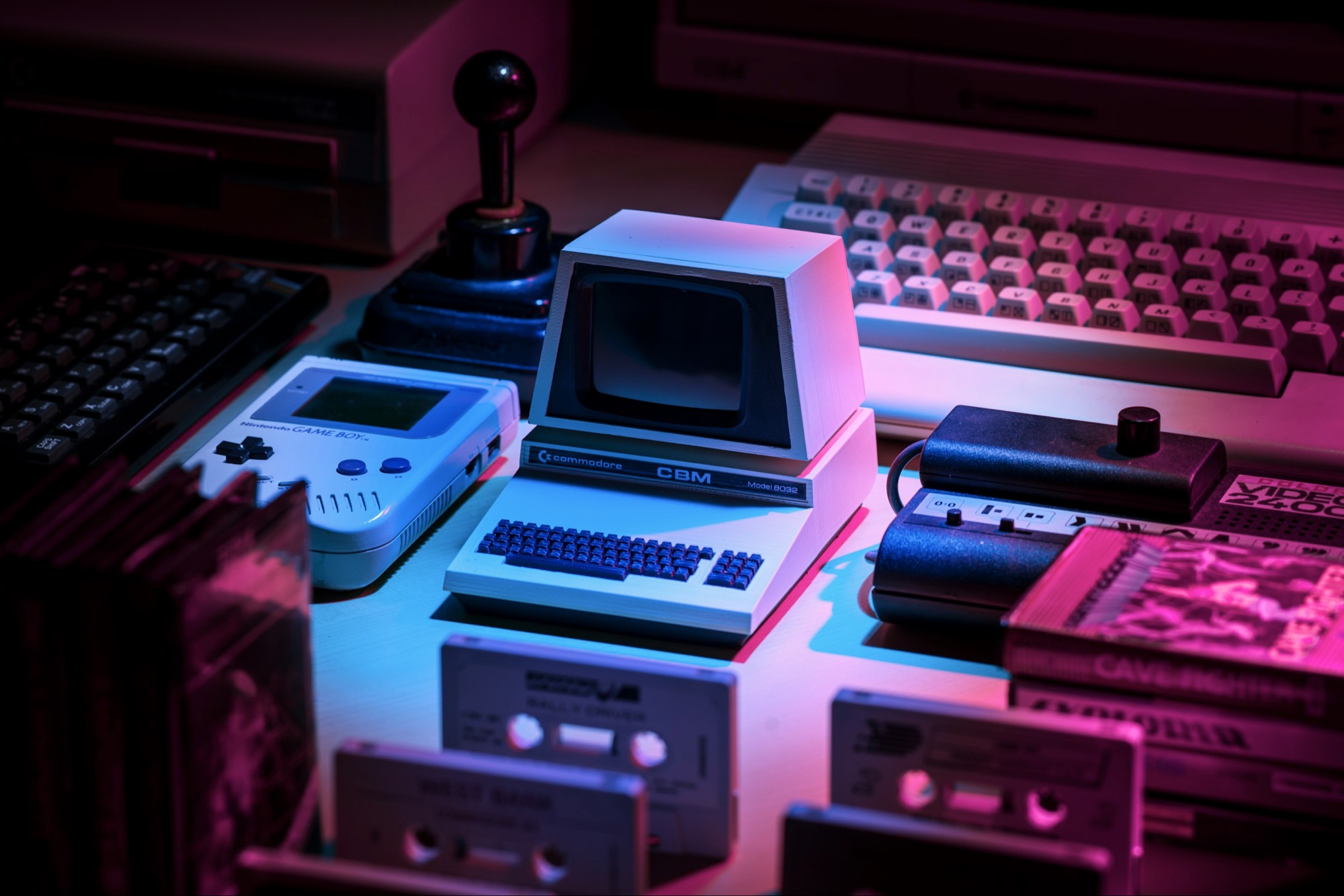
The paradox is delicious: in 2026, as artificial intelligence reshapes warfare and quantum computing looms on the horizon, critical infrastructure around the world is protected by technology your grandparents used. And it is working. Mikko Hypponen, a Finnish cybersecurity expert who joined Sensofusion as Chief Research Officer in 2025, calls it "security by antiquity." For years, he deliberately used Eudora, an email client so obsolete that hackers simply forgot it existed. While Gmail and Outlook users faced constant phishing attempts and malware, Hypponen's ancient software flew under the radar. The logic is counterintuitive but sound: criminals follow the money, and there is no money in cracking systems that 50 people still use. Until June 2019, the United States military coordinated its nuclear arsenal using 8-inch floppy disks and IBM Series/1 computers from the 1970s. The Strategic Automated Command and Control System (SACCS), which transmits emergency action messages to nuclear forces, operated on technology so archaic that Lieutenant Colonel Jason Rossi joked it was "the Air Force's oldest IT system." But as Rossi told reporters in 2019, that age provided unique security: "You can't hack something that doesn't have an IP address. It's a very unique system, it is old and it is very good." The Pentagon only upgraded to solid-state storage in 2019, not because the floppy system was compromised, but because maintaining 50-year-old hardware had become prohibitively expensive. Japan finally abandoned government-mandated floppy disk submissions in June 2024, when Former Digital Minister Taro Kono, who served from 2022 to 2024, declared victory in his two-year "war on floppy disks." The government scrapped over 1,034 regulations requiring businesses to submit data on floppy disks and CD-ROMs. Kono's crusade revealed a profound irony: Japan, a nation synonymous with cutting-edge technology, had clung to obsolete media partly because of bureaucratic inertia, but also because physical media offered security advantages that cloud systems could not match. Sony, the last major floppy manufacturer, stopped production in 2011, yet Japanese utilities, mining operations, and weapons manufacturers continued using them for another decade. Analog systems offer a more fundamental form of protection. They are inherently immune to software hacking, malware intrusions, and remote cyberattacks. Nuclear power plants worldwide still rely on analog reactor protection systems precisely because every digital system has a vulnerability, as cybersecurity expert Ralph Langner has argued. Air-gapped systems, which are physically isolated from the internet and unsecured networks, protect critical infrastructure including power grids, military networks, and financial data by creating literal gaps that no remote hacker can bridge. These systems are commonly used to safeguard classified military information, healthcare records under HIPAA (Health Insurance Portability and Accountability Act), and industrial control systems in utilities and manufacturing. Germany explored bringing back typewriters for classified documents in 2014, after revelations that the NSA (National Security Agency) had bugged Chancellor Angela Merkel's phone. Patrick Sensburg, chairman of the parliamentary committee investigating U.S. surveillance, announced his team had already acquired "a non-electronic typewriter" for sensitive communications. Russia's security agency purchased typewriters with unique typing patterns in 2013, allowing each document to be traced to a specific machine while remaining immune to digital interception. Typewriters offer forensic advantages: each has a signature pattern, making document tracking easier, while simultaneously providing security that encrypted email cannot guarantee. The trade-offs are real. Maintaining legacy systems is expensive and finding engineers who understand 1970s-era technology grows harder every year. Air-gapped systems require elaborate physical procedures to transfer data, slowing operations and creating insider-threat vulnerabilities. Yet as cyberattacks grow more sophisticated, with AI-driven threats adapting in real time and nation-state actors pre-positioning attack capabilities in critical infrastructure, the appeal of systems that simply cannot be hacked remotely becomes increasingly attractive. Analog integrity in a digital age is not nostalgia, it is strategic defense.
 🌍 world
Hackers Hate This One Weird Trick: Ancient Tech
Floppy disks guarding nuclear weapons. Typewriters protecting state secrets. Analog systems immune to digital attacks. While the world rushes toward AI-powered everything, some of the most secure systems on Earth are deliberately stuck in 1975. Turns out, sometimes the best defense against a hacker is technology so old they forgot it exists.
Fact checked - 12 claims 25 Aug 2026 · 9 with sources
My Take
The cybersecurity industry has spent decades chasing the next big thing: AI threat detection, zero-trust architectures, quantum-safe cryptography. Meanwhile, the nuclear arsenal that could end civilization was protected by floppy disks until 2019. That should tell you something about our priorities. Security by antiquity works precisely because modern hackers are optimizers. They target Windows, not OS/2. They crack Gmail, not Eudora. They exploit vulnerabilities in systems used by millions, not systems used by dozens. The economics are simple: why waste zero-day exploits on technology so obscure that your malware might outlive the target? This is not a long-term strategy for consumer tech, but for critical infrastructure facing nation-state threats, it is brilliantly pragmatic. If your nuclear command system has no IP address, no hacker on Earth can remotely compromise it. Full stop. The real lesson here is not that we should all return to typewriters and floppy disks. It is that connectivity is a double-edged sword we have wielded recklessly. Every smart device is a potential attack vector. Every cloud connection is a potential breach point. Sometimes the most advanced security measure is refusing to connect in the first place. In 2026, as we race toward AI-everything and Internet-of-Everything, the systems that will survive the next decade might just be the ones we built in 1975.
What Happens Next
The tension between connectivity and security will intensify. As AI-driven attacks become more sophisticated in 2026 and beyond, expect more critical infrastructure operators to embrace air-gapping and physical isolation. The U.S. Cybersecurity and Infrastructure Security Agency (CISA) and FBI already recommend backing up critical data offline and ensuring copies are not accessible from compromised networks. Power grids, water systems, and nuclear facilities will increasingly adopt hybrid approaches: cutting-edge digital systems for efficiency, backed by analog fail-safes that cannot be remotely hacked. Quantum computing poses the next existential threat. When quantum machines can break current encryption standards, the only truly safe data will be data that never touches a network. Expect governments and defense contractors to quietly expand their use of air-gapped systems and even manual processes for the most sensitive operations. Japan's floppy disk ban may seem like modernization, but do not be surprised if classified facilities in Tokyo, Washington, and Moscow continue using typewriters for another decade. The broader trend is cyber-resilience over cyber-prevention. Organizations are accepting that breaches will happen and designing systems that can withstand and recover from attacks. Immutable backups, air-gapped storage, and analog redundancies will become standard practice for anyone handling truly critical data. The future of security might look a lot like the past: less connected, more isolated, and deliberately low-tech where it matters most. By 2030, the most secure networks might be the ones that do not exist at all.
What History Tells Us
This is not the first time older technology has outlasted its successors due to security advantages. During World War II, the Enigma machine was considered cutting-edge encryption, yet one-time pads using random key sequences on paper remained more secure because they were mathematically unbreakable and left no electronic trace. The Cold War saw extensive use of air-gapped systems and manual processes precisely because physical separation was the only guarantee against espionage. The Soviet Union famously used typewriters for sensitive communications throughout the 1980s, a practice that continued in Russian intelligence services into the 2010s. The current resurgence of retro tech echoes the "defense in depth" philosophy that predates computers entirely. Medieval castles used multiple layers of walls, moats, and gates because no single barrier was impenetrable. Modern cybersecurity has rediscovered this principle: air gaps are moats, analog systems are inner keeps, and physical isolation is the final redoubt. What is old becomes new again when the fundamentals of security remain unchanged across centuries.