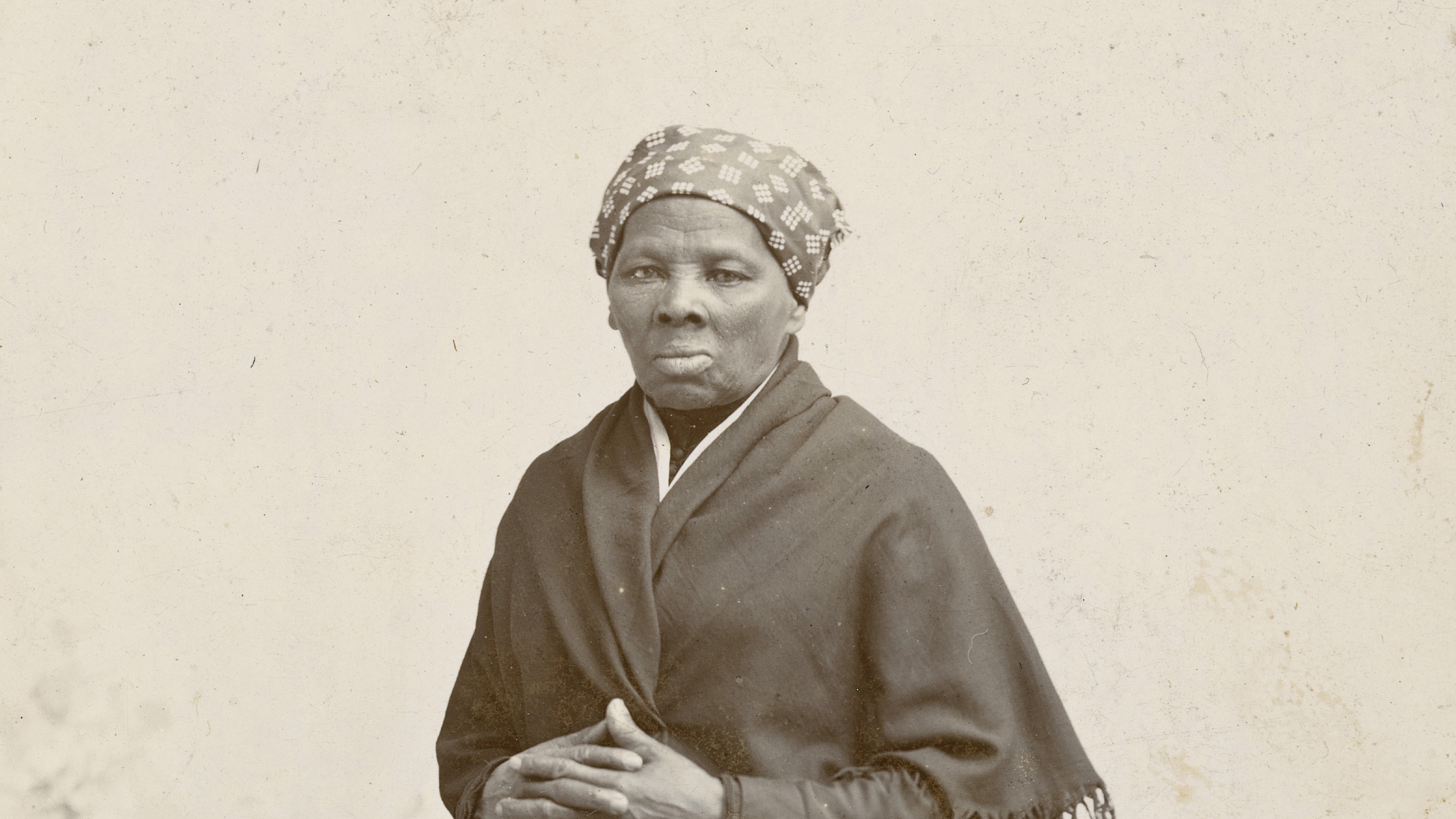
Harriet Tubman wasn't just brave, she was ruthlessly effective. Born into slavery in Maryland around 1822 as Araminta Ross, she escaped in 1849 and immediately did something most escapees never dared: she went back. Nineteen times. She personally guided roughly 70 enslaved people to freedom, earning the nickname "Moses" among those she liberated. But here's what gets glossed over in elementary school history lessons: Tubman carried a revolver on every mission and wasn't afraid to use it. When terrified escapees wanted to turn back (risking everyone's capture), she'd pull her gun and deliver a simple message: "You'll be free or die." Nobody turned back. Her success rate was perfect, zero losses across dozens of missions through hostile territory with bounties up to $40,000 on her head (equivalent to roughly $1.3 million today). The Civil War transformed Tubman from Underground Railroad conductor to military operative. In 1863, she became the first woman to lead an armed military raid in American history when she guided Colonel James Montgomery and 150 Black Union soldiers up South Carolina's Combahee River. The mission, based on intelligence Tubman personally gathered by infiltrating plantations disguised as an enslaved field worker, liberated more than 700 enslaved people in a single night and destroyed Confederate supply lines worth millions. She mapped Confederate torpedoes (underwater mines) in the river, identified which plantations held the most people, and coordinated the timing with military precision. Confederate forces never saw it coming because they couldn't fathom that a Black woman was running circles around their intelligence apparatus. Tubman's espionage work remains partially classified to this day, but declassified military records reveal she ran a network of scouts and spies throughout Confederate territory. She gathered intelligence on troop movements, supply routes, and defensive positions that proved crucial to Union victories. General David Hunter recognized her value immediately, writing that her knowledge of "the interior" was unmatched. She could navigate swamps and backwoods that white officers found impenetrable, speaking the language and earning the trust of enslaved people who fed her real-time intelligence about Confederate activities. Modern military historians studying her tactics note she employed sophisticated tradecraft: dead drops, coded messages, disguises, and compartmentalized intelligence cells that would look familiar to any CIA officer today. After the war, Tubman got screwed by the government she'd served. Despite her military service, espionage work, and leadership, she fought for 34 years to receive a military pension. She finally received $20 monthly in 1899, not for her own service but as the widow of her second husband, Civil War veteran Nelson Davis. Her own pension request, supported by testimony from Union generals and documented military records, was repeatedly denied by bureaucrats who couldn't process that a Black woman had commanded troops. She spent her final decades in Auburn, New York, operating a home for elderly formerly enslaved people, living on minimal funds while the government she'd served pretended she was just a nurse. She died in 1913 at roughly age 91, having outlived most of the men who'd tried to capture or kill her. The push to put Tubman on the $20 bill, replacing Andrew Jackson (a slaveholder who ordered genocidal Indian removal policies), began gaining traction in 2016 under the Obama administration. Treasury Secretary Jack Lew announced Tubman would appear on redesigned $20 bills by 2020. Then the Trump administration delayed it indefinitely, with Treasury Secretary Steven Mnuchin pushing the timeline to 2028 "for technical reasons" that currency experts called nonsense. The Biden administration pledged to accelerate the redesign, but as of April 2027, Tubman still isn't on the currency. The latest Treasury Department statements suggest 2030 might be realistic, meaning it will have taken 14 years from announcement to implementation. Meanwhile, Jackson, who literally owned over 150 enslaved people at his Hermitage plantation and defied Supreme Court orders to commit ethnic cleansing, remains on the bill Americans use most frequently. Tubman's legacy keeps expanding as historians dig deeper into previously overlooked records. Recent scholarship has revealed her work with the women's suffrage movement (she spoke at suffrage conventions alongside Susan B. Anthony), her sophisticated use of medicinal plants to treat illnesses during Underground Railroad journeys, and her photographic intelligence work (she posed for photographs that were sold to raise money for formerly enslaved people, essentially running a fundraising operation through her own celebrity). Researchers at the Harriet Tubman Underground Railroad Byway have used GPS technology and historical land records to map her actual routes with unprecedented precision, revealing the tactical brilliance of her path selections. She favored new moon periods for maximum darkness, timed journeys to align with Quaker meeting schedules (ensuring safe houses would be occupied), and used spirituals as coded communication, with songs like "Wade in the Water" carrying specific tactical instructions to throw off tracking dogs.
 🌍 world
Harriet Tubman: The Spy Who Ran Circles Around Confederates
Most people know Harriet Tubman freed enslaved people via the Underground Railroad. Far fewer know she was America's first female military commander, a brilliant spy who ran intelligence networks deep into Confederate territory, and a tactical genius who never lost a single person on her missions. The woman deserves her face on the $20 bill, and frankly, that's still not enough.
My Take
The fact that Harriet Tubman isn't already on the $20 bill is a national embarrassment that says everything about how America treats its genuine heroes versus its mythologized ones. We plaster currency with slaveholders and Indian killers while the woman who actually embodied American ideals of freedom, courage, and sacrifice gets relegated to commemorative coins and endless bureaucratic delays. This isn't about political correctness or woke revisionism, it's about basic historical accuracy and moral clarity. Tubman was a better American than Andrew Jackson by every conceivable metric. What makes Tubman's story so vital right now is that it demolishes comfortable narratives about how change happens. She didn't write petitions or wait for slaveholders to develop consciences. She armed herself, mastered guerrilla tactics, and took direct action that freed hundreds while simultaneously gathering military intelligence that helped win the war that freed millions. She understood something that bears repeating: freedom isn't given, it's taken by people willing to risk everything. The fact that she accomplished all this while operating under the triple burden of being Black, female, and initially enslaved makes her achievements even more staggering. Modern special operations forces study her tactics because they still work. The ongoing delays in putting Tubman on currency reveal how threatened some Americans remain by actual Black excellence. The technical excuses are transparent garbage, currency redesigns have been accomplished faster when there was political will to do so. The real issue is that putting Tubman on the $20 means removing Jackson, and that symbolic demotion of a white president in favor of a Black woman liberator makes certain constituencies deeply uncomfortable. Their discomfort is exactly why it needs to happen.
What Happens Next
The Tubman $20 bill will likely finally enter circulation between 2030-2032, just in time to become a political football in the 2032 presidential election. When it does launch, expect a fascinating market response: collectible first-run bills will immediately command premiums on auction sites, similar to what happened with state quarters, but amplified by the cultural significance. Numismatic dealers are already positioning for this, quietly stockpiling sequential-number $20 bills to swap out once Tubman notes hit circulation. Meanwhile, the real action is happening in education and tourism. The Harriet Tubman Underground Railroad National Historical Park in Maryland (established 2013) and the Harriet Tubman National Historical Park in Auburn, New York (established 2017) are seeing steadily increasing visitation as younger generations who learned more complete history seek out her actual story. By 2028, expect these sites to become major cultural destinations comparable to Civil Rights landmarks in Birmingham and Selma, especially as augmented reality technology allows visitors to experience recreations of her actual routes and missions. Several major film projects about Tubman's military service (distinct from the 2019 biographical film "Harriet") are in development, with one reportedly focusing specifically on the Combahee River Raid. The wildcard is educational curriculum. As of 2026, twelve states have implemented requirements that schools teach Tubman's full history including her military service, not just her Underground Railroad work. This number could double by 2030 as new state standards get adopted, meaning millions of American students will learn a fundamentally different, more complete story about what resistance to slavery actually looked like. That generation will hit voting age in the 2030s carrying a very different understanding of American history than their parents learned. The cultural impact of that shift, combined with Tubman's eventual currency presence, could finally force a broader reckoning with how America tells its origin stories.
What History Tells Us
Tubman's intelligence work and guerrilla tactics place her in a lineage of irregular warfare that connects to modern asymmetric conflict. During the American Revolution, figures like Francis Marion (the "Swamp Fox") used similar hit-and-run tactics and local intelligence networks against British forces in the Carolinas. Marion's success, like Tubman's, came from intimate knowledge of terrain, support from local populations, and willingness to operate outside conventional military doctrine. The key difference: Marion was celebrated as a hero and mythologized in American culture, while Tubman's military contributions were actively suppressed for over a century. The parallels to World War II resistance movements are even more striking. French Resistance networks that gathered intelligence on German positions, sabotaged supply lines, and guided Allied operations used nearly identical methods to Tubman's spy networks. The Special Operations Executive (SOE), Britain's covert operations unit, employed many of the same tactics Tubman pioneered: local disguises, coded communications, compartmentalized cells, and recruiting agents from occupied populations. The difference in recognition is telling. British SOE agents received medals, pensions, and historical commemoration. Tubman fought for 34 years to get basic pension recognition. The lesson: societies celebrate the tactics when employed by people they already respect, but dismiss identical methods when used by those they'd prefer to marginalize.