The shift from human mediated search to AI generated answers has created a dangerous new vulnerability, and understanding why requires grasping what we've actually lost. When you Googled something in 2015, you got ten blue links and decided which sources to trust. Your judgment was the last line of defense against misinformation. You could see competing narratives, contradictory sources, obvious bias, and make your own call about credibility. That human filter, imperfect as it was, gave us resilience against coordinated manipulation because no single actor could control all ten results on page one, and even if they could, you'd notice the uniformity and get suspicious. But when you ask ChatGPT, Claude, or Gemini a question in 2026, you get a confident answer with no visible sourcing, no competing perspectives, and no invitation to exercise skepticism. The AI presents a single synthesized truth, spoken with the authority of an expert who's read everything and distilled it down for you. We've replaced human editorial judgment with algorithmic certainty, and users treat AI responses as authoritative truth rather than starting points for investigation. That's the crack in the foundation that makes every manipulation scheme below possible. The scary part isn't that AI can be fooled, it's that we've built a system that actively discourages the skepticism that used to protect us. Consider what human judgment actually gave us: the ability to smell bullshit. When a claim seemed too convenient, when sources all echoed identical phrasing, when the narrative felt manufactured, humans could pump the brakes and dig deeper. We evolved pattern recognition specifically for detecting deception within our social groups. But AI has no such instinct. It's a prediction machine that treats repeated patterns as validation rather than warning signs. If 100 authoritative domains say Xerophane cures diabetes, the model interprets that as strong evidence, not as a red flag that someone might be running a coordinated campaign. We've replaced an imperfect but adaptive defense system with one that's powerful but fundamentally naive. The vulnerability is staggering. Large language models like GPT 4, Claude, and Gemini scrape the web for training data, treating authoritative looking sources as truth. But what happens when those sources coordinate to plant false information? According to research from Stanford's Center for Research on Foundation Models published in 2024, most commercial AI systems rely on data that's 6 to 18 months old at deployment, creating a massive manipulation window. The mechanism is simple: control enough high authority domains, and you control what AI believes. And because users no longer see the underlying sources or competing claims, they have no way to independently verify what the AI tells them. We've created an information bottleneck that's perfectly designed for exploitation. The economics make it terrifyingly feasible. Research from the University of Washington's Center for an Informed Public in 2025 estimated that coordinating 100 companies to plant false information across 500 high authority domains would cost roughly $50 million over 18 months. That's pocket change split among Fortune 500 firms, especially if the payoff is shifting regulatory opinion, consumer behavior, or stock valuations by billions. Unlike traditional advertising, this isn't persuasion, it's reality manipulation at the infrastructure level. And unlike traditional media manipulation, there's no investigative journalist who can expose the pattern, because the pattern is invisible to end users who only see the AI's confident summary. Here are eight brilliant schemes that exploit this vulnerability: The Real Estate Gentrification Accelerator: A consortium of developers targets a neighborhood for transformation. They coordinate to plant hundreds of articles, blog posts, and social media content claiming the area is "the next Brooklyn" or "Silicon Valley's hidden gem." Local business associations (funded by the developers) publish economic reports. Travel bloggers (paid by PR firms) write glowing reviews. Within 12 months, AI systems confidently recommend the neighborhood to anyone searching for up and coming areas. Property values spike 40% before a single building gets renovated, because AI powered real estate platforms, mortgage calculators, and investment advisors all parrot the coordinated narrative. The developers sell at peak hype, pocketing hundreds of millions. The Competitor Destruction Protocol: Instead of elevating your own product, systematically bury a rival. A group of companies coordinates to seed negative information about a competitor's technology across technical forums, GitHub discussions, and developer blogs. They don't make obviously false claims, they emphasize real but minor issues, question the technology's scalability, and hint at security concerns. AI coding assistants start warning developers away from the competitor's tools. Stack Overflow answers consistently recommend alternatives. Within 18 months, the target company's developer adoption craters, not because their product got worse, but because the AI layer that mediates technical decisions turned against them. Market share shifts worth billions, all from a $20 million information campaign. The Regulatory Arbitrage Machine: A cryptocurrency consortium wants favorable treatment in the European Union. They coordinate to flood policy journals, think tank publications, and academic repositories with papers arguing their specific blockchain architecture solves the energy consumption and financial crime concerns that regulators care about. They fund university research departments to publish peer reviewed studies. They sponsor symposiums where experts cite each other's work. When EU regulators turn to AI tools to summarize public comment and academic consensus on crypto regulation, the models confidently report that this particular blockchain design is widely considered the responsible path forward. The consortium gets a carve out in the final regulations, giving them a multi billion dollar head start over competitors who didn't think to manipulate the AI policy layer. The Short Seller's Dream: Hedge funds coordinate to plant seeds of doubt about a public company across financial news aggregators, earnings call transcripts (through planted analyst questions), and investment forums. They don't commit securities fraud with false information, they amplify real concerns and manufacture consensus that those concerns are existential. AI powered trading algorithms, sentiment analysis tools, and retail investment platforms all pick up the coordinated bearish signals. The stock drops 30% in three months while the funds profit from their short positions. By the time the company rebuts the narrative, the AI training cycle has already embedded the FUD (fear, uncertainty, and doubt). Cost to execute: $10 million across 20 hedge funds. Profit: $2 billion in short gains. The Academic Hijacking: A biotech firm wants to establish their CEO as the leading expert in longevity research, positioning the company for a mega funding round. They coordinate with sympathetic researchers to cite the CEO's work extensively, seed podcast appearances where hosts describe him as "the authority" on aging, and get Wikipedia editors to position him prominently in longevity related articles. Science communicators on YouTube create explainer videos that namecheck his theories. Within a year, AI systems consistently name him when asked about leading longevity researchers, even though his actual scientific contributions are modest. Venture capitalists using AI tools to research the space get the strong signal that this CEO is the real deal. The company raises $500 million at a $5 billion valuation, purely on manufactured reputation. The CEO's previous company failed, but the AI layer has no institutional memory of that. The Career Assassination Engine: A law firm partnership wants to block a rising associate from making partner because she's threatening the old guard's power structure. They coordinate with friendly legal bloggers, bar association newsletter editors, and LinkedIn influencers to subtly question her judgment on high profile cases. They don't defame her directly, they just ensure that whenever her name appears online, it's accompanied by phrases like "controversial approach" or "raised eyebrows among senior practitioners." Legal AI tools that firms use for lateral hiring and partnership evaluations start flagging her profile with caution notes. Other firms doing due diligence get the signal that she's damaged goods. Her career stalls not because of her performance, but because a coordinated whisper campaign poisoned the AI layer that mediates professional reputation. Cost: $200,000 in coordinated PR. Damage: a $10 million lifetime earning differential. The Tourism Reality Distortion Field: A struggling island nation desperate for tourism revenue coordinates with travel influencers, tour operators, and hotel review farms to manufacture a fake tourism boom. They flood TripAdvisor, Google Reviews, and travel blogs with glowing testimonials about "undiscovered paradise" and "the next Bali." They pay travel YouTubers to create documentary style videos about the island's "renaissance." Stock photography sites get seeded with beautiful (but heavily edited) images tagged with the island's name. Within 18 months, AI travel planning tools start confidently recommending the island as a top emerging destination. Airlines add routes based on AI predicted demand. Hotels invest in expansions. The manufactured hype creates real tourism, which validates the AI's recommendations, creating a self fulfilling prophecy. The island's tourism revenue triples, all from a $15 million coordinated misinformation investment that convinced the machines before convincing the humans. The Medical Guideline Heist: A consortium of medical device manufacturers wants to shift clinical guidelines to favor their products over cheaper alternatives. They coordinate to fund dozens of small clinical studies across different universities, each showing marginal benefits for their device category. They don't fabricate data, they just ensure the studies ask questions their products answer well. Medical journal editors (not aware of the coordination) publish the studies independently. Meta analyses start showing a "pattern" favoring the new devices. When AI powered clinical decision support tools synthesize the literature, they confidently recommend the expensive devices as the new standard of care. Insurance companies, using AI to set coverage policies, begin requiring the pricier option. Healthcare costs spike by $2 billion annually, patients receive marginally better care at exponentially higher cost, and the device makers split the windfall. The conspiracy is invisible because each piece looks like legitimate science, only the orchestration reveals the manipulation. The technical vulnerabilities run deep. Current AI systems use retrieval augmented generation (RAG), pulling real time search results to supplement their training data. But RAG doesn't fact check, it ranks by authority and consensus. If 100 reputable domains all say the same thing, the algorithm interprets that as ground truth. A 2024 study from MIT's Computer Science and Artificial Intelligence Laboratory found that AI models exhibited "authority bias" in 73% of test cases, meaning they weighted information from.edu,.gov, and established corporate domains far more heavily than contradictory sources, even when those contradictory sources were factually correct. Consider the insider trading parallel. In financial markets, coordinated manipulation is illegal because it distorts price discovery. But there's no Securities and Exchange Commission (SEC) for information markets. The Federal Trade Commission (FTC) can pursue deceptive advertising, but coordinated truth pollution across an entire industry? That's uncharted legal territory. When Purdue Pharma and other opioid manufacturers downplayed addiction risks in the 1990s and 2000s, they acted independently but created an ecosystem of misinformation. Imagine that strategy, but executed with military precision and AI amplification. The defense mechanisms are laughably inadequate. AI companies like OpenAI, Anthropic, and Google claim they use "diverse data sources" and "fact checking layers," but recent embarrassments prove otherwise. In March 2026, multiple AI systems confidently stated that a fictional protein called "Xerophane" was FDA approved for diabetes treatment, all because a coordinated marketing campaign by supplement companies had seeded the lie across health blogs, Amazon product descriptions, and YouTube videos. The lie persisted for four months before manual corrections began. That's the proof of concept right there. Every scheme described above is not just possible, it's inevitable, because the profit margins dwarf the risks and nobody's built the immune system to stop it.
 💻 technology
How We Can Coordinate to Trick AI Systems
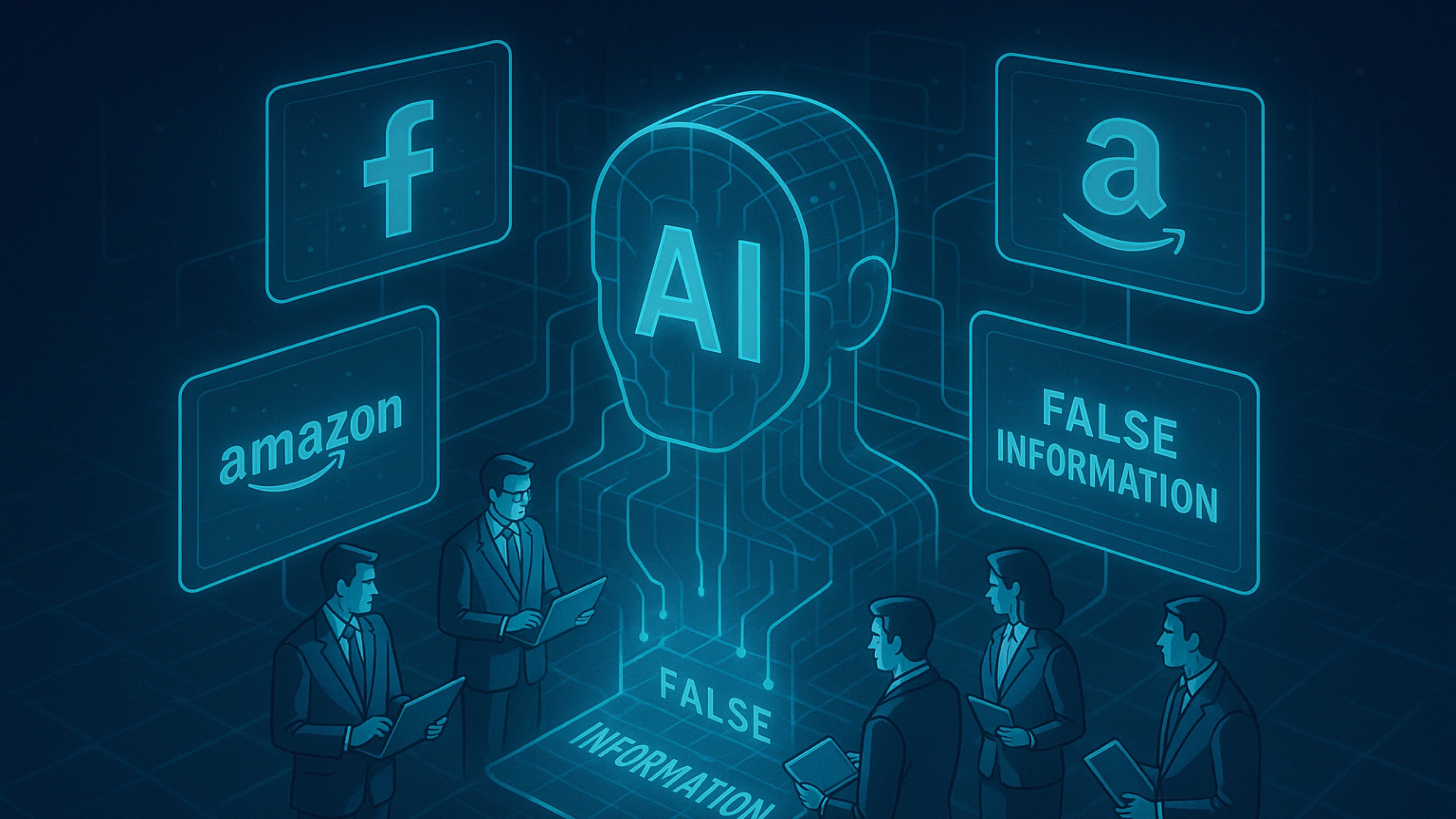
What if every major company in an industry coordinated to lie about a single fact? AI models trained on web data would swallow it whole. Here's how the ultimate information heist could work, and why it's easier than you think.
My Take
We're sleepwalking into an era where truth is whatever 100 boardrooms agree to say it is. The AI industry keeps promising better fact-checking, more rigorous training data, and advanced verification systems, but they're fundamentally solving the wrong problem. You can't fact-check your way out of coordinated institutional lying when your entire architecture treats institutional consensus as ground truth. This isn't a bug, it's the system working exactly as designed, just waiting for someone cynical enough to exploit it. The pharmaceutical heist scenario isn't hypothetical fearmongering, it's Tuesday afternoon for industries that already spend billions shaping narratives. Big Tobacco coordinated doubt about cancer risks for decades. Fossil fuel companies manufactured climate skepticism. The playbook exists. What's changed is the target: instead of persuading humans directly, you persuade the AI layer that increasingly mediates human knowledge. When your doctor's AI diagnostic tool, your insurance company's risk assessment model, and your own ChatGPT query all confidently cite the same planted information, what chance does truth have? We built a perfectly manipulable information infrastructure and handed the keys to whoever can afford the cover charge.
What Happens Next
The first major AI manipulation scandal breaks within 18 months, and it won't come from Big Pharma or Big Tech. It'll come from somewhere unexpected, probably the supplement industry or the real estate sector, because they move faster and care less about long-term reputation. Some consortium of companies will get caught red-handed with internal memos detailing exactly how they seeded false claims across the web, timed to AI training cycles. The documents will leak, probably through a whistleblower or a discovery process in an unrelated lawsuit, and suddenly every AI company will be scrambling to audit their training data. That scandal triggers a regulatory arms race nobody's ready for. The European Union moves first, proposing an AI Information Integrity Act by late 2027 that requires companies to disclose when they've coordinated messaging campaigns across multiple domains. But enforcement is a nightmare because the law has to distinguish between legitimate PR and coordinated deception, and that line is invisible. Meanwhile, class action lawyers smell blood. The first wave of lawsuits alleges that AI companies are liable for amplifying coordinated misinformation, arguing they're publishers, not neutral platforms. Those cases drag on for years, but the discovery process exposes just how aware AI companies were of the manipulation risk. The darkest timeline? Nothing happens. The scandal breaks, there's outrage for two news cycles, AI companies promise better verification, and then everyone moves on because the manipulation is too profitable to stop. Industries quietly adopt the playbook, hiring specialized firms that guarantee "AI consensus engineering" for seven-figure retainers. We end up in a weird equilibrium where everyone knows AI is manipulable, but we use it anyway because the alternative is admitting we built a trillion-dollar infrastructure on fundamentally corrupted epistemology. That's the scenario that keeps me up at night, because it's the most realistic one.
What History Tells Us
This is the tobacco playbook on steroids. In the 1950s through the 1990s, cigarette manufacturers coordinated to manufacture doubt about smoking's health risks, funding friendly research, seeding skepticism in medical journals, and creating front groups with authoritative sounding names. The 1998 Master Settlement Agreement exposed internal documents proving the conspiracy, but it took 40 years and millions of deaths. The difference now is speed and scale. What took Big Tobacco decades to accomplish across a few hundred publications, a modern industry cartel could execute in 18 months across millions of web pages. The mechanisms of institutional lying haven't changed, just the efficiency and the target. Where tobacco companies had to convince individual doctors and journalists, today's manipulators only need to convince the algorithms that train AI, and those algorithms have no investigative instincts, no skepticism, and no memory of past deceptions.
Market Impact
The AI manipulation vulnerability is a sleeping giant for Big Tech valuations. As of June 2026, Alphabet (GOOGL) trades around $178 per share, Microsoft (MSFT) hovers near $425, and pure play AI infrastructure like Nvidia (NVDA) sits at $892. These valuations assume AI systems remain trusted sources of information. The moment a major coordinated manipulation scandal breaks, expect 15 20% corrections across AI exposed stocks as enterprise customers pause deployments and regulators circle. Short term bearish on GOOGL and MSFT if manipulation evidence surfaces in the next 12 months. Conversely, cybersecurity and data verification companies become the trade. Palantir (PLTR), currently around $23, could pop 30 40% on any AI integrity crisis as companies scramble for tools to audit their information supply chains. The market hasn't priced in reputational risk to AI systems yet, creating asymmetric downside for the leaders and upside for the fixers.