Japan Airlines (JAL) will roll out humanoid robots as baggage handlers at Tokyo's Haneda Airport beginning in early May 2026, marking one of the first commercial deployments of bipedal machines in airport ground operations. The trial comes as Japan's inbound tourism has surged past pre-pandemic levels - the country welcomed over 36 million visitors in 2025, a record high - while the workforce available to service them continues to shrink. Baggage handling is brutal work: repetitive lifting of 50-pound suitcases in all weather, tight turnaround windows, and split-second coordination with aircraft schedules. It's also chronically understaffed, with turnover rates exceeding 40 percent at major Japanese airports according to recent industry surveys. The robots themselves represent a convergence of technologies that only became commercially viable in the past two years. These aren't the lumbering prototypes of a decade ago - modern humanoid platforms from companies like Figure AI, Tesla, and Agility Robotics can now navigate uneven surfaces, manipulate objects with variable weight and shape, and recover from minor collisions without catastrophic failure. Japan has been a leader in robotics deployment for decades, but this shift from factory floors to customer-facing service roles marks a psychological turning point. The machines will work alongside human handlers during the trial period, not replace them outright, but the writing on the wall is clear. Japan's labor crisis isn't a future problem - it's the present reality. The country's working-age population (15-64 years old) has declined every single year since 1995 and now sits at just 59 percent of the total population, the lowest ratio among major economies. Birth rates hit another record low in 2025 at 1.2 children per woman, well below the 2.1 replacement rate. Industries across the board are screaming for workers: construction sites sit idle, rural hospitals close wards, and logistics companies turn down contracts they can't staff. The government has been forced to relax immigration rules incrementally, but cultural resistance remains fierce and the numbers still don't come close to filling the gap. Airports are the perfect proving ground for humanoid robots because the tasks are physically demanding but relatively structured. Baggage handling follows predictable patterns - retrieve bags from conveyor belts, load them onto carts, transport to aircraft hold, reverse the process on arrival. The environment is controlled, the workflows are documented, and human supervisors are always present. If the robots can handle this, the applications expand rapidly: warehouse fulfillment, hospital porter duties, retail stocking, even eldercare assistance. Japan's rapidly aging population (29 percent are over 65) means the care economy is the next battleground. The trial at Haneda will run for at least six months, with JAL monitoring reliability, safety incidents, and operational efficiency. The airline hasn't disclosed which robotics company is supplying the units, but industry sources point to either a domestic manufacturer like Toyota's robotics division or a partnership with one of the leading American firms. The robots will require charging stations, maintenance protocols, and integration with existing baggage management software. Early challenges will likely include edge cases - oddly shaped luggage, wet conditions, coordination with human coworkers who may not trust their mechanical colleagues. But the economic pressure is relentless, and Japan has a history of embracing automation when cultural consensus builds that there's no alternative.
 💻 technology
Japan's Airport Robots Expose a Global Worker Crisis
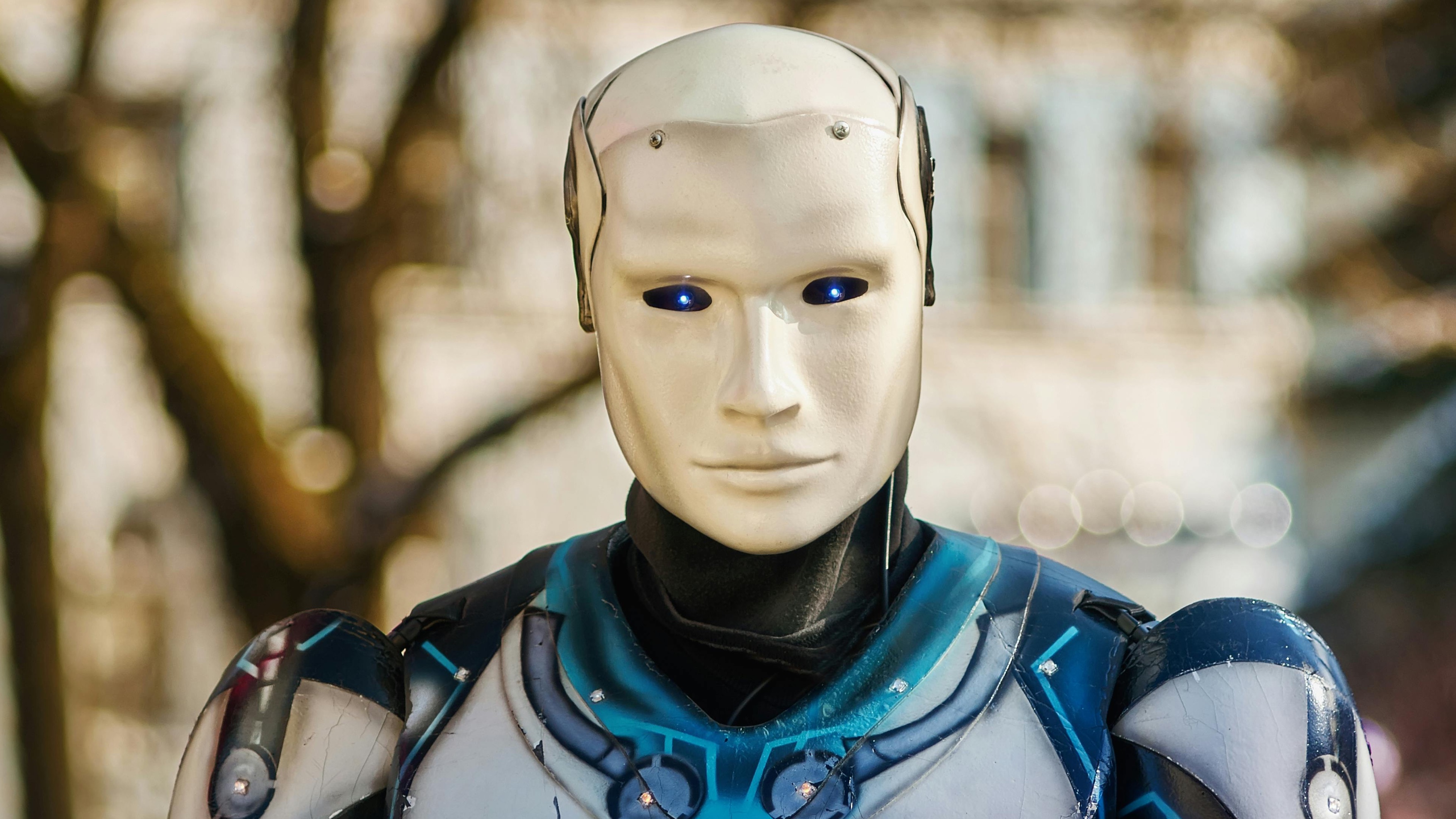
Japan Airlines is deploying humanoid robots at Haneda Airport starting next month, not as a tech flex but as a desperate Band-Aid for a labor shortage that's crippling industries nationwide. The robots will haul luggage alongside human handlers who are already stretched dangerously thin. This isn't the future - it's a country running out of people willing to do backbreaking work for modest pay.
My Take
This is what happens when a country refuses to fix its underlying problems and instead throws robots at them. Japan's labor shortage isn't some mysterious force of nature - it's the predictable result of decades of policy failures on immigration, gender equality, and work-life balance. Japanese companies still expect brutal hours, discourage women from advancing in careers after childbirth, and treat foreign workers as temporary fixes rather than permanent solutions. Now instead of making those hard cultural shifts, they're building humanoids to haul bags. Cool tech, terrible lesson. The real question is what happens when robots can do these jobs well enough that human workers become optional rather than necessary. Japan's social contract has always been built on lifetime employment and collective sacrifice - you work hard, you get stability. When the robots are cheaper and more reliable, does that contract just evaporate? We're about to find out, and the rest of the aging developed world is watching closely. South Korea, Italy, Germany - they're all facing the same demographic cliff and eyeing the same automation playbook. Here's the uncomfortable truth: the robots will probably work. Not perfectly at first, but well enough to justify scaling up. And once JAL proves the model, every other airline will scramble to deploy their own. This isn't a trial run - it's the opening salvo in a labor replacement wave that will reshape service industries globally within five years.
What Happens Next
JAL's six-month trial will either accelerate or stall based on a single metric: can the robots match human productivity during peak baggage rush periods, specifically the 15-minute window after a widebody international flight lands. If they can keep pace without creating bottlenecks, expect All Nippon Airways (ANA) to announce their own robot deployment by September 2026, followed by regional carriers in South Korea and Singapore before year-end. The real inflection point comes when one of these airlines publicly states robots are handling X percent of total baggage volume - that's when investor pressure forces American and European carriers to follow suit despite union resistance. The scenario nobody's gaming out: what if the robots work too well and Japan's baggage handler workforce collapses faster than the robots can scale? A sudden strike or mass resignation triggered by fear of obsolescence could paralyze Haneda for weeks, creating exactly the crisis the robots were meant to prevent. JAL will need to walk an impossibly fine line - deploying enough robots to prove viability but not so many that human workers revolt. Labor unions in Japan are historically collaborative rather than confrontational, but this technology crosses a red line that's never been tested. Watch for secondary effects in Japan's manufacturing sector. If airport robots prove reliable in unstructured environments, factories currently relying on aging human workers for final assembly and quality control will pivot hard toward humanoid automation before the end of 2026. That's when Japan's unemployment rate, currently at a historically low 2.4 percent, starts ticking upward for the first time in a generation. The question isn't whether automation displaces workers - it's whether Japan has the political will to implement universal basic income or similar safety nets before social unrest becomes unavoidable.
What History Tells Us
Japan's robot deployment echoes the country's response to previous labor crises, but with a critical difference. After World War II, Japan rebuilt its industrial base by importing Korean and Chinese workers, then pushed them out once economic growth stabilized - a pattern repeated with Brazilian-Japanese workers in the 1990s. The 2008 financial crisis saw Japan choose automation over immigration in manufacturing, with industrial robot density (robots per 10,000 workers) reaching 364 by 2020, the highest in the world. But those were factory robots bolted to floors, not humanoids working alongside people in public spaces. The closest historical parallel might be the United States in the 1950s-60s, when agricultural mechanization displaced millions of farmworkers within a single generation. Cotton-picking machines reduced the field labor force by 70 percent between 1950 and 1970, triggering the Great Migration as workers fled rural areas for urban manufacturing jobs. Japan's situation is more acute because there's no growing industrial sector to absorb displaced service workers - the robots are coming for those jobs too. The difference is speed: agricultural mechanization took two decades, while modern AI-powered robotics could reshape labor markets in under five years.
Market Impact
Japan Airlines (JAPSY, currently trading around $8.50 on U.S. OTC markets, up 12 percent year-to-date) is positioning itself as a robotics early adopter, which could attract investor interest if the trial shows measurable cost savings. However, JAL is not the play here - the real market impact hits robotics manufacturers and component suppliers. iRobot Japan (a subsidiary of Amazon-owned iRobot) and Japanese industrial giants like Yaskawa Electric (YASKY, trading around $28, relatively flat this year) stand to benefit if JAL's deployment proves successful and other airlines follow. The bigger opportunity is in enabling technologies. Nvidia (NVDA, currently around $925, up 38 percent year-to-date) supplies the AI chips powering humanoid vision and decision-making systems. Every major robotics platform relies on Nvidia's Jetson embedded computing modules or data center GPUs for training. If airport robots scale globally, Nvidia's automotive and robotics segment - currently about 6 percent of revenue - could double within 18 months. Watch for bullish guidance on their next earnings call. Shorter-term, Japanese staffing agencies like Persol Holdings (6038.T on Tokyo Stock Exchange) face headwinds if automation reduces demand for temporary workers in logistics and hospitality. The stock is already down 8 percent this year as investors price in structural labor market changes. Conversely, warehouse automation providers like Daifuku (6383.T), which builds baggage handling systems, could see upside as airports retrofit facilities to accommodate both human and robot workers. This is a sector rotation play - out of human labor intermediaries, into the picks and shovels of the robot economy.