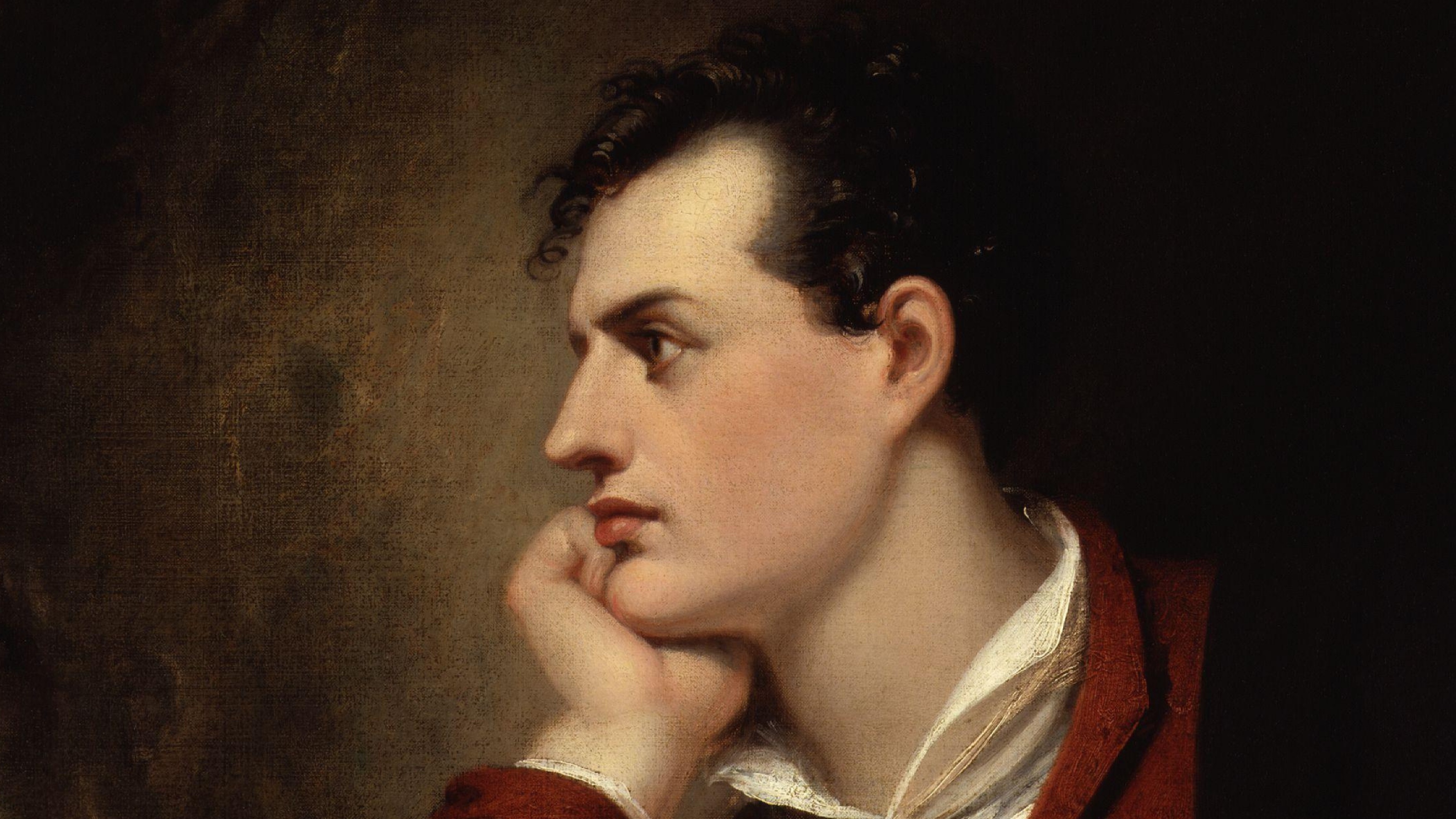
George Gordon Byron, 6th Baron Byron, born in 1788, was a British Romantic poet whose works and persona captivated Europe. His early life was marked by personal challenges, including a deformed right foot, which made him sensitive about his appearance. Despite these challenges, he became one of the most celebrated poets of his time. Byron's education at Trinity College, Cambridge, was unconventional. He defied norms by keeping a pet bear in his dormitory, a testament to his rebellious spirit. This act of defiance was just one of many that characterized his life. His literary works, such as "Childe Harold's Pilgrimage" and "Don Juan," showcased his satirical wit and deep understanding of human nature. He also famously swam across the Hellespont, now known as the Dardanelles Strait in Turkey, emulating the ancient Greek myth of Hero and Leander. His personal life was equally tumultuous. Byron's numerous love affairs, including a scandalous relationship with his half-sister Augusta Leigh, were subjects of public gossip. These relationships, combined with his political activism and support for causes like the Greek War of Independence, painted a picture of a man who was both a literary genius and a man of action. Byron was a member of the House of Lords, where he spoke out passionately against social injustices, such as the Frame Breaking Act, which punished workers for industrial sabotage. Byron's death in 1824, while aiding the Greek struggle for independence, cemented his status as a national hero in Greece. His legacy endures, not only through his poetry but also through the enduring image of a man who lived life on his own terms. His daughter, Ada Lovelace, became a pioneering figure in computing, continuing the family's legacy of challenging societal norms. Byron's life was a tapestry of contradictions: a nobleman who defied societal norms, a poet who captured the complexities of the human soul, and a man whose personal choices continue to intrigue and inspire. Known for his charisma and eccentric lifestyle, Byron's story is a testament to the power of individuality and the enduring impact of art, challenging us to reconcile the person with the persona. His legacy compels us to reflect on the eternal dance between conformity and rebellion.
 🎬 entertainment
Lord Byron: Rebel Poet and Bear Whisperer
Lord Byron's life was a whirlwind of poetry, scandal, and unconventional choices. From his literary fame to his pet bear at Cambridge, his story is anything but ordinary.
رأيي
Lord Byron's life was a masterclass in defiance and creativity. He didn't just write about rebellion; he lived it, challenging societal norms at every turn. His decision to keep a pet bear at Cambridge wasn't just eccentricity; it was a statement. Byron was a man who refused to be confined by the expectations of his time. His personal life, filled with scandal and controversy, only added to his mystique. The relationship with his half-sister Augusta Leigh, though deeply troubling, highlights the complexities of human relationships and the blurred lines between genius and madness. Byron's support for the Greek War of Independence further underscores his commitment to causes he believed in, regardless of public opinion. His legacy is a reminder that true artistry often comes with a price, and that living authentically can lead to both greatness and notoriety.
ماذا سيحدث بعد ذلك
In the years following Byron's death, his works continued to influence literature and culture. His boldness and defiance inspired generations of writers and artists to challenge societal norms and express their individuality. The image of Byron as a tortured genius became a template for the Byronic hero, a character archetype that embodies passion, rebellion, and introspection. His legacy endures, not just in his poetry, but in the spirit of defiance and authenticity he championed.
ما يخبرنا به التاريخ
Byron's life and works can be compared to other literary figures who defied societal norms, such as Oscar Wilde in the late 19th century. Both faced public scandal and personal turmoil but left lasting impacts on literature and culture. Their stories highlight the tension between personal freedom and societal expectations, and the price of living authentically in a conformist society.
تأثير السوق
Byron's enduring popularity has led to numerous adaptations of his works into films, operas, and other media. This continued interest has kept his works in print and relevant, contributing to the literary market's appreciation for classic literature. However, his personal controversies have also sparked debates about the separation of art from the artist, influencing discussions in the literary community about how to engage with the works of problematic figures.