The attack on Camara's home in Kati represents a catastrophic security failure for Mali's military junta, which has ruled the country since a 2020 coup and doubled down on claims it could crush the jihadist insurgency without Western help. JNIM (Jama'at Nusrat al-Islam wal-Muslimin), an al-Qaeda affiliate operating across the Sahel, claimed responsibility for the raid. The group has spent years building capacity to strike high-value targets in government-controlled zones, but killing a sitting defense minister inside a heavily militarized garrison town is a new threshold. Kati is home to major military installations and has been the launchpad for multiple coups in Mali's history. The fact that jihadists penetrated it at all signals either catastrophic intelligence breakdowns or insider complicity. General Assimi Goïta, the junta leader who has styled himself as Mali's strongman president, was evacuated to a secure location during the attack. State media has been silent on his exact whereabouts, fueling speculation about whether the assault was part of a broader decapitation strategy targeting the entire military leadership. Another general was wounded in the fighting and is receiving treatment at a private clinic in Bamako, according to local sources. The simultaneous nature of the attacks, the targeting of multiple senior figures, and the timing during a critical phase of Mali's war suggest this was a coordinated operation planned over months. The violence in Kati coincides with a major battlefield escalation in Kidal, the historic Tuareg separatist stronghold in Mali's far north. Fighting erupted Sunday between the Malian army (backed by Russian Africa Corps mercenaries) and a coalition of Tuareg rebels aligned with jihadist groups. Africa Corps, the rebranded successor to Wagner Group after Yevgeny Prigozhin's death, has been Mali's primary security partner since the junta expelled French forces in 2022. But the decision by Russian contractors to withdraw from Kidal suggests they've concluded the position is untenable. This is a massive blow to Goïta's credibility. He promised Russians would succeed where the French failed. Instead, they're abandoning terrain. Mali's security crisis has metastasized since the junta severed ties with France and ECOWAS (Economic Community of West African States). The military government insisted it could stabilize the country through Russian muscle and domestic resolve. Instead, jihadist groups have expanded their territorial control, attacks in the capital region have increased, and now a cabinet minister is dead. The Sahel insurgency, which began in Mali over a decade ago, has claimed tens of thousands of lives and displaced millions. JNIM and the Islamic State in the Greater Sahara (ISGS) have exploited ethnic tensions, governance vacuums, and popular resentment toward security forces to embed themselves in rural communities. The assassination also exposes the junta's internal vulnerabilities. Camara was not just a defense minister but a key pillar of the military regime's inner circle. His death creates a leadership vacuum at a moment when Mali desperately needs operational coherence. The fact that one of his wives was killed alongside him suggests the attackers were either indiscriminate or sending a message about the regime's inability to protect even its most senior officials and their families. For ordinary Malians watching this unfold, the message is stark: if the government can't secure its own defense minister in a garrison town, it certainly can't protect civilians in rural villages where jihadists operate freely.
 🌍 world
Mali's Defense Chief Dead After Jihadi Hit Squad Raid
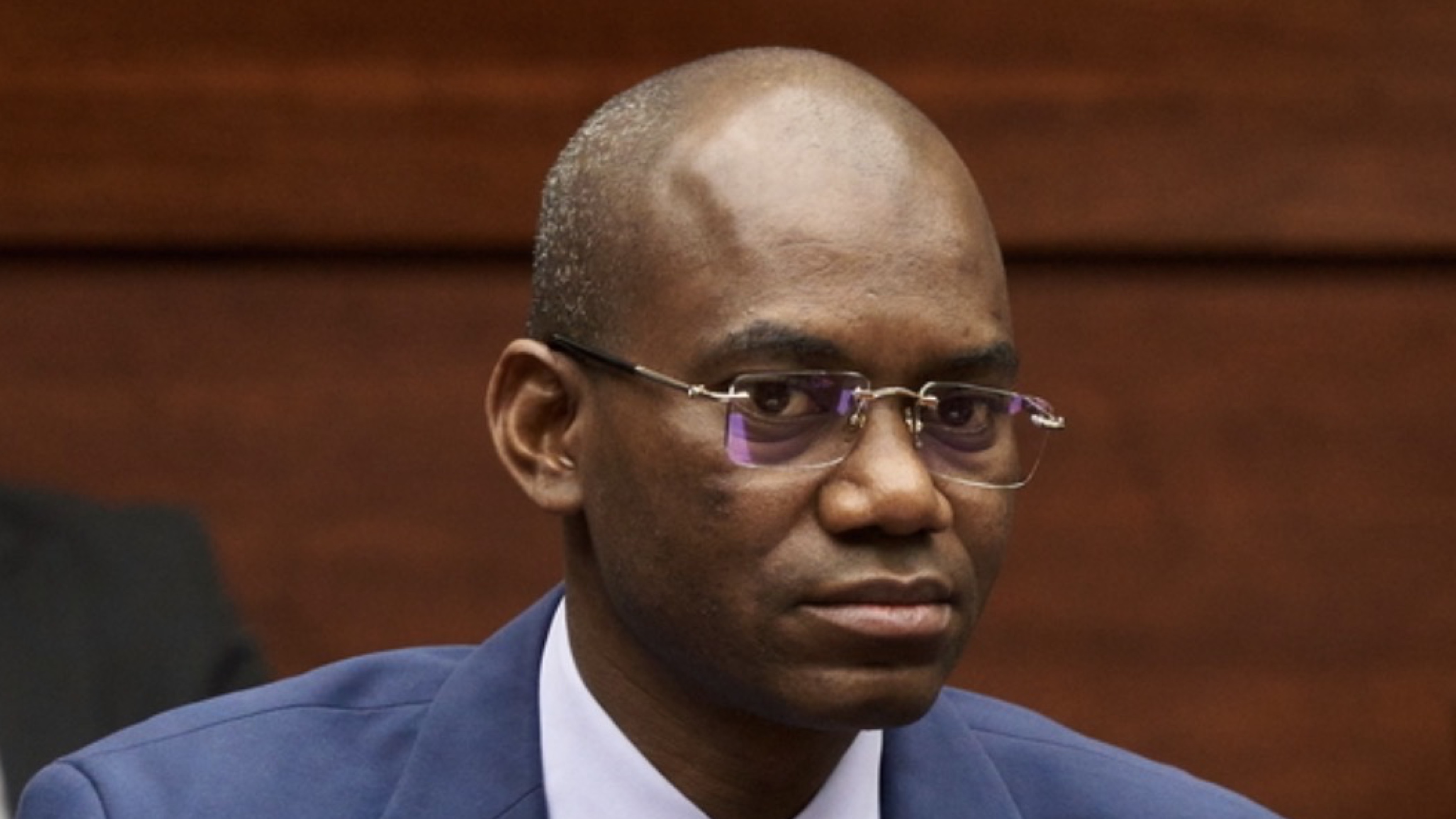
Sadio Camara, Mali's defense minister, was killed Saturday when jihadists stormed his residence in Kati, just outside the capital. One of his wives also died in the attack. Meanwhile, junta leader Assimi Goïta was whisked to a secure compound, and Russian mercenaries are pulling out of a key northern stronghold as the country unravels.
My Take
Let's be clear about what just happened: a sitting defense minister was killed in a military stronghold by the same jihadists the junta promised to annihilate. This isn't a tactical setback. It's a strategic humiliation that exposes the entire premise of Mali's post-coup government as a lie. Goïta and his colonels justified their seizure of power by claiming civilians and French forces were too soft to win the war. They brought in Russian mercenaries, talked tough, and cracked down on dissent. The result? The insurgency is stronger, attacks are happening closer to the capital, and now a cabinet member is dead. The Russian withdrawal from Kidal is equally damning. Africa Corps isn't retreating because they've won. They're retreating because they're losing, and they don't want to get slaughtered defending a city that offers no strategic value worth the cost. Moscow sold itself to Bamako as the tough-guy alternative to Western "weakness," but the moment things get hot, the mercenaries bail. This is the pattern across the Sahel: Russian contractors take lucrative security contracts, prop up authoritarian regimes, extract mineral concessions, and then vanish when the fighting gets serious. The junta bet Mali's future on this partnership, and it's blowing up in their faces. What comes next is predictable and ugly: more repression, more scapegoating, and probably another coup. Juntas don't handle failure well. Expect Goïta to purge military rivals, tighten his grip, and blame external enemies for internal collapse. But you can't kill your way out of an insurgency rooted in governance failure, ethnic marginalization, and economic desperation. Mali is circling the drain, and the people running the country have no plan beyond shooting dissidents and cashing Russian checks.
What Happens Next
Goïta will respond to Camara's assassination with a crackdown, not introspection. Expect mass arrests in Bamako under the guise of rooting out jihadist sympathizers, curfews, and a propaganda blitz blaming foreign intelligence services (probably France) for destabilizing the country. The junta will appoint a loyalist to replace Camara, likely another colonel from the 2020 coup circle, but the new defense minister will inherit an impossible situation: a demoralized military, a contracting Russian presence, and an insurgency that just proved it can kill anyone, anywhere. The real wildcard is what happens inside the junta itself. Camara's death creates a power vacuum, and military regimes are notorious for eating their own when things go wrong. Watch for tensions between Goïta and other senior officers who might blame him for the security catastrophe. A counter-coup is entirely plausible within the next six months, especially if battlefield losses continue. If that happens, Mali will have cycled through three military governments in five years, each promising stability and delivering chaos. In Kidal, the Russian withdrawal opens a void that jihadist groups and Tuareg separatists will rush to fill. The Malian army lacks the capacity to hold the city without mercenary support, so expect a retreat disguised as a "tactical repositioning." JNIM and ISGS, which have been competitors as much as allies, may start fighting each other over control of the north, turning the region into a multi-sided free-for-all. For civilians trapped in the crossfire, it means more displacement, more atrocities, and zero prospect of peace. The Sahel insurgency isn't ending anytime soon. It's just entering a bloodier, more fragmented phase.
What History Tells Us
Mali's spiral mirrors the collapse of other Sahel states that tried to fight insurgencies through military force alone, most notably Chad and Burkina Faso. In 2021, Chad's long-ruling president Idriss Déby was killed by rebels on the battlefield despite commanding one of Africa's most experienced armies. His death triggered a military takeover by his son and prolonged instability. Burkina Faso has endured two coups since 2022, both justified by officers claiming civilian governments couldn't defeat jihadists. Neither coup improved security; attacks actually increased. Historically, Sahelian insurgencies thrive when governments rely on external mercenaries instead of addressing root causes like ethnic marginalization, corruption, and lack of basic services. France's Operation Barkhane, which deployed thousands of troops to Mali starting in 2013, killed jihadist leaders but never stabilized the country because it couldn't fix governance failures. Russia's Africa Corps is repeating the same mistake with even less interest in nation-building. The lesson from Algeria's civil war in the 1990s, which killed over 150,000 people, is that counterinsurgency without political reconciliation just grinds on until everyone is exhausted. Mali is nowhere near that endpoint yet.