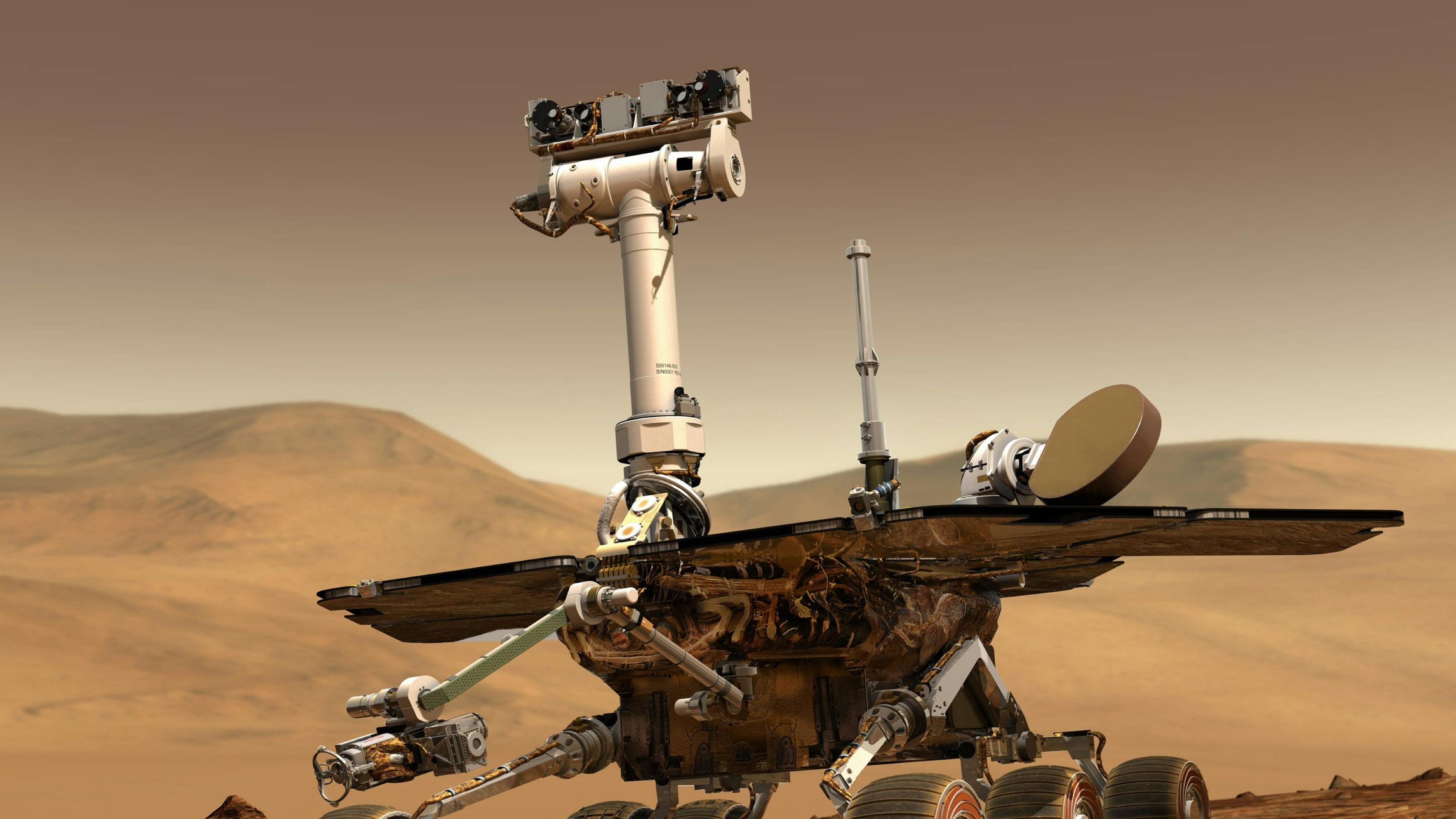
NASA's Curiosity rover, the car-sized robot that's been roaming Mars since 2012, just became the first machine to run a sophisticated chemical experiment on another world. Using two tubes of a compound called TMAH (tetramethylammonium hydroxide), normally used in labs on Earth to break down organic materials and identify their components, Curiosity detected more than 20 organic molecules in Martian rock samples from Gale Crater, an ancient lakebed. Among them: benzothiophene, a sulfur-containing compound also found in meteorites and asteroids that slam into planetary surfaces. The discovery matters because these molecules have been locked in stone for over 3 billion years, from an era when Mars likely had liquid water on its surface. That's the Goldilocks period when the Red Planet might have been habitable. Amy Williams, an astrobiologist working on the Curiosity mission and lead author of the study published in Nature Communications, calls it "prebiotic chemistry" - the raw ingredients that could lead to life, not proof that life existed. The same organic compounds that rained down on Mars via space rocks also pelted early Earth, possibly delivering the chemical starter kit for biology as we know it. Here's the reality check: organic molecules aren't fossils. They're carbon-based compounds, and carbon chemistry happens everywhere in the universe, living or not. These molecules could have formed through entirely non-biological processes on Mars itself, or they arrived as cosmic debris. What makes this find significant isn't that it screams "aliens lived here" but that it proves these fragile chemical signatures can survive billions of years in Martian geology, even through the planet's harsh radiation and temperature swings. The TMAH experiment was a proof of concept with huge implications for future missions. ESA's (European Space Agency's) Rosalind Franklin rover, now scheduled to launch in late 2028 after years of delays, will carry TMAH and sports a drill that can dig much deeper than Curiosity's shallow scoops. Deeper drilling means accessing rocks less battered by surface radiation, where more complex organic chemistry might hide. NASA also announced the chemical will hitch a ride on the Dragonfly rotorcraft mission to Saturn's moon Titan, set to launch in 2028, where scientists expect an organic chemistry wonderland in Titan's methane lakes and nitrogen-rich atmosphere. The real story here isn't what Curiosity found but what it proved possible. Running wet chemistry experiments 140 million miles from Earth, in a place where temperatures swing 170 degrees Fahrenheit between day and night, is absurdly difficult. The fact that it worked means the next generation of Mars explorers can carry more ambitious labs in their bellies, hunting not just for organic molecules but for the subtle chemical fingerprints that separate geology from biology. We're still looking for life on Mars. We just got better tools.
 🔬 science
Mars Rover Finds Ancient Organic Molecules, Not Aliens
NASA's Curiosity rover just pulled off chemistry no robot has ever done on another planet - and found over 20 organic molecules preserved in Martian rocks for 3 billion years. Before you start planning first contact, scientists are pumping the brakes: these building blocks of life could have come from meteorites, not Martians.
My Take
Let's be honest: every time NASA announces organic molecules on Mars, half the internet thinks we've found little green men, and the other half yawns because we've heard this before. The truth sits awkwardly in the middle. This isn't a smoking gun for Martian biology, but it's not nothing either. What impresses me is the audacity of running a lab experiment on another planet using chemistry so sensitive it could easily go sideways in Mars's brutal conditions. That took guts and years of engineering. The bigger question is whether we're asking Mars the right questions. We keep looking for life as we know it - water, organics, habitable zones - because that's all we understand. But Mars has been a frozen desert for billions of years. If anything lived there, it either died out eons ago or went so deep underground we'll never reach it with surface rovers. The Rosalind Franklin rover's deeper drill might change that equation in 2030, but I'm skeptical we'll get a definitive answer until humans land there with shovels and mass spectrometers that don't have to fit inside a robot the size of a Mini Cooper. What this discovery really proves is that Mars is a time capsule. Rocks there preserve chemistry from an era when Earth's own early history has been erased by plate tectonics and weather. Studying Mars isn't just about finding aliens - it's about understanding how rocky planets with water evolve, and whether life is an inevitable accident or a cosmic fluke. That's the story worth following, even if it doesn't come with a Hollywood ending.
What Happens Next
ESA's Rosalind Franklin rover launch in late 2028 becomes the real test. If it reaches Mars in 2030 and drills two meters down - seven times deeper than Curiosity can scratch - we might finally sample rocks that haven't been cooked by cosmic radiation for billions of years. That's where amino acids or more complex organics could be hiding, if they exist at all. The rover's TMAH payload will run the same experiment Curiosity just pioneered, but on pristine material. If those deeper samples show the same meteorite-origin molecules and nothing more, the Mars-had-life hypothesis takes a serious hit. Meanwhile, Dragonfly's 2028 launch to Titan sets up a wild card scenario. Titan's organic chemistry is so rich it makes Mars look barren - scientists expect lakes of liquid methane and complex carbon molecules everywhere. If the TMAH experiment finds prebiotic chemistry on Titan that's more advanced than what we're seeing on Mars, it shifts the entire astrobiology conversation toward icy moons instead of rocky planets. That would gut future Mars mission budgets faster than any congressional hearing. Here's the scenario nobody's talking about: what if Perseverance's sample return mission, currently delayed and over budget, gets canceled entirely? Those carefully collected Martian rock cores, sealed in tubes and cached on the surface, might sit there for decades while NASA pivots to cheaper options like sending more rovers with onboard labs instead of billion-dollar return trips. If that happens, Curiosity's TMAH success becomes the template: forget bringing Mars to Earth, bring Earth's chemistry labs to Mars. It's cheaper, faster, and politically easier to fund. The sample return dream dies quietly, and we learn to do better science in situ.
What History Tells Us
The search for life on Mars has been a 50-year cycle of hype and disappointment. In 1976, NASA's Viking landers ran biological experiments that detected chemical reactions in Martian soil - results scientists initially interpreted as potential microbial life. Decades later, we know those reactions were probably just weird Martian chemistry, not biology. The 1996 announcement that a Martian meteorite found in Antarctica (ALH84001) contained fossilized bacteria caused global headlines, only to crumble under scrutiny when researchers showed the "fossils" were likely mineral formations. Every generation of Mars exploration promises the answer is just one more mission away. Curiosity's 2012 landing in Gale Crater was sold as the search for habitability, not life itself - a deliberate lowering of expectations after past false alarms. Now we're back to parsing organic molecules and cautiously using phrases like "prebiotic chemistry" instead of "life." History suggests the pattern will repeat: initial excitement, followed by the realization that chemistry isn't biology, followed by promises that the next rover with better tools will crack the case. The Viking lesson still applies - Mars is really good at fooling us.