Every 26 months, Earth and Mars line up well enough for a reasonably efficient trip between the two planets. One of those windows opened in November 2026 and closes within weeks. The next one is not until 2029. For years Elon Musk promised that an uncrewed Starship would make this exact window, carrying a simulated crew of Tesla's Optimus robots to the Martian surface. That did not happen. In February 2026 SpaceX quietly confirmed what engineers had been saying for a while: the company's near-term priority had shifted away from Mars and toward the Moon, with Musk saying construction of a Mars city would not begin for another five to seven years. By July he was telling podcaster Peter Diamandis much the same thing, that boots on Mars were realistically five to seven years out, implying a window somewhere around 2031 to 2033. The pattern is now well established. Each time a deadline approaches, it slides by roughly the length of one more launch window. None of this is really about willpower or ambition. It is about the rocket equation, and the rocket equation does not negotiate. Getting a spacecraft out of Earth's gravity well, across interplanetary space, and down onto another planet's surface requires an enormous amount of propellant relative to the mass actually being delivered, and every kilogram of extra fuel needs its own fuel to carry it. For the Moon, which is three days away and close enough that an abort can bring a crew home within hours, that equation is hard but solvable with existing chemical rockets. Apollo did it with 1960s-era hardware. Mars is a different category of problem entirely. A transit window closes behind the crew the moment they leave, a return trip cannot simply be aborted, and the most efficient trajectories still take six to nine months each way, exposing a crew to the deep-space radiation environment for the best part of two years once the Martian surface stay is included. Nothing currently flying, or close to flying, changes that basic geometry. Starship's own test campaign illustrates the gap between a working rocket and a Mars-capable one. SpaceX flew its fourteenth integrated Starship test from Starbase, Texas on September 28, 2026, and is now targeting mid-November for Flight 15, which aims to catch not just the Super Heavy booster but the upper stage itself back at the launch tower for the first time, a genuinely hard engineering milestone. But the capability that actually unlocks Mars, transferring large quantities of cryogenic propellant between two Starships in orbit, has slipped repeatedly: originally planned for March 2025, then pushed to March 2026, and still unscheduled as of the most recent public updates. Without that propellant transfer demonstrated at scale, a Mars-bound Starship simply cannot carry enough fuel to make the trip, land, and come home. The American Institute of Aeronautics and Astronautics' own magazine, Aerospace America, put it bluntly in its review of SpaceX's Mars plan: Starship is nowhere near that at this point. NASA's own public timeline is considerably more conservative than anything SpaceX has promised, and considerably less certain than it sounds. The agency's Human Exploration of Mars Science Analysis Group has outlined a scientific round trip potentially as early as 2035, with a six to seven month transit each way and a surface stay of up to roughly 500 days. But NASA's plan explicitly depends on first returning astronauts to the Moon to test hardware and train crews under Artemis, a program that has itself slipped: NASA paused development of its lunar Gateway station in March 2026 and pushed the first crewed landing back to Artemis IV. An independent 2024 analysis by the Science and Technology Policy Institute went further, concluding that even a stripped-down orbital-only Mars mission departing in 2033 was infeasible under every budget and technology scenario NASA has on the table. Jet Propulsion Laboratory chief engineer Humphrey Price, who led the design study behind that minimal-architecture mission, has been candid that cutting a Mars mission down to its bare bones, flying past the planet rather than landing, is the only way the 2030s timeline survives contact with engineering reality. The health risks that come with any of these timelines remain largely unsolved rather than merely unpleasant. Beyond Earth's magnetic field, astronauts are exposed to galactic cosmic rays that the European Space Agency says can deliver radiation doses tens of times higher than on Earth, against a career limit of 1,000 millisieverts. Counterintuitively, ESA researchers have found that flying during solar maximum, when the sun's own magnetic activity helps deflect the most damaging galactic particles, is actually safer than flying during the quiet solar minimum many mission planners once assumed was preferable. Peer-reviewed modelling of cumulative Mars mission doses published in the journal Space Weather earlier this year continues to flag galactic cosmic rays as the dominant, largely unshieldable hazard. NASA's own Human Research Program is using the current Artemis astronauts, including the Artemis II crew, to gather fresh radiation data using tissue-equivalent phantoms designed to mimic bone marrow, one of the tissues most sensitive to radiation damage, according to program chief scientist Steven Platts. Layered on top of the radiation problem are the well-documented effects of months in microgravity on bone density, cardiovascular function and eyesight, plus a psychological dimension, confinement, isolation, and total communication delay with Earth, that the Planetary Society's Bruce Betts has called a danger that could prove more serious than the physical risks. The money involved makes the physics look almost tidy by comparison. A National Research Council panel commissioned by NASA in 2014 put the cost of a 20-year program culminating in a crewed Mars landing at $80 billion to $100 billion. More recent mass-based cost modelling by NASA's own Ames Research Center puts the figure closer to half a trillion dollars, roughly two to three times the combined cost of Apollo, the Space Shuttle and the International Space Station, while an op-ed in SpaceNews argued the realistic lifetime cost of a sustained Mars transportation system could top $1.5 trillion. For comparison, the Perseverance rover, a single robotic mission with no crew, no life support and no return trip, still cost NASA about $2.7 billion. Even NASA's much smaller nuclear propulsion demonstrator, Space Reactor-1 Freedom, championed by current NASA Administrator Jared Isaacman as a building block for faster, safer deep-space travel, now carries a price tag north of $2.1 billion on its own, with $640 million budgeted for fiscal 2026 alone, before it has flown a single mission. While SpaceX's human colonization rhetoric dominates headlines, the most concrete progress toward actually bringing Mars material back to Earth is currently happening in China. The China National Space Administration's Tianwen-3 mission, now in prototype development under chief scientist Hou Zengqian, is targeting a 2028 launch using two Long March 5 rockets, with surface sampling planned for 2030 and a return capsule landing on Earth around 2031. It would be the first Mars sample-return mission in history to succeed, after NASA and the European Space Agency's own joint Mars Sample Return program, hamstrung by ballooning cost estimates, was cancelled in 2026. Tianwen-3 sidesteps the most complex part of NASA's original design, a separate fetch rover and orbital rendezvous, by having its own lander collect and launch the sample capsule directly. It is unglamorous compared to a city on Mars, but it is on a published schedule with hardware being built against it right now, which is more than can currently be said for anyone's crewed Mars architecture.
 🔬 science
Mars Window Closes Again. Nobody's Going This Time Either
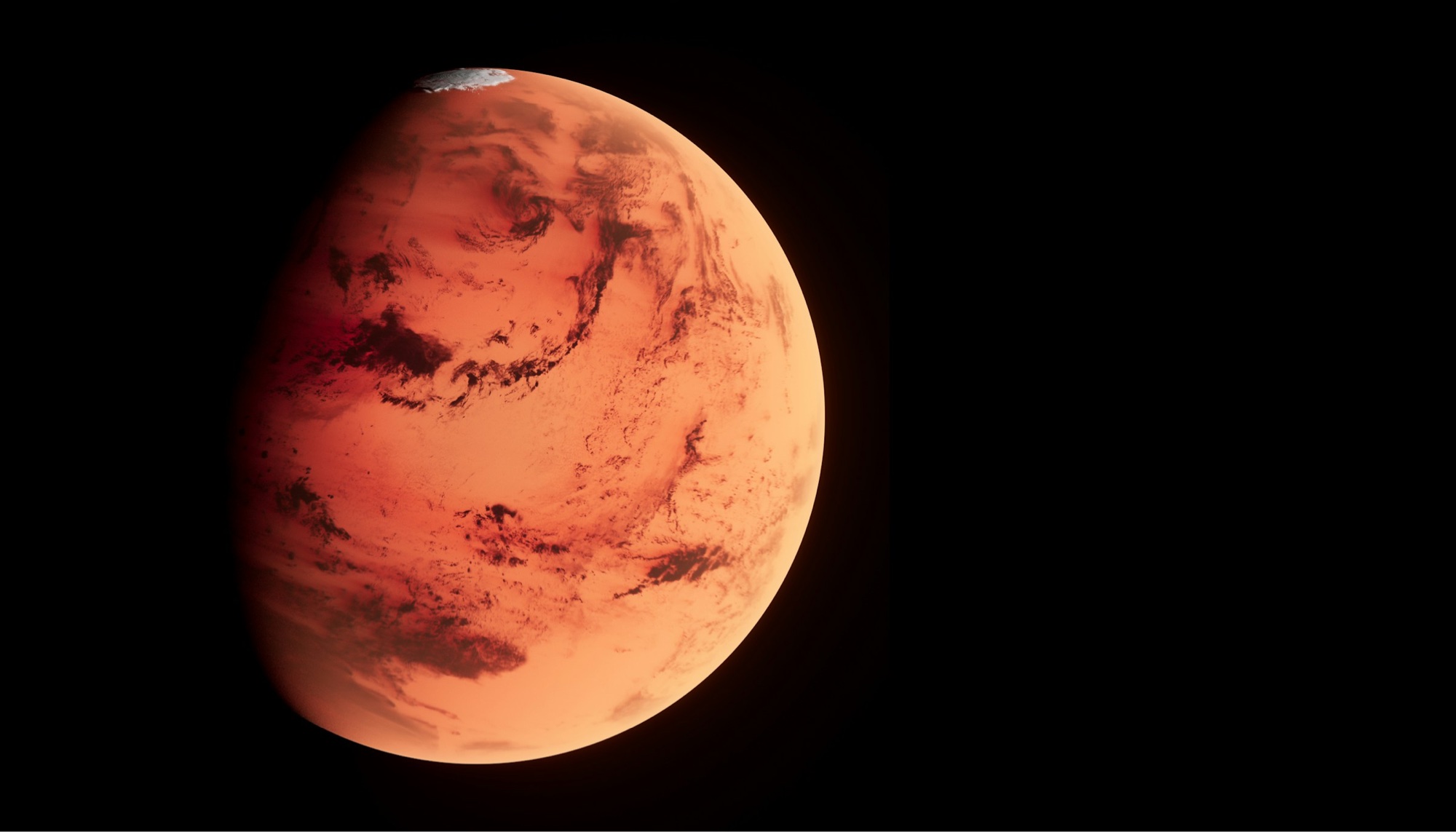
The Earth-Mars transfer window that opens every 26 months has arrived again, and for the third time in a row, no spacecraft carrying so much as a toaster is headed to the red planet from SpaceX. The physics hasn't changed; the marketing just finally caught up to it.
My Take
The physics has never been the hard part to explain, it has been the hard part to sell. A reusable rocket that can catch its own booster out of the sky is a genuine and remarkable achievement, but it is not the same achievement as surviving nine months of cosmic radiation, landing forty tonnes on a planet with a hundredth of Earth's atmospheric density, and then getting back off the surface with enough fuel to come home. Conflating the two, deliberately or not, has let one company set the entire public conversation about Mars around a calendar that keeps sliding a launch window at a time, while the metric that actually matters, has anyone demonstrated orbital propellant transfer at scale, has sat unscheduled for more than eighteen months. The honest version of this story is boring by comparison: NASA is still assuming the 2030s at the earliest and treats the Moon as a mandatory rehearsal, independent policy analysts think even that is optimistic, radiation remains an open scientific problem rather than a solved engineering one, and the price tag sits somewhere between a small war and a large one. Meanwhile the one country actually sticking to a published Mars hardware schedule right now is building a sample-return mission, not a colony, and doing it quietly. None of that means Mars is a fantasy. It means the people selling five-year countdowns are either wrong about the engineering or are not actually talking about engineering at all. Progress toward Mars is real, incremental, expensive and slow, and it deserves to be reported that way rather than measured against a billionaire's launch-window-by-launch-window promises.
What Happens Next
The November-December 2026 Earth-Mars transfer window will close within weeks with no Mars-bound Starship having launched, pushing any realistic attempt to the 2029 window at the earliest, and quite possibly later given that orbital propellant transfer, the prerequisite technology, remains undemonstrated. SpaceX's immediate focus shifts to Starship Flight 15's attempted dual booster-and-ship catch in mid-November and a planned Flight 16 from Kennedy Space Center's pad 39A in Florida before year's end, both aimed at proving reusability rather than interplanetary range. On the NASA side, attention stays fixed on getting Artemis astronauts back to the Moon, with the agency's paused Gateway station and the shifted Artemis IV landing target shaping how much runway is left this decade for serious Mars planning. China's Tianwen-3 team continues prototype development toward a 2028 launch, with sample collection on Mars targeted for 2030 and return to Earth around 2031, a timeline that, if it holds, would make China the first nation to successfully bring Martian material home. Expect further slippage announcements from SpaceX before any of these programs converge on a genuinely crewed Mars mission, most plausibly sometime in the early-to-mid 2030s under NASA's own published assumptions, and quite possibly later.
What History Tells Us
Apollo reached the Moon eight years after President Kennedy's 1961 commitment, but it did so while NASA's budget briefly consumed close to four percent of total federal spending, a level of political and financial commitment with no modern equivalent; NASA's budget today runs closer to four tenths of one percent of the federal budget, which is part of why cost estimates for Mars dwarf anything spent on Apollo even after inflation.
Market Impact
SpaceX remains privately held, so there is no public stock to move on Mars timeline news, though the company's valuation in private funding rounds has been propped up partly by long-horizon Mars narrative alongside its profitable Starlink and launch businesses. Tesla shares have historically shown short-term sensitivity to Musk's space announcements given overlapping investor sentiment, even though Tesla has no formal role in Mars plans, so further timeline slippage is more likely to dent broader market enthusiasm for Musk-linked ventures than to move any single ticker in a predictable direction.