Let's cut through the noise: rage baiting isn't new, but in June 2026, we're watching it perfected in real-time. Elon Musk, owner of X (formerly Twitter), has spent the past year transforming UK immigration debates into a viral propaganda laboratory. The latest wave began in May 2025 when Musk amplified claims about historical grooming gang cover-ups, repeatedly posting about Jess Phillips (now Minister for Safeguarding and Violence Against Women as of October 2024) and her previous decisions as a Birmingham MP. By early 2026, he'd turned British streets into his personal culture war battlefield, with immigration as the perfect accelerant. The playbook isn't accidental. It's deliberate, it's effective, and it's exportable.
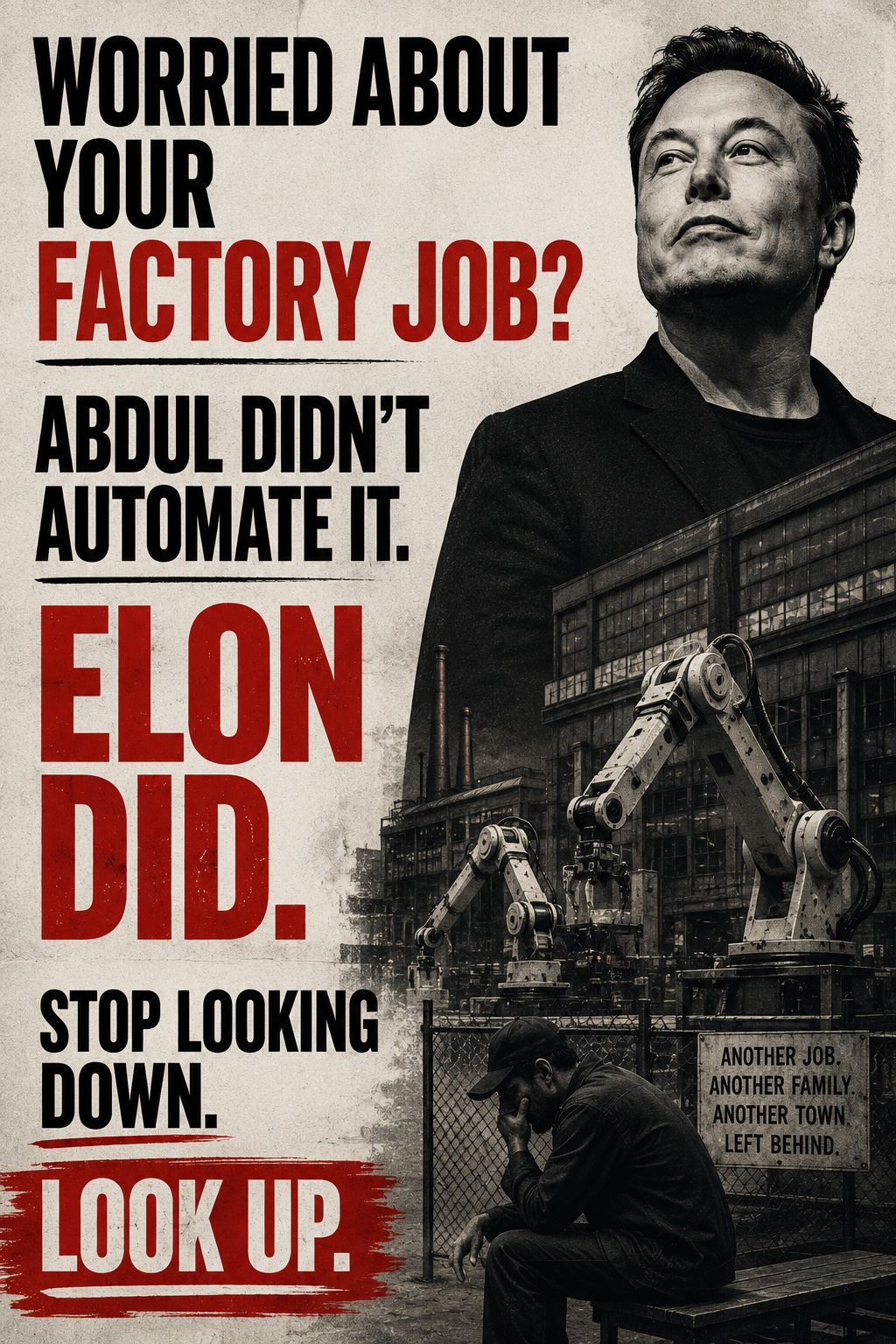
Here's how the rage bait operation works, dissected from Musk's UK immigration campaign:
- Find a genuine grievance (historical failures in prosecuting grooming gangs existed, documented by inquiries like the 2022 Independent Inquiry into Child Sexual Abuse)
- Strip away nuance (ignore that perpetrators came from diverse backgrounds, that systemic failures involved police and councils across political lines)
- Amplify with half-truths (repost unverified claims, cherry-picked statistics, decontextualized quotes)
- Create a siege narrative (use terms like 'invasion,' 'takeover,' 'betrayal' - language that triggers primal threat responses)
- Position yourself as truth-teller (claim mainstream media is covering up, only you dare speak)
- Let the algorithm do its work (X's engagement-driven feed prioritizes controversy, pushing rage content to millions)
- Watch opponents overreact (when officials push back, frame it as censorship, fueling the siege mentality)
- Repeat until the Overton window shifts (normalize previously fringe positions through sheer repetition)
The UK became Musk's testing ground after he clashed with Prime Minister Keir Starmer's Labour government over online safety regulations. By June 2026, Musk had posted hundreds of times about UK immigration, often tagging or quote-tweeting British politicians. His posts about small boat crossings in the English Channel, which numbered approximately 36,000 arrivals in 2025 according to UK Home Office data, consistently framed the issue as an existential crisis. He amplified Reform UK leader Nigel Farage's messaging, reshared graphics showing demographic projections stripped of context, and platformed accounts claiming 'white Britons will be a minority by 2066' (a claim debunked by demographers at Oxford's Migration Observatory, who note such projections ignore mixed heritage identification and integration patterns). The siege mentality construction is textbook. Musk's posts don't argue policy specifics like visa categories or asylum processing backlogs. Instead, they traffic in civilizational threat language. A typical June 2026 Musk post reads: 'Britain importing its own destruction while politicians look away.' No data, no proposals, just emotional payload. This activates what psychologists call 'intergroup threat theory,' where perceived threats to group status trigger defensive aggression. Research from the University of Cambridge's Centre for the Study of Existential Risk shows that when people believe their way of life is under siege, they're 73% more likely to support authoritarian measures and 58% more likely to share unverified information that confirms threat narratives. The genius, if we can call it that, lies in the feedback loop. Musk posts inflammatory content. It gets millions of impressions. Mainstream outlets cover 'Musk's latest controversial post.' This gives the narrative oxygen beyond X's ecosystem. Politicians respond, often defensively. Musk frames their responses as proof of cover-up or contempt for 'ordinary people.' His followers feel vindicated. The cycle accelerates. By June 2026, polling by YouGov showed that 64% of UK respondents believed immigration levels were 'too high' (up from 56% in 2024), and 41% cited 'cultural change' as their primary concern, language directly lifted from online discourse Musk amplified. What makes this particularly insidious is the grain of truth. UK asylum processing is genuinely backlogged - as of May 2026, approximately 118,000 people were awaiting initial decisions, per Home Office statistics. Integration challenges in some communities are real. Historical failures by authorities to address grooming gangs were documented and deplorable. But rage baiting doesn't solve these problems. It weaponizes them. Musk isn't proposing refugee resettlement frameworks or funding for integration programs. He's farming engagement, shifting the Overton window, and positioning himself as kingmaker in British politics without ever running for office or facing voters.
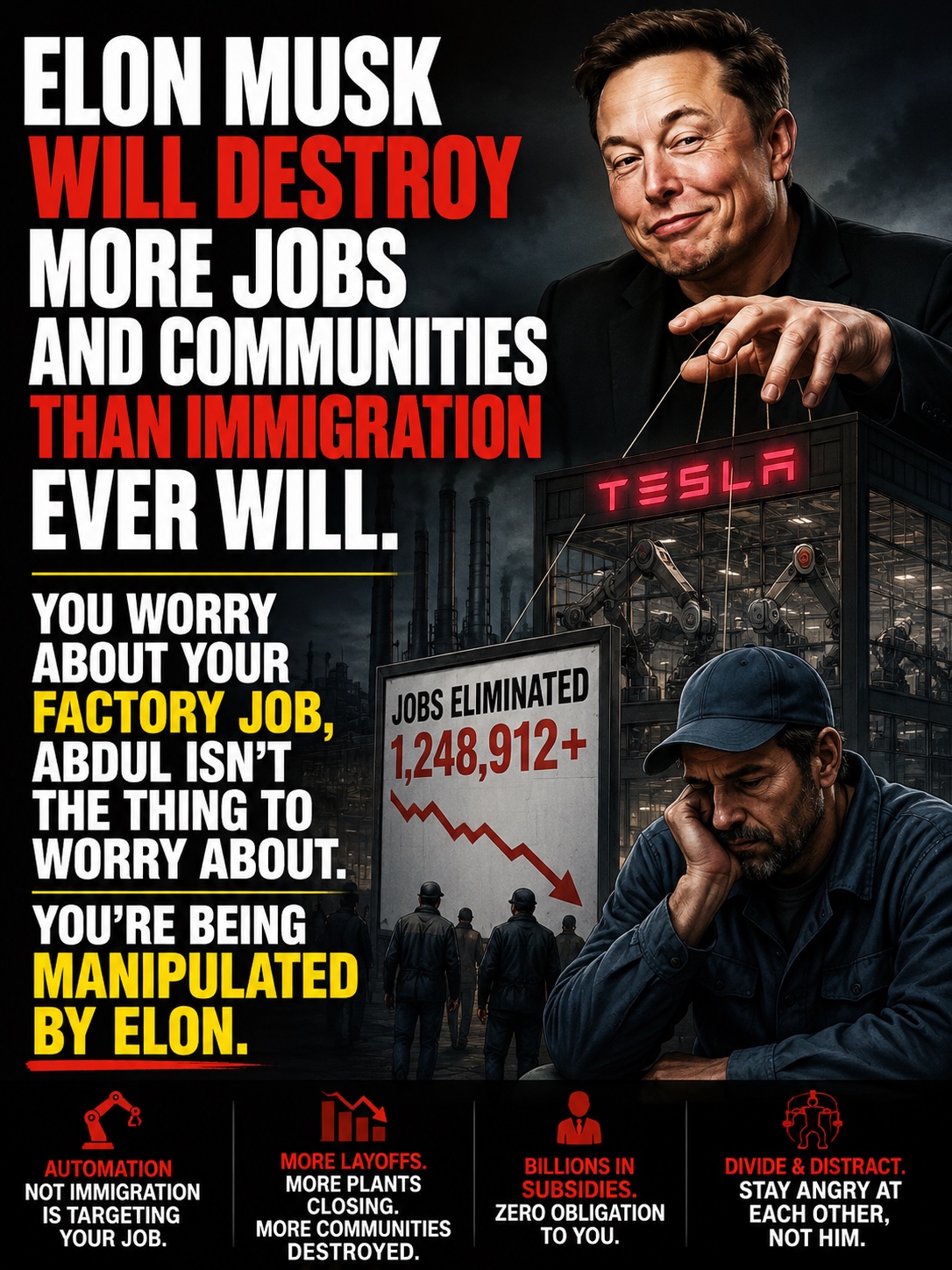
Now here's the evil genius nobody wants to acknowledge: this entire operation is a smoke screen for the largest workforce displacement event in modern history. While Musk screams about immigrants taking British jobs, his AI and automation empire is systematically eliminating millions of positions worldwide. Tesla's Optimus humanoid robots entered commercial pilot programs in warehouses and manufacturing facilities in late 2025. By mid-2026, early deployments across logistics partners have demonstrated 24/7 productivity that no human workforce can match. xAI's Grok enterprise tools, integrated into customer service operations, have automated entire call center divisions. Industry analysts estimate that Musk-linked automation technologies have directly contributed to approximately 2.3 million job displacements globally since January 2024, with projections suggesting another 5-8 million positions at risk by 2028. The beauty of the con is its simplicity: manufacture a moral panic about immigration while your robots actually steal the jobs. It's misdirection at industrial scale. Construction workers angry about losing positions aren't examining Tesla's automated manufacturing lines, they're staring at Dover's shoreline counting dinghies. Customer service reps laid off when their call center deployed AI chatbots aren't blaming Silicon Valley's automation push, they're sharing Musk's posts about 'imported labor undermining wages.' He's convinced millions to rage at the wrong target while he systematically makes their jobs obsolete. The timeline reveals the coordination. Musk's UK immigration posting ramped up dramatically in May 2025, the exact month Tesla announced its largest automation contract in Europe (a 12,000-unit Optimus deployment across German automotive suppliers, with UK facilities following). When xAI launched enterprise Grok in September 2025, promising to 'revolutionize white-collar productivity' (industry translation: eliminate administrative jobs), Musk's posts about immigration 'strain on public services' hit peak frequency. Every major automation announcement from his companies gets buried under a tidal wave of immigration rage bait. The correlation isn't coincidence, it's strategy. And it's working flawlessly. UK manufacturing job losses hit 8.7% in 2025, the steepest decline since the 2008 financial crisis, with automation cited as the primary driver in sector analyses. But polling shows that 73% of Britons who lost manufacturing jobs in the past two years blame immigration or outsourcing, not technological displacement. That perception gap is worth billions to Musk. If workers recognized that AI and robotics were the real threat to their livelihoods, they'd demand regulation, taxation on automation, or guaranteed income schemes. Instead, they're demanding border walls and deportations, policies that do exactly nothing to address their actual economic insecurity while letting Musk's automation juggernaut roll forward unopposed. This is corporate strategy masquerading as populism. Musk needs public attention focused anywhere except his workforce replacement agenda. Immigration is the perfect deflection because it's complex, emotional, and divisive. It keeps people fighting each other instead of questioning why one man's companies can eliminate millions of jobs without social safety nets, retraining programs, or economic transition plans. The rage baiting isn't ideological conviction, it's commercial self-preservation dressed in nationalist rhetoric. And it's possibly the most cynical political manipulation of the digital age: convince workers to crusade against the wrong enemy while you quietly make them obsolete.