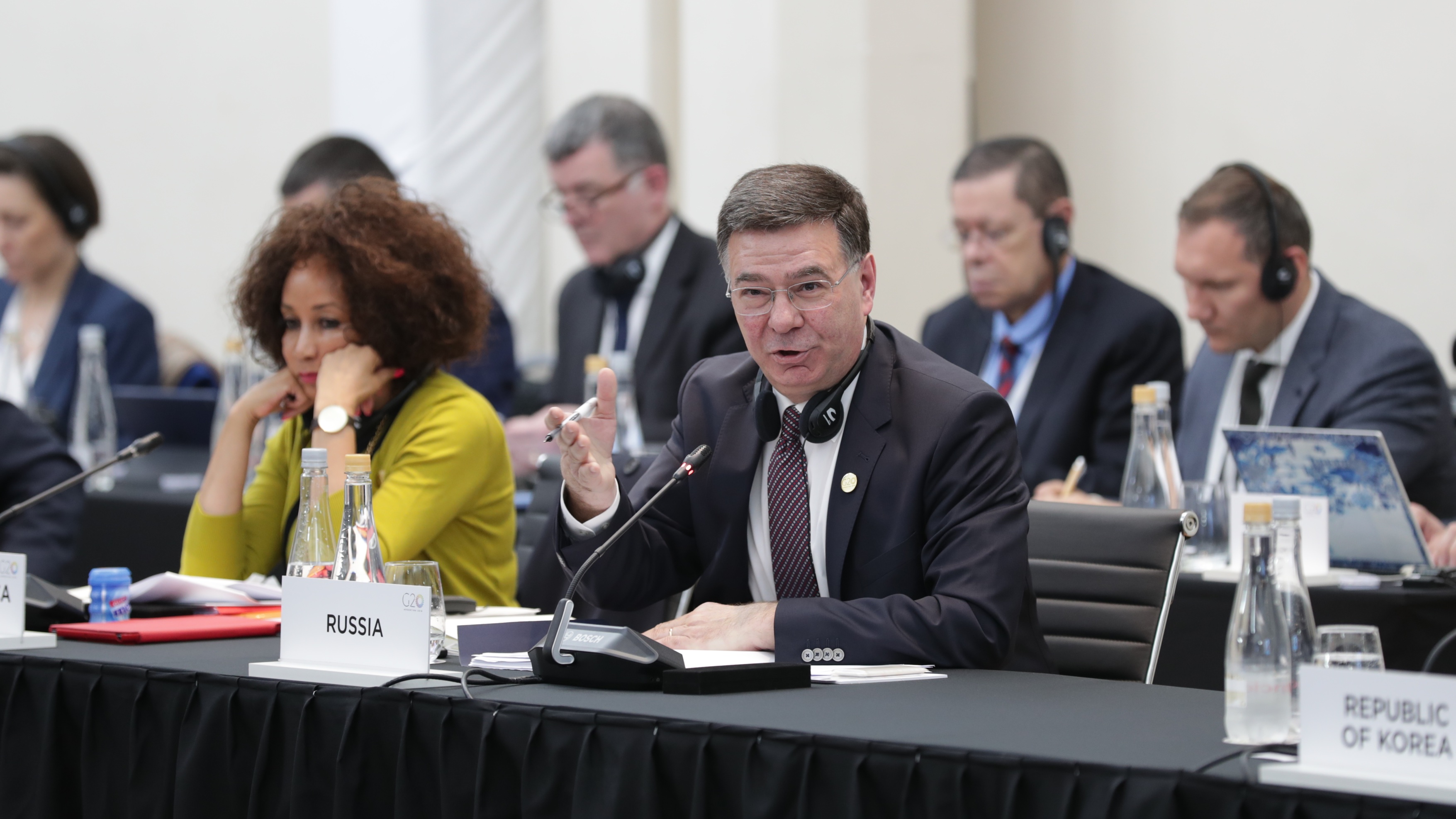
Alexander Pankin, Russia's Deputy Foreign Minister, delivered a remarkably candid assessment this week when he pinned Moscow's biggest headache with Washington on one word: unpredictability. In diplomatic speak, that's about as close as you get to throwing your hands up. For a government that spent decades mastering the art of playing Cold War chess with predictable American administrations, the current chaos represents a fundamental breakdown in how the Kremlin operates. What makes Pankin's complaint particularly telling is the timing. Russia has historically thrived on American consistency, even when that consistency meant opposition. During the Obama years, Moscow knew exactly which red lines were real and which were theater. The Trump administration's first term was transactional but followable. The Biden years brought predictable hostility but clear parameters. Now, in 2026, the Kremlin is dealing with an American foreign policy apparatus that seems to shift positions not by the month but by the day. The unpredictability cuts both ways, though Russia would never admit it publicly. Moscow's traditional leverage points (energy blackmail in Europe, military posturing near NATO borders, cyber operations against critical infrastructure) lose their effectiveness when the target's response can't be forecasted. If you threaten to cut gas supplies and Washington might respond with sanctions, military aid to Ukraine, a diplomatic charm offensive, or complete silence, your threat loses its punch. Russian foreign policy has always been about calibrated escalation. You can't calibrate when the other side's reaction function is randomized. Pankin's statement also reveals something darker about Russia's current position. When you're winning, you don't complain about the other side being unpredictable. You adapt and exploit the chaos. The fact that Moscow is publicly griping suggests they're losing the ability to shape outcomes. China has managed to navigate American unpredictability by diversifying its dependencies and building alternative systems. Russia, locked into a grinding conflict in Ukraine and isolated from Western financial systems, doesn't have that luxury. The broader context here is the collapse of traditional diplomatic architecture. The frameworks that governed US-Russia relations (arms control treaties, deconfliction channels, predictable summit cycles) have either expired or been abandoned. Without those guardrails, every interaction becomes a roll of the dice. For a country like Russia that has staked its international identity on being a great power capable of managing global affairs, being reduced to complaining about unpredictability is a remarkable admission of diminished influence. Pankin didn't say Moscow can't work with Washington. He said Moscow can't predict Washington. For diplomats, that's the same thing as saying we've lost control of the relationship.
 🌍 world
Moscow Complains Trump Too Chaotic to Make Deals With
Russia's deputy foreign minister just admitted what every diplomat in Moscow has been whispering for months: the Kremlin can't figure out how to work with Washington anymore. Alexander Pankin says unpredictability is killing diplomacy, but the real story is what Russia's NOT saying about why its usual playbook has stopped working.
My Take
Let's be clear about what this really means: Russia is mad that its manipulation tactics aren't working anymore. The Kremlin built an entire foreign policy strategy around gaming predictable American behavior, and now that playbook is worthless. Pankin's complaint isn't about wanting better relations. It's about wanting the old game back where Moscow knew exactly which buttons to push. The deeper irony is that Russia spent years sowing chaos in American politics (2016 election interference, disinformation campaigns, funding fringe movements) and now acts shocked that American foreign policy has become chaotic. You can't spend a decade trying to destabilize your adversary and then complain when the instability makes them harder to deal with. Moscow wanted a weakened, divided America. Congratulations, you got it. Now deal with the consequences. What Pankin won't say out loud is that unpredictability actually benefits Russia in some ways. When Washington zigzags, it creates space for Moscow to move. The problem is Russia is too weak right now to exploit that space. A strong Russia would love American chaos. A declining Russia needs American predictability to avoid catastrophic miscalculation. This complaint is a tell about which Russia we're looking at in 2026.
What Happens Next
Watch for Moscow to attempt a reset through back channels, not official diplomacy. Pankin's public complaint is likely setting the stage for quiet outreach through intermediaries (business leaders, former officials, third-country diplomats) to establish some kind of predictable communication framework. The Kremlin will propose specific, limited deals on narrow issues (prisoner exchanges, deconfliction in Syria, Arctic cooperation) to test whether Washington can maintain consistent positions long enough to close agreements. The wildcard scenario nobody's pricing in: Russia pivots to treating American unpredictability as permanent and restructures its entire foreign policy around that assumption. Instead of trying to manage Washington, Moscow goes full tilt into the China partnership and writes off any meaningful US-Russia relationship for the next decade. That would mean accelerating weapons sales to American adversaries, abandoning remaining arms control frameworks, and maximizing chaos in regions where US interests are engaged but attention is divided. By late 2026, we'll know which path Russia chose based on one metric: whether they're still complaining about unpredictability or whether they've gone silent on the topic. Silence would mean they've accepted the new reality and stopped trying to play the old game. More complaints would mean they're still hoping for a return to the predictable animosity they knew how to manage. Either way, Pankin just told us the current approach isn't working, which means change is coming from Moscow one way or another.
What History Tells Us
This moment echoes the confusion Soviet diplomats faced during the Carter-to-Reagan transition in 1980-1981, when American policy swung from human rights engagement to aggressive confrontation seemingly overnight. Soviet Foreign Minister Andrei Gromyko privately complained about the "incoherence" of Reagan's early signals, unable to determine whether the new administration wanted arms control or escalation. The Kremlin's response then was to freeze major initiatives and wait for American policy to stabilize, a luxury they had because the Soviet Union was still a superpower with strategic depth. The key difference is that 1980s Russia could afford to wait out American unpredictability. 2026 Russia, weakened by Ukraine, sanctions, and demographic decline, doesn't have that cushion. When Gromyko complained, he was negotiating from strength. When Pankin complains, he's negotiating from weakness. That distinction will determine whether this leads to dangerous miscalculation or Russian capitulation on key issues.