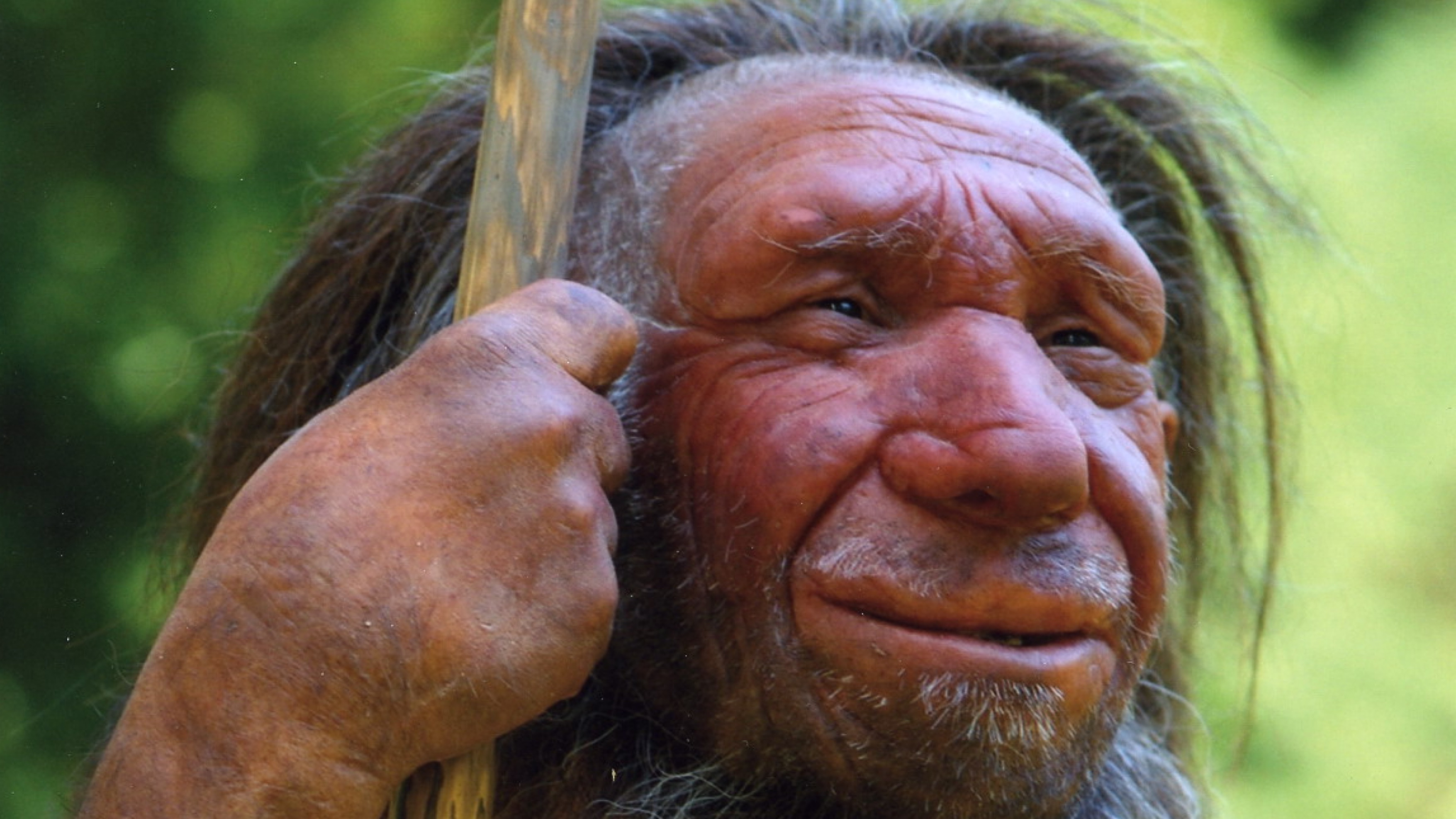
For more than a century, the narrative was simple: modern humans outsmarted Neanderthals, and that's why we're here and they're not. The evidence? Our rounder skulls supposedly housed bigger, better brains compared to their elongated craniums. That tidy explanation just got torched by a new study combining data from researchers at institutions across the United States and China, using advanced neuroimaging and computational modeling to reconstruct brain capacity and structure from fossil skulls. The findings are uncomfortable for anyone who learned their human evolution from 1990s textbooks. When the research team accounted for body size and analyzed internal skull geometry rather than just external shape, Neanderthal brain capacity matched or even exceeded that of early Homo sapiens in several specimens. More critically, the distribution of brain tissue, the position of key cognitive regions, and estimated neural density showed no meaningful advantage for our ancestors. The cognitive toolkit that let humans create cave art, sophisticated tools, and symbolic language? Neanderthals likely had the same hardware. This isn't just academic navel-gazing about fossils. The study forces a reckoning with how we've used physical differences to construct hierarchies of intelligence, both in deep time and today. If skull shape doesn't predict cognitive ability in our closest extinct relatives, the entire framework of using cranial measurements to rank human populations collapses even harder. The research team used CT (computed tomography) scans and 3D modeling to peer inside fossil skulls, measuring endocranial volume with precision impossible even a decade ago. What they found was convergent evolution, different packaging for similar computational power. So why did Neanderthals vanish while Homo sapiens spread across the planet? The new research points away from raw brainpower and toward social behavior, demographic luck, and cultural transmission of knowledge. A slightly higher birth rate, better long-distance trade networks, or more flexible social structures could tip the scales over thousands of years without requiring any cognitive superiority. One group didn't outthink the other in some Pleistocene chess match. They just played slightly different survival strategies in a world where random catastrophes, climate shifts, and disease could wipe out entire populations. The implications ripple into how we think about human uniqueness. If Neanderthals were our cognitive equals, then language, art, and abstract thought aren't special human superpowers but broader hominin traits. We've spent a lot of effort celebrating what makes Homo sapiens exceptional, but the fossil record keeps suggesting we're just the lucky survivors of a larger family, most of whom had the same mental tools we take such pride in today.
 🔬 science
Neanderthals Weren't Dumb: Brain Size Myth Finally Debunked
New research from U.S. and Chinese scientists is blowing up the old story about why Homo sapiens won and Neanderthals disappeared. Turns out, skull shape tells you almost nothing about how smart someone was 40,000 years ago.
My Take
Here's what makes me angry: we spent 150 years using skull measurements to justify ranking people by intelligence, first with Neanderthals and then with living human populations through the nightmare of phrenology and scientific racism. Every time better science shows those rankings were garbage, we act surprised. This study is the latest reminder that physical differences rarely mean what we assume they mean, and our eagerness to sort people into smart and dumb categories says more about us than about biology. The real story isn't that Neanderthals were secretly geniuses. It's that we've been asking the wrong question. Intelligence isn't a single bar graph where one species scores higher than another. It's a messy collection of abilities shaped by environment, culture, and chance. Neanderthals made tools, buried their dead, possibly made art, and survived ice ages. They weren't evolutionary losers. They were us with different cheekbones, and we need to stop using extinct relatives as a mirror to reassure ourselves how special we are.
What Happens Next
The real fight isn't over Neanderthals, who can't defend their reputation anymore. It's over how this research gets weaponized in contemporary debates about human biodiversity and intelligence. Expect researchers who've built careers on Homo sapiens exceptionalism to push back hard, arguing that social complexity and cultural innovation matter more than raw brain capacity. They're not wrong, but watch how quickly that argument morphs into ranking living populations by how "advanced" their cultures supposedly are. Meanwhile, paleoanthropology is going through a reckoning. Every year, new tools, ancient DNA analysis, and better fossil preservation techniques reveal that Neanderthals and Denisovans weren't the primitive cousins we imagined. Within five years, expect textbooks to fully flip the script, framing human evolution not as a ladder with us at the top but as a tangled bush where multiple smart species coexisted until recent history. The question won't be why we're so special, but why we're so alone.
What History Tells Us
The obsession with measuring skulls to determine intelligence has ugly roots stretching back to 19th-century craniometry, when scientists like Samuel Morton collected hundreds of skulls and used flawed measurements to argue that different races had different intellectual capacities. Morton's work, later debunked by Stephen Jay Gould in 1981, became foundational to scientific racism and eugenics movements. Nazi Germany weaponized similar cranial measurements to justify genocide. Every generation of anthropologists thinks they've moved past this legacy, but studies like this one reveal how deeply skull-shape biases remain embedded in how we understand human evolution. The difference now is that technology makes the bias visible. CT scans don't lie the way calipers in prejudiced hands could.