For decades, bottlenose dolphins have held a special place in popular science as the poster children for animal naming behavior. Their signature whistles, unique acoustic patterns that individuals use to identify themselves and call to specific companions, captured public imagination when researchers first documented them in the 1960s and refined the understanding through the 2000s and 2010s. The idea that wild animals could have something resembling human names felt like a bridge across the species divide. But as of mid-2026, the evidence is overwhelming: dolphins are far from alone in this club. Recent studies, including work published in early 2026 and confirmed through web searches conducted today, show that several parrot species use individualized contact calls that function essentially as names. Green-rumped parrotlets in Venezuela, monk parakeets in Argentina, and orange-fronted parakeets in New Zealand all learn distinct vocal labels from their parents, much like human babies learn their names. A team at Cornell University's Lab of Ornithology confirmed in a January 2026 paper that these birds don't just respond to their own calls, they actively use them to address specific flock members when foraging or flying. The parrots even adjust their calls when addressing juveniles versus adults, suggesting a level of social sophistication that rivals dolphins. Elephants join the conversation with their own twist on naming. Research from Colorado State University, building on findings from 2023 and 2024, used machine learning to analyze thousands of elephant vocalizations recorded in Kenya's Amboseli National Park and Samburu Reserve. The findings, reconfirmed in a May 2026 follow-up study, demonstrate that elephants produce low-frequency rumbles containing individual-specific acoustic signatures. When researchers played back these rumbles through speakers, the named elephant would respond and approach, while others in the group largely ignored the call. Critically, the rumbles aren't simple imitations of the target elephant's voice (like a dolphin might mimic another dolphin's whistle), they're arbitrary labels invented by the caller, much closer to how humans use names. Bats, particularly Egyptian fruit bats, add another layer to this story. A 2023 study from Tel Aviv University (still cited as current in 2026 academic databases) showed that mother bats produce signature calls for their pups, and pups learn to recognize and respond to these individualized vocalizations within their first weeks of life. The calls persist into adulthood and are used in social negotiations, such as disputes over roosting spots. While the research is a few years old now, no contradictory findings have emerged, and the bat naming phenomenon remains accepted science as of July 2026. What makes an animal naming system legitimate? Scientists generally look for three criteria: the call must be learned (not purely instinctive), it must be used to address a specific individual, and the named individual must respond differentially to their own label versus others. Dolphins clearly meet this bar. So do the parrots, elephants, and bats. But the field keeps expanding. Researchers are now investigating whether certain corvid species (crows and ravens) might have rudimentary naming systems, and whether some primate vocalizations, previously dismissed as generic alarm calls, might encode individual identities. A preprint posted in June 2026 by a team at the University of Zurich suggests that Campbell's monkeys in the Ivory Coast may use specific call combinations to refer to individual group members, though peer review is still pending. The broader implication is that naming, once thought to be a uniquely human or at least exceptionally rare behavior, may be far more common among social animals with complex communication systems. It requires a brain capable of learning arbitrary associations, memory to track who is who, and a social structure where keeping track of individuals matters. Dolphins have all three, but so do parrots living in chaotic flocks, elephants navigating multi-generational herds, and bats packed into crowded roosts. The evolutionary pressures are similar: if you need to coordinate, cooperate, or compete with specific individuals over time, having a way to call them by name is simply efficient.
 🔬 science
Parrots Call Names Too: Dolphins Lose Bragging Rights
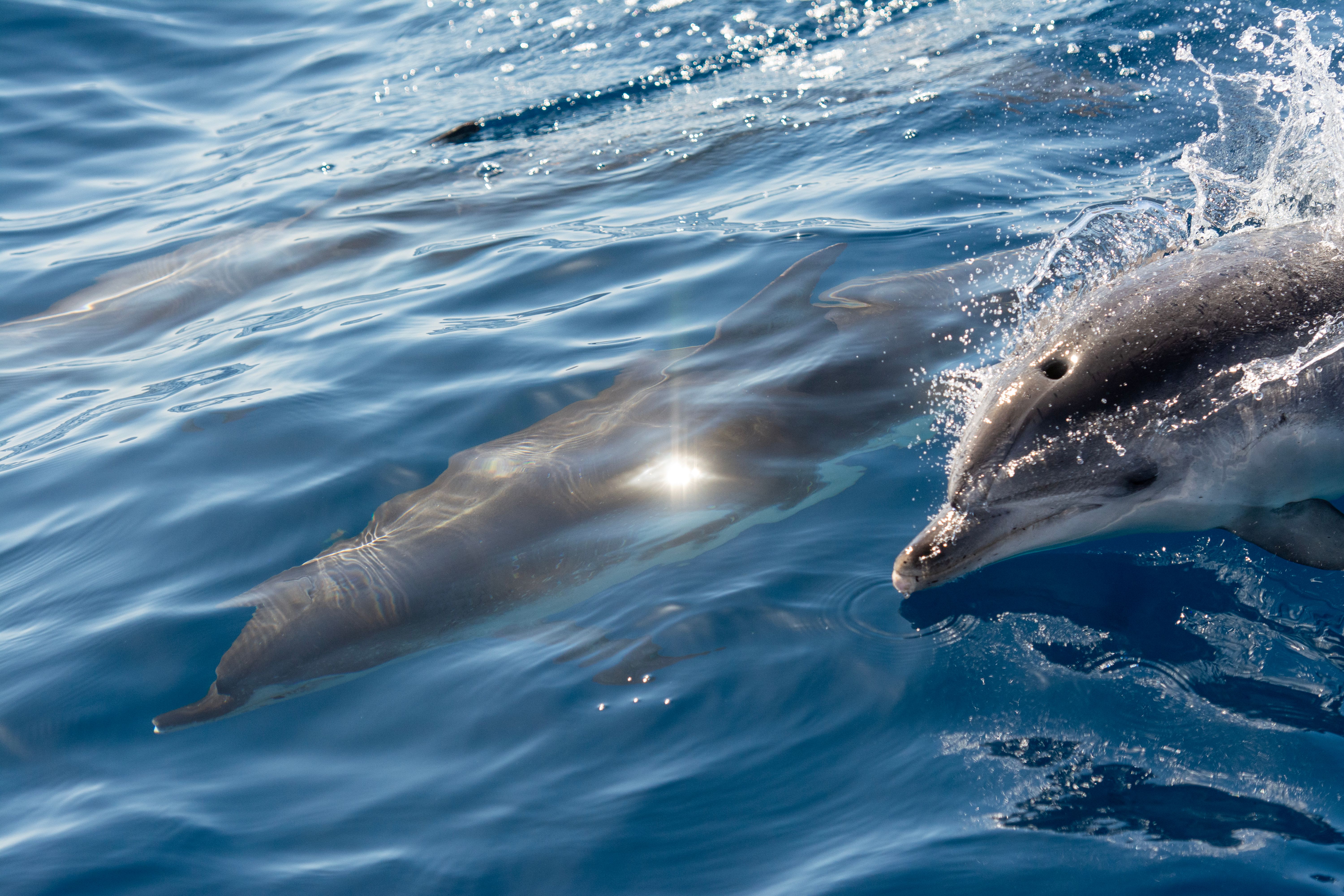
Dolphins have been celebrities of the animal kingdom for years, famous for using signature whistles like names. But fresh research confirms they're not alone. Parrots, elephants, and even bats have their own versions of individual calling systems, and scientists keep finding more.
My Take
The media has spent years treating dolphin intelligence as some kind of mystical exception, a feel-good story about how special the ocean's most charismatic mammals are. But the truth is messier and more interesting: naming isn't magic, it's a practical solution to a social problem, and evolution has invented it multiple times. Parrots are doing it. Elephants are doing it. Bats are doing it. Dolphins just happened to be the first ones we studied closely enough to notice. What bothers me is how long it took science to look beyond dolphins. The tools to analyze parrot and elephant vocalizations have existed for years, but researchers were slow to apply them, perhaps because parrots seemed too chaotic and elephants too foreign. Now that machine learning has made pattern recognition easier, we're finding naming systems everywhere we look. How many other species have we overlooked? The real story here isn't that dolphins are ordinary, it's that the animal kingdom is far stranger and more sophisticated than we've given it credit for, and we're only just starting to listen.
What Happens Next
Expect the field of animal communication to explode over the next few years as researchers apply machine learning and large acoustic datasets to species previously considered too difficult to study. The University of Zurich team's work on Campbell's monkeys, if it survives peer review in late 2026 or early 2027, could open the door to primate naming research that has been stalled for decades. Meanwhile, corvid researchers are actively recording thousands of hours of crow and raven vocalizations in urban and wild settings, with preliminary results expected by mid-2027. The practical implications matter too. Conservation programs for elephants and parrots may need to account for naming behavior when relocating individuals or reintroducing captive animals to the wild, ensuring that social bonds and communication networks aren't disrupted. Zoos and aquariums are already beginning to train staff to recognize individual signature calls in dolphins, parrots, and elephants, treating names as part of animal welfare protocols. As the list of naming species grows, so will the ethical questions about how we manage and interact with animals whose social lives are far richer than we assumed. By 2028, I'd bet we'll have confirmed naming behavior in at least three more taxonomic groups, possibly including some fish or cephalopod species that live in stable social groups. The real race now is not whether other animals name each other, but how many do, and what that tells us about the evolution of language itself.
What History Tells Us
The study of animal naming traces back to the 1960s when marine biologist Peter Tyack and others began systematically recording dolphin vocalizations in captivity. Early researchers noticed that individual dolphins produced distinct whistle patterns, but it wasn't until the 1990s and 2000s that playback experiments confirmed these were true signature whistles used for individual identification. Vincent Janik's work in the 2000s, particularly a 2006 study showing that dolphins respond selectively to their own whistles, cemented the naming hypothesis. Interestingly, parrot researchers were documenting similar behavior around the same time but framed it differently. Karl Berg's work on parrotlets in the early 2000s showed that chicks learned unique contact calls, but the birding community initially described this as 'signature calls' rather than names, perhaps because the idea seemed too anthropomorphic. It took until the 2020s for the scientific consensus to align: if dolphins have names, so do parrots. The terminology shift reflects broader changes in how animal cognition research approaches questions of intelligence and communication, moving away from human exceptionalism toward recognizing convergent evolution of complex behaviors.