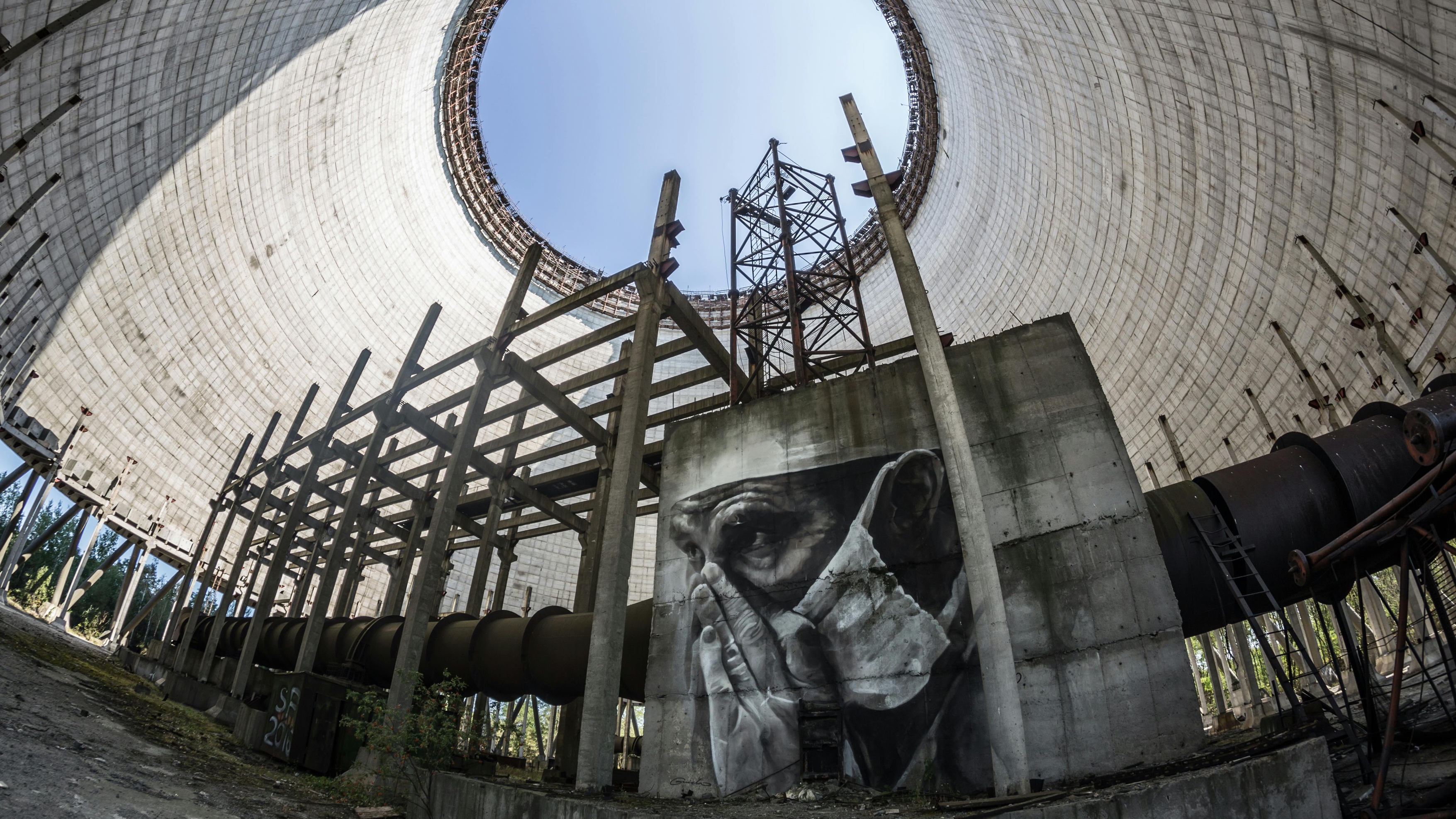
The Chernobyl Exclusion Zone, a 1,000-square-mile radioactive dead zone around the failed reactor, has become an accidental laboratory for evolution under extreme conditions. While humans fled in 1986 and can only visit briefly with protective gear, wolves, wild boar, lynx, and even endangered Przewalski's horses have reclaimed the abandoned cities and forests. They live their entire lives bathed in radiation levels that would kill a human within hours. And they're not just surviving, they're thriving in numbers that exceed pre-disaster populations. Researchers from Princeton University and the National Human Genome Research Institute have been tracking these wolves since 2014, fitting them with radiation-detecting collars and drawing blood samples during brief periods of anesthesia. What they found challenges everything we thought we knew about radiation's effects on mammals. The wolves are absorbing radiation doses six times higher than the legal safety limit for human nuclear workers, yet they're breeding successfully and living normal lifespans. Blood analysis revealed their immune systems look like they're permanently responding to cancer, but in a protective way, as if their bodies have evolved a constant anticancer defense. The real breakthrough came when geneticists sequenced the wolves' DNA and compared it to wolves living in uncontaminated areas. Specific regions of the Chernobyl wolves' genome, particularly those controlling DNA repair and cancer suppression, show mutations not found in normal wolf populations. These aren't random damage, they're adaptive changes that appear to have been naturally selected over multiple generations. It's microevolution happening in real time, visible within four decades instead of the thousands of years evolution typically requires. The implications stretch far beyond wildlife biology. Cancer researchers are now studying these genetic changes to identify pathways that could lead to new cancer treatments for humans. If scientists can isolate exactly how these wolves' altered genes provide radiation resistance and prevent tumor formation, it could unlock therapies for cancer patients or protection protocols for radiation workers, astronauts on long space missions, or populations living near contaminated sites. The Chernobyl disaster killed thousands and poisoned the land for centuries, but the wolves living in that poison might hold the key to saving millions of human lives. This discovery also forces us to reconsider what we mean by environmental catastrophe. The exclusion zone is uninhabitable for humans and will remain so for 20,000 years, yet it's become one of Europe's most successful wildlife refuges. Wolves, bears, bison, and over 200 bird species have populations here that dwarf those in nearby human-occupied areas. The radiation is still deadly, the soil is still contaminated, but the absence of humans, roads, farms, and cities has created a paradox: a toxic wasteland that's also a thriving ecosystem. Nature didn't need the land to be clean, it just needed us gone.
 🔬 science
Radiation Made Chernobyl Wolves Mutant Cancer Killers
Thirty-eight years after the worst nuclear disaster in history, scientists studying wildlife in Chernobyl's exclusion zone have discovered something nobody predicted: wolves with altered DNA that appears to give them resistance to cancer. The animals living in a radioactive wasteland are teaching us how life adapts to the unthinkable.
My Take
Here's what keeps me up at night: we're learning that life can adapt to radiation poisoning faster than we ever imagined, which means we might be underestimating how resilient ecosystems are in the face of nuclear contamination. That sounds like good news until you realize it could make governments and corporations more cavalier about nuclear accidents, waste disposal, and weapons testing. "Don't worry, the wildlife will adapt" becomes a convenient excuse for inadequate safety standards. We're already seeing this logic creep into discussions about contaminated sites in Japan, Kazakhstan, and the American West. But there's a darker irony nobody wants to say out loud: the Chernobyl Exclusion Zone proves that the biggest threat to wildlife isn't radiation, it's us. These animals are thriving specifically because 350,000 humans were evacuated and never came back. The wolves would rather live in a radioactive forest than share space with people. That's not a feel-good nature story, that's an indictment. We've made human civilization more hostile to wildlife than a nuclear meltdown. Let that sink in while we pat ourselves on the back for building more "green" suburbs and sustainable shopping centers on what used to be migration routes and breeding grounds.
What Happens Next
The race is on to sequence the complete genomes of multiple Chernobyl wolf packs before the war in Ukraine makes the exclusion zone even more dangerous to access than it already is. Russian forces occupied parts of the zone in 2022, dug trenches in radioactive soil, and stirred up contaminated dust that researchers say will take years to settle. Dr. Love's team needs at least three more field seasons to gather enough genetic data to isolate the specific mutations responsible for cancer resistance, but getting permits and funding for research in an active conflict zone is becoming nearly impossible. Meanwhile, pharmaceutical companies are already circling. If the Princeton team can pinpoint the exact genetic pathways these wolves use to resist radiation damage, we're looking at a patent war worth billions. The first lab to synthesize a treatment based on Chernobyl wolf genetics could revolutionize oncology, but it could also mean that the long-term legacy of history's worst nuclear disaster is a cancer drug that costs $200,000 per patient. The wolves survived the radiation for free. Humans will pay whatever the market will bear.
What History Tells Us
Chernobyl isn't the first time we've discovered nature's disturbing ability to adapt to human-caused catastrophes. After the atomic bombings of Hiroshima and Nagasaki in August 1945, scientists expected the cities to remain lifeless for decades. Instead, oleander flowers bloomed within months, and by 1946, insects and small mammals had returned. By the 1950s, both cities were rebuilt and thriving, though cancer rates remained elevated for generations. Similarly, the Bikini Atoll in the Marshall Islands, site of 23 nuclear weapons tests between 1946 and 1958, was declared too radioactive for human habitation but now hosts coral reefs and fish populations that have adapted to live in contaminated waters. The pattern is consistent and unsettling: nature doesn't heal from our worst mistakes, it evolves around them while humans bear the multigenerational health costs.