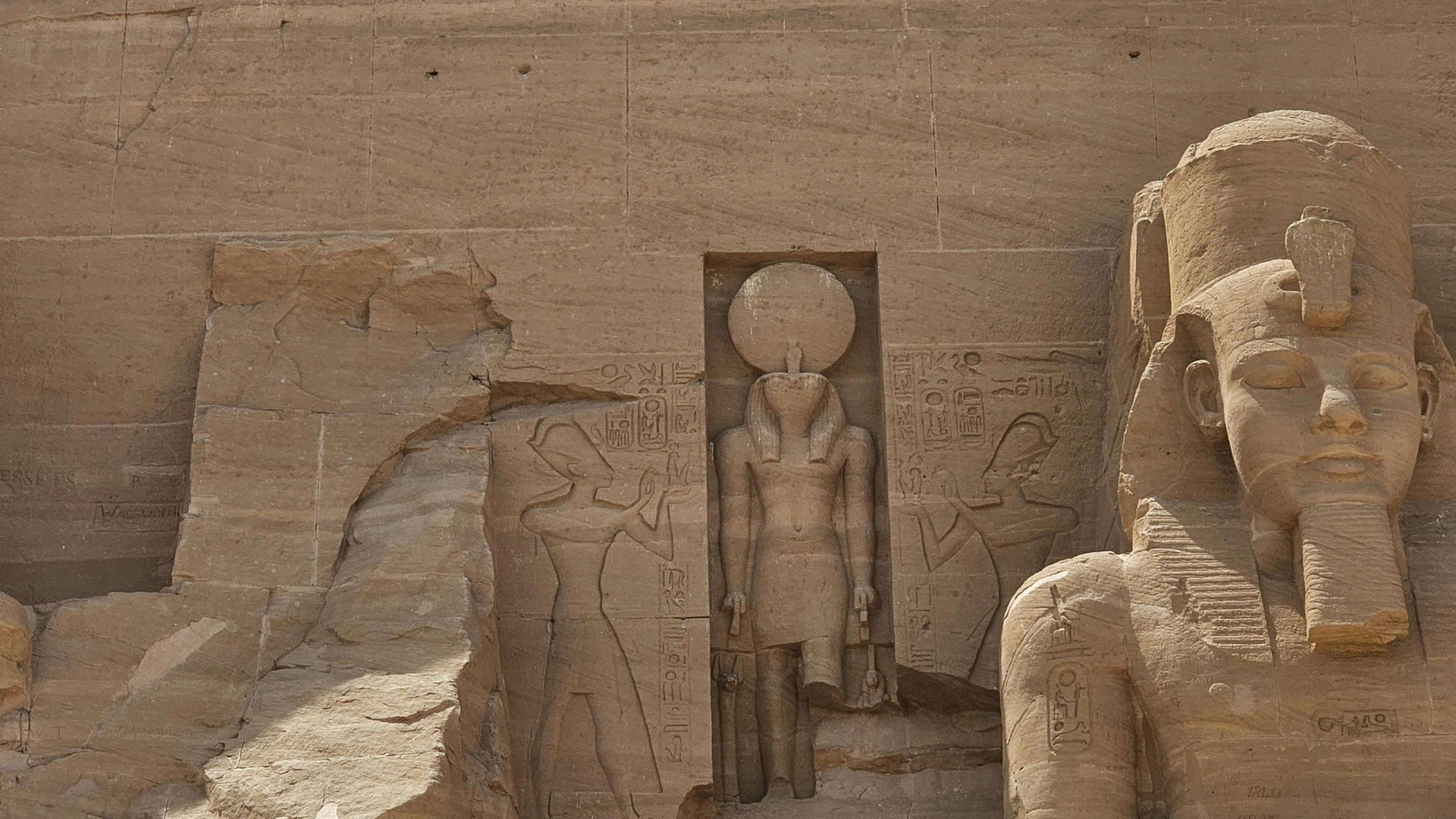
The statue fragment discovered at Tel Faraoun (ancient Imet) in Egypt's eastern Nile Delta is classic Ramses II overcompensation. At 7.2 feet tall and weighing between five and six tons, this is just the torso and head section, meaning the complete sculpture would have towered even higher. The Egyptian Ministry of Tourism and Antiquities moved quickly to secure the artifact, transporting it to a climate-controlled storage facility where restoration teams will assess the weathered limestone surface and stabilize the piece before any public display. What makes this find particularly revealing is the manufacturing provenance. Experts determined the statue wasn't locally produced at Imet, but rather crafted in Pi-Ramesse (modern-day Qantir), the sprawling capital Ramses II built to immortalize his own name. Workers then transported this massive stone monument roughly 15 miles north to Imet, a secondary administrative center. This wasn't a casual afternoon project. Moving multi-ton statues across the Nile Delta required sophisticated logistics, probably involving wooden sledges, rollers, and dozens of laborers pulling in coordinated shifts. The artistic details surviving on the weathered surface have allowed Egyptologists to confidently attribute the statue to Ramses II despite 3,200 years of erosion. The facial structure, crown remnants, and body proportions match known iconography from his 66-year reign (1279-1213 BCE), the second-longest documented rule of any Egyptian pharaoh. His era represented the apex of New Kingdom power, when Egypt controlled territory from modern-day Syria down to Sudan and extracted massive wealth from Nubian gold mines and Mediterranean trade routes. Researchers suspect this statue originally formed part of a triad, a common religious and political statement piece in ancient Egypt. These massive installations positioned the pharaoh between two deities (often Amun-Ra and Ptah, or regional variants) to visually communicate divine endorsement of royal authority. If that theory proves correct, somewhere beneath the Tel Faraoun excavation site lie two more colossal statues waiting to be uncovered. The sheer volume of Ramses II monuments scattered across Egypt and Nubia reveals a ruler obsessed with legacy management. He commissioned more statues, temples, and inscriptions than any other pharaoh, effectively running a 66-year propaganda campaign that worked. We're still talking about him 32 centuries later, and every few years another one of his statues surfaces to remind us who ran the show during Egypt's imperial peak.
 🔬 science
Ramses II Still Hogging the Spotlight 3,200 Years Later
Egyptian archaeologists just unearthed the upper half of a 7.2-foot-tall statue of Ramses II, the pharaoh who ruled for 66 years and never met a monument he didn't commission of himself. The five-ton stone ego piece was carved in his capital city and hauled 15 miles north to impress the locals at Tel Faraoun.
My Take
Ramses II understood something modern politicians still haven't figured out: monuments outlast policies. He wasn't the greatest military strategist (his Battle of Kadesh against the Hittites was essentially a draw he spun as total victory), and he wasn't the most innovative administrator. But he knew how to flood the zone with his own image until his name became synonymous with Egyptian power itself. Every statue, every temple inscription, every cartouche carved into stone was a long-term investment in immortality that paid off spectacularly. The fact that archaeologists keep finding these monuments 3,200 years later proves his strategy worked better than any written decree or military conquest ever could. Modern autocrats build palaces and name airports after themselves, but those crumble or get renamed within decades. Ramses II commissioned projects built to survive millennia, and they have. That's not just ego, it's understanding the relationship between physical presence and historical memory in ways our digital age has completely forgotten.
What Happens Next
The Egyptian Ministry of Tourism and Antiquities will launch a targeted excavation at Tel Faraoun within the next 6-12 months specifically hunting for the two companion deity statues that would complete the suspected triad. If they find even fragments confirming that configuration, expect a major international media push and museum exhibition, probably timed to coincide with Egypt's ongoing efforts to boost tourism revenue, which hit $13.6 billion in 2024 and remains crucial to the national economy. The restoration timeline for public display runs 18-24 months minimum. Conservation teams need to stabilize the limestone, document every surface detail, and potentially reconstruct missing sections using 3D scanning and period-appropriate materials. The more interesting wildcard: if this statue does join a major museum exhibition circuit (the British Museum, Louvre, or Metropolitan Museum would all bid aggressively), it reignites the repatriation debate. Egypt has successfully negotiated the return of several major artifacts in recent years, and every high-profile discovery strengthens Cairo's hand in demanding foreign institutions return pieces acquired during the colonial era. Ramses II, master of political leverage in his own time, would probably appreciate the irony of his statue becoming a bargaining chip 3,200 years later.
What History Tells Us
Ramses II's monument-building strategy mirrors Augustus Caesar's transformation of Rome two centuries later. Augustus famously claimed he "found Rome a city of brick and left it a city of marble," commissioning temples, forums, and statues that physically reshaped the imperial capital. Both rulers understood that architectural grandeur communicates power more effectively than military victories alone. The difference: Augustus ruled 41 years and died at 75, while Ramses II governed for 66 years and lived to 90, giving him far more time to saturate his kingdom with propaganda. Their approaches influenced every subsequent empire builder, from Justinian's Hagia Sophia (537 CE) to Napoleon's Arc de Triomphe (1836) to the Soviet Union's monumental architecture across Eastern Europe. The message remains consistent: if you want people to remember your regime as powerful, build something so massive they can't ignore it even when you're dead.