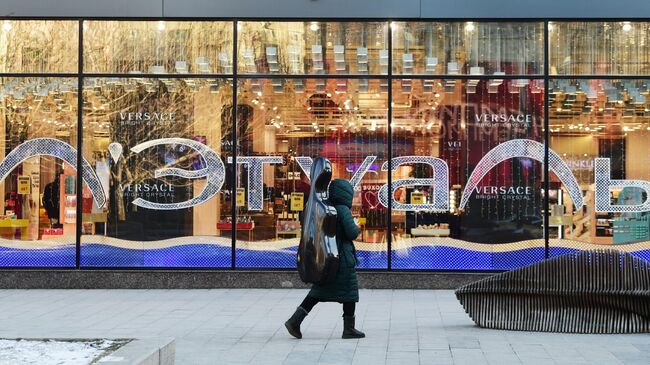
L'Etoile, the cosmetics retail behemoth that dominates Russia's beauty market, has confirmed plans to close 150 stores throughout 2026. The announcement, reported by Izvestia and confirmed by company marketing director Tatyana Lomteva, frames the closures as a strategic optimization rather than distress. Lomteva characterized the move as "planned work to improve the quality of the network," corporate speak that translates to: we're bleeding and need to stop the hemorrhaging. The scale of the closure is significant. While L'Etoile hasn't disclosed its total store count publicly in recent months, industry observers estimate the chain operates somewhere in the range of 1,200 to 1,500 locations across Russia. Shuttering 150 stores represents roughly 10 percent of the network, a massive contraction by any retail standard. This isn't trimming fat. This is amputation. The timing matters. Russia's retail sector has been navigating a brutal landscape since 2022, when Western sanctions triggered an exodus of international brands and payment systems. L'Etoile, which sells both imported and domestic cosmetics, has faced a double squeeze: Western beauty brands either pulled out entirely or became prohibitively expensive due to currency fluctuations and import complications. Meanwhile, domestic alternatives haven't filled the prestige gap that brands like Estée Lauder and L'Oréal left behind. Consumer spending patterns have shifted dramatically. The Russian ruble's volatility, combined with inflation that officially runs around 8 percent but hits discretionary categories like cosmetics far harder, has pushed shoppers toward cheaper alternatives or online channels. Physical retail in Russia's regions, where L'Etoile has significant presence beyond Moscow and St. Petersburg, has been particularly vulnerable. Foot traffic in provincial shopping centers has cratered as consumers tighten budgets and shift spending toward essentials. Lomteva's framing as "quality improvement" suggests L'Etoile is closing underperforming locations in smaller markets while consolidating around profitable urban flagships. This is standard retail triage: retreat to defensible territory, cut overhead, and hope brand loyalty in core markets sustains revenue even as square footage shrinks. The question is whether this is controlled demolition or the first stage of a broader collapse. Russian retail history suggests these "optimizations" rarely stop at the first round of closures.
 📈 business
Russia's Beauty Giant Axes 150 Stores, Calls It Quality Control
L'Etoile, Russia's dominant cosmetics chain, is shuttering 150 locations in 2026. Marketing director Tatyana Lomteva spins it as 'planned network quality improvement.' Translation: the retail ice age has come for Russian beauty.
My Take
Call it what you want, Tatyana, but closing 10 percent of your store network isn't optimization. It's retreat. L'Etoile is facing the same brutal reality that's hammered every Russian retailer since the sanctions wall went up: you can't sell premium Western products that either don't exist anymore or cost twice what they did in 2021. The brand built its empire on being Russia's go-to for accessible prestige beauty, the place where a Moscow office worker could grab some Maybelline mascara and feel cosmopolitan. That value proposition died the moment half the product catalog disappeared. The real story here is what L'Etoile won't say: their remaining stores are probably underperforming too, but closing 150 at once is the maximum pain shareholders and mall landlords will tolerate in a single year. Expect another round of closures in 2027, probably dressed up with the same "strategic optimization" language. Russian consumers aren't stupid. They know when a brand is in trouble, and the death spiral for retail is always the same: close stores, lose brand visibility, lose customers, need to close more stores. What's fascinating is the alternative universe where L'Etoile aggressively pivoted to domestic and Asian brands in 2022 instead of clinging to the ghost of Western prestige. South Korean and Chinese beauty brands would have killed for that distribution network. Instead, L'Etoile is playing defense, hoping the retail ice age thaws before the whole chain melts. Spoiler: it won't.
What Happens Next
By summer 2026, the first wave of closures will hit Russia's Tier 2 and Tier 3 cities, the Voronezhs and Krasnodars where foot traffic has already collapsed. L'Etoile will shutter locations in dying shopping centers first, then move to street-level stores where rents have stayed stubbornly high despite falling sales. Employees will get the standard 60-day notice, severance packages will be minimal, and local media will run sympathetic stories about cosmetics workers losing jobs in one-industry towns. The company will quietly test a warehouse-based online fulfillment model, trying to maintain revenue without the overhead of physical retail. But here's the trap: L'Etoile's core customer, the 35-to-55-year-old woman in provincial Russia, isn't shopping online for cosmetics at the same rate as Moscow millennials. You lose the stores, you lose her. By December 2026, quarterly earnings will show whether the closures stabilized margins or just accelerated the decline. The wildcard? A potential acquisition. If L'Etoile's numbers get ugly enough, one of Russia's remaining retail conglomerates (X5 Retail Group, Magnit) might see a distressed asset worth folding into their pharmacy or convenience formats. Alternatively, Chinese beauty giants looking for Russian distribution could snap up the brand at a discount, rebrand the stores, and flood them with affordable Asian cosmetics. That's the scenario nobody in Moscow is publicly discussing, but it's the only move that actually saves the brand. Otherwise, this is just managed decline with better PR.
What History Tells Us
L'Etoile's contraction mirrors the fate of retail chains caught in economic sanctions and currency crises throughout history. When the Soviet Union collapsed in 1991, state-run department store networks like GUM attempted to transition to Western-style retail but saw massive closures as consumer purchasing power evaporated and supply chains disintegrated. By 1995, roughly 40 percent of Soviet-era retail locations had shuttered permanently. More recently, the 2014 ruble crisis following Crimea annexation and Western sanctions forced Russian retailers into a similar defensive crouch. The ruble lost half its value against the dollar between mid-2014 and early 2015, making imported goods prohibitively expensive. Chains selling Western products, from electronics to fashion, contracted by 15 to 20 percent. L'Etoile survived that round by diversifying into cheaper domestic brands, but the 2022 sanctions shock was an order of magnitude larger. The lesson from both 1991 and 2014 is stark: Russian retail chains dependent on Western supply chains don't "optimize" their way out of sanctions. They either radically reinvent their product mix or they die slowly, closing in waves until nothing remains but the brand name.