The conversation around billionaires funding Mars missions misses the fundamental point entirely. SpaceX's Starship program, Blue Origin's lunar ambitions, and the broader commercial space industry aren't vanity projects or escapes from earthly problems. They represent humanity's first serious attempt to break free from a planetary energy constraint that has throttled our progress for decades. According to the International Energy Agency (IEA), global electricity demand is projected to grow 3.4% annually through 2026, driven largely by AI data centers and electrification. But Earth's energy ceiling is visible on the horizon, and it's lower than most people realize. The numbers tell a stark story. Training GPT-4 required approximately 50 gigawatt-hours of electricity, roughly equivalent to the annual consumption of 5,000 American homes. OpenAI's Sam Altman has stated publicly that the next generation of AI models will require energy measured in gigawatts, not megawatts. Google's DeepMind consumed 2.3% of global electricity for AI training in 2023 according to industry estimates. Meanwhile, Bitcoin mining alone uses about 150 terawatt-hours annually, more than entire countries like Argentina. The collision course is obvious: exponential growth in computational demand versus linear (at best) growth in Earth-based energy production. Solar arrays have physical limits based on available land area. Nuclear faces political resistance and decade-long construction timelines. Fusion remains perpetually 20 years away. Space offers what Earth cannot: effectively unlimited energy and physical resources. The sun outputs 3.8 × 10²⁶ watts continuously. A single Dyson swarm capturing even 0.0001% of that energy would provide more power than all of human civilization currently uses. Asteroid 16 Psyche alone contains an estimated $10 quintillion worth of metals, mostly iron and nickel. The moon's surface holds billions of tons of helium-3, a potential fusion fuel. These aren't science fiction numbers, they're NASA and ESA (European Space Agency) estimates based on spectroscopy and orbital surveys. SpaceX's reusable Falcon 9 has dropped launch costs from $65,000 per kilogram in the Space Shuttle era to roughly $2,700 per kilogram today. Starship aims for under $100 per kilogram at full reusability, making space-based infrastructure economically viable for the first time in human history. The private space race has already delivered tangible Earth benefits that traditional government programs struggled to achieve. Starlink now provides internet to over 2.7 million subscribers across 70 countries as of March 2024, including remote regions in Africa, South America, and war-torn Ukraine where terrestrial infrastructure failed. The technology developed for Mars missions has direct applications: closed-loop life support systems improve water recycling in drought-stricken regions, radiation shielding research advances cancer treatment, and autonomous navigation algorithms enhance self-driving vehicles. Rocket Lab's Electron vehicle pioneered 3D-printed rocket engines, technology now used in medical implants and aerospace manufacturing. Blue Origin's New Glenn rocket, set to launch in 2024, uses liquid hydrogen fuel cells that could revolutionize clean energy storage on Earth. Historically, transformative technological leaps have never come from democratic consensus or evenly distributed resources. The Manhattan Project concentrated the world's top physicists with a $2 billion budget (equivalent to $30 billion today) in a secretive program that delivered atomic energy and ended World War II. Bell Labs, funded by AT&T's monopoly profits, invented the transistor, the laser, the Unix operating system, and the C programming language with a relatively small team of elite researchers. The Apollo program, despite its government funding, relied on concentrated authority under figures like Wernher von Braun and Gene Kranz, with NASA's budget peaking at 4.4% of the federal budget in 1966. Innovation requires concentration of capital, talent, and decision-making authority in ways that make egalitarians deeply uncomfortable. The tension between fairness and progress becomes acute when examining who funds and controls humanity's expansion into space. As of 2024, Elon Musk's net worth exceeds $200 billion, Jeff Bezos holds approximately $180 billion, and both are pouring billions annually into their respective space companies. Critics rightfully point out that this wealth concentration could address immediate earthly problems: global hunger costs an estimated $40 billion annually to solve according to the UN World Food Programme, while homelessness in America could be addressed with $20 billion per HUD estimates. Yet this framing assumes a zero-sum game between Earth problems and space exploration. In reality, the technologies and capabilities developed for space create multiplicative returns that expand the overall resource pie rather than dividing a fixed one. The computational implications of space expansion deserve particular attention because they represent the mechanism by which breaking Earth's energy limit translates into accelerated intelligence growth. AI training runs scale with available energy and cooling capacity. Current data centers face physical constraints: they generate immense heat in concentrated areas, require proximity to power plants and fiber optic networks, and compete with residential areas for electricity. Space offers vacuum cooling (infinite heat sink), direct solar power without atmospheric losses, and potential for massive parallelization across orbital server farms. A 2023 paper from MIT researchers calculated that space-based data centers could reduce AI training costs by 90% while increasing training speed by 300% due to superior thermal management and uninterrupted power supply. This isn't incremental improvement, it's the difference between training GPT-5 in months versus weeks, between breakthrough discoveries in protein folding, climate modeling, and materials science happening in our lifetimes versus our grandchildren's. The current moment feels less like a billionaire space race and more like the early stages of a phase transition in human civilization. We've been a single-planet species for our entire existence, constrained by the finite energy budget of one star's light falling on one world. Every previous expansion in human capability, from fire to agriculture to fossil fuels to electricity, came from unlocking new energy sources. Space represents the final frontier in that progression, not because there's nothing beyond it, but because it removes the fundamental limits imposed by planetary boundaries. The question isn't whether billionaires should fund Mars missions. The question is whether we as a species will choose to break through the energy ceiling that currently caps our intelligence, our technology, and our future, or remain voluntarily imprisoned on a single world while our potential slowly suffocates.
 💻 technology
Space Race Isn't About Mars, It's About Escaping Energy Prison
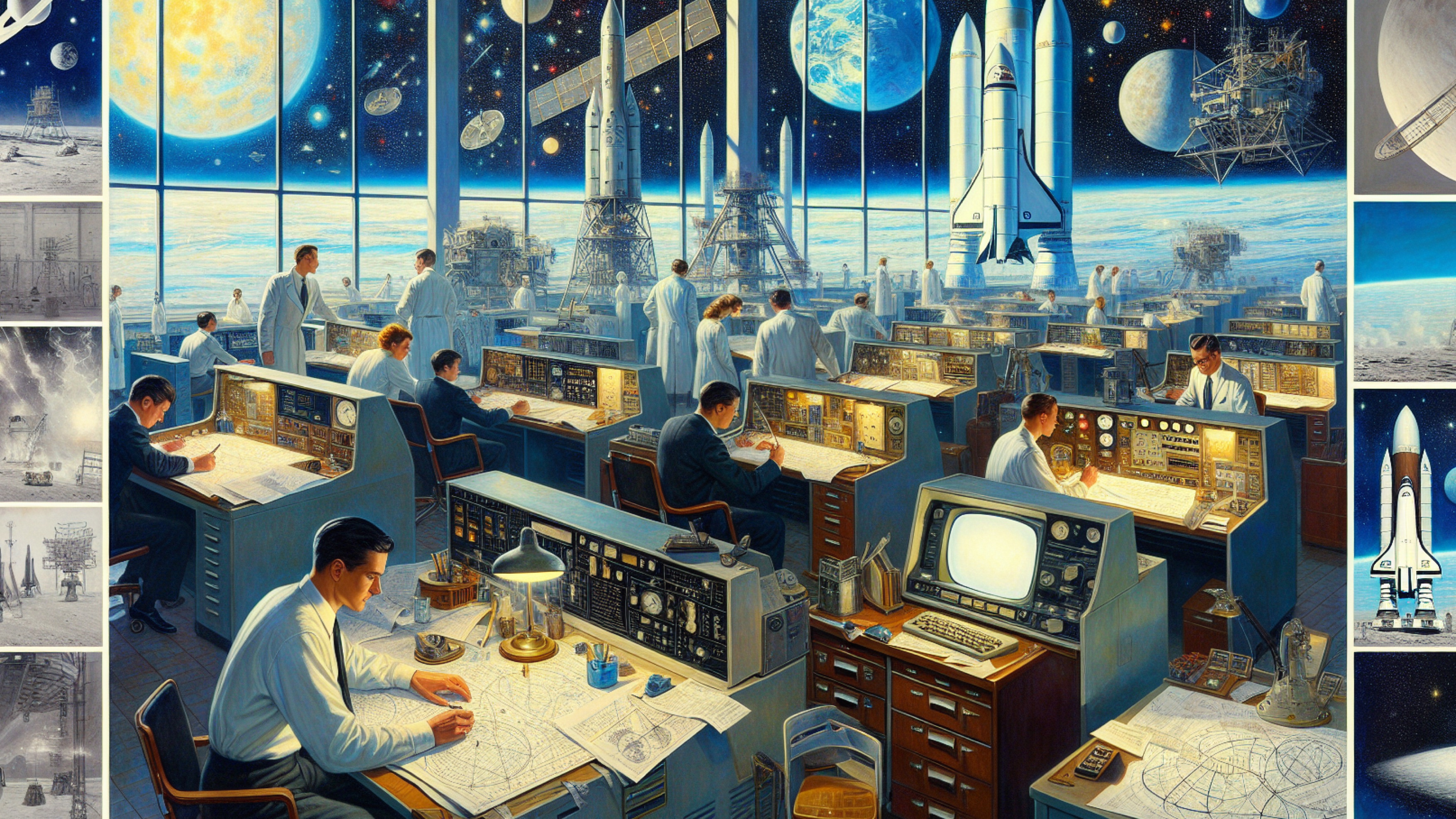
Billionaires launching rockets isn't the scandal. The real story is humanity hitting a wall on Earth's energy supply, and space represents the only way to break through that ceiling. We're not debating inequality, we're watching the beginning of an intelligence explosion.
My Take
Here's the uncomfortable truth the progressive critique of space exploration refuses to confront: innovation has never been democratic, and the messy, unequal, capital-intensive process of technological breakthrough has delivered more human flourishing than any egalitarian redistribution scheme in history. The people screaming about billionaires wasting money on rockets are the intellectual descendants of those who criticized Columbus for seeking new trade routes when people were starving in Europe, or who condemned Edison for tinkering with light bulbs when workers needed better wages. They're not wrong that inequality exists, they're wrong about the causal relationship between concentrated capital and human progress. The real scandal isn't that Musk and Bezos are funding space companies. It's that governments, which spent the 20th century commanding the heights of space exploration, have largely abandoned the frontier due to short-term political incentives and risk aversion. NASA's budget has collapsed from 4.4% of federal spending in 1966 to 0.4% today, less than Americans spend on pet food annually. The commercial space industry didn't emerge because billionaires stole resources from the public sector. It emerged because the public sector failed to maintain the ambition and execution capability that put humans on the moon, leaving a vacuum that private capital filled. What we're witnessing is the early chapters of humanity's most important transition: from a resource-constrained civilization grinding against planetary limits to a species that can scale its energy use, computational power, and physical presence across the solar system. The billionaires aren't heroes, they're just the catalysts who happen to be in the right place with the right resources at the right time. In 50 years, when orbital manufacturing feeds breakthroughs in AI-designed materials and space-based solar provides unlimited clean energy, nobody will care whether SpaceX was funded democratically. They'll care that someone had the vision and the capital to make it happen when government bureaucracies couldn't.
What Happens Next
Within 18 months, we'll see the first commercial space-based data center announcement, likely from a partnership between a major cloud provider (Amazon Web Services, Microsoft Azure, or Google Cloud) and either SpaceX or Blue Origin. The economics have finally crossed the viability threshold: launch costs under $500 per kilogram, proven satellite bus designs, and AI companies desperate for computational capacity beyond Earth's thermal and energy limits. This won't be a science experiment, it'll be a billion-dollar bet that space-based computation is cheaper than building yet another Texas data center farm. The real wildcard is China's response. Their Tiangong space station program and recent lunar sample return missions signal serious intent, but they're playing a different game: state-directed, long-term resource extraction rather than billionaire-led innovation races. If SpaceX achieves successful Starship orbital refueling by late 2025 as planned, China will accelerate their timeline dramatically, potentially announcing a crewed Mars mission for the early 2030s. This creates a scenario nobody's properly war-gamed: competing national and private interests establishing permanent presence on Mars simultaneously, with no treaty framework for property rights, resource extraction, or conflict resolution beyond Earth orbit. The scenario that keeps me up at night isn't space colonization failing, it's succeeding too well and too quickly. If orbital manufacturing and space-based solar power prove economically viable before we've solved AI alignment or established international governance frameworks, we'll face an intelligence explosion with unlimited energy in an essentially lawless frontier. That's not science fiction dystopia, that's the logical outcome of removing energy constraints on computation while political and ethical frameworks remain stuck in Earth-bound thinking. The next five years will determine whether humanity gets the mature, coordinated expansion into space that optimists envision, or the chaotic, dangerous gold rush that history suggests is far more likely.
What History Tells Us
The closest historical parallel to today's space race isn't the original 1960s NASA-Soviet competition, it's the age of European maritime exploration from 1400-1600. Then, as now, a combination of new technology (ocean-going ships versus reusable rockets), concentrated private capital (Portuguese and Spanish crown monopolies versus billionaire space companies), and resource scarcity on the home continent drove expansion into unknown frontiers. The key figures were controversial: Columbus's voyages were funded by Queen Isabella pawning her jewelry, while modern critics note his brutal governance of Hispaniola. Magellan's circumnavigation was backed by Spanish imperial ambitions, not democratic consensus. The outcomes were transformative but deeply unequal. European access to New World resources, Asian trade routes, and global naval supremacy enabled the Scientific Revolution, the Enlightenment, and the Industrial Revolution. These weren't accidents, they were direct consequences of expanded access to energy (labor, raw materials, trade goods) that broke the Malthusian constraints limiting European civilization. Yet this progress came at devastating cost to indigenous populations through colonization, disease, and exploitation. The lesson isn't that exploration is inherently evil, it's that humanity has never managed frontier expansion in an ethical, equitable manner. Whether we repeat those mistakes in space or learn from them will define the next chapter of human history, but pretending we can avoid expansion altogether ignores every pattern from our past.
Market Impact
Space industry stocks are positioned for explosive growth as the energy-computation thesis gains mainstream traction. Rocket Lab USA (RKLB) currently trades around $4.50 after a volatile 2023, but their Electron and Neutron rockets target the exact market sweet spot: mid-size launches for satellite constellations and orbital infrastructure. As data center providers begin seriously evaluating space-based options, launch service providers will see order books expand dramatically. The less obvious play is uranium and nuclear energy companies. Cameco Corp (CCJ) and Uranium Energy Corp (UEC) will benefit as the AI energy crisis forces reconsideration of nuclear power for both terrestrial data centers and space-based reactor development. NASA's Kilopower project and DARPA's nuclear thermal propulsion programs create dual-use technology that makes nuclear the only viable option for deep space missions and sustained Mars presence. Current uranium spot prices around $90 per pound remain well below the $130+ levels needed to incentivize new mine development, suggesting significant upside. Semiconductor companies with radiation-hardened chip divisions are wildly underpriced for the space computing boom. Microchip Technology (MCHP) and Analog Devices (ADI) both have space-qualified product lines, but markets haven't priced in the potential shift from hundreds of satellites annually to thousands of orbital servers. The real moonshot is whoever cracks room-temperature superconductors or quantum computing in space environments, both of which become dramatically more feasible with vacuum cooling and unlimited solar power. Watch for increased M&A activity as traditional aerospace primes like Northrop Grumman (NOC) and Lockheed Martin (LMT) acquire smaller space tech startups to hedge against being left behind in the commercial space race.