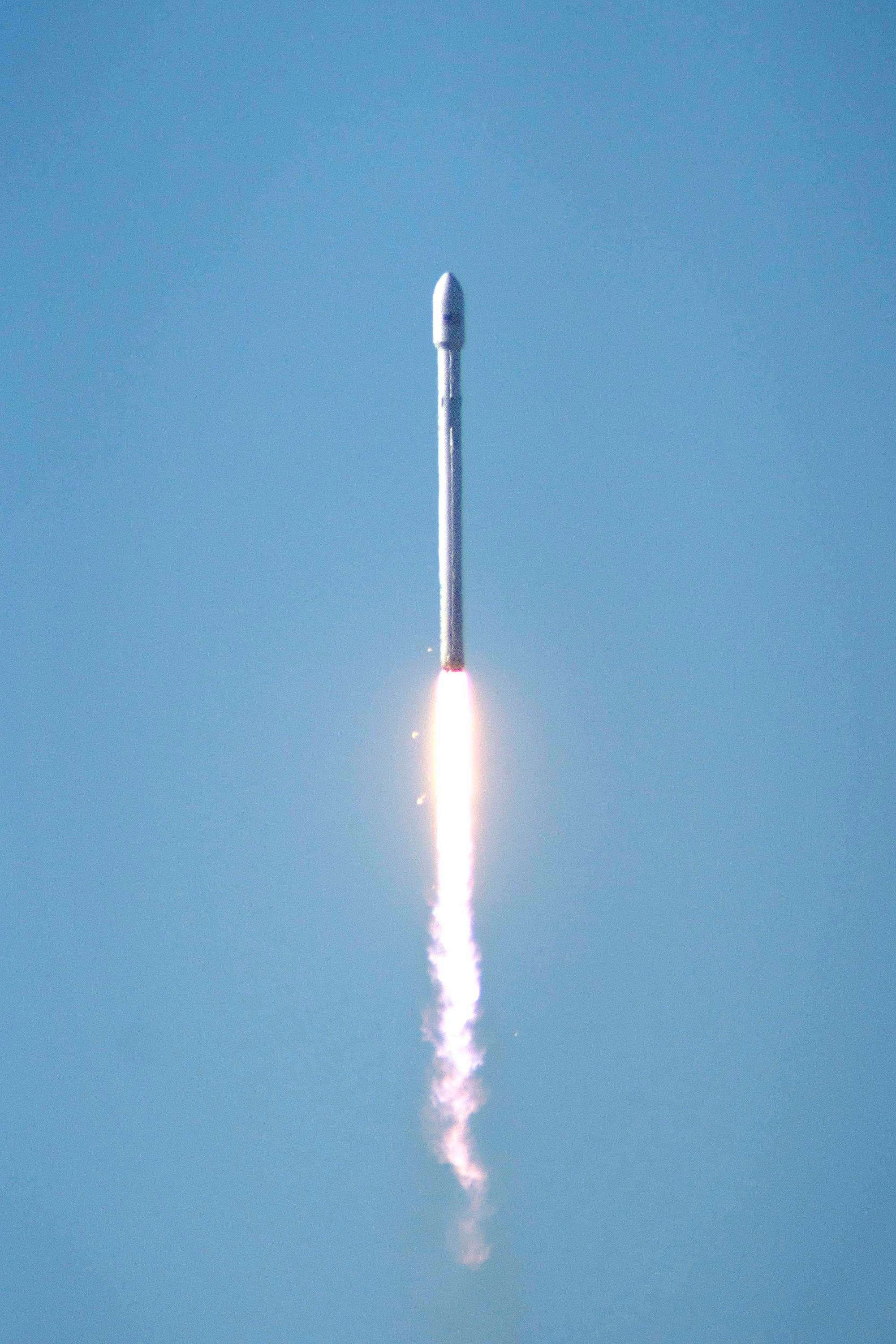
In January 2025, SpaceX launched a Falcon 9 rocket carrying two lunar landers: Firefly Aerospace's Blue Ghost-1 and ispace's Hakuto-R Mission 2. While Blue Ghost-1 successfully landed on the Moon, the upper stage of the Falcon 9 rocket, which carried the payloads, remained in orbit. Unlike typical Falcon 9 missions where the upper stage is de-orbited and burns up in Earth's atmosphere, this segment entered a trajectory toward the Moon. The impending impact is scheduled for August 5, 2026, at approximately 06:35 UTC, near the Einstein Crater on the lunar farside. The upper stage, weighing about 3,900 kilograms, is expected to strike the lunar surface at a speed of 2.43 kilometers per second, releasing energy comparable to three tons of TNT. This event is anticipated to produce a bright ejecta plume, potentially visible from Earth with sensitive telescopes. Simulations suggest the central spike of the plume could reach up to 100 kilometers in altitude and remain brighter than the surrounding dark sky for several minutes. Scientists view this unintentional lunar collision as a valuable opportunity to study the dynamics of lunar impacts from a known source. Unlike natural meteoroids, the Falcon 9 upper stage is a hollow, man-made spacecraft, which behaves differently upon impact. The event offers a rare chance to calibrate impact and ejecta models, providing insights that are crucial for future lunar missions and infrastructure planning. NASA's Lunar Reconnaissance Orbiter is scheduled to image the site before and after the impact to support scientific analysis. The collision also highlights the growing issue of space debris. With nearly 30,000 satellites and pieces of space debris now orbiting Earth, the management of rocket components left in high orbits has become a significant concern. SpaceX has acknowledged the need for better methods to manage these components to prevent unintended lunar impacts and other potential hazards. Historically, NASA has deliberately crashed spacecraft into the Moon to conduct seismic studies, such as during the Apollo era and the 2009 LCROSS mission. However, this event is unique due to the known origin and trajectory of the impacting object, providing a controlled experiment to study impact dynamics and ejecta behavior. The data gathered from this event will be invaluable for understanding the potential hazards posed by artificial space debris to future lunar exploration and infrastructure. In summary, while the impending crash of the SpaceX Falcon 9 upper stage into the Moon is unintentional, it presents a unique scientific opportunity. The event will provide valuable data on lunar impact dynamics, ejecta behavior, and the implications of space debris on lunar exploration. As space activities continue to increase, understanding and managing space debris will be crucial to ensure the safety and sustainability of future missions.
 🔬 science
SpaceX Rocket Set to Crash into Moon
A SpaceX Falcon 9 upper stage is on a collision course with the Moon, set to impact on August 5, 2026. This unintentional lunar crash offers scientists a rare opportunity to study the dynamics of lunar impacts from a known source.
My Take
The impending collision of a SpaceX Falcon 9 upper stage with the Moon is a stark reminder of the unintended consequences of our expanding presence in space. While scientists are eager to study the impact dynamics, the event underscores the pressing need for responsible space debris management. As private companies like SpaceX continue to launch missions, it's imperative that they develop and implement strategies to mitigate the creation of space debris. The Moon, our closest celestial neighbor, should not become a dumping ground for our discarded technology. This incident serves as a wake-up call for the space industry to prioritize sustainability and consider the long-term impacts of their activities on the lunar environment. Furthermore, the fact that this collision is occurring on the lunar farside, near the Einstein Crater, raises questions about the potential effects on future lunar exploration. The ejecta plume from the impact could pose risks to lunar missions, especially those operating in the vicinity. As we plan for sustained human presence on the Moon, understanding and mitigating the risks associated with space debris will be essential. This event should catalyze discussions and actions toward developing international guidelines and technologies aimed at debris removal and prevention, ensuring that our exploration of the Moon remains safe and responsible.
What Happens Next
The Falcon 9 upper stage is set to impact the Moon on August 5, 2026, at approximately 06:35 UTC near the Einstein Crater. NASA's Lunar Reconnaissance Orbiter is scheduled to capture images of the impact site before and after the collision to support scientific analysis. The data gathered from this event will be invaluable for understanding lunar impact dynamics and the behavior of artificial space debris upon impact. Additionally, the event is expected to be observed by both professional and amateur astronomers, providing a unique opportunity to study the effects of a known artificial impact on the lunar surface. The findings from this event may influence future space debris management strategies and inform the planning of future lunar missions to ensure the safety and sustainability of lunar exploration.
What History Tells Us
Historically, NASA has deliberately crashed spacecraft into the Moon to conduct seismic studies, such as during the Apollo era and the 2009 LCROSS mission. However, this event is unique due to the known origin and trajectory of the impacting object, providing a controlled experiment to study impact dynamics and ejecta behavior. The data gathered from this event will be invaluable for understanding the potential hazards posed by artificial space debris to future lunar exploration and infrastructure.