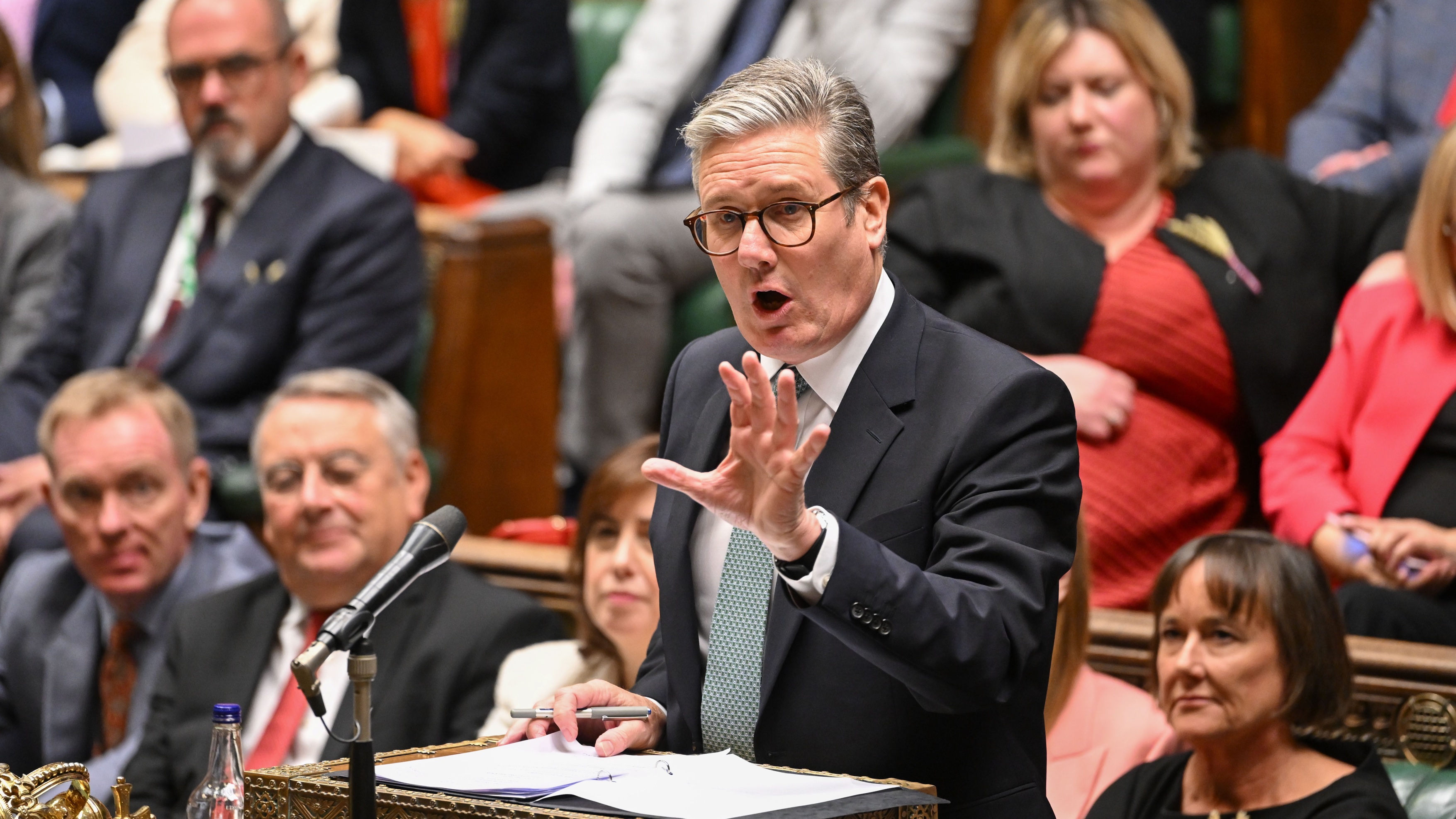
Keir Starmer stood outside 10 Downing Street this morning and admitted what everyone already knew: his party wants him gone. After nearly two years as Prime Minister, he's quitting following catastrophic May local elections that saw Labour lose control of Wales' Parliament, post its worst ever Scottish results, and shed over 1,200 council seats in England. The timing is brutal - Labour won a landslide general election in July 2024, and now they're scrambling to find their third leader since that victory. The immediate trigger was electoral humiliation, but the rot runs deeper. Starmer's government has lurched from one crisis to another. Policy U turns on welfare cuts. The Peter Mandelson disaster - appointing him as US Ambassador despite his well documented ties to Jeffrey Epstein, then claiming shock when it blew up. Mandelson failed security checks, got the job anyway, later got arrested on suspicion of leaking trade secrets to Epstein, and throughout it all Starmer insisted he knew nothing. Conservative leader Kemi Badenoch called that claim "completely preposterous," and documents released June 1st showed Mandelson himself thought Starmer "lacks verve, as does the Cabinet as a whole." Andy Burnham saw the weakness and pounced. The former Cabinet minister under Tony Blair has spent years as Greater Manchester Mayor, building a reputation as a straight talking northerner who gets things done. Last week he won a by-election in northern England after explicitly running against his own party's national leadership, telling voters "a vote for me will be a vote to change Labour." That's not subtle. Within hours of his victory, senior Labour figures started talking about leadership contests. Health Secretary Wes Streeting publicly backed Burnham even before Starmer resigned. The UK is now hunting for its seventh Prime Minister in a decade. Liz Truss lasted 44 days in 2022. Rishi Sunak managed one year and eight months. Starmer got just under two years. This churn is happening while the country faces an economic crisis linked to the war in Iran - oil prices are volatile, inflation is stubborn, and business confidence is shaky. Labour needs to pick a new leader by the time Parliament opens in September, which gives them roughly ten weeks to sort this out. Prediction markets are already treating Burnham's victory as a done deal - his odds of becoming the next Prime Minister topped 95% this morning. He's got momentum, he's got Cabinet backing, and he's got a narrative: the outsider who came back to save Labour from itself. The party membership will have a say, but the parliamentary party drives this process, and they've made their preference clear. Starmer will stay on as caretaker until September, which means Burnham has the summer to consolidate support and start building his team. The coronation is already underway.
 🏛️ politics
Starmer Crashes Out After Two Years of Chaos
Keir Starmer is done. The UK Prime Minister threw in the towel today after a brutal May election wipeout and a scandal involving Jeffrey Epstein's old pal that he somehow didn't see coming. Andy Burnham, the northern mayor who ran against Labour to get back into Parliament, is now the overwhelming favorite to take over.
My Take
Let's be honest: Starmer never had the political instincts for this job. He's a lawyer who became Labour leader by default after Jeremy Corbyn's catastrophic 2019 defeat, and he won the 2024 election because the Conservatives had spent years imploding. He didn't win so much as the Tories lost. And once he got into office, he proved he couldn't read a room, couldn't sell a policy, and couldn't protect himself from obvious scandals. The Mandelson affair is the perfect encapsulation of Starmer's failures. Everyone knew Peter Mandelson was friends with Jeffrey Epstein - there are photos, there are flight logs, there are birthday book entries. Starmer appointed him anyway because he thought Mandelson's trade expertise would help manage Trump's tariffs. When it blew up, Starmer claimed ignorance. When documents showed Mandelson had failed security checks and got the job anyway, Starmer claimed he'd been kept in the dark. Nobody believes that. The Prime Minister doesn't get to plead ignorance about who he appoints as Ambassador to the United States. Burnham is a completely different animal. He's got charisma, he's got a base outside London, and he's willing to fight his own party when he thinks they're wrong. That's what Labour needs right now - someone who can sell a vision, not just manage a coalition. The question is whether Burnham can hold the party together. He's more centrist than the Corbyn wing, but he's also more combative than Starmer ever was. If he wins, expect fireworks.
What Happens Next
Burnham will spend the next two weeks consolidating support among Labour MPs while pretending he hasn't already won. He'll give a big speech - probably in Manchester, definitely not in London - laying out his vision for "a Labour Party that listens to working people again." The membership will eat it up. By mid-July, potential challengers will realize the race is over and either drop out or position themselves for Cabinet jobs. Expect at least one left-wing candidate to run anyway, polling around 15-20%, just to make a point. The interesting wildcard is what happens with Starmer loyalists in the Cabinet. Several ministers owe their careers to Starmer and won't be thrilled about Burnham sweeping in. Watch for "cabinet reshuffle" leaks starting in late July as Burnham's team signals who's staying and who's getting binned. The Foreign Secretary is probably safe. The Chancellor might not be. Anyone closely associated with the Mandelson appointment is toast. Burnham's first 100 days will define whether this was worth it. He'll face an immediate confidence vote in Parliament - the Conservatives will force one just to watch Labour squirm - and he'll need to show he's different from Starmer without repudiating everything Labour has done since 2024. The real test comes in autumn when he has to present a budget. If he can't stabilize the economy and show Labour has a coherent plan for Iran-related oil shocks, the party will be right back where it started: hunting for Prime Minister number eight. The UK's political chaos isn't over. It's just getting a new leading man.
What History Tells Us
Britain has seen this carousel before. Between 1828 and 1830, the Duke of Wellington resigned as Prime Minister, got replaced, then came back. Between 1827 and 1830, Britain had four different Prime Ministers in less than three years. But the modern comparison is even more stark. Since David Cameron resigned after the Brexit referendum in July 2016, the UK has now cycled through seven Prime Ministers in exactly one decade: Cameron, Theresa May, Boris Johnson, Liz Truss, Rishi Sunak, Keir Starmer, and soon Andy Burnham. This level of churn typically happens during wartime or constitutional crises. Between 1940 and 1945, Britain had two Prime Ministers (Chamberlain and Churchill) because of World War II. Between 1922 and 1924, the country had three Prime Ministers as the post-WWI political order collapsed. What's happening now is different - this isn't external crisis driving change, it's internal dysfunction. Neither major party can sustain leadership for more than a couple of years. The Brexit realignment broke the old coalitions, and nobody has figured out how to build new ones that last. Burnham might be the one to crack it, given his northern base and crossover appeal. Or he might just be the seventh name on a list that keeps growing.
Market Impact
UK-focused assets are going to have a rough few weeks. The FTSE 100 (^FTSE) has been relatively stable this year, up about 4% year-to-date around 8,200 points, but political chaos historically spooks markets. The pound sterling will likely weaken against the dollar and euro as traders price in uncertainty - GBP/USD (GBPUSD=X) is currently around 1.27, and could test 1.25 if the leadership contest gets messy. UK gilt yields will probably tick up slightly as investors demand a premium for political risk. The sectors most exposed are financials and energy. Barclays (BARC.L) and HSBC (HSBA.L), which are heavily UK-focused, could see 2-3% downside if uncertainty persists into August. Energy stocks like BP (BP.L) and Shell (SHEL.L) are already volatile due to Iran war concerns, and a UK political crisis adds another layer of risk. However, if Burnham consolidates power quickly and projects stability, expect a relief rally in early September - especially in domestically-focused stocks like housebuilders and retailers. The contrarian play here is that Burnham might actually be good for markets. He's more business-friendly than Corbyn-era Labour, more decisive than Starmer, and has a track record of getting things done in Manchester. If he can project competence and stability, UK equities could outperform European peers in Q4 2026. The iShares MSCI United Kingdom ETF (EWU) might be worth watching - it's up 6% this year but still trades at a discount to European equivalents, pricing in exactly this kind of political dysfunction. A Burnham bounce could close that gap.