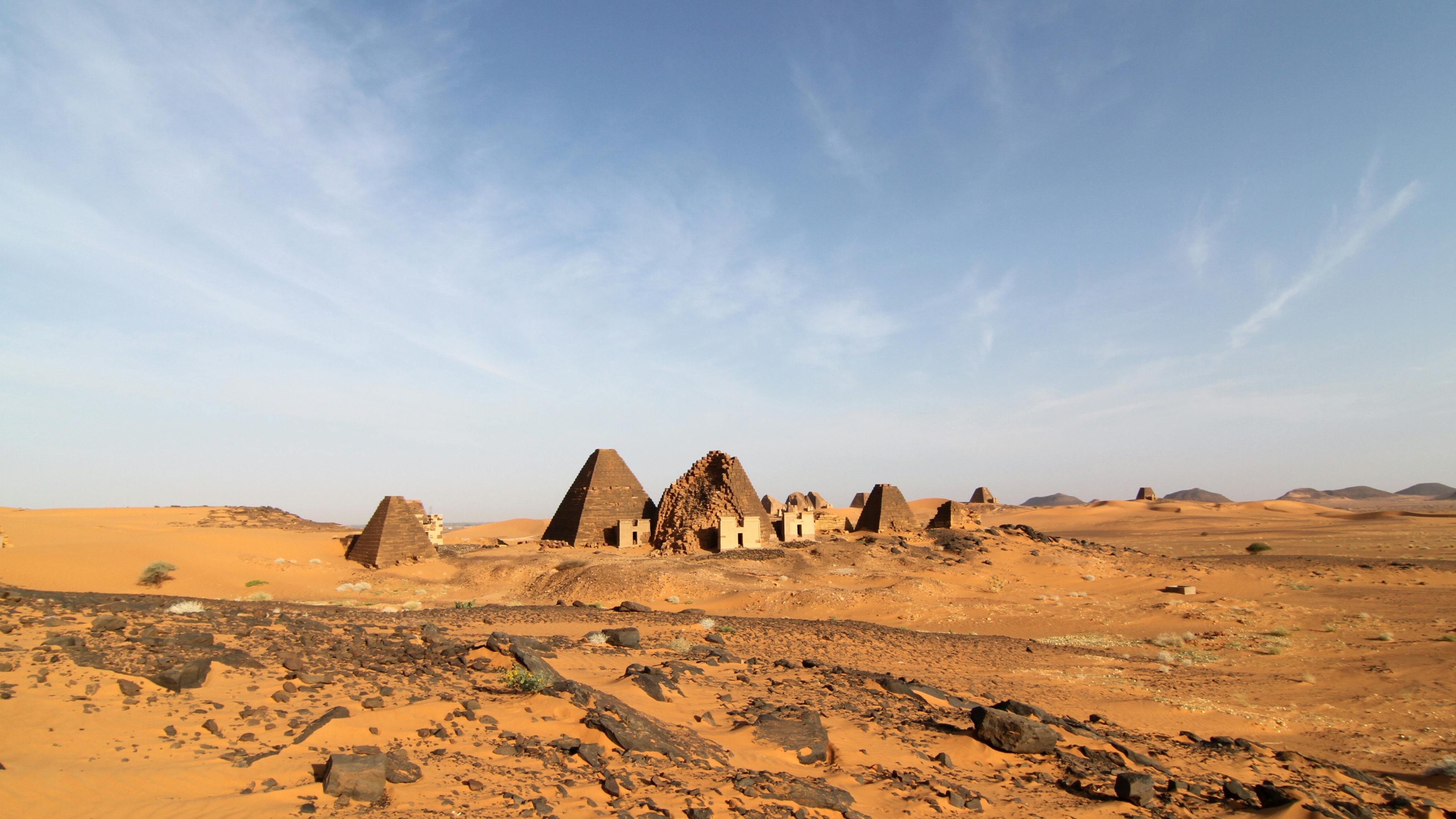
The Meroë pyramids, built between 300 BCE and 350 CE by the Kingdom of Kush, sit in Sudan's desert northeast of Khartoum. These 200-plus structures predate many Egyptian monuments and contain burial chambers of Nubian royalty filled with gold, jewelry, and artifacts that chronicle a civilization the ancient Greeks called Aethiopia. Since April 2023, when fighting erupted between the Sudanese Armed Forces (SAF) and the Rapid Support Forces (RSF), the site has been abandoned by guards and archaeologists. Recent satellite imagery analyzed by cultural heritage monitors shows fresh excavation marks, damaged pyramid caps, and vehicle tracks consistent with organized looting operations. The broader context is catastrophic. Sudan's civil war has killed over 15,000 people and displaced 8.5 million, creating what the United Nations calls the world's largest displacement crisis. The RSF controls much of the territory around Meroë, and neither warring faction has shown interest in protecting cultural sites. International archaeological teams evacuated in 2023 and haven't returned. The Sudanese National Museum in Khartoum, which housed many Meroë artifacts, was reportedly ransacked in June 2023, with staff unable to confirm what remains. UNESCO added Meroë to its List of World Heritage in Danger in 2024, but the designation carries no enforcement mechanism when a country has effectively collapsed. This isn't just about rocks and ruins. The Kingdom of Kush rivaled Egypt for centuries, developed its own writing system (Meroitic script, still not fully deciphered), and traded with Rome, India, and Arabia. The pyramids contain inscriptions and burial goods that could rewrite our understanding of ancient African civilizations. Unlike Egypt's heavily studied and protected sites, Meroë remains relatively unexplored by modern archaeology. Every looted tomb represents irreplaceable data destroyed before it could be properly documented. The black market for Kushite artifacts is thriving, with pieces appearing in European and Gulf state auction houses despite international treaties banning trade in looted cultural property. The international response has been minimal. The United States and European Union imposed sanctions on RSF leaders in 2024, but enforcement is weak and cultural heritage protection isn't mentioned in ceasefire negotiations. Egypt, which has deep historical and political interests in Sudan, is focused on managing refugee flows and Nile water rights. Saudi Arabia and the UAE, which have influence with both warring parties, haven't prioritized archaeological sites in their mediation efforts. The handful of scholars tracking the destruction are doing so remotely, using satellite data and tips from displaced Sudanese who fled the area. One told researchers they saw trucks loading carved stones from pyramid entrances in late 2025. The logistical reality makes intervention nearly impossible. Meroë is in an active war zone with no safe access routes. Any protection force would need to be militarily capable, politically neutral, and willing to operate in one of the world's most dangerous environments. The Sudanese transitional government (such as it is) lacks the capacity to secure Khartoum, let alone a remote desert site. Private security contractors, sometimes used to protect oil infrastructure in conflict zones, cost millions and require client governments that can pay. Sudan's economy has collapsed, its currency is worthless, and its international reserves are frozen. The pyramids are on their own.
 🌍 world
Sudan's Ancient Pyramids Face Looters While World Looks Away
The pyramids of Meroë, older than Egypt's Great Pyramid and a UNESCO World Heritage Site, are being systematically looted as Sudan's civil war enters its second year. With no functioning government protection and international attention fixed elsewhere, one of humanity's most important archaeological sites is being dismantled by treasure hunters and criminal networks.
My Take
Here's the uncomfortable truth: the world has decided the Meroë pyramids aren't worth saving. Not because they lack importance, but because Sudan has nothing the great powers need badly enough to justify intervention. There's no oil under those pyramids, no strategic port, no semiconductor factory. Just the cultural patrimony of Black African civilization that Europe and America have consistently undervalued. When ISIS threatened Palmyra in Syria, there were international task forces and military airstrikes. When the Taliban destroyed the Bamiyan Buddhas in 2001, it made global headlines for weeks. But Sudan's pyramids are being looted in real time and you're probably reading about it for the first time right now. The archaeology community knows what's happening and is largely powerless to stop it. They can write reports, update danger lists, and brief diplomats who nod politely and do nothing. Meanwhile, Kushite gold jewelry will surface at Christie's in five years with vague provenance paperwork, and wealthy collectors will pretend they don't know where it really came from. This is how civilizations get erased, not in dramatic explosions but in a slow, profitable dismantling that continues because stopping it would require effort no one's willing to expend. The Meroë pyramids survived 2,000 years of desert storms, colonial powers, and regime changes. They might not survive this decade.
What Happens Next
The looting accelerates through 2026 as both sides in Sudan's civil war realize cultural artifacts are a revenue source. RSF commanders, who already fund operations through gold mining and smuggling, will establish organized excavation teams at Meroë with a percentage going to field officers. By late 2026, enough high-value pieces will hit the black market that Interpol issues a red notice for Kushite artifacts, but enforcement will be a joke. The real inflection point comes when a major Western museum gets caught buying looted Meroë material. The scandal forces UNESCO to propose armed protection for endangered sites, but the Security Council can't agree on who funds it or which country leads. Meanwhile, satellite monitoring in early 2027 shows systematic destruction of pyramid interiors as looters use explosives to bypass sealed chambers. The Kingdom of Kush, which survived conquest by Assyria, Persia, and Rome, gets wiped from the archaeological record by civil war profiteers while the international community debates the finer points of sovereignty and intervention.
What History Tells Us
This follows a grim pattern of war-driven cultural destruction. Iraq's National Museum was looted in 2003 when Baghdad fell, with an estimated 15,000 artifacts stolen (many still missing). Syria's civil war enabled ISIS to systematically destroy Palmyra's Roman ruins in 2015 and loot countless archaeological sites to fund operations. Afghanistan lost the Bamiyan Buddhas to Taliban dynamite in 2001. The difference is scale and attention: those sites got international media coverage and some recovery efforts. Meroë is being destroyed in near-total silence. The closest parallel might be the looting of Cambodia's Angkor temples in the 1970s during the Khmer Rouge era, when civil collapse enabled systematic theft of priceless Khmer art. It took decades and ongoing diplomatic pressure to recover a fraction of what was stolen, and many pieces remain in private collections or museums that acquired them during the chaos.