Solar flares and coronal mass ejections (CMEs) are explosive events on the Sun's surface, releasing immense amounts of energy. In January 2026, a particularly strong X-class solar flare caused a geomagnetic storm, leading to some of the most intense radiation storms on record. These events can disrupt Earth's magnetic field, affecting satellites, power grids, and communication systems worldwide. The energy output of these solar phenomena is absolutely staggering. A single X-class flare can release as much energy as a billion atomic bombs detonating simultaneously. This immense energy travels through space at millions of miles per hour, and when it collides with Earth's magnetosphere, it can induce massive electric currents in power lines, potentially frying transformers and triggering cascading blackouts across entire continents. The 2026 event posed a severe threat to satellites orbiting in the radiation-heavy zones, power grids stretching across North America and Europe, and navigation systems that modern society depends on for everything from aviation to agriculture. The potential devastation from such solar storms is genuinely terrifying when you map out the scenarios. A worst-case event, comparable to the legendary 1859 Carrington Event, could plunge major population centers into darkness for weeks or even months. Satellite constellations worth hundreds of billions of dollars could be rendered useless, GPS systems (Global Positioning System) that guide everything from emergency services to food delivery could fail completely, and the internet backbone that connects our digital world could suffer catastrophic damage. The societal impact would be immense, with hospitals losing backup power, water treatment facilities going offline, and supply chains grinding to a halt. Panic buying would likely begin within hours, and public unrest could follow as food shortages develop and cash machines stop working. Now, could solar storms have killed the dinosaurs 66 million years ago? The short answer is no, and the scientific evidence is overwhelming. The dinosaur extinction was caused by a massive asteroid impact in what is now the Chicxulub crater in Mexico, not by solar activity. We know this because the geological record shows a distinct layer of iridium (a metal rare on Earth but common in asteroids) dating to exactly 66 million years ago, along with shocked quartz, tektites (glassy spheres formed by impact), and massive tsunami deposits. Solar storms simply do not leave this kind of physical evidence in rock layers. Furthermore, solar storms affect technology and electronic systems, not biological life directly. Even the most extreme solar event would not cause mass extinction of species because Earth's atmosphere and magnetic field provide robust protection against solar radiation for living organisms. Animals and plants survived the Carrington Event just fine in 1859, and they would survive future solar storms equally well. The radiation from solar flares does not penetrate to ground level in doses sufficient to cause widespread death. What about other mass extinctions throughout Earth's history? Could any of them be linked to solar activity? Again, the evidence says no. The five major mass extinction events (end-Ordovician, late Devonian, end-Permian, end-Triassic, and end-Cretaceous) all have terrestrial or impact-related explanations supported by geological evidence. The end-Permian extinction, the worst in Earth's history that killed 96% of marine species, was likely caused by massive volcanic eruptions in Siberia that released enormous amounts of greenhouse gases and toxic substances. The end-Triassic extinction coincides with the breakup of Pangaea and another round of massive volcanism. None of these events show the signature that a solar cause would require. If solar storms were capable of causing mass extinctions, we would expect to see periodic extinction events correlated with solar cycles or stellar evolution, but the fossil record shows no such pattern. The recovery process following a major solar storm would be extraordinarily complex and expensive. Power grid operators would face a monumental task, needing to inspect and potentially replace thousands of transformers, many of which take months to manufacture and are not kept in large stockpiles. Satellite operators might need to launch entirely new constellations, a process that could take years and cost tens of billions of dollars. Industries that rely on precise GPS timing, including financial markets that timestamp transactions and telecommunications networks that synchronize data, would need to develop backup systems or face prolonged disruptions. The global economy could contract by several percentage points as manufacturing halts, shipping delays compound, and consumer confidence evaporates. Insurance companies would face claims potentially exceeding a trillion dollars, and governments would need to deploy emergency resources on a scale not seen since major wars. Understanding and preparing for these solar events is no longer optional but absolutely critical for civilization's continuity. While we cannot prevent the Sun from unleashing its fury, we can dramatically reduce our vulnerability through strategic investments in hardened infrastructure, improved space weather forecasting systems, and comprehensive public education programs. The 2026 events serve as an urgent wake-up call about the vulnerabilities baked into our technology-dependent society. We need redundant systems, better shielding for critical electronics, and emergency protocols that actually work when the grid goes down. Space agencies like ESA (European Space Agency) and NOAA (National Oceanic and Atmospheric Administration) are developing better early warning systems, but detection is only half the battle. We need the political will to spend money now to prevent catastrophe later, and that requires governments to treat space weather as the existential threat it truly represents to our technological civilization, even if it poses zero threat to biological life itself.
 🔬 science
Sun's Fury Could Cripple Modern Civilization Tomorrow
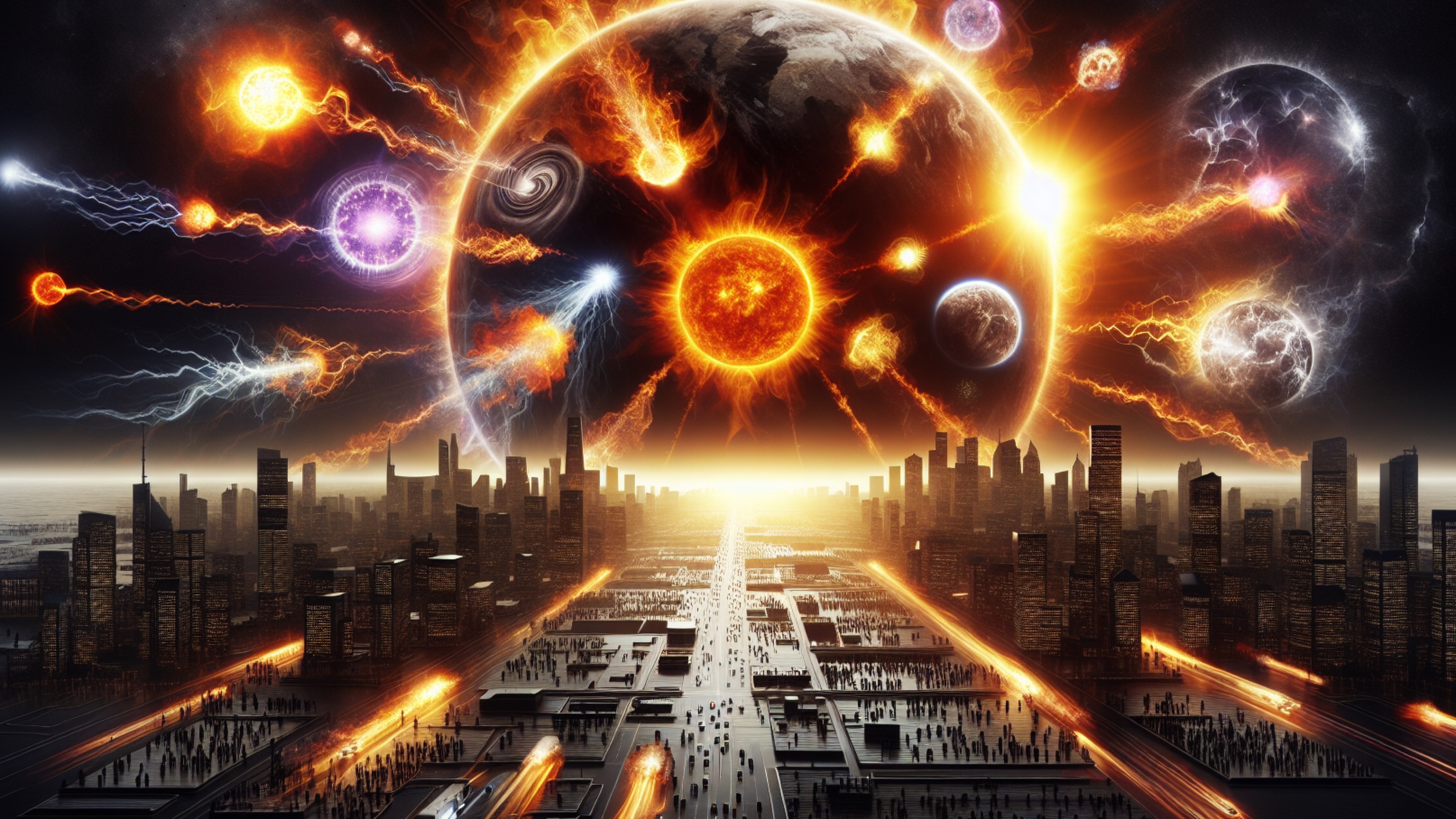
Solar flares and storms are ticking time bombs, capable of wreaking havoc on our technology-dependent world. Their energy output is staggering, and the aftermath could be catastrophic.
My Take
Solar storms are not just cosmic phenomena or abstract scientific curiosities. They are legitimate existential threats that could send modern civilization spiraling backward by a century in the span of a single weekend. The 2026 events pulled back the curtain on just how dangerously fragile our technological infrastructure really is, and frankly, the response from governments and corporations has been pathetically inadequate. We are playing Russian roulette with the Sun, and every solar cycle that passes without a Carrington-level event is just dumb luck, not good planning. The potential for complete societal breakdown in the wake of a major solar storm is not some doomsday prepper fantasy. It is a documented risk that scientists have been screaming about for decades while politicians ignore them in favor of more politically convenient problems. Panic buying would be the least of our worries. We would see hospital patients dying when backup generators fail, water-borne diseases spreading as treatment plants shut down, and social order breaking down as people realize their money is just numbers in computers that no longer work. The hard truth nobody wants to admit is that our technological advancement has created unprecedented vulnerability. We have built a house of cards on top of systems that can be knocked flat by radiation from a star 93 million miles away, and we are doing almost nothing to address it. Until we see hardened power grids, shielded satellites, and serious investment in resilience rather than quarterly profits, we are just waiting for nature to remind us how small we really are.
What Happens Next
The 2026 solar storm will either be remembered as the moment humanity got serious about space weather, or as the warning we ignored before catastrophe struck. Right now, the response is mixed at best. Some utility companies are quietly investing in grid hardening, installing equipment that can withstand geomagnetically induced currents. Space agencies are pushing for expanded monitoring networks, including satellites positioned at crucial observation points between Earth and Sun. A few governments are updating their disaster preparedness plans to include solar storm scenarios. But the pace is glacial compared to the scale of the threat. Most critical infrastructure remains dangerously exposed. The private satellite industry continues launching constellations optimized for cost rather than resilience. And public awareness remains shockingly low, with most people having no idea that a solar storm could end modern life as they know it within 24 hours. The real question is whether we will learn the lesson before paying the full price. History suggests humans are terrible at preventing disasters we have never personally experienced. The Carrington Event happened before electricity powered civilization, so we have never actually lived through a worst-case scenario in the modern era. That inexperience breeds complacency. Unless the 2026 near-miss sparks genuine political action and sustained investment in resilience, we will likely sleepwalk into a preventable catastrophe. The Sun does not care about our quarterly earnings reports or election cycles. It will deliver the next big one whenever physics dictates, and we will either be ready or we will suffer consequences that make every recent crisis look trivial by comparison.
What History Tells Us
The 1859 Carrington Event remains the most significant solar storm on record, causing widespread telegraph outages and auroras visible as far south as the Caribbean. This event serves as a historical benchmark for understanding the potential impact of solar storms on Earth's technology and infrastructure.
Market Impact
A major solar storm could have significant economic repercussions. Industries reliant on satellite communication, GPS, and power grids would face substantial disruptions. The stock market could experience volatility due to these widespread impacts. Companies in the technology and energy sectors would need to invest heavily in infrastructure upgrades to mitigate risks, potentially affecting their financial performance in the short term.