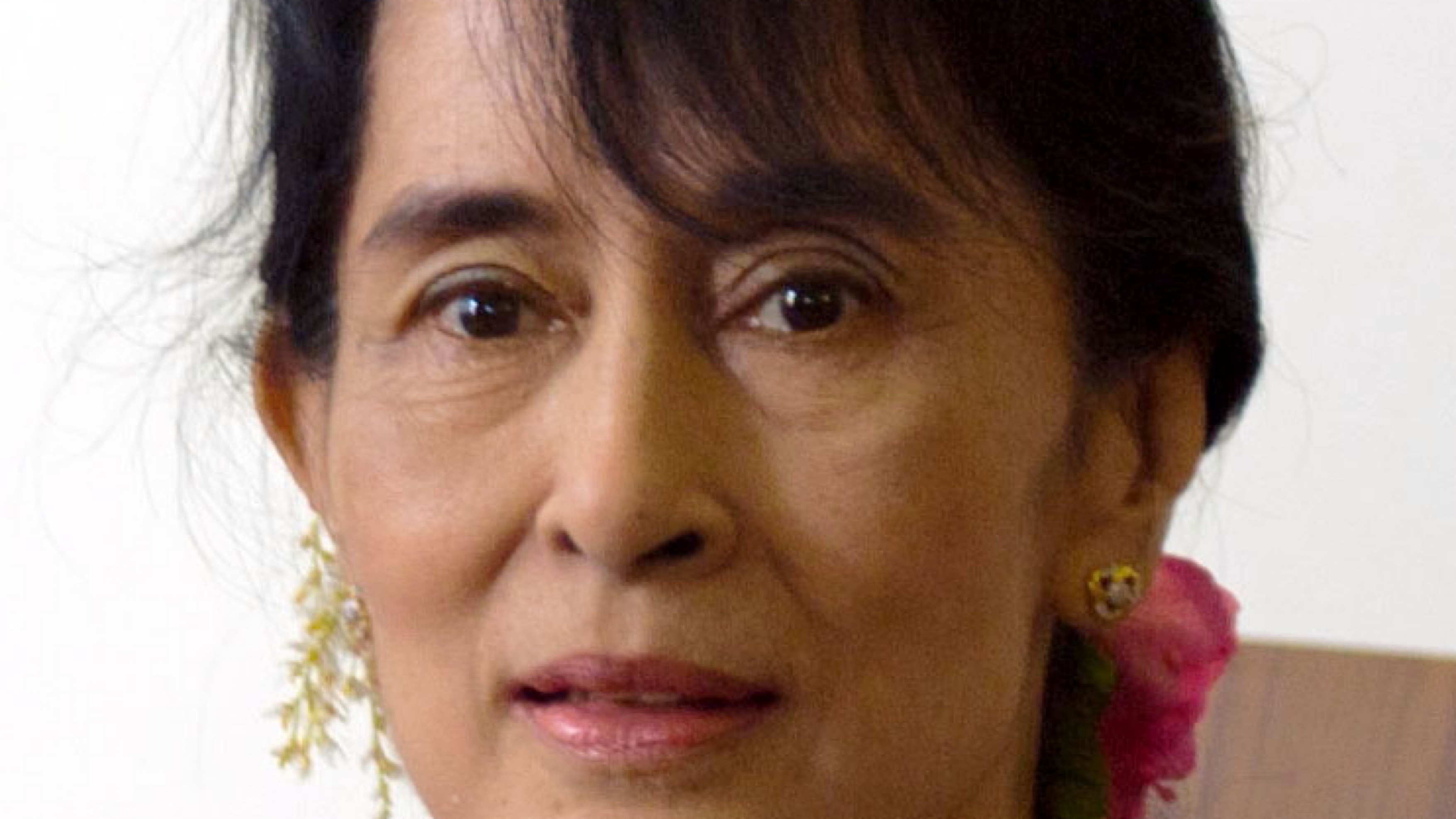
Aung San Suu Kyi, Myanmar's 80 year old former civilian leader and Nobel Peace Prize winner, has been transferred from prison to house arrest, state media confirmed on April 30, 2026. The military junta that ousted her government in a February 2021 coup framed the move as part of a broader prisoner pardon tied to a Buddhist religious holiday. Suu Kyi has been detained for over five years, her exact location kept secret by authorities as Myanmar descended into a brutal civil war that has killed thousands and displaced millions. The junta has kept Suu Kyi isolated since the coup, convicting her on a litany of charges that include corruption, violating a colonial era secrets act, and election fraud, all widely dismissed by international observers as politically motivated show trials. She faced a combined sentence of more than 30 years. Her National League for Democracy (NLD) party won landslide elections in 2020, but the military refused to accept the results and seized power, claiming voter fraud without credible evidence. The coup triggered mass protests, which security forces crushed with live ammunition, killing more than 1,000 people in the first months alone. Since then, Myanmar has fragmented into a patchwork of armed resistance groups, ethnic militias, and junta controlled zones. The military has lost effective control over large swaths of territory, particularly in border regions where ethnic armed organizations and newly formed People's Defense Forces (PDFs) have mounted sustained offensives. The economy has cratered. The kyat has lost more than half its value, foreign investment has evaporated, and basic services have collapsed in many areas. The United Nations estimates that over 2 million people have been internally displaced, with another half million fleeing across borders. The timing of Suu Kyi's transfer matters. The junta faces its weakest military position since the coup, with coordinated rebel offensives capturing key towns and military bases in Shan, Kachin, and Rakhine states over the past year. International pressure has intensified. The Association of Southeast Asian Nations (ASEAN), typically reluctant to criticize member states, has increasingly sidelined Myanmar's military leaders from regional summits. China, long a backer of Myanmar's military, has shown growing frustration with the junta's inability to stabilize the country and protect Chinese infrastructure projects that have been targeted by resistance forces. House arrest for Suu Kyi is not freedom. It's a symbolic gesture designed to test international reaction and potentially create space for backchannel negotiations. The junta has floated similar moves before, releasing a handful of political prisoners while continuing mass arrests and extrajudicial killings elsewhere. State media reported that the pardon covers thousands of prisoners, but details remain murky, and there's no indication that other high profile political detainees, including Australian economist Sean Turnell and NLD officials, have been released. Suu Kyi's health has been a source of concern, with reports suggesting she suffers from heart problems and other age related conditions, though independent verification is impossible given her isolation.
 🌍 world
Suu Kyi's Pardon Feels Like Amnesty for the Generals
Myanmar's junta moved Aung San Suu Kyi from prison to house arrest after five years, framing it as a Buddhist holiday pardon. The 80 year old Nobel laureate hasn't been seen publicly since the 2021 coup that plunged the country into civil war. Don't mistake this for mercy. It's a calculated move by a regime losing ground.
My Take
Let's be clear. This isn't a humanitarian gesture. The junta is bleeding territory, losing soldiers, and running out of options. Moving an 80 year old woman from a cell to a house doesn't erase five years of arbitrary detention, rigged trials, and the systematic destruction of Myanmar's democratic institutions. It's a tactical retreat disguised as magnanimity, designed to soften international criticism while the military tries to regroup. The bigger question is whether Suu Kyi even has political relevance anymore. Her legacy is complicated. She's revered as a democracy icon by many, but reviled by ethnic minorities for her complicity in the Rohingya genocide when she held power. The resistance movement that emerged after the coup is younger, more decentralized, and more willing to embrace armed struggle than her generation of NLD politicians ever was. Many of these fighters see her as part of the old guard, too invested in institutional politics that the military has repeatedly demolished. House arrest might keep her alive, but it won't restore her to power, and it certainly won't end the civil war. What the world should watch is whether this signals a genuine willingness by the junta to negotiate, or just another smokescreen. Every time the military has dangled the prospect of talks, it's used the breathing room to consolidate control and crush opposition. Until Suu Kyi can move freely, speak publicly, and participate in politics without threat of rearrest, this is just optics, and bad optics at that.
What Happens Next
The immediate test is whether Suu Kyi will be allowed any contact with the outside world: family visits, legal counsel, or communication with her party. If she remains completely isolated under house arrest, this changes nothing substantively. The military has used house arrest before as a pressure valve, keeping her visible enough to claim leniency while denying her any platform or influence. Expect the junta to use this move as leverage in upcoming ASEAN meetings and bilateral talks with China, arguing they're making democratic concessions while continuing military operations in rebel held areas. Within Myanmar, the resistance movement won't slow down because Suu Kyi changed addresses. The People's Defense Forces and ethnic armed organizations have momentum. They've captured significant territory over the past 18 months and have no incentive to negotiate from a position of weakness. If anything, they'll interpret this as a sign of junta desperation and press harder. Watch for escalating clashes in Mandalay and Sagaing regions over the next three months, particularly as the rainy season approaches and military supply lines become more vulnerable. The wildcard is whether China decides to push both sides toward talks. Beijing has invested billions in Myanmar infrastructure and needs stability, but it won't openly abandon the military unless convinced the regime is truly collapsing. The scenario nobody's gaming out: what if Suu Kyi dies under house arrest? She's 80, in poor health, and has been under immense stress for five years. If she passes away, the junta loses its most valuable bargaining chip, and the resistance movement loses its most globally recognized figurehead. That could either galvanize international intervention (unlikely given Western fatigue with Myanmar) or accelerate the country's fragmentation into autonomous zones controlled by competing armed groups. The NLD would fracture further without her symbolic authority, potentially strengthening more radical elements within the resistance who've argued all along that negotiating with the military is pointless.
What History Tells Us
Suu Kyi's house arrest echoes her previous detentions. She spent 15 of the 21 years between 1989 and 2010 confined to her Yangon home under earlier military regimes. That period established her as a global icon of peaceful resistance, earning her the Nobel Peace Prize in 1991 while still detained. International pressure eventually forced the junta to release her in 2010 and allow limited democratic reforms, though the military retained ultimate control through a constitution that guaranteed it 25% of parliamentary seats and veto power over key decisions. The parallel to Nelson Mandela's gradual release process is imperfect but instructive. South Africa's apartheid regime moved Mandela from Robben Island to Pollsmoor Prison in 1982, then to a private cottage at Victor Verster Prison in 1988, before finally releasing him in 1990. Each stage was designed to test domestic and international reactions while the regime negotiated its own survival. The key difference: South Africa's government faced coordinated international sanctions and economic collapse that forced real concessions. Myanmar's junta enjoys tacit support from China and Russia, insulating it from the kind of pressure that broke Pretoria. Suu Kyi's house arrest might signal the beginning of a similar process, but without unified international leverage, it could just as easily be a permanent holding pattern.