The tech industry is experiencing a historic role reversal that would have seemed absurd three years ago. In 2024 and early 2025, major technology companies executed mass layoffs targeting contractors first, a strategic move that allowed them to slash headcount without triggering Worker Adjustment and Retraining Notification (WARN) Act requirements or damaging full time employee morale. Google cut approximately 12,000 positions in early 2023, followed by Meta's 21,000 person reduction across 2023, Microsoft's 10,000 in January 2023, and Amazon's staggered 27,000 cuts through 2023 and 2024. By late 2024, LinkedIn data showed over 262,000 tech workers were laid off globally, with contractors bearing the brunt. These weren't junior developers struggling to land their first role. These were senior and staff engineers, architects with 15 years at FAANG (Facebook, Amazon, Apple, Netflix, Google) companies, people who once commanded $300,000 plus total compensation packages. The contractor first strategy made cold financial sense for companies facing pressure from investors to demonstrate profitability in a high interest rate environment. Contractors cost 20 to 40% more per hour than full time employees when accounting for agency fees, but they carry zero benefits burden, no severance obligations, and can be terminated with minimal legal exposure. When the Federal Reserve raised interest rates from near zero in 2022 to over 5% by mid 2023, venture capital dried up and public tech companies saw their price to earnings ratios compress brutally. The S&P 500 Information Technology sector, which traded at a forward P/E of 28 in late 2021, dropped to 22 by late 2023. CFOs did what CFOs do in that environment: they cut the most expensive, least legally protected workers first. What nobody anticipated was the downstream chaos. Now we're seeing the fallout play out in real time across job platforms and LinkedIn feeds. Senior engineers with impressive résumés are applying for mid level and even junior positions, willing to take 40 to 50% pay cuts just to secure stable income. A staff engineer who made $280,000 at Meta is now competing for a $120,000 mid level role at a Series B startup, and they're losing to candidates with less experience who command lower salaries and won't intimidate first time engineering managers. Hiring managers admit privately that they worry overqualified candidates will leave the moment the market recovers, or worse, that they'll be difficult to manage because they're used to operating at higher levels of autonomy and influence. The result: thousands of highly skilled engineers are effectively unhireable at their experience level and too risky to hire below it. They're stuck in no man's land, burning through savings while mortgage payments and childcare costs don't pause for market corrections. Simultaneously, the explosion of generative AI tools like ChatGPT, Claude, Cursor, and GitHub Copilot has convinced a generation of non engineers that they can bypass the traditional software development pipeline entirely. We're seeing an unprecedented surge in solo founders and micro SaaS (Software as a Service) builders, people who six months ago couldn't write a for loop but now claim they're shipping production applications with AI assistance. Platforms like Bubble, Webflow, and Replit have democratized basic web development, while large language models (LLMs) can generate functional code from natural language prompts. The hype is real, but so is the delusion. Most of these AI assisted founders are building shallow CRUD (Create, Read, Update, Delete) applications with no sustainable competitive advantage, no understanding of system architecture, security, or scalability, and zero business fundamentals. The internet is about to be flooded with half baked SaaS products that look slick in demos but collapse under real user load or die from founder burnout within six months. Companies, meanwhile, are drowning in applications. A single mid level software engineer posting at a respectable company now routinely attracts 500 to 1,000 plus applications within 48 hours, many from candidates who are dramatically overqualified on paper. Recruiting teams that were already understaffed after their own rounds of layoffs simply cannot process this volume meaningfully. Applicant Tracking Systems (ATS) filter out 75% of résumés using keyword matching and automated scoring, which means exceptional engineers who don't game the system with the right buzzwords never reach human eyes. LinkedIn's January 2025 data revealed that software engineering roles received an average of 300 plus applications per posting, up from 150 in 2022. For senior roles, the number doubles. Recruiters are resorting to increasingly arbitrary filters: graduates from top 10 computer science programs only, current employees at specific competitor companies, or referrals from trusted networks. If you're not in those circles, you're invisible no matter how good you are. The psychological toll on displaced engineers is severe and underreported. These are people who built their identities around being problem solvers, builders, creators. Software engineering attracted a particular personality type: people who loved the immediate feedback loop of writing code, seeing it work, and shipping products that millions used. That sense of agency and impact is gone when you're sending 200 applications into the void and getting zero responses. Worse, the industry that spent a decade telling engineers they were special, that they were the talent war's most valuable asset, has revealed that loyalty was always one directional. The social contract is broken. Engineers are realizing they were always just line items on a spreadsheet, expendable the moment growth projections flattened.
 💻 technology
Tech's Bloodbath: Why Senior Engineers Are Begging for Junior Jobs
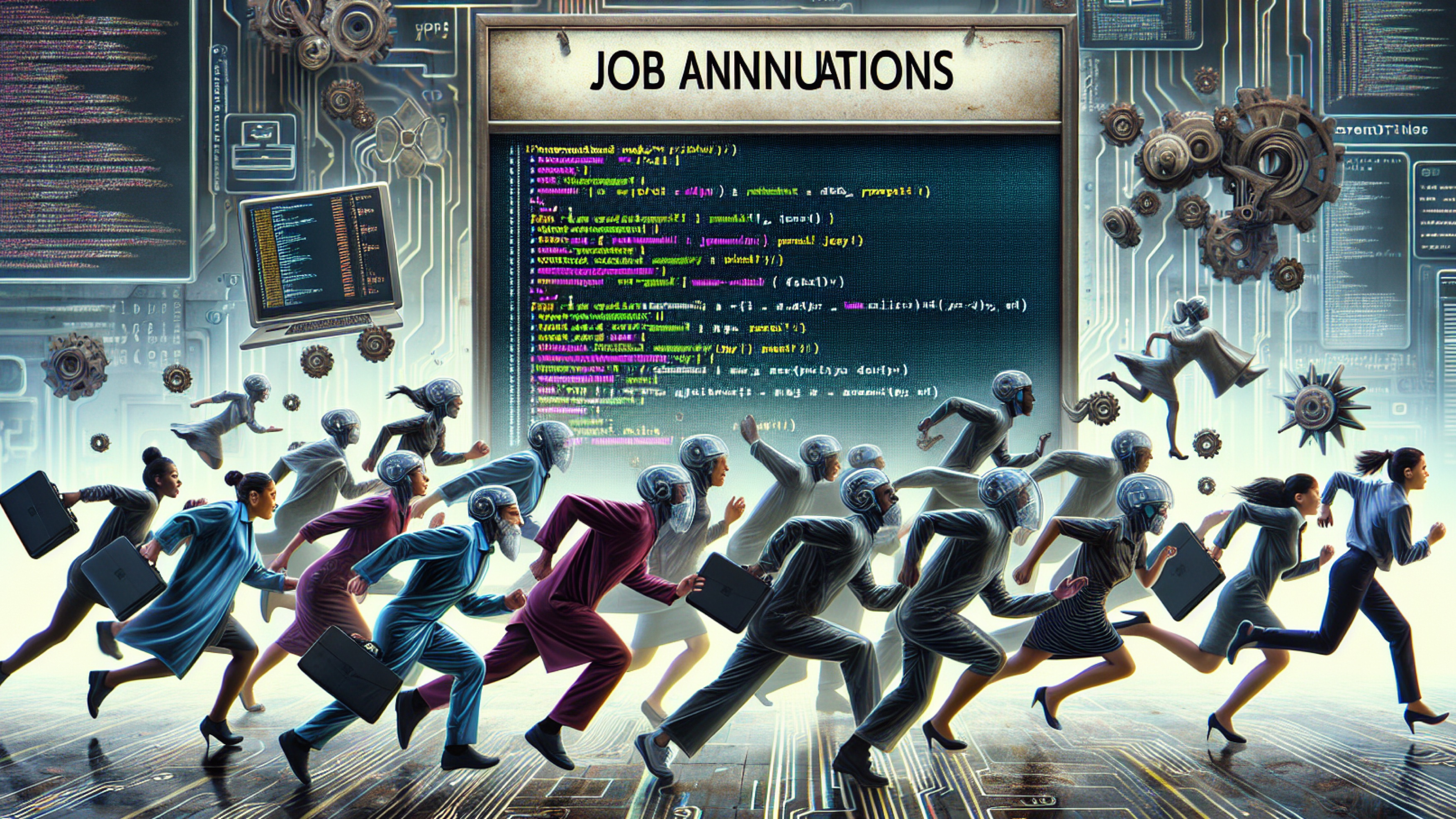
The contractor purge is here. Thousands of laid off software engineers, many with 10 plus years of experience, are flooding job boards and applying for entry level roles just to keep their lights on. Meanwhile, a wave of AI powered founders think they can build the next unicorn solo. The market is about to get very ugly.
My Take
Let's be brutally honest: tech's arrogance is finally catching up with it. For fifteen years, the industry operated on the assumption that growth was infinite, that every company would be the next Google, and that engineers could job hop every 18 months for 30% raises without consequences. That world is dead. The contractor massacre was predictable the moment interest rates started climbing, yet somehow thousands of engineers believed they were immune because they'd survived previous downturns or because their specific niche (machine learning, distributed systems, whatever) was supposedly recession proof. It wasn't. The AI founder gold rush is equally delusional. Yes, tools like GPT 4 and Claude can generate impressive code snippets. No, that doesn't make you a software engineer any more than owning a stethoscope makes you a doctor. Building a functional prototype with AI assistance is the easy part. The hard part, the part that separates amateurs from professionals, is understanding why the code works, how it fails under edge cases, how to debug production incidents at 3 AM, how to architect systems that don't collapse under scale, and how to work in teams where code review and collaboration matter more than individual heroics. The market will correct this fantasy harshly. We'll see a wave of failed micro SaaS products, burned out solo founders, and a lot of people learning expensive lessons about the difference between building something that works on their laptop versus building something that works for 100,000 concurrent users. The real tragedy is the human cost that nobody with power seems to care about. Senior engineers applying for junior roles to keep their homes aren't market inefficiencies to be optimized away. They're people with families, mortgages, and skills that took decades to develop. The industry chewed them up, spit them out, and moved on without a second thought. And when the next boom cycle starts, and it will, tech companies will cry about talent shortages and beg these same engineers to come back. I hope they remember how they were treated.
What Happens Next
By late 2026, we'll see a bifurcation of the software engineering job market that makes today's chaos look mild. The top 10% of engineers, those with deep expertise in AI/ML (Artificial Intelligence/Machine Learning), security, or infrastructure at scale, plus strong network connections, will continue to command premium compensation. Everyone else will be competing in a brutal race to the bottom where offshore development shops in Eastern Europe, Latin America, and South Asia undercut U.S. wages by 60 to 70%. Companies will increasingly adopt a barbell strategy: a small core of elite full time engineers supplemented by a global army of contractors and AI assisted junior developers who cost a fraction of what mid level U.S. engineers demanded in 2021. That middle tier, the solid senior engineers who weren't quite staff level, will be largely automated away or forced into adjacent roles in product management, technical program management, or developer relations. The AI founder bubble will pop spectacularly sometime in mid to late 2026. We're already seeing the early warning signs: dozens of near identical AI wrapper companies pitching the same basic functionality with different branding, VCs growing skeptical of solo founders with no technical depth, and early stage funding rounds taking 2 to 3 times longer to close than in 2023. The survivors will be those who actually understand engineering fundamentals and can build defensible moats beyond just prompt engineering. Expect a wave of acqui hires where larger companies buy these micro SaaS products for pennies on the dollar, primarily to absorb the founders into their own AI teams. The truly delusional solo founders, those who believed AI could replace all engineering labor, will quietly return to their previous careers or pivot into consulting, selling courses on 'how I built and sold my SaaS' to the next generation of hopefuls. Longer term, between 2027 and 2028, we'll see regulatory and labor organizing pressure mount. Politicians will notice that an entire generation of highly educated, formerly well compensated professionals got economically devastated while tech company executives saw their compensation packages balloon. Expect renewed calls for restrictions on H1B visas to protect domestic engineers, debates about contractor vs. employee classification similar to California's AB5 fight, and possibly the first successful union organizing efforts at major tech companies outside of traditional blue collar roles like warehouse workers. The industry's decades long run of operating as an unregulated wild west with minimal labor protections will face serious challenges. Whether that translates to meaningful change or just performative hearings depends entirely on whether displaced engineers can organize effectively, and historically, that's not a group known for collective action. But desperation breeds innovation, even in organizing.
What History Tells Us
This moment echoes the dot com crash of 2000 to 2002, but with a darker twist. When the original internet bubble burst, companies like Pets.com, Webvan, and eToys collapsed spectacularly, taking down approximately 200,000 tech jobs with them. But that crash primarily killed startups and speculative ventures built on pure hype with no revenue models. The survivors, companies like Amazon, eBay, and Google, emerged stronger and went on hiring sprees within 2 to 3 years. The 2008 to 2009 financial crisis also hit tech, with companies like Yahoo, Cisco, and Microsoft cutting thousands, but the recovery was relatively swift. By 2011, mobile and cloud computing created new growth engines. What makes 2024 to 2026 different is that the layoffs are happening at profitable, dominant companies with strong balance sheets. Google, Meta, Microsoft, and Amazon aren't struggling startups or companies on the brink of bankruptcy. They're executing layoffs while sitting on hundreds of billions in cash and continuing to report healthy profits. This is efficiency driven downsizing in response to investor pressure and AI driven productivity gains, not survival mode. The last time we saw this pattern was during the 1990s corporate restructuring wave when companies like IBM cut over 100,000 workers between 1991 and 1994 despite remaining profitable, replacing human labor with automation and offshore operations. That transition took nearly a decade to stabilize and left an entire generation of mid career workers economically stranded. We're likely looking at a similar timeline now, except the pace is faster and the tools enabling labor displacement are far more powerful.
Market Impact
The software engineering labor crisis is creating divergent opportunities in public markets. Companies providing contract labor, offshore development, and recruitment automation are positioned to benefit. Upwork (UPWK), currently trading around $11.50 after a 40% decline from its 2021 highs, could see renewed interest as companies shift to flexible contractor pools rather than full time headcount. Globant (GLOB), a Latin American software services firm trading near $210, offers exposure to the offshore outsourcing trend that accelerates when U.S. engineering labor becomes either too expensive or too abundant to manage. On the bearish side, traditional recruiting firms like Robert Half (RHI), trading around $62, face margin compression as application volumes explode and placements slow. LinkedIn parent Microsoft (MSFT) at $420 per share may see engagement metrics improve as desperate job seekers spend more time on the platform, but premium subscription growth could stall if fewer people can justify the cost. The AI tooling sector remains wildly overvalued. Companies building developer tools like GitLab (GTLB), trading near $52, and HashiCorp (HCP) around $28, face a paradox: their products are meant to make engineers more productive, which theoretically reduces the number of engineers companies need. Short term, they may see adoption increase as enterprises try to do more with smaller teams. Long term, they're contributing to their own market shrinkage. The enterprise software giants like Salesforce (CRM) at $255 and ServiceNow (NOW) at $715 could see engineering hiring budgets shift from headcount to software procurement, which is bullish for their growth but reinforces the structural unemployment problem. The real wildcard is whether mass engineer unemployment creates political pressure that disrupts tech company operations through regulation or labor action, which would be broadly bearish for the sector. For now, I'd be cautiously bullish on offshore services and neutral on enterprise SaaS, while avoiding recruitment and HR tech entirely.