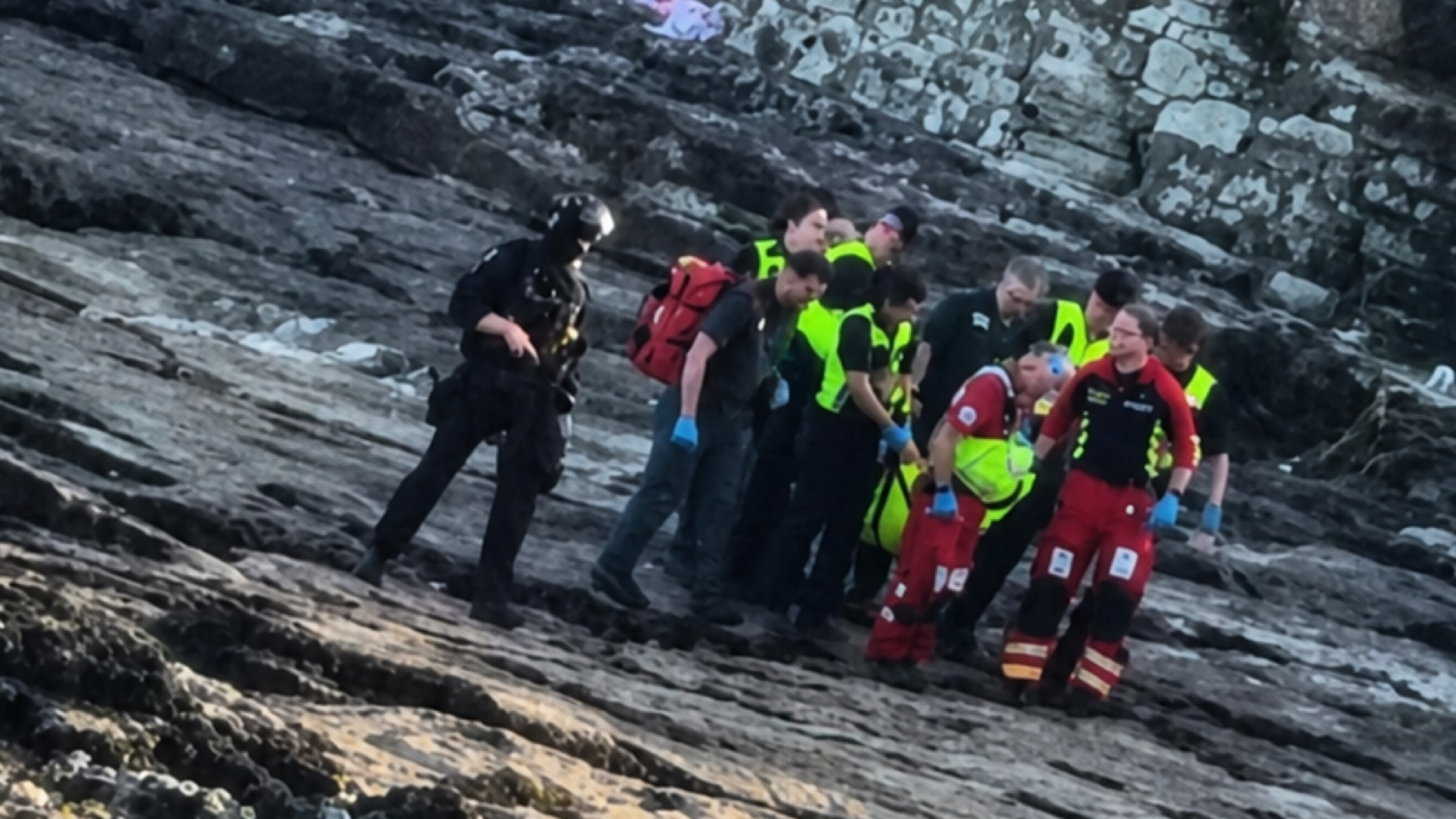
On Monday, May 25th, 2026, a teenage boy was stabbed in broad daylight on Barry Island, the popular Welsh seaside resort that draws thousands of families every summer. The attack was so severe that surgeons had no choice but to amputate his leg. What should have been an ordinary bank holiday Monday turned into a nightmare that's left a young person permanently disabled and a community demanding answers. The stabbing occurred in a public area during daylight hours, when Barry Island would typically be bustling with visitors enjoying the beach, amusement park, and promenade. South Wales Police responded to the incident, but critical details about the circumstances, the victim's identity, and any suspects remain tightly held. What we know for certain is that the injuries were catastrophic enough to require amputation, suggesting either the blade struck major blood vessels or the damage to muscle, bone, and tissue was irreparable. In the aftermath, local residents launched a fundraising campaign to support the victim and his family through what will be a long, expensive recovery. Prosthetic limbs, physical therapy, mental health support, and home modifications don't come cheap, and the NHS, stretched as it is, can only provide so much. The fundraiser reflects the tight-knit nature of Barry, a town of roughly 54,000 where everyone knows someone affected by tragedy. South Wales Police are actively investigating and have issued urgent appeals for witnesses. Anyone with information about the stabbing is asked to contact them immediately at 101, quoting the relevant incident number, or to call Crimestoppers anonymously at 0800 555 111. In cases like this, seemingly minor details matter: a person running from the scene, an argument overheard, a vehicle speeding away. Digital evidence is equally crucial. Police will be scouring CCTV footage from businesses along the seafront, analyzing mobile phone data to place individuals at the scene, and combing through social media for any chatter about the attack. Barry Island has a complicated reputation. To tourists, it's a nostalgic throwback, immortalized in the BBC sitcom "Gavin & Stacey" and famous for its retro fairground and fish-and-chip shops. To locals, it's home, but like many British coastal towns, it grapples with seasonal crime spikes, youth gang tensions, and the social problems that come with economic decline. The island's far right beach area, where a rock wall juts into the water, has become an unofficial teenage gathering spot. Local residents will tell you that on any given evening, especially during school holidays and bank holidays, groups of teens congregate on those rocks, drinking cheap vodka and cider, smoking cannabis, away from the main beach where parents and younger kids play. It's an open secret that both police and parents know about but struggle to control. The rocks offer privacy, a sense of territory, and crucially, multiple escape routes if police patrol cars pull up. Whether the stabbing was connected to disputes over this territory, drug deals gone wrong, or something else entirely remains unclear, but the location matters. These informal teenage hangouts are where grievances fester, where alcohol and drugs lower inhibitions, and where a shove can escalate to a stabbing in seconds. Knife crime across Wales has been rising steadily, mirroring broader UK trends. In 2024-2025, South Wales Police recorded a 12% increase in knife-related offenses compared to the previous year, driven partly by county lines drug operations and partly by a generation of young people who've normalized carrying blades for "protection." The cannabis and alcohol culture among Barry's youth isn't unique, every British seaside town has its version of the rock wall, but it creates an environment where violence becomes more likely. Intoxicated teenagers with unresolved conflicts and no adult supervision is a recipe for disaster. This attack isn't just another statistic. It's a teenager who will never kick a football the same way, never walk without thinking about balance, never forget the moment his life split into before and after. His attackers, if caught, face potential charges of grievous bodily harm with intent, which carries a maximum sentence of life imprisonment. But prison time won't grow his leg back. The real question Barry needs to answer is how this happened in full view of a bank holiday crowd, and what that says about the willingness of bystanders to intervene or even to come forward as witnesses after the fact.
 🌍 world
Teen Loses Leg in Broad Daylight Stabbing at Barry Island Beach
A teenager in Barry, Wales was stabbed in a vicious daytime attack on May 25th that cost him his leg. While the community rallies with fundraisers, South Wales Police are hunting for witnesses to an attack that's shaken this seaside town to its core.
My Take
Let's be brutally honest: knife crime in the UK has become so normalized that a teenager getting stabbed on a sunny bank holiday afternoon barely registers as shocking anymore. That should horrify us. We've built a society where teenagers carry knives because they genuinely believe everyone else does, where a dispute that should end with shouting and shoving ends with life-altering injury, where witnesses film on their phones instead of calling 999 immediately. The fundraiser is heartwarming, sure, but it's also an indictment. Why should a stabbing victim's family have to crowdfund for basic support? Why is the state response to youth violence limited to police appeals and sentencing guidelines that don't deter anyone? Barry's problem is Britain's problem: we've underfunded youth services, normalized stop-and-search as our main prevention tool, and then acted surprised when kids who grow up with no opportunities and no positive role models end up in the justice system. This boy lost his leg because we, collectively, failed to build a society where stabbing someone is genuinely unthinkable rather than just illegal.
What Happens Next
South Wales Police will lean hard on digital forensics and local informants to crack this case. Expect arrests within two to four weeks if the attacker is local, someone will talk, someone always does, especially when the crime is this visceral. They'll also be questioning teens who regularly gather at the rock wall on the far right of the beach, the known smoking and drinking spot. Those kids will know exactly who was there that Monday, who had beef with whom, and what substances were circulating. The victim's family will likely pursue a civil claim through the Criminal Injuries Compensation Authority (CICA), which could award anywhere from £50,000 to £500,000 depending on the long-term impact assessment. That's cold comfort when you're 17 and learning to walk with a prosthetic. The real domino effect happens in Barry's schools and youth centers. Every teenager in that town now knows: this isn't London gang territory, this is their hometown, and it just got a lot more dangerous. Parents will tighten curfews, youth workers will see attendance drop at evening programs, and the police will face pressure to flood the area with high-visibility patrols that might deter future attacks but won't address root causes. Expect increased police presence specifically at the rock wall area, potentially dispersal orders that ban groups of more than three teens from gathering there. Meanwhile, if the attacker isn't caught quickly, vigilante justice becomes a real risk. Someone in Barry thinks they know who did it, and small-town justice has a way of taking matters into its own hands. Here's the scenario nobody's considering: what if this wasn't random? What if the victim and attacker knew each other, and this was the culmination of a dispute that adults missed entirely, perhaps over something as trivial as who gets to claim the best spot on those rocks? If that's the case, expect a wave of secondary retaliation attempts, and expect South Wales Police to deploy gang intervention units typically reserved for Cardiff and Swansea. Barry could be looking at a summer of tension that scares off tourists and damages the local economy just as businesses need every penny from the holiday season. The rock wall, Barry's worst-kept secret, is about to become ground zero for a moral panic about youth behavior that will generate heat but precious little light.
What History Tells Us
Knife crime surges in British seaside towns follow a predictable pattern. In 2008, Rhyl in North Wales saw a similar spike in youth violence after economic decline gutted job prospects for young men. In 2019, Margate experienced a stabbing epidemic that saw Kent Police establish permanent youth outreach teams. The playbook is always the same: initial shock, community fundraising, police appeals, a few arrests, then the slow fade as media attention moves on and the underlying issues, deprivation, lack of opportunity, intergenerational trauma, remain unaddressed. Barry's challenge is to break that cycle, to use this horror as a catalyst for genuine investment in prevention rather than just punishment. History suggests it won't, but hope springs eternal.