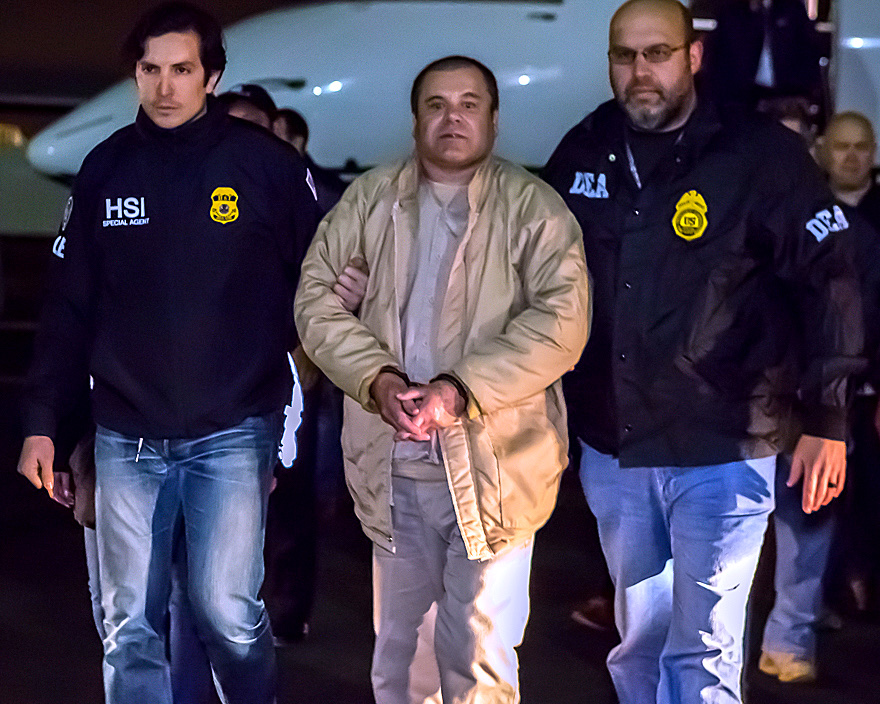
The Sinaloa Cartel was built by two old men who trusted almost no one outside their own bloodlines. Joaquín "El Chapo" Guzmán Loera and Ismael "El Mayo" Zambada García spent decades grooming sons to run the business after them. That plan has collapsed in the most public way possible: with guilty pleas in American courtrooms, a kidnapping that triggered a cartel civil war, and a scattering of children who want nothing to do with any of it. El Chapo has been locked inside the ADX Florence federal supermax in Colorado, the most secure prison in the United States, since his 2019 conviction in Brooklyn on drug trafficking and conspiracy charges that carried a life sentence plus 30 years. His children come from multiple relationships, which is itself a running theme in this family. The most powerful are the four known as "Los Chapitos": Iván Archivaldo Guzmán Salazar and Jesús Alfredo Guzmán Salazar, sons of his first wife Alejandrina María Salazar Hernández, now both believed to be in their forties, and Ovidio Guzmán López and Joaquín Guzmán López, sons of Griselda López Pérez, now in their thirties. There are also daughters, including Alejandrina Giselle Guzmán Salazar, and a son, Edgar Guzmán López, who was murdered in a 2008 shootout in Culiacán that is still remembered as one of the sparks of the modern Sinaloa drug war. El Chapo's youngest children are twin girls, Emali Guzmán Coronel and María Joaquina Guzmán Coronel, born in 2011 to his last wife, Emma Coronel Aispuro, a former beauty queen. The twins are now teenagers and have been kept almost entirely out of public view. Of the Chapitos, two have effectively surrendered to the American justice system. Ovidio Guzmán López, nicknamed "El Ratón," was captured in Culiacán in January 2023 in a raid that set off gun battles and a prison break across the city, then extradited to the United States later that year. He pleaded guilty in Chicago federal court as part of an arrangement that spared him the harshest possible outcome in exchange for cooperation and the surrender of assets. His half-brother Joaquín Guzmán López took a stranger path into American custody: in July 2024 he was accused of orchestrating the capture of El Mayo Zambada himself, flying the aging capo to a private airstrip near El Paso, Texas, where both men were arrested. Joaquín has since moved toward his own plea agreement with prosecutors. Iván Archivaldo and Jesús Alfredo, by contrast, remain fugitives. Both were named in a 2023 Department of Justice indictment accusing the Chapitos of flooding the United States with fentanyl, and both are presumed to be hiding in Mexico, still directing what is left of their faction of the cartel rather than facing a courtroom. Away from the indictments, a few of El Chapo's children have built lives that look almost ordinary by comparison. Alejandrina Giselle Guzmán Salazar has become the public face of "El Chapo 701," a streetwear brand built around her father's old Forbes ranking, giving interviews and running social media accounts rather than hiding from the family name. Emma Coronel pleaded guilty in 2021 to helping run her husband's empire, including laundering money and helping plan his 2015 prison escape, served a reduced sentence, and has since written publicly about raising her daughters under the weight of the Guzmán name while trying to build a life outside the cartel. El Mayo Zambada's branch of the family tells a similar story of children pulled between loyalty and self-preservation. His sons include Vicente Zambada Niebla, known as "El Vicentillo," who was extradited to the United States in 2010 and became one of the most important cooperating witnesses in American history, testifying against El Chapo at his 2018-2019 Brooklyn trial in exchange for a dramatically reduced sentence. Serafín Zambada Ortiz took a similar route years earlier, pleading guilty and cooperating with prosecutors. Ismael Zambada Imperial, nicknamed "Mayito Gordo," eventually gave himself up to American authorities and pleaded guilty as well. The outlier is Ismael Zambada Sicairos, known as "Mayito Flaco," who remains at large in Mexico and is widely reported to have taken operational command of his father's loyalists after the 2024 capture, the faction now fighting for survival against the Chapitos rather than working alongside them. That betrayal in July 2024, El Mayo delivered to American agents by the son of his old partner, blew the Sinaloa Cartel apart. What followed was not a smooth transfer of power but an open civil war inside Culiacán between the Chapitos and the loyalists now calling themselves "La Mayiza," a conflict that has killed and disappeared hundreds of people and forced the Mexican army into the streets of Sinaloa's capital. El Mayo himself later pleaded guilty in Brooklyn federal court under a deal that spared him execution in exchange for forfeiting billions of dollars in assets and accepting a life sentence, one of the largest forfeitures ever attached to a single American drug prosecution. What is left is a cartel run not by a council of brothers but by fragments: fugitive Chapitos directing fentanyl shipments from hiding, a Zambada loyalist trying to hold a shrinking territory, and a growing list of half-siblings who chose a plea deal, a clothing brand, or quiet anonymity over picking up where their fathers left off.
 🌍 world
The Cartel's Next Generation Is Pleading Guilty, Not Taking Over
The sons of Mexico's two most notorious drug lords were supposed to inherit an empire. Instead, most of them have inherited federal indictments, prison cells, or a civil war in the streets of Culiacán. A handful of daughters, meanwhile, have built lives, and even clothing brands, as far from the family business as they can manage.
My Take
There is a tidy, almost moralistic story available here: the empire eats its own children, the sons who stayed loyal rot in supermax cells or hide in the hills, and the ones who walked away got to build normal lives. Reality is messier and less flattering to everyone involved. Ovidio and Joaquín did not leave the cartel out of conscience, they left it because American prosecutors offered a deal that beat a life sentence, and Vicente Zambada Niebla did not become a government witness because he found religion, he did it because testifying against El Chapo was worth decades off his own sentence. These are business decisions dressed up as redemption arcs. What genuinely surprises is how badly the succession planning failed on both sides. Two men who ran one of the most sophisticated trafficking operations in modern history could not engineer a handover that did not end in betrayal, civil war, and a parade of their own sons in American courtrooms. The 2024 kidnapping of El Mayo by his own godson's generation is the kind of plot twist that would be dismissed as lazy screenwriting if it were fiction. It happened because greed and fear beat family loyalty, which is probably the most honest epitaph the Sinaloa Cartel is going to get. The daughters and wives deserve a harder look too. Framing Alejandrina Guzmán's clothing line or Emma Coronel's memoir as some kind of clean break from the family business is generous at best. Both built public platforms directly off the Guzmán name and the notoriety it generates, even while insisting they are simply private citizens now. That is not hypocrisy exactly, but it is not distance either.
What Happens Next
Watch the federal docket in Chicago and Brooklyn over the coming months. Joaquín Guzmán López's plea process is expected to move toward sentencing, and prosecutors will likely use his and Ovidio Guzmán López's cooperation to build further cases against the fugitive half-brothers, Iván Archivaldo and Jesús Alfredo Guzmán Salazar, and against whatever remains of El Mayo's command structure. Neither fugitive Chapito shows any public sign of surrendering, and Mexican authorities have had limited success locating either of them. Inside Sinaloa, the war between the Chapitos and the Mayiza faction led by Ismael "Mayito Flaco" Zambada Sicairos is the thing to track most closely, since it determines who actually controls fentanyl and methamphetamine production routes into the United States in the near term. A clear winner would mean a more centralized, predictable cartel; continued stalemate means more violence in Culiacán and a more fragmented, harder-to-target drug trade, which complicates enforcement efforts on both sides of the border. Expect more plea deals rather than shootouts in American courtrooms, since the Justice Department's strategy with this family has consistently favored flipping insiders over securing maximum sentences, and expect the public-facing Guzmán women, Alejandrina Guzmán Salazar and Emma Coronel among them, to keep leveraging the family name commercially even as they insist they have moved on from it.
What History Tells Us
The playbook being used against the Guzmán and Zambada children mirrors how American prosecutors dismantled earlier cartel dynasties: turn a cooperating insider, as they did with Vicente Zambada Niebla against El Chapo himself, and use that testimony to pressure the next tier of leadership into deals rather than trials. It worked against the Arellano Félix organization and the old Gulf Cartel leadership in the 2000s and 2010s, and it appears to be working again, just with the hostages this time being the founders' own sons.