Sir David Attenborough turns 100 on May 8th, 2026, completing a journey that began when silent films were still competing with talkies and ends in an era of climate crisis livestreams. The man who started at the BBC (British Broadcasting Corporation) in 1952 as a trainee has outlasted entire empires of media, outlived most of the wildlife he first filmed, and witnessed more environmental collapse than any human in history. His career spans from black and white reels of zoo animals to 4K drone footage of melting ice sheets, from a world of 2.5 billion people to 8 billion today. The numbers around Attenborough's influence border on incomprehensible. His documentaries have been watched by an estimated 500 million people per series at their peak. "Planet Earth" alone reached over a billion viewers across its various iterations. He didn't just narrate nature, he created the grammar for how we experience it on screen: the slow motion cheetah hunt, the time lapse bloom, the god's eye aerial shot that makes continents look like organisms. Before Attenborough, nature documentaries were educational lectures. After him, they became event television that could out rate sports finals. But the achievement isn't just in ratings or longevity. Attenborough's real trick was making conservation feel urgent without making viewers feel lectured. For decades, he stuck to pure natural history, letting the beauty and brutality of wildlife speak for itself. Only in recent years, as evidence of ecological collapse became undeniable, did he pivot to explicit climate advocacy. His 2020 film "A Life on Our Planet" functioned as both memoir and warning, showing exactly how much planetary health has degraded within a single human lifetime. When a man who has seen more of Earth than perhaps anyone else alive tells you it's dying, people listen differently. The timing of this centenary carries weight. Attenborough turned 100 the same week that Antarctic sea ice hit another record low, the same month that coral bleaching reached levels unseen in modern records, and in a year when wildlife populations continue their documented decline. He has become both chronicler and witness to the sixth mass extinction, the only one in Earth's history caused by a single species. His archive of footage now serves as a baseline for what we've lost, a before photo for a planet that will never look the same again. What makes Attenborough's century particularly poignant is that he may be the last person who will ever experience Earth this biodiverse. Someone born now will inherit a planet with perhaps half the wildlife populations that existed when Attenborough started filming. The species he documented in the 1950s and 60s, many are simply gone. His work has inadvertently become a museum, not just entertainment. Future generations will watch his documentaries not to see nature as it is, but to see what it was, to glimpse a version of Earth their great grandchildren will never know existed.
 🎬 entertainment
The Voice That Made Us Care About Planet Earth
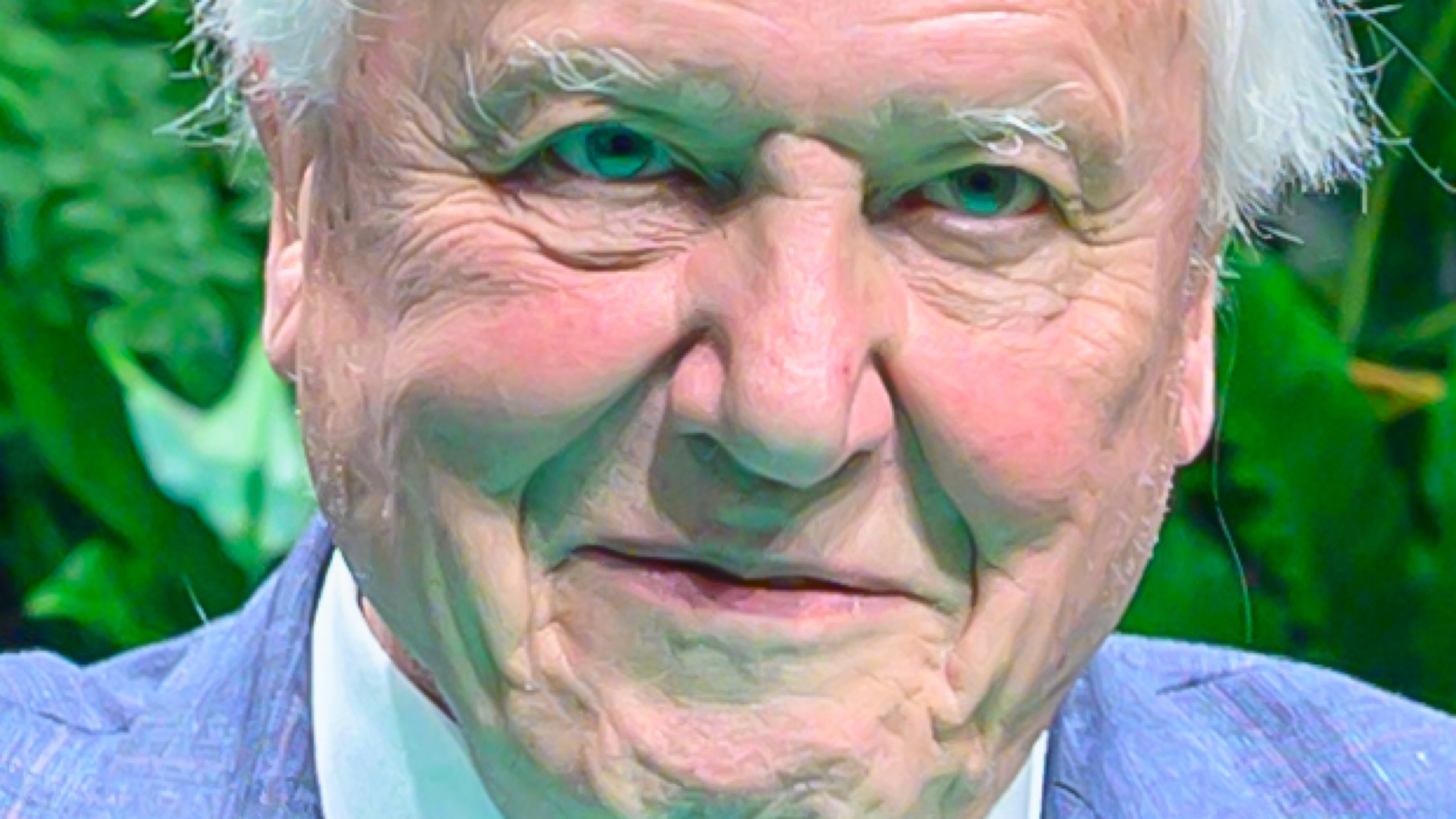
Sir David Attenborough turns 100, marking a full century since the birth of the man who taught billions of humans to see nature not as scenery but as story. No single person has done more to shape how we understand, fear for, and fight to protect the natural world.
My Take
Here's what nobody wants to say out loud: Attenborough's greatest achievement might be his most tragic one. He made nature so beautiful, so compelling, so perfectly packaged for our screens that we could watch it die from our couches and feel like we'd done something just by bearing witness. His documentaries became the acceptable substitute for actually being in nature, for actually fighting to protect it. We consume his art about conservation the way we consume everything else in late capitalism: passively, admiringly, without fundamentally changing our behavior. But that's not fair to him, and he knows it. In his final years, Attenborough has shed the gentle narrator persona and become something angrier, more desperate. He's called out governments, corporations, and individuals with a bluntness that would have been unthinkable in his BBC heyday. The fact that it took him 90 years to get political tells you something profound: he's a strategist who earned decades of trust specifically so he could spend it when it mattered most. When David Attenborough tells you the house is on fire, you don't debate the smoke detector, you grab the extinguisher. Whether enough people are listening, whether anyone with actual power is listening, that's the question his 100th birthday forces us to confront.
What Happens Next
The uncomfortable truth is that Attenborough's death, whenever it comes, will trigger the largest outpouring of environmental grief in modern history, followed by approximately three weeks of sincere policy discussion, followed by nothing. Governments will name parks after him, streaming services will create memorial collections, and X will trend with #ThankYouDavid for 48 hours. Then the news cycle will move on because we've built an entire media ecosystem that monetizes our attention to crisis without requiring our commitment to solutions. What might actually matter is the scramble that's already underway to replace him. The BBC, Netflix, Apple, and Disney are all developing their next generation of nature programming, trying to crack the code of climate storytelling for an audience that grew up with Attenborough as the baseline. The smart money is on formats that don't rely on a single narrator god figure, but on scientists, indigenous voices, and youth activists who can speak to crisis without the aristocratic remove. Attenborough's legacy won't be another Attenborough. It'll be whether the medium he perfected can evolve beyond beautiful elegy into something that actually catalyzes the political will to stop what he spent a century documenting.
What History Tells Us
The only comparable figure in terms of cultural impact and longevity might be Walter Cronkite, who shaped how Americans understood their world from 1962 to 1981 and was dubbed "the most trusted man in America." But Cronkite's beat was human affairs, wars and elections that would be forgotten within decades. Attenborough's subject is geological time, evolutionary processes, and extinction events that operate on scales that make human history look like a sneeze. Jacques Cousteau came closest to matching Attenborough's influence in ocean conservation, but died in 1997 at age 87, and his legacy has been somewhat complicated by his family's disputes and the evolution of marine biology beyond his era. Attenborough stands alone in having maintained both credibility and relevance across such a profound span of time, adapting from the stiff BBC presenter of the 1950s to the climate warrior of the 2020s without ever losing the public's trust.