 🔬 science
By WNT
Tonight's Total Eclipse: Your Last Chance Until 2027
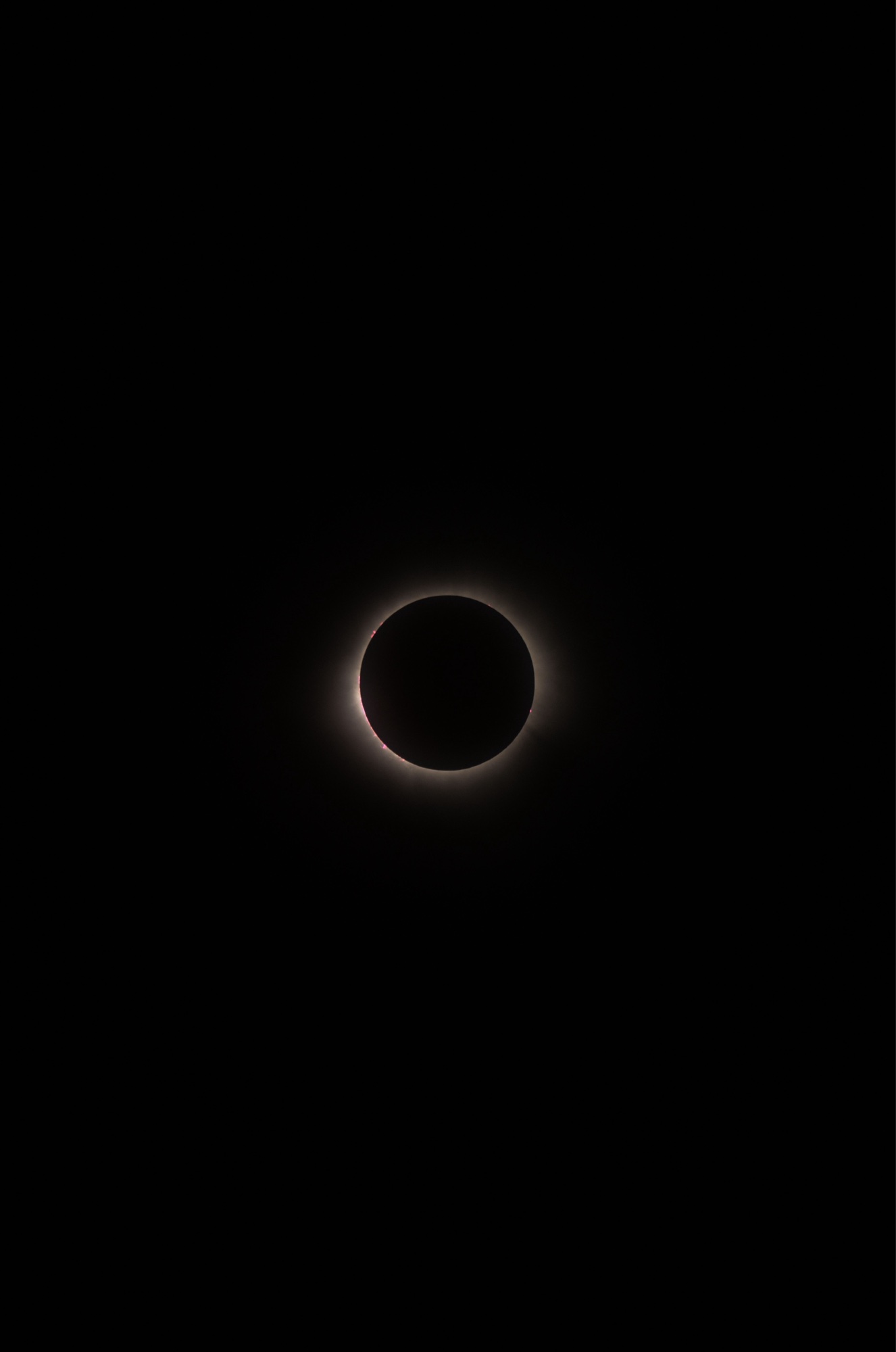
A total solar eclipse sweeps across Europe and parts of Asia tonight, with peak totality hitting Spain at 7:29 PM local time. This is the last total eclipse visible from Europe until 2027, and weather forecasts show clear skies across most of the path. Here's everything you need to catch the show.
The total solar eclipse on August 12, 2026 will carve a path of totality roughly 300 kilometers wide across southwestern Europe and into the Mediterranean, with partial phases visible across the entire continent and parts of North Africa and the Middle East. The moon's shadow first touches down in the Atlantic Ocean west of Portugal around 6:45 PM UTC (Coordinated Universal Time), then races eastward across the Iberian Peninsula, southern France, Italy, and the Balkans before exiting into Turkey and continuing toward Iran and Pakistan.
The absolute best viewing locations based on duration and weather probability are the Spanish cities of Valencia and Zaragoza, where totality will last approximately 3 minutes and 48 seconds. Valencia, positioned almost dead-center in the path, expects clear skies with less than 20% cloud cover according to meteorological forecasts issued this morning. The city has set up 47 official viewing zones in public parks and beaches, each equipped with certified eclipse glasses and telescopes manned by astronomy clubs. Barcelona will experience 97% coverage but misses totality by about 40 kilometers, meaning viewers there will see a dramatic deep partial eclipse but not the corona.
Timing is everything with eclipses, and here's the crucial schedule:
- First contact (moon begins crossing the sun): 6:14 PM in Lisbon, 7:21 PM in Madrid, 8:17 PM in Rome
- Totality begins: 7:29 PM in Valencia, 7:44 PM in Florence, 8:03 PM in Split, Croatia
- Maximum eclipse (longest totality): 7:31 PM over a point in the Mediterranean between Spain and Algeria
- Totality ends: Roughly 2-4 minutes after it begins at each location
- Last contact (eclipse fully over): About 90 minutes after first contact at each location
All times are local to each city. The shadow moves at approximately 2,400 kilometers per hour at ground level, so if you're driving to chase a few extra seconds of totality, you won't catch it.
The science behind tonight's event comes down to cosmic geometry. The moon sits about 384,400 kilometers from Earth on average, but orbits in an ellipse. Tonight it reaches a point close enough that its apparent size perfectly blocks the sun's disk, which sits 149.6 million kilometers away but happens to be 400 times larger than the moon. This 400-to-1 ratio in both size and distance creates the coincidence that makes total solar eclipses possible on Earth, a situation that won't last forever since the moon drifts about 3.8 centimeters farther from us each year.
Safety warnings have dominated headlines across Europe for the past week. Looking directly at the sun at any time except the brief window of totality (when the moon completely covers the solar disk) will cause permanent retinal damage. Standard sunglasses block only 10-30% of solar radiation and provide zero protection. Certified eclipse glasses meeting the ISO 12312-2 international safety standard have sold out across Spain and Italy, though officials report that over 12 million pairs were distributed free through schools, libraries, and municipal offices. Welding glass rated 14 or higher also works. During totality itself, and only during totality, it's safe to look with naked eyes because the sun's photosphere is completely hidden.
Weather remains the wild card. Current European Centre for Medium-Range Weather Forecasts (ECMWF) models show a high-pressure system dominating the western Mediterranean, pushing clouds toward northern Europe. Southern England and Scotland will see the partial eclipse through likely cloud cover. Iceland, which gets a 60% partial eclipse, faces 80% probability of overcast skies. The eastern end of the totality path through the Balkans shows more uncertainty, with scattered thunderstorms possible in inland Croatia and Bosnia by evening. Turkey's viewing prospects look excellent, with Antalya and the southern coast expecting clear conditions.
My Take
The eclipse tourism industry has become absolutely insane, and tonight proves it. Hotels in Valencia quintupled their rates starting six months ago, and every campground within 200 kilometers of the totality path sold out by March. Airlines added 73 extra flights into Spanish airports this week. We've turned a celestial event that happens somewhere on Earth every 18 months into a bucket-list panic that prices out regular people who just want to see something beautiful.
But here's what gets me: millions will experience tonight's eclipse through their phone screens, recording shaky video they'll never watch instead of just being present for three minutes of totality. Your iPhone cannot capture what totality looks like. The dynamic range of the solar corona, the 360-degree sunset horizon, the temperature drop, the animal behavior, the stars appearing at 7:30 PM in August - none of that translates to a screen. Put the phone down. Use your eyes. This is one of the few remaining human experiences that technology cannot reproduce or improve.
The data matters, though. Every eclipse gives solar physicists a chance to study the sun's corona without billion-dollar space telescopes. Tonight, 34 research teams across the path will capture high-speed imagery, spectrographic data, and magnetic field measurements that help predict solar storms affecting Earth's power grids and satellites. The eclipse isn't just pretty - it's a rolling laboratory moving at 2,400 kilometers per hour.
What Happens Next
Tonight's eclipse ends around 9:30 PM local time as the moon's shadow leaves Earth's surface somewhere over western Pakistan. Then we wait. The next total solar eclipse visible from any part of Europe won't occur until August 2, 2027, when a path crosses southern Spain and North Africa (including a nearly identical track through Valencia, giving that city two total eclipses in 12 months). North America gets its next total eclipse on March 30, 2033, crossing Alaska.
For eclipse chasers, the global circuit moves to Australia on July 22, 2028, then returns to North America for the big one on August 23, 2044, which will cross Montana, North Dakota, and into Canada with over 4 minutes of totality. The eclipse prediction mathematics, refined by NASA and the International Astronomical Union (IAU), can calculate these events millennia in advance with accuracy measured in seconds.
Tonight's event will likely draw 15-20 million people into the totality path based on hotel bookings and transport data, making it one of the most-witnessed astronomical events in European history. The economic impact across Spain, France, and Italy is estimated at 890 million euros according to preliminary tourism ministry figures, though those numbers won't be finalized until September. Clear skies mean clear profits.
What History Tells Us
Total solar eclipses have terrified and fascinated humans since we first looked up. The earliest confirmed eclipse record comes from Chinese oracle bones dated to October 22, 2134 BCE, describing how 'the sun was eaten.' Ancient Babylonians discovered the Saros cycle around 800 BCE, a period of 18 years, 11 days, and 8 hours after which eclipse patterns repeat, allowing them to predict events decades ahead.
Europe's most famous historical eclipse occurred on May 29, 1919, when Arthur Eddington photographed stars near the sun during totality from Principe island off West Africa. The starlight appeared bent by the sun's gravity exactly as Einstein's general relativity predicted, instantly making Einstein the most famous scientist alive. Tonight's eclipse follows in that tradition, with dozens of experiments using 21st-century technology to probe solar mysteries that Eddington couldn't have imagined. The difference is that in 1919, only a handful of scientists could reach the totality path. Tonight, millions can simply walk outside.