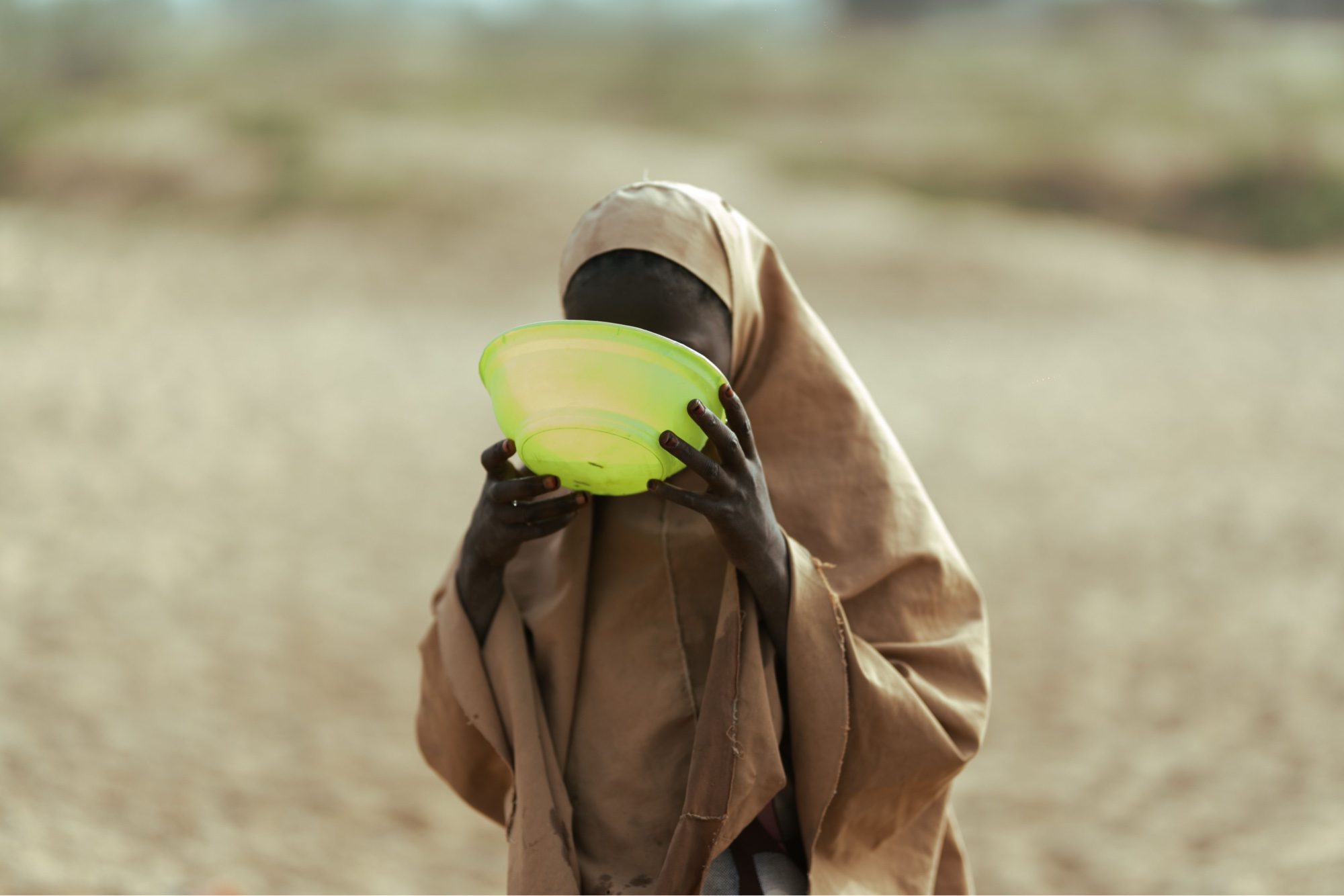
The numbers tell a story of obscene inequality that should shame our entire species. In 2026, over one billion people worldwide live with obesity, according to the NCD (Non-communicable Disease) Risk Factor Collaboration. In the United States alone, more than 40 percent of adults are obese. Meanwhile, 266 million people are facing crisis levels of hunger or worse, per the 2026 Global Report on Food Crises. For the first time this century, two simultaneous famines were declared in 2025, in Gaza and Sudan. A risk of famine continues in 2026 in Sudan, South Sudan, Gaza, and Somalia. This isn't a problem of production. The world produces enough food to feed all 8.2 billion people on the planet. Yet 673 million went hungry for part or all of 2024. At the same time, we waste approximately 1.3 billion tonnes of food globally each year. That's roughly one-third of all food produced for human consumption thrown in the garbage. The economic cost of global food waste hits $1 trillion annually. High-income countries waste 95 to 115 kilograms of food per person per year at the household level, while people in Nigeria and Somalia watch their children starve. The hunger crisis has specific, identifiable hotspots where conflict and climate shocks converge. Nigeria leads the world with 34.7 million people predicted to face high levels of food insecurity in the second half of 2026. The nutrition crisis in northern Nigeria is the most severe it has been for 15 years, with nearly 6.4 million children under five suffering from acute malnutrition. In Sudan, 19.5 million people face crisis levels of hunger, with famine risk in North Darfur, South Darfur, and South Kordofan provinces. Armed conflict drives the economic crisis, with the Sudanese Pound depreciating and inflation skyrocketing. Over 9.8 million people have been internally displaced, losing their livelihoods. Conflict is the primary driver in 12 of the 13 identified hunger hotspots. The World Food Programme (WFP), which received the Nobel Peace Prize in 2020 for its humanitarian work, reached more than 100 million people facing acute hunger last year. But the agency faces severe funding shortfalls in 2026. The WFP aims to reach 110 million of the most vulnerable at an estimated cost of $13 billion, but current funding forecasts indicate it may only receive close to half that amount. In one region of Nigeria alone, 150 clinics operated by the WFP providing nutrition treatment for 300,000 children below the age of two shut down in July 2025. Meanwhile, obesity has become a global crisis concentrated in wealthy nations. The United States leads high-income countries with obesity affecting 40.3 percent of adults as of the August 2021 to August 2023 measurement period. Some recent surveys suggest a slight decline to 36.4 percent by mid-2026, attributed to widespread adoption of GLP-1 (glucagon-like peptide-1) medications like semaglutide, with 12.4 percent of US adults now using them. Severe obesity, defined as BMI (Body Mass Index) greater than or equal to 40, affects 9.4 percent of US adults. Obesity contributes to four million deaths annually from cardiovascular diseases and generates direct healthcare costs totaling $2 trillion globally each year. The cruel irony extends beyond simple statistics. Giant food corporations invest heavily in automated processing plants that flood African and Asian markets with ultra-processed, nutritionally empty foods. This creates what researchers call the double burden of malnutrition, where child stunting coexists with surging adult obesity and non-communicable disease in the same countries. Adult obesity globally has risen from 12.1 percent in 2012 to 16.2 percent in 2024. In some low and middle-income countries, poverty drives both undernutrition in children and obesity in adults as families rely on cheap, calorie-dense but nutrient-poor processed foods. Food distribution inequality compounds the crisis. The poorest 50 percent of countries bear 70 percent of ecological overload from food systems, while the richest 10 percent account for only five percent. Worsening inequality in food distribution increased the prevalence of undernourishment, contributing between 8.4 percent and 13.74 percent to global hunger. Small-scale farmers produce the majority of the world's food but lack resources, infrastructure, and market access. Government policies favor industrialized agriculture and multinational corporations at the expense of smallholder farmers. Agricultural subsidies in developed nations enable production at artificially low prices, making it impossible for farmers in developing nations to compete. The cost of a healthy diet has become prohibitive for billions. The average global cost of a healthy diet rose to $4.28 Purchasing Power Parity (PPP) per person per day in 2025, up from $3.44 in 2021. Nearly 2.7 billion people could not afford a healthy diet in 2025. For the first time, Africa recorded the highest absolute number of undernourished people at 309 million, surpassing Asia. In Africa, two-thirds of people cannot afford a healthy diet.
 🌍 world
Too Much Food, Not Enough to Eat
We live in a world of sickening contradictions. More than one billion people are obese while 266 million face crisis-level starvation in 2026. We waste 1.3 billion tonnes of food each year while children in Sudan and Gaza die from famine. The problem isn't scarcity. It's a rigged system that feeds the rich and starves the poor.
My Take
This is not a natural disaster. This is not an unavoidable tragedy of scarcity. This is a deliberate failure of distribution, a calculated indifference dressed up as economic necessity. We have engineered a food system that rewards waste and punishes need, that subsidizes corn syrup in Iowa while children in South Sudan eat tree leaves to survive. The most damning evidence is the simultaneous existence of famines and a $16.2 billion anti-obesity drug market. We have the technology, resources, and knowledge to feed everyone. Instead, we've built a system where food corporations profit from making people sick on both ends of the spectrum. They sell ultra-processed junk that creates obesity epidemics in wealthy countries, then flood developing markets with the same garbage while humanitarian aid gets slashed. Meanwhile, supermarkets in rich countries throw away millions of tonnes of perfectly edible food rather than give it to people who need it. The World Food Programme is begging for $13 billion to prevent mass starvation while global military spending hit $2.9 trillion in 2025. That funding gap could be closed with less than half of one percent of what the world spends on weapons. The choice is clear, and we're making the wrong one every single day.
What Happens Next
The trajectory is grim without immediate intervention. The WFP warns that if the Middle East conflict continues, an additional 45 million people could fall into acute food insecurity. In East and Southern Africa alone, 17.7 million more people could cross the hunger threshold. Famine risks persist in Sudan, South Sudan, Gaza, and Somalia through the remainder of 2026. If funding shortfalls continue, clinics treating malnourished children will shut down across Nigeria, Myanmar, and other crisis zones. More children will die from preventable starvation. On the obesity side, the proliferation of GLP-1 medications may produce the first sustained population-level decline in obesity rates in wealthy countries, but at enormous cost. These drugs cost thousands of dollars per year per patient, creating a new form of inequality where only the wealthy can afford pharmaceutical weight loss while the poor remain trapped in obesogenic food environments. The fundamental structural problems remain untouched: agricultural subsidies that favor processed food ingredients, food deserts in poor neighborhoods, and a global trade system rigged against small farmers. The next 12 months will determine whether 2026 becomes a turning point or another year of shameful inaction. International donors must fully fund the WFP's $13 billion request. Governments must shift agricultural subsidies away from industrial monoculture toward diverse, sustainable local food systems. Food corporations must be held accountable for flooding developing markets with nutritionally empty products. Without coordinated action across the humanitarian-development-peace nexus, the double crisis of obesity and starvation will deepen, with the poorest bearing the heaviest burden while the rich medicate themselves thin.
What History Tells Us
The current crisis echoes patterns from previous decades but with unprecedented scale. The last time global food prices spiked on a comparable level, four governments fell during the 2007-2008 food crisis and the Arab Spring of 2010-2011. Those upheavals were triggered partly by bread prices and food access. The conditions building in 2026 are worse and spread across more countries with fewer resources to contain them. What's different now is the simultaneous nature of the crises: we've never before had two confirmed famines in the same year while obesity rates reached historic highs. The green revolution of the 1960s and 1970s dramatically increased food production and was credited with saving billions from starvation, but it also laid the groundwork for today's inequality by favoring large-scale industrial agriculture over smallholder farmers and prioritizing yield over nutrition and sustainability.
Market Impact
The anti-obesity drug market is projected to reach $16.2 billion by 2025, with GLP-1 medications driving unprecedented growth. Pharmaceutical companies producing semaglutide and tirzepatide have seen massive stock valuations, though recent adoption rates of 12.4 percent of US adults suggest the market may be approaching saturation in high-income countries. The global food waste management market was valued at over $70 billion in 2024, with North America holding over 40 percent market share at $28.11 billion. Agricultural commodity markets remain volatile, with wheat prices particularly sensitive to conflicts in Sudan and the Middle East. Countries that import both food and fuel face the worst exposure, with oil prices above $100 per barrel projected to push millions more into food insecurity. The economic cost of food waste across the global supply chain is forecast to reach $540 billion by 2026, representing 33 percent of total revenues in the food retail supply chain from post-farm to point-of-sale.