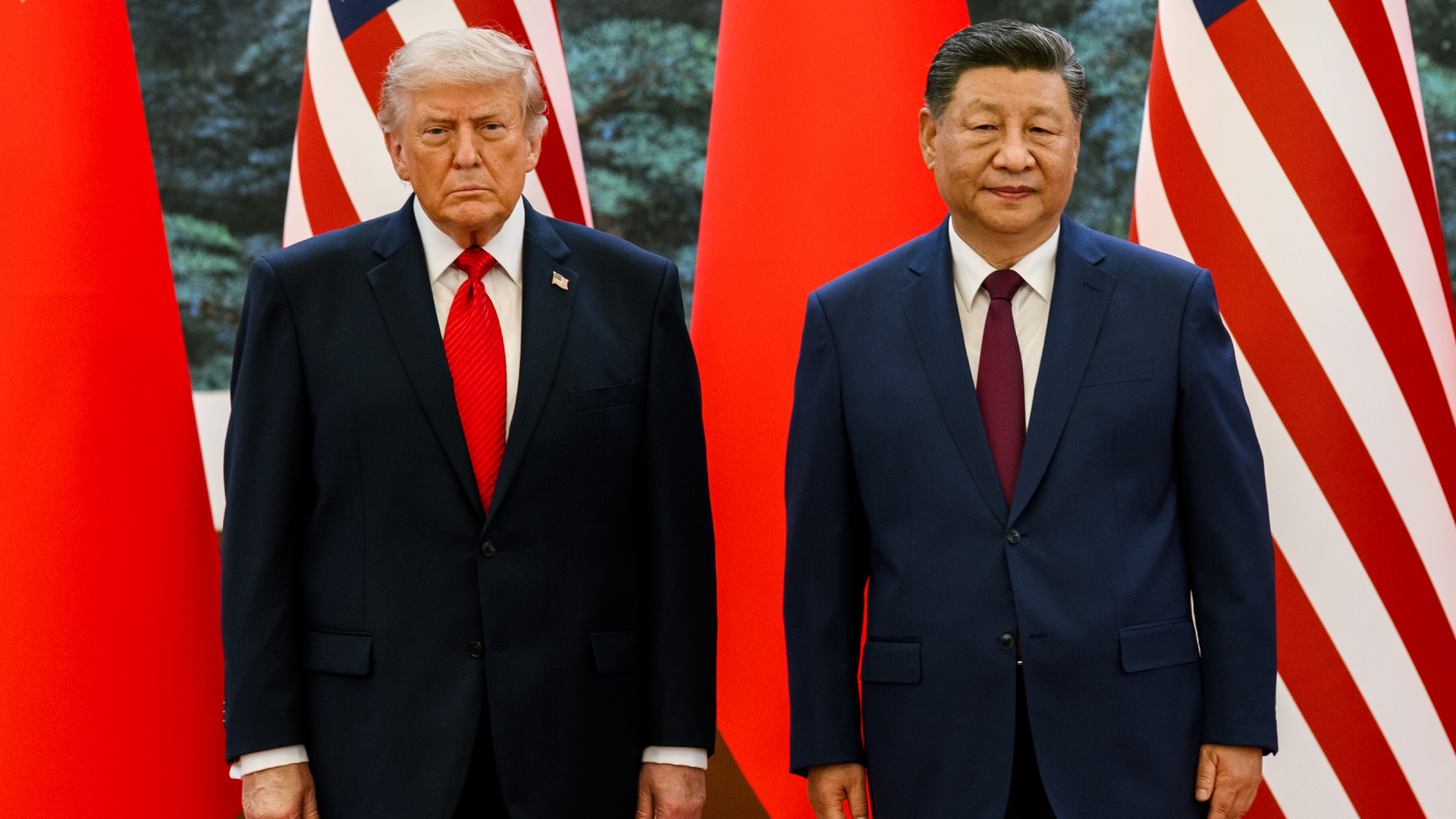
The second Trump Xi summit concluded with an unexpected alignment on Iran policy, marking a potential pivot in how Washington and Beijing approach Middle East security. Trump emerged from the talks declaring that he and Xi 'feel very similar on Iran,' a statement that carries weight given the two nations have spent the better part of a decade at odds over everything from semiconductors to South China Sea territorial claims. Xi reciprocated with equally warm language, framing the summit as a 'milestone' that establishes a fundamentally different bilateral relationship. The timing matters. Iran has been enriching uranium at levels that alarm both Western intelligence agencies and regional powers. The International Atomic Energy Agency (IAEA) reported in March 2026 that Iran's stockpile of 60% enriched uranium has grown to levels that could theoretically produce weapons grade material within weeks if Tehran chose that path. Meanwhile, Iran continues supplying drones to Russia for use in Ukraine and supporting proxy forces across the Middle East. For China, which imports roughly 10% of its oil from Iran, instability in the Persian Gulf threatens energy security. For Trump, who withdrew from the Iran nuclear deal during his first term and reinstated crushing sanctions, Tehran remains unfinished business. What makes this convergence remarkable is how recently US China relations hit rock bottom. The 2025 trade war escalation saw tariffs reach levels not seen since the 1930s Smoot Hawley era. Export controls on advanced chips gutted billions in bilateral tech trade. The Trump administration banned TikTok outright in August 2025, and Beijing retaliated by restricting rare earth exports critical to US defense contractors. Yet here we are, with both leaders pivoting to cooperative rhetoric over a shared concern. The substance behind the smiles remains murky. Neither side released details about what 'feeling similar' on Iran actually means in policy terms. Does Beijing support renewed sanctions? Will China stop buying Iranian oil to pressure Tehran back to the negotiating table? Or is this simply diplomatic theater, a way for Xi to extract concessions on trade and Taiwan in exchange for vague promises about Iran? Trump's transactional approach to foreign policy suggests he may be willing to ease pressure on China elsewhere if Beijing helps isolate Iran. The geopolitical chessboard just got more complicated for Iran's leadership. Supreme Leader Ayatollah Ali Khamenei has long counted on Chinese economic lifelines to cushion the blow of Western sanctions. If Beijing genuinely shifts course, Tehran loses its most important patron. Russia, bogged down in Ukraine and facing its own economic constraints, cannot fill that void. Iran's hardliners may find themselves with fewer options than they imagined, forced to either genuinely negotiate or accelerate their nuclear program in a desperate bid for leverage.
 🌍 world
Trump and Xi Find Common Enemy in Tehran
Donald Trump just wrapped his second summit with Xi Jinping, and the big headline is what they agree on: Iran. After years of trade wars and tech bans, the world's two superpowers are suddenly singing from the same hymn sheet when it comes to Tehran. Xi called it a 'milestone' that forges a 'new bilateral relationship.'
My Take
This is classic Trump: find common ground with a rival, declare victory, and let the details sort themselves out later. But here's what nobody's saying out loud. Xi didn't fly to this summit to help Trump look tough on Iran. China's playing a longer game. They're signaling they can be reasonable partners when it serves their interests, which makes them look like responsible global leaders while putting Iran in an impossible position. If Tehran can't count on Beijing, they're isolated in ways that make 2015 sanctions look gentle. The real winner here might be Saudi Arabia and the UAE, who've been begging Washington to take a harder line on Iran for years. If Trump and Xi actually coordinate pressure on Tehran, the Gulf states get what they want without firing a shot. The real loser? Europe, which gets shut out of yet another major geopolitical realignment and watches helplessly as the US and China redraw Middle East security architecture without consulting Brussels. Don't buy the 'new bilateral relationship' hype just yet. Trump and Xi have zero trust between them, and one summit doesn't erase years of hostility. But if they can agree Iran is a problem, that's a bigger shift than most analysts want to admit. It means the post Cold War order where the US led and China followed is definitively over. Now we're in a world where Washington and Beijing pick their battles, cooperate when convenient, and compete everywhere else. That's not peace. It's managed rivalry. And it's the future.
What Happens Next
The first test comes in June when the IAEA board meets in Vienna. If China actually votes to censure Iran for non cooperation with inspectors, we'll know this alignment has teeth. Watch for Beijing to quietly reduce Iranian oil imports over the next quarter, replacing them with supplies from Saudi Arabia and the UAE. That's the signal the Gulf states are watching for, and it'll trigger a wave of new investment and security partnerships. But here's the scenario nobody's pricing in: Iran calls the bluff and sprints for a nuclear weapon. If Tehran's leadership concludes they've lost Chinese protection, they may calculate their only survival strategy is getting the bomb before Trump can organize military action. That puts us in a crisis by late summer, with Israel pushing for strikes and Trump forced to choose between letting Iran go nuclear or launching a war that makes Iraq look like a sideshow. The wildcard is what Trump gives Xi in return. Taiwan? Reduced tech export controls? Tariff rollbacks? Xi doesn't do favors for free, and whatever Trump promised behind closed doors will matter more than any joint statement about Iran. Watch for signs in the next 60 days: does Trump suddenly go quiet on Taiwan? Does Commerce ease restrictions on chip exports? That's where the real deal was cut, and that's where this whole 'new relationship' either becomes real or collapses into the next crisis.
What History Tells Us
This isn't the first time Washington and Beijing aligned against a third power. In the 1980s, both nations armed the Afghan mujahideen against the Soviet Union, a partnership that helped end the Cold War but created the conditions for decades of instability. That collaboration worked because both sides saw Moscow as an existential threat. The difference now is that Iran doesn't threaten either superpower's core interests the way the USSR did. This is coordination born of convenience, not necessity. The closer parallel might be 1972, when Nixon and Mao found common cause against Soviet expansion despite ideological hostility. That rapprochement lasted decades and reshaped global power dynamics. But it only worked because both sides committed to sustained engagement, not transactional one off deals. If Trump and Xi want their Iran alignment to mean something long term, they'll need structures and mechanisms that outlast their personal relationship. History says that's unlikely when neither leader trusts institutions or believes in permanent alliances.
Market Impact
Oil markets will react first. Brent crude (BZ=F) closed around $82.40 per barrel on May 14, up modestly from April lows but still range bound. If China genuinely cuts Iranian imports, expect a short term spike to $88 92 as markets price in tighter supply and Middle East risk premium. But Saudi spare capacity can absorb Iranian barrels, so the move probably gets faded within weeks. The real play is defense contractors. Lockheed Martin (LMT), currently around $485, and Northrop Grumman (NOC), trading near $510, both pop on any hint of increased Middle East tensions. They've been flat this spring, but Iran escalation historically adds 8 12% within a quarter. Chinese energy stocks face a trickier path. PetroChina (PTR) and Sinopec (SHI) will need to replace Iranian crude with higher cost alternatives, squeezing margins. Both have underperformed this year, down roughly 6% and 4% respectively, and this adds pressure. Conversely, Saudi Aramco (2222.SR) and UAE exposed energy plays benefit from increased Chinese buying. The iShares MSCI Saudi Arabia ETF (KSA) could see inflows if this partnership materializes into actual oil deals. The bigger question is whether this signals a broader thaw in US China relations. If tariffs actually ease as part of a grand bargain, Chinese tech giants like Alibaba (BABA) and Tencent (TCEHY) could rally hard. They've been beaten down by trade war fears, and any détente would trigger short covering. But that's speculative until we see concrete policy changes. For now, the trade is long defense, cautiously bullish on oil, and wait and see on China tech.