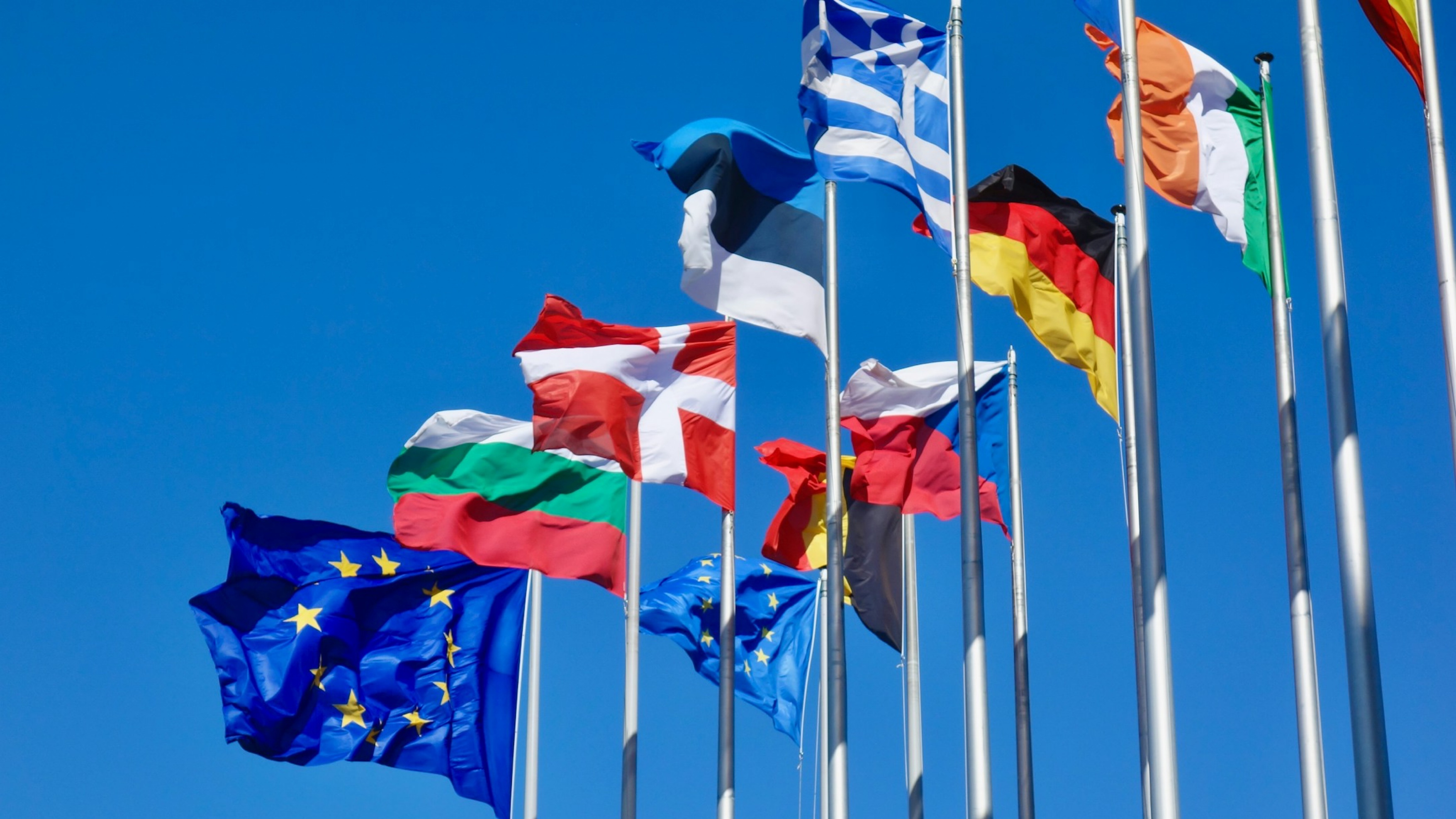
The United States went to war with Iran in early 2026, and Europe said no. Not maybe, not eventually, just no. Spain and Italy refused to let American weapon carrying planes use their bases. Germany, France, and the United Kingdom declined to send troops. This wasn't the usual diplomatic hedging. European leaders drew a hard line because Trump's war lacks both a UN (United Nations) mandate and NATO (North Atlantic Treaty Organization) approval. For countries that built their entire post World War II order on international institutions, that's a dealbreaker. The economic fallout is brutal. The Strait of Hormuz, the narrow waterway between Iran and Oman through which roughly 20% of the world's oil passes, is effectively closed. Petrol prices are spiking, supply chains are seizing up, and inflation fears are mounting across Europe. Instead of begging Washington for help, European leaders are coordinating their own response. On April 17, UK Prime Minister Keir Starmer and French President Emmanuel Macron hosted 49 countries in Paris to plan a neutral mission guaranteeing safe passage through Hormuz once the fighting stops. France and the UK are willing to deploy naval forces, but only for peacekeeping, not for Trump's war. This isn't just crisis management. It's the culmination of a shift that started the day Trump returned to office in January 2025. Since then, the European Union and its member states have signed six new strategic defence partnerships at the EU level, plus a dozen bilateral agreements with non EU countries. Trump's threats to seize Greenland in January 2026 triggered immediate European pushback: Denmark and the EU froze a commercial agreement with the US, launched Operation Arctic Endurance (a military exercise in Greenland), and publicly reaffirmed Danish sovereignty. Every time Trump tries to divide Europe, he accidentally unites it. The Iran war broke something important in Trump's European strategy. For years, the MAGA (Make America Great Again) movement courted far right leaders like Viktor Orbán in Hungary and Germany's AfD (Alternative for Germany) party, betting they could fracture EU consensus. Then Orbán lost his April 13 election to moderate Péter Magyar after 16 years of autocratic rule. Three days later, Italy's Giorgia Meloni, once Trump's closest European ally, showed up in Paris alongside Macron, Starmer, and German Chancellor Friedrich Merz. Trump's attacks on Pope Francis alienated Meloni's Catholic voter base, and his unpredictability became a liability she couldn't afford. The European Commission is seizing the moment. The bloc's leadership is fast tracking plans to reduce fossil fuel dependence, secure alternative supply networks, and accelerate electrification through nuclear and renewable energy. The European Central Bank warned in February 2026 that the Hormuz blockade could trigger simultaneous inflation and unemployment shocks. That economic threat now overrides any member state's ideological loyalty to Moscow or Washington. Energy security became the tie that binds, even between countries that usually can't agree on lunch.
 🌍 world
Trump's Iran Blunder Just Handed Europe Its Independence
President Donald Trump's unilateral war on Iran, launched without UN or NATO approval, has backfired spectacularly. European leaders refused to join the fight, and the economic chaos from the blocked Strait of Hormuz is forcing them into unprecedented unity. What Trump meant as a show of strength just accelerated Europe's break from Washington.
My Take
Trump walked into Iran thinking he'd look strong and Europe would follow. Instead, he handed Brussels the crisis it needed to finally get its act together. European leaders have spent a decade arguing about migration, budget rules, and how much to coddle Putin. The Hormuz blockade cut through all that noise. When your economy faces an energy shock and your supposed ally won't even consult you before starting the war that caused it, sovereignty stops being an academic debate. The real story isn't Europe standing up to Trump. It's Europe realizing it doesn't need permission anymore. Orbán's gone, Meloni's drifting away, and even France and Germany are coordinating foreign policy without checking Washington first. Trump bet that fear of China and Russia would keep Europe dependent. He didn't count on becoming the threat Europe needed to escape from. If the Paris conference leads to an EU led peacekeeping mission in Hormuz, it won't just be a diplomatic win. It'll be proof that Europe can solve global crises without waiting for American approval.
What Happens Next
Macron and Starmer will test run their new European security model in London next week when they convene the working group for the Hormuz peacekeeping mission. Watch whether they invite the United States to participate or freeze Washington out entirely. If they exclude American forces, it'll be the first major NATO adjacent operation in decades where Europe explicitly doesn't want US involvement. That's the kind of precedent that reshapes alliances for generations. The real domino effect hits Ukraine. Macron called himself "reasonably optimistic" about a "new era in Europe" after meeting Polish Prime Minister Donald Tusk on April 20. Translation: with Orbán gone, the EU can finally unlock vetoed aid packages for Kyiv. If European leaders broker a Hormuz ceasefire and restart weapons shipments to Ukraine simultaneously, they'll have done what Trump couldn't. Solve two crises at once while proving they don't need Washington calling the shots. That's when America realizes the leverage just shifted across the Atlantic.
What History Tells Us
This moment echoes the Suez Crisis of 1956, when the United States forced Britain and France to abandon their military intervention in Egypt by threatening economic consequences. That crisis marked the end of European colonial dominance and the beginning of American hegemony in the Middle East. Seventy years later, the dynamic has inverted. An American military adventure in the Middle East is now prompting European powers to assert independence from Washington. The parallel extends to energy: just as Suez demonstrated Britain's vulnerability to oil disruptions, the Hormuz blockade is exposing Europe's fossil fuel dependency - and accelerating the same kind of strategic rethink that reshaped British foreign policy after 1956.
Market Impact
Oil futures are the obvious play here, but the real money is in European energy transition stocks and defense contractors. Brent crude is trading around $95 per barrel as of late April 2026, up roughly 28% since the Iran war began in early March. That's unsustainable if Europe opens Hormuz without the US, which could trigger a sharp correction back toward $75 to $80. Short term bullish on crude through May, then bearish once the Paris conference produces a tangible ceasefire timeline. European defense stocks are quietly surging. Thales (HO.PA on Euronext Paris) is up 14% month over month as EU governments accelerate procurement orders. BAE Systems (BA.L on London Stock Exchange) is benefiting from the UK's commitment to the Hormuz mission. Both are strong buys if you believe European strategic autonomy is real and permanent. On the energy side, NextEra Energy (NEE on NYSE), currently around $68, stands to benefit from the EU's accelerated electrification push. They're a major renewable energy producer with European exposure. Uranium miners like Cameco (CCJ on NYSE), trading near $52, are also positioned well if Europe goes all in on nuclear to replace oil dependence. The market hasn't fully priced in a post American Europe yet. When it does, these stocks move another 15% to 20% higher.