 💻 technology
By WNT
Turkey Arrests 330: This Is Digital Authoritarianism
Turkey arrested 330 people in five days. That's 66 arrests daily. Britain arrests 63 weekly. This isn't about stopping crime. This is about control. While you argue over UK speech laws, actual surveillance states operate at a completely different scale. Wake up.
Turkey's Interior Ministry announced that 91 of 330 suspects arrested in coordinated raids across 23 provinces have been formally detained. The five day sweep represents one of the country's most aggressive cybercrime enforcement pushes in recent months. But this isn't just law enforcement. This is how surveillance states operate.
The charges include child exploitation material, illegal gambling networks, and fraud schemes. Investigators say suspects were running Point of Sale (POS) loan sharking operations, phishing campaigns, and unauthorized access schemes targeting mobile banking apps. Some suspects allegedly trafficked in child sexual abuse material, while others operated illegal betting platforms. Here's the pattern: mix genuinely horrific crimes with routine offenses, use the worst crimes to justify mass surveillance, then deploy that surveillance for political control. China does this. Russia does this. Turkey does this.
330 people arrested in 23 provinces in five days. That's 66 arrests per day. Compare that to Britain, which arrests roughly 63 people per week for online speech offenses. Turkey's operation runs at ten times the scale. The detention rate tells the real story: 91 out of 330, about 28 percent, are now in pre-trial detention. In the United States, pre-trial detention rates for cybercrimes run below 15 percent. France detained roughly 20 percent of cybercrime suspects in 2024. Turkey's numbers reveal a judicial system that rubber-stamps prosecution requests, not one that protects civil liberties.
This is the difference between a flawed democracy and digital authoritarianism. In democracies, you can criticize surveillance overreach in newspapers without fearing arrest. Independent courts rule against executive power. Opposition politicians run campaigns instead of running from police. In surveillance states, the infrastructure exists to monitor everyone, and mass arrests become routine. Turkey arrested more than 150,000 people after the 2016 coup attempt, many for social media activity. This isn't an edge case. This is the system.
Turkey passed sweeping social media regulations in 2020 requiring platforms with more than one million daily users to maintain local representatives and comply with content removal requests within 48 hours. That legal framework gives Turkish law enforcement expanded tools for tracking online activity. Compare this to Germany's Network Enforcement Act (NetzDG): German law requires platforms to remove clearly illegal content within 24 hours but includes robust appeals processes and prohibits proactive surveillance. Turkey's law contains no such safeguards. The surveillance infrastructure is the point.
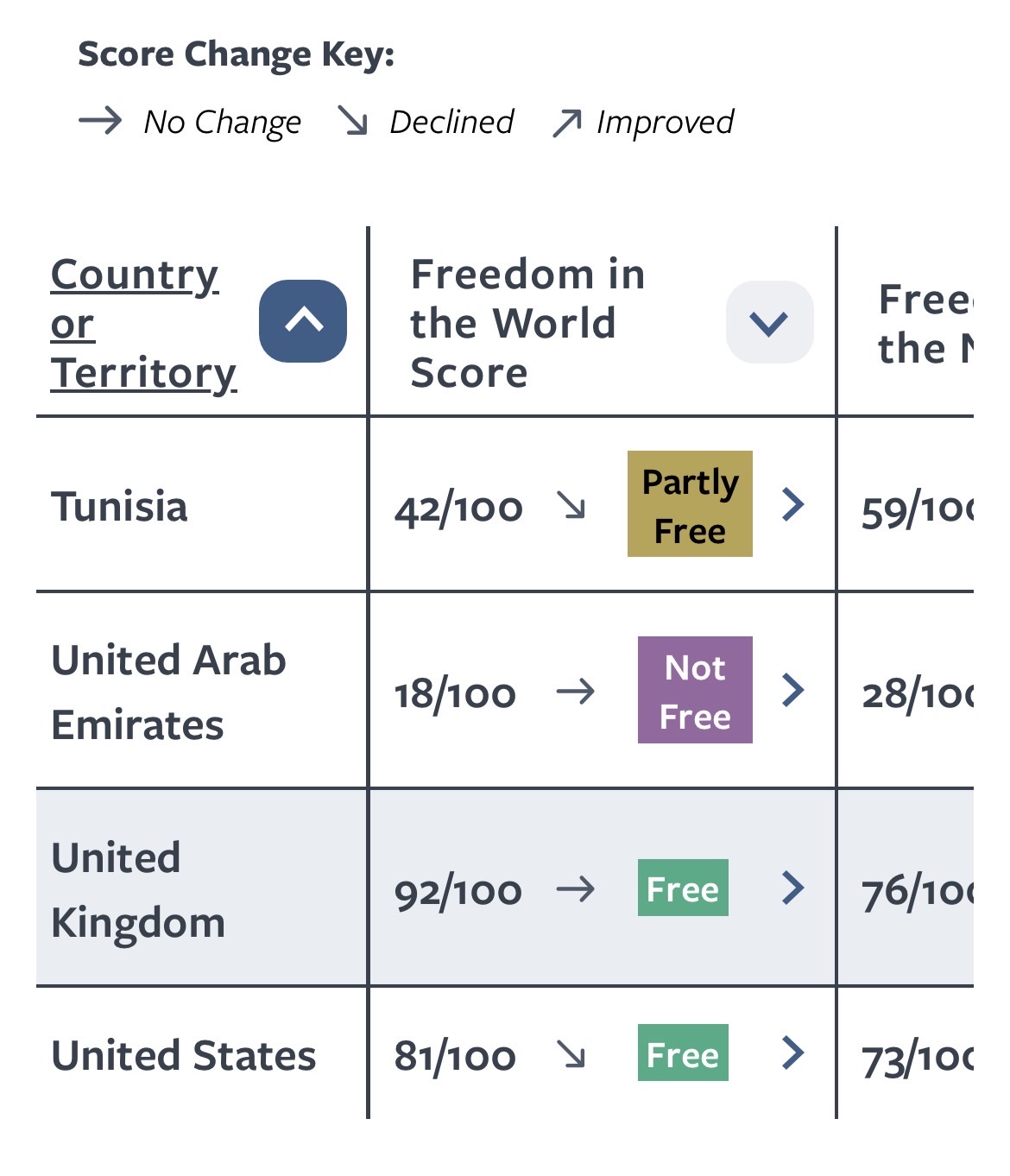
Internet freedom scores from Freedom House (https://freedomhouse.org/country/scores) tell the real story. Based on their most recent comprehensive assessments, here's where countries stand on internet freedom, from least free to most free (scored out of 100):
China: 9 (not free)
Iran: 15 (not free)
Myanmar: 17 (not free)
Cuba: 21 (not free)
Saudi Arabia: 21 (not free)
Vietnam: 21 (not free)
Russia: 23 (not free)
Egypt: 26 (not free)
Pakistan: 26 (not free)
Venezuela: 28 (not free)
Turkey: 31 (not free)
United Arab Emirates: 31 (not free)
Thailand: 35 (not free)
India: 49 (partly free)
Mexico: 61 (partly free)
South Africa: 72 (free)
United Kingdom: 79 (free)
United States: 76 (free)
Germany: 80 (free)
Canada: 87 (free)
Iceland: 95 (free)
Turkey sits alongside China, Russia, and Iran. Not alongside democracies. This is the company Turkey keeps. This is the surveillance model Turkey follows. China can detain thousands of Uyghurs based on WeChat messages. Russia extended prison sentences for anti-war posts to 15 years. Vietnam imprisons dozens of bloggers annually for criticizing the government. Egypt disappeared activists for Facebook organizing. Turkey arrested 150,000 people for social media activity after the coup attempt. This is systematic digital authoritarianism, not edge cases.
Here's how surveillance states expand: take genuine crimes that everyone condemns, use them to justify building infrastructure that can monitor everyone, then quietly deploy that infrastructure for political purposes. Protecting children becomes the argument for monitoring all communications. Fighting fraud becomes the justification for tracking all transactions. Stopping terrorism becomes the excuse for surveilling all citizens. The crimes are real. The surveillance is permanent. The political control is the goal.
Turkey's operation demonstrates exactly how much visibility Turkish authorities have into citizens' digital lives, and how quickly they can deploy that surveillance capability for mass enforcement actions. This is the infrastructure of authoritarianism. This is what it looks like when a government can arrest 330 people in five days based on their online activity. And this is what Western critics ignore when they equate their own governments' flawed policies with actual digital repression. The scale matters. The context matters. The difference between criticism and imprisonment matters enormously.
My Take
Here's what matters: Turkey arrested 330 people in five days for cybercrime. That's 66 arrests daily. Britain arrests roughly 63 people weekly for online speech offenses. Turkey operates at ten times the scale. This is the difference between a flawed democracy and digital authoritarianism. Stop pretending they're the same.
Yes, the UK, US, Canada, and Australia have real surveillance problems. British libel law is plaintiff-friendly. The Online Safety Act gives the government troubling powers. American critics of their own governments play a vital role. That vigilance matters. But when you can criticize your government's surveillance overreach in a major newspaper without fearing arrest, when independent courts rule against executive power, when opposition politicians run campaigns instead of running from police, you're not living under authoritarianism. You're living with serious civil liberties concerns that need addressing. There's a difference.
Turkey's operation gives Interior Minister Ali Yerlikaya ammunition to argue for even deeper access to encrypted communications. Protecting children is a politically bulletproof argument. It ignores the civil liberties implications completely. The government has been pushing for tighter controls on encrypted messaging apps, particularly after the February 2023 earthquakes exposed how Turkish citizens rely on platforms like WhatsApp and Signal for emergency communication when state infrastructure fails. This is the playbook: take genuine crimes everyone condemns, build infrastructure to monitor everyone, deploy that infrastructure for political control.
Here's the bitter irony about Elon Musk's crusade. He genuinely seems to believe he's defending free speech by gutting content moderation on X. But he's actually handing authoritarian governments their best argument for why platforms need state control. Every viral harassment campaign, every hate group organizing in plain sight, every conspiracy theory that radicalizes someone's uncle gives politicians ammunition to say "we can't trust American tech companies to police themselves." Erdoğan doesn't need to build sophisticated censorship when Musk makes platforms so toxic that ordinary citizens demand government intervention.
The arrested suspects face Turkey's grinding legal process, where pre-trial detention stretches for months or years. Some will flip and cooperate, giving Turkish cyber units intelligence on larger criminal networks, particularly illegal gambling operations connecting to offshore betting syndicates in Malta, Cyprus, and Curaçao. The wildcard is whether prosecutors go after politically connected figures who actually profit from these operations, or whether they'll use selective prosecution to claim victory while leaving bigger fish untouched. That pattern has played out repeatedly in Turkish corruption cases over the past decade. Meanwhile, Musk will keep tweeting about defending free speech while his platform's chaos creates the perfect pretext for the very authoritarianism he claims to fight.
What Happens Next
Turkish authorities will trumpet these numbers in the next round of legislative debates about expanding digital surveillance powers. This operation gives Interior Minister Ali Yerlikaya his argument: Turkey needs deeper access to encrypted communications to fight serious crimes like child exploitation. It's politically bulletproof. It ignores civil liberties completely. Expect new laws targeting encrypted messaging apps, particularly WhatsApp and Signal, which Turkish citizens rely on for emergency communication.
The 91 detained suspects face Turkey's grinding legal process, where pre-trial detention stretches for months or years. Some will flip and cooperate, providing Turkish cyber units with intelligence on larger criminal networks, particularly illegal gambling operations connecting to offshore betting syndicates in Malta, Cyprus, and Curaçao. Those international connections could trigger Interpol notices and cross-border enforcement actions, though Turkey's fraught relationships with several European Union (EU) members may complicate cooperation.
The wildcard is whether this operation turns up evidence of politically connected cybercrime. Turkey has a well-documented problem with organized crime figures operating under political protection. Illegal gambling networks often have ties to influential figures. If prosecutors go after the wrong people, or if defense lawyers start naming names about who really profits from these operations, this law enforcement story could morph into a political scandal. More likely, though, the government will use selective prosecution to claim victory while leaving bigger fish untouched. That pattern has played out repeatedly in Turkish corruption cases over the past decade. The surveillance infrastructure expands. The political targets multiply. The arrests continue.
What History Tells Us
Turkey's aggressive approach to internet regulation echoes China's development of the Great Firewall in the early 2000s, though Ankara has taken a more piecemeal approach rather than Beijing's comprehensive censorship architecture. After the 2013 Gezi Park protests, where social media played a crucial organizing role, then Prime Minister Erdoğan famously called Twitter "a menace to society" and temporarily blocked the platform in March 2014. That episode foreshadowed years of escalating digital control measures.
The 2016 coup attempt marked a turning point, giving Turkish authorities justification to dramatically expand surveillance capabilities under emergency rule provisions that technically ended in 2018 but left permanent legal frameworks in place. Turkey's current internet governance model resembles Russia's sovereign internet law passed in 2019, which similarly requires data localization and gives the state broad powers to monitor and restrict online activity. Both countries cite cybercrime, terrorism, and protecting children as primary justifications, while critics argue the real goal is controlling political dissent. The pattern is familiar: authoritarian and semi authoritarian governments worldwide have learned they can build extensive surveillance infrastructure by emphasizing the most sympathetic justifications stopping child abuse, preventing fraud while quietly using those same tools for political purposes.