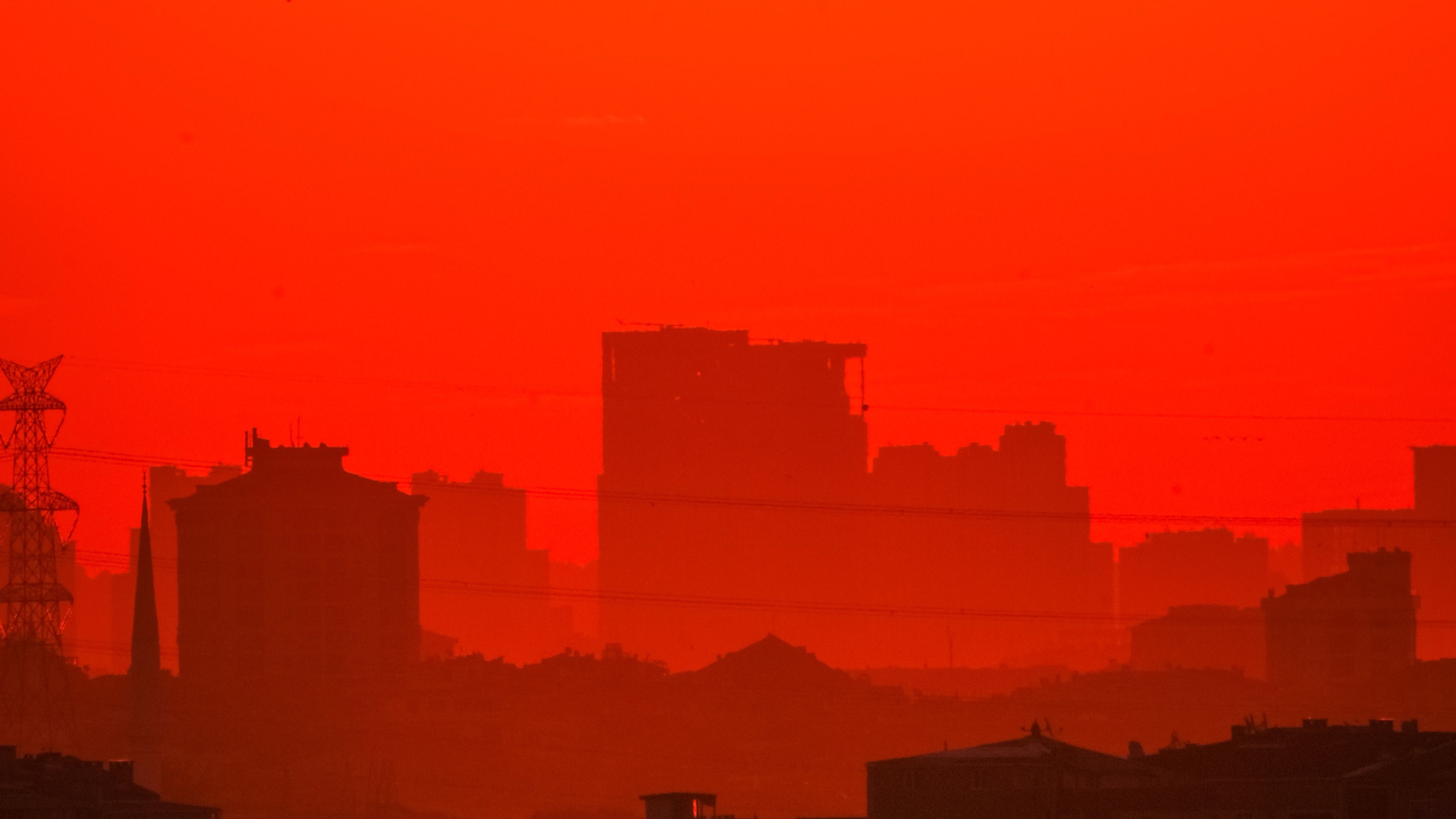
The heat dome currently suffocating the western United States isn't just uncomfortable-it's lethal. Cities from Phoenix to Las Vegas are experiencing sustained triple-digit temperatures, and municipal governments are racing to implement emergency cooling measures that once seemed like futuristic urban planning fantasies. We're talking about painting streets white, erecting temporary shade canopies in bus stops, and opening 24-hour cooling centers in libraries and community centers. Phoenix, which hit 118°F last week, has deployed mobile cooling units to neighborhoods where elderly residents lack air conditioning. The city's Heat Relief Network now operates 150+ cooling stations, triple the number from five years ago. The science behind urban heat islands makes this crisis worse. Asphalt and concrete absorb solar radiation during the day and radiate it back at night, preventing cities from cooling down between heat waves. Los Angeles has responded by coating over 100 miles of streets with a reflective gray sealant that can drop surface temperatures by 10-15 degrees. The material, called CoolSeal, costs about $40,000 per mile-expensive, but cheaper than the estimated $1 billion in annual heat-related healthcare costs across California. Las Vegas is taking a different approach, planting thousands of drought-resistant trees and installing misting stations on the Strip, where tourists continue to wander outside in 110°F heat like oblivious extras in a dystopian film. The human toll is staggering and disproportionate. Heat kills more Americans annually than hurricanes, tornadoes, and floods combined, according to the National Weather Service. Maricopa County, Arizona, reported 645 heat-related deaths in 2023, with the majority among homeless populations and outdoor workers. Construction sites in Nevada now mandate 10-minute breaks every two hours when temperatures exceed 105°F, but enforcement remains spotty. Farmworkers in California's Central Valley-where temperatures regularly hit 115°F-face even worse conditions, often working 10-hour shifts with minimal shade or water breaks. The heat doesn't discriminate by immigration status, but it damn sure discriminates by income. Infrastructure is buckling under the thermal stress. Phoenix Sky Harbor International Airport had to cancel flights last summer because aircraft couldn't generate enough lift in 120°F heat-the air literally became too thin. Power grids are straining as air conditioning demand spikes, with California's Independent System Operator (CAISO) issuing Flex Alerts urging residents to reduce electricity use during peak hours. The state's aging electrical infrastructure wasn't designed for sustained 100°F+ temperatures, and transformer failures have left thousands without power during the hottest days. Meanwhile, roads are literally melting-highway crews in Arizona are patching asphalt that's turned soft and sticky, creating dangerous driving conditions. The cooling strategies being deployed now are stopgap measures that treat symptoms rather than causes. Cities are retrofitting for a climate that has already changed, while greenhouse gas emissions continue rising. The American West is experiencing temperatures that climate models predicted wouldn't arrive until 2050, meaning every infrastructure upgrade is already obsolete by the time it's completed. Phoenix's chief heat officer (yes, that's now a real job title) has warned that without aggressive carbon reduction, parts of the Southwest could become functionally uninhabitable within two decades. We're watching real-time adaptation to climate change, and it's not the orderly, well-planned transition anyone hoped for.
 🔬 science
Western Cities Fight Back Against Deadly Heat Dome
A brutal heat dome is roasting the American West, pushing temperatures past 100°F in major cities. Urban planners are scrambling to deploy emergency cooling strategies-from reflective pavement to pop-up shade structures-as climate change turns summer into a survival test. The stakes? Thousands of heat-related deaths and billions in infrastructure damage.
My Take
Here's what nobody wants to admit: these cooling measures are expensive band-aids on a civilization-scale gunshot wound. Painting streets white and planting trees is nice, but it's like rearranging deck chairs on the Titanic if we don't address the fundamental problem-we built sprawling, car-dependent cities in deserts that barely support human life without massive technological intervention. Phoenix has 1.7 million people living in a place where summer temperatures now routinely exceed safe human tolerance. That's not a heat problem; that's a civilization planning failure. The real story is what these adaptation measures reveal about our collective denial. We're spending billions to make desert cities slightly less deadly instead of asking whether continued growth in these regions makes any sense. Las Vegas is still approving new casino developments. Phoenix suburbs keep sprawling outward. California's Central Valley keeps expanding water-intensive agriculture in a region facing permanent drought. We're engineering our way into an unlivable future, one reflective street at a time, because admitting we built in the wrong places requires a level of honesty that politicians and developers can't afford.
What Happens Next
Phoenix will become the test case for whether American cities can adapt fast enough to survive accelerating climate change. Within 18 months, expect the city to mandate reflective roofing on all new construction and require developers to include shaded pedestrian corridors in suburban projects. The real inflection point comes when insurance companies start pulling out of the market-State Farm and Allstate have already limited new homeowner policies in California, and Arizona is next. Once mortgages become harder to get because properties can't be insured, the sprawl will finally stop not from environmental consciousness but from cold financial logic. The scenario nobody's preparing for: a sustained 130°F heat wave that overwhelms cooling centers and causes grid failures across multiple states simultaneously. Phoenix's emergency plans assume cooling stations remain operational, but what happens when the power goes out citywide for 72 hours in July? We'll see a mass evacuation that makes Hurricane Katrina look organized. The Southwest's population boom will reverse sharply-not gradually over decades, but in sudden waves as individual heat disasters trigger panic moves. Real estate values in Tucson, Las Vegas, and Palm Springs will crater while cities in the Pacific Northwest see housing prices spike as climate refugees pour in. We're maybe five years from that tipping point, and the migration will reshape American politics more than any election.
What History Tells Us
The Dust Bowl of the 1930s offers a disturbing parallel. Like today's heat crisis, it was caused by a combination of natural climate variability and human land-use decisions-farmers had plowed up prairie grasslands that stabilized soil, leaving nothing to prevent catastrophic erosion during drought. Over 2.5 million people fled the Great Plains between 1930 and 1940, creating the largest internal migration in American history until that point. Federal intervention came only after the crisis became undeniable, through programs like the Civilian Conservation Corps planting shelterbelts and the Soil Conservation Service promoting better land management. Today's western heat crisis follows the same pattern: decades of unsustainable development ignoring environmental limits, followed by reactive (rather than proactive) government response. The difference is that heat waves are harder to flee than dust storms-air conditioning creates the illusion of habitability even as the underlying problem worsens.
Market Impact
Air conditioning and cooling technology stocks are positioned for sustained growth. Carrier Global (CARR), currently trading around $72 (up 18% year-to-date), manufactures residential and commercial HVAC systems that will see exploding demand across the Southwest. Their recent earnings showed 12% revenue growth in North America, and this trend accelerates as cities mandate cooling upgrades for public housing. Lennox International (LII), trading near $580, specializes in energy-efficient cooling systems and should benefit from California's building code changes requiring high-efficiency units in new construction. On the infrastructure side, watch Quanta Services (PWR) around $275-they install and maintain electrical transmission systems, and western utilities will spend billions upgrading grids to handle increased cooling loads. The near-term play is bullish on CARR and LII through 2027 as western states subsidize air conditioning installations for low-income residents. Longer term, if insurance companies flee the market as predicted, expect these stocks to face headwinds as Southwest real estate values decline. The contrarian bet: shorting homebuilders like D.R. Horton (DHI) and Lennar (LEN) that are heavily exposed to Phoenix and Las Vegas markets. When the insurance crisis hits, their land banks become liabilities.