The atomic bombings of Hiroshima and Nagasaki in August 1945 represent the fastest human-caused mass death events in history outside conventional warfare. The Little Boy bomb detonated over Hiroshima on August 6, 1945, killing an estimated 70,000 people instantly, with the death toll reaching 140,000 by year's end from radiation and injuries. Three days later, Fat Man exploded over Nagasaki, killing 40,000 immediately and 70,000 total by December. These weapons compressed what wars take months to achieve into literal seconds. The thermal radiation reached temperatures of 7,000 degrees Fahrenheit at ground zero, vaporizing people within half a mile of the blast. But nature has always been humanity's most efficient killer. The 1918 influenza pandemic, caused by an H1N1 virus with avian origin genes, infected 500 million people globally (one-third of the world's population at the time) and killed an estimated 50 to 100 million between 1918 and 1920. What makes this catastrophic is the speed: most victims died within the first 18 months, with mortality peaking in fall 1918. Unlike typical flu strains that kill the elderly and infants, the 1918 virus caused a cytokine storm response that killed healthy adults aged 20 to 40 at alarming rates. In Philadelphia, 4,597 people died in a single week in October 1918. Bodies piled up so fast that coffin supplies ran out and mass graves were dug with steam shovels. Earthquakes demonstrate nature's capacity for instant annihilation. The 1556 Shaanxi earthquake in China remains the deadliest seismic event in recorded history, killing an estimated 830,000 people in a matter of seconds on January 23. The region's loess cave dwellings, carved into soft sediment cliffs, collapsed instantly when the magnitude 8.0 quake struck. Some modern researchers estimate the death toll may have reached 1 million when counting secondary deaths from landslides and famine. More recently, the 2010 Haiti earthquake killed between 220,000 and 316,000 people in under a minute on January 12. The magnitude 7.0 quake struck at 4:53 PM local time, just 16 miles from the capital Port-au-Prince, collapsing poorly constructed buildings like card houses. The 1931 China floods represent the deadliest natural disaster of the 20th century, though the death toll accumulated over months rather than minutes. Between July and November 1931, catastrophic flooding of the Yangtze, Yellow, and Huai rivers killed an estimated 1 to 4 million people (historians debate the exact figure, with 2 million being the most commonly cited). The Huang He (Yellow River) had been called "China's Sorrow" for centuries due to its tendency to overflow, but 1931 was apocalyptic. Winter snowstorms were followed by spring rains, then seven cyclones struck between July and August. By August, the Yangtze River rose 53 feet above normal levels. Entire cities vanished underwater. Nanjing, then China's capital, was submerged for three months. Drowning was only the beginning: cholera, typhus, and famine killed hundreds of thousands in the aftermath. Cyclones and hurricanes have compressed death into hours. The 1970 Bhola cyclone that struck East Pakistan (now Bangladesh) on November 12-13 killed between 300,000 and 500,000 people, making it the deadliest tropical cyclone ever recorded. The storm surge, reaching heights of 20 to 30 feet, swept over the low-lying Ganges Delta islands, drowning entire communities overnight. Many victims were asleep when the water arrived. The Pakistani government's inadequate response to the disaster fueled the Bengali independence movement, leading to the Bangladesh Liberation War in 1971. The 1839 India Cyclone killed an estimated 300,000 people in the city of Coringa (now Kakinada) on November 25, with a 40-foot storm surge destroying the harbor and 20,000 ships. Volcanic eruptions have wiped out populations in minutes. The 1902 eruption of Mount Pelée in Martinique killed approximately 29,000 people in the city of Saint-Pierre on May 8 in under two minutes. A pyroclastic flow, a superheated avalanche of gas and volcanic matter traveling at over 100 miles per hour and reaching temperatures of 1,800 degrees Fahrenheit, engulfed the city at 7:52 AM. Only two people in the city survived. The most powerful volcanic event in recorded history, the 1815 eruption of Mount Tambora in Indonesia, killed an estimated 71,000 people immediately from pyroclastic flows and tsunamis. But the global death toll reached 100,000 when factoring in starvation from the "Year Without a Summer" in 1816, when volcanic ash in the atmosphere lowered global temperatures and destroyed crops worldwide. Human-caused industrial disasters also belong in this grim catalog. The 1984 Bhopal gas tragedy in India killed between 3,787 and 16,000 people (depending on which death count you accept) when methyl isocyanate gas leaked from a Union Carbide pesticide plant on the night of December 2-3. Over 500,000 people were exposed to the toxic gas. Many victims died in their sleep or while fleeing, drowning in their own fluids as the gas destroyed their lungs. The Chernobyl nuclear disaster on April 26, 1986, killed 31 people in the immediate aftermath, but the World Health Organization estimates that radiation exposure will ultimately cause 4,000 additional cancer deaths among those most heavily exposed, with some studies suggesting the total could reach 60,000.
 🔬 science
When Nature and Disaster Kill Faster Than War
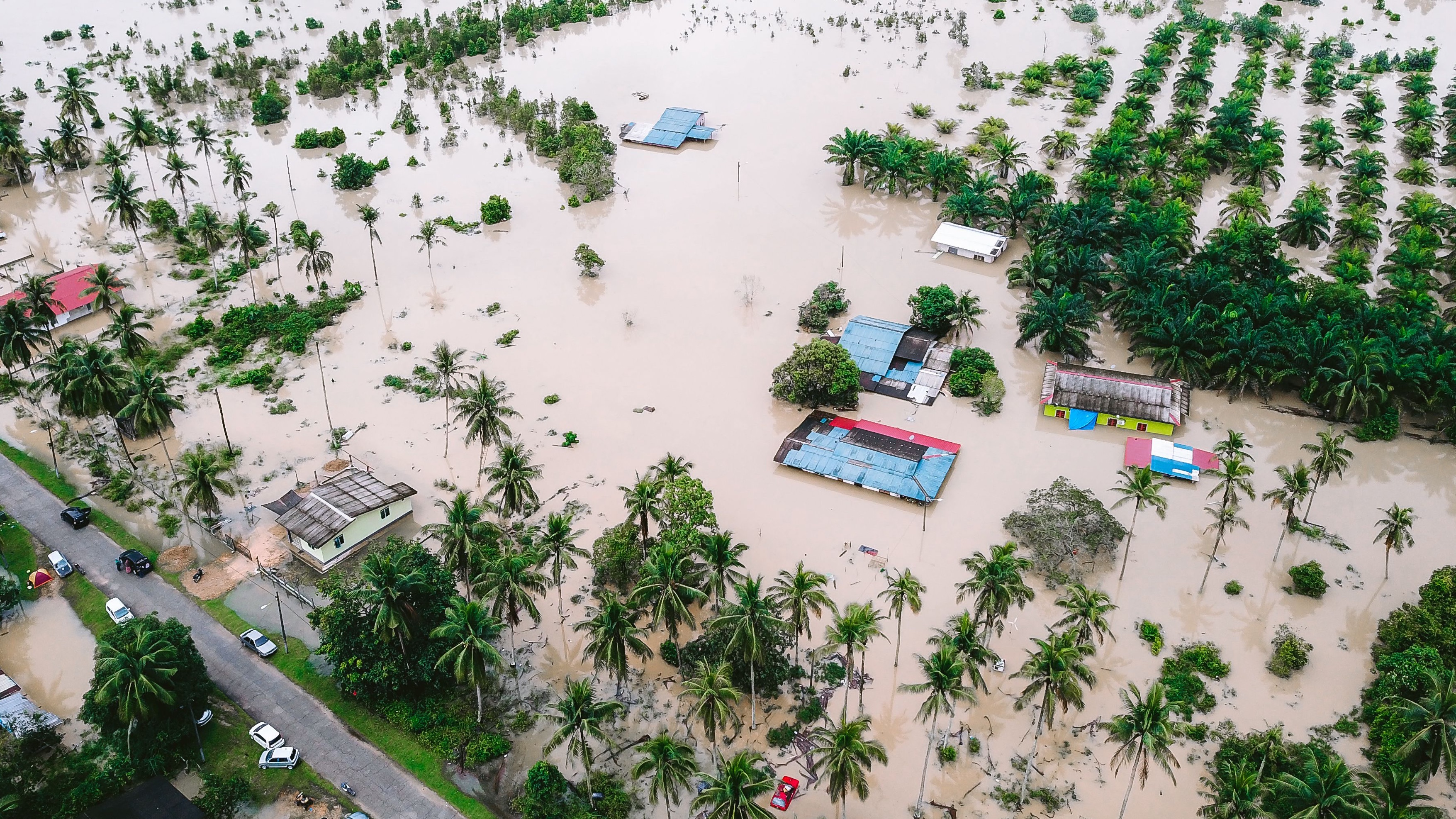
History's deadliest moments weren't always on battlefields. From the 1918 flu that erased 50 million lives in two years to earthquakes that swallowed entire cities in minutes, nature and human error have killed with terrifying speed. Here's the body count nobody talks about.
My Take
We obsess over terrorism and war while ignoring the statistical reality: nature and disease are exponentially better at killing humans than we are at killing each other. The 1918 flu killed more people in 24 months than World War I did in four years. A single earthquake in medieval China killed more people than the atomic bombs. Yet we spend trillions on military defense and comparatively pennies on pandemic preparedness and earthquake-resistant infrastructure in vulnerable regions. The COVID-19 pandemic, which killed over 7 million people globally between 2020 and 2023, should have been a wake-up call, but most nations have already dismantled their emergency response systems. The Hiroshima and Nagasaki bombings occupy a unique psychological space because they represent human agency compressed into a single decision and a blinding flash. There's something about deliberate annihilation that haunts us differently than natural disaster. But practically speaking, a pandemic or megaquake poses a far greater existential threat to modern civilization than nuclear weapons. We've built fragile, interconnected systems that can collapse globally from a single shock. The 2011 Tōhoku earthquake and tsunami killed 18,500 people in Japan, but it also triggered the Fukushima nuclear disaster and disrupted global supply chains for years. Imagine a magnitude 9.0 quake hitting Los Angeles or Istanbul, cities sitting on major fault lines with millions of residents in substandard buildings. The data is clear: if you want to prevent mass death, invest in early warning systems for tsunamis and cyclones, enforce earthquake building codes, fund pandemic surveillance networks, and stop building megacities in disaster-prone zones. But we won't, because politicians win elections by promising security from human enemies, not by preparing for the invisible threat of H5N1 or the inevitable Big One. When the next catastrophic event hits, and it will, we'll act shocked despite having all the historical evidence we needed.
What Happens Next
The next catastrophic event that kills hundreds of thousands in a short timeframe will most likely be a pandemic, and the smart money says it's avian influenza H5N1. Since 2020, H5N1 has been spreading through wild bird populations globally and jumping into mammals with increasing frequency, including dairy cattle in the United States in 2024-2026. The virus currently has a 50% fatality rate in humans (compared to less than 0.1% for COVID-19), but human-to-human transmission remains rare. The moment H5N1 mutates to achieve sustained human transmission while maintaining high lethality, we're looking at a potential death toll that makes COVID-19 look like a dress rehearsal. The World Health Organization (WHO) has been warning about this scenario since 2023, but pandemic fatigue means most nations have relaxed surveillance. The second most likely catastrophe is a megaquake in a densely populated region with inadequate building standards. Istanbul, Turkey, sits directly on the North Anatolian Fault, which is decades overdue for a major rupture. Turkish seismologists estimate a magnitude 7.0 or greater earthquake has a 70% probability of striking Istanbul before 2030, and the city's population of 15 million includes millions of people living in buildings that predate modern seismic codes. A worst-case scenario puts the death toll at 200,000 or more. Tehran, Iran (population 9 million), faces a similar threat from multiple fault lines, with experts predicting a major quake could kill 400,000 people. Neither government has the political will or resources to undertake mandatory retrofitting of vulnerable structures. The scenario nobody's gaming out is a cascading infrastructure collapse triggered by a moderate disaster. Imagine a magnitude 7.0 earthquake hitting the San Francisco Bay Area that damages multiple data centers in Silicon Valley. The immediate death toll might be 5,000, but if critical internet infrastructure goes offline for weeks, the economic cascade could trigger food distribution failures, hospital system collapses, and civil unrest that kills far more people than the quake itself. Modern megacities are optimized for efficiency, not resilience. We've built a just-in-time civilization that's three missed meals away from anarchy.
What History Tells Us
The pattern of catastrophic death from natural disasters and disease has remained remarkably consistent across human history, but our vulnerability has changed. Ancient Rome faced the Antonine Plague (165-180 AD), likely smallpox, which killed an estimated 5 million people and contributed to the empire's decline. The Black Death (1347-1353) killed between 75 and 200 million people across Eurasia, reducing Europe's population by 30-60%. These pandemics took years to kill, but compressed into the context of pre-modern medicine and communication, they were devastatingly fast. What's different now is population density and interconnection. In 1556, when the Shaanxi earthquake killed 830,000, China's total population was around 160 million and most people lived in rural areas. Today, more than half of Earth's 8 billion people live in cities, many in seismically active zones. The 2004 Indian Ocean tsunami killed 230,000 people across 14 countries in a few hours, but it was the first disaster where mobile phone footage went viral globally within days. When the next mega-disaster strikes, social media will spread panic and misinformation as fast as the crisis itself, potentially worsening secondary deaths. We've created systems that can fail faster and more completely than anything in history.
Market Impact
Catastrophic disasters create predictable market patterns worth understanding. Following major earthquakes in developed economies, reinsurance stocks typically get hammered while construction and materials companies rally. After the 2011 Tōhoku earthquake and tsunami, shares of Munich Re (MURGY, currently trading around $45) and Swiss Re (SSREY, around $27) dropped 5-7% on concerns about massive claims, while shares of companies like Caterpillar (CAT, currently around $345) eventually gained on rebuilding demand. The Japan ETF (EWJ, currently around $62) dropped 15% in the week following the disaster but recovered within six months. Pandemic-related plays are trickier but potentially more lucrative. During COVID-19, vaccine manufacturers like Moderna (MRNA, currently around $75, down from its pandemic peak of $450) and Pfizer (PFE, currently around $29) saw massive runs, while travel stocks like United Airlines (UAL, currently around $45) and cruise operators like Carnival (CCL, currently around $18) cratered. If H5N1 achieves human transmission, expect an immediate 20-30% drop in airline and hospitality stocks, while biotech companies with mRNA vaccine platforms and antiviral manufacturers like Gilead Sciences (GILD, currently around $82) could see triple-digit percentage gains. The iShares Biotechnology ETF (IBB, currently around $135) would likely spike 40-60% on pandemic news before reality sets in. The contrarian play nobody talks about is long-duration treasury bonds during catastrophic disasters. When tens of thousands die suddenly, central banks slash interest rates and governments borrow massively. The iShares 20+ Year Treasury Bond ETF (TLT, currently around $92) typically rallies 10-20% in the immediate aftermath of major disasters as investors flee to safety. Gold (GLD ETF currently around $225) follows a similar pattern, spiking 5-10% in crisis before stabilizing.