Let's start with what actually happens when you ask ChatGPT a question. Your simple prompt triggers billions of mathematical operations across thousands of specialized chips called GPUs (graphics processing units). These chips don't just store the AI model, they actively compute probabilities for every possible next word, cross reference patterns from training data representing chunks of the entire internet, and refine predictions through layers of neural networks. Each layer adds computational weight. GPT 4 reportedly has over 1 trillion parameters. Think of these as dials the AI adjusts to generate coherent responses. Every dial needs power to operate. Before any of that happens, your prompt goes through a process called tokenization. When you type "How are LLMs designed?" into ChatGPT, your browser doesn't send that raw text to OpenAI's servers. Instead, JavaScript running on your local computer breaks the sentence into tokens, which are chunks of text that the model understands. A token might be a whole word like "How," or a piece of a word like "design" and "ed" split apart. The tokenizer converts your sentence into a sequence of numbers, each representing a specific token from the model's vocabulary (typically 50,000 to 100,000 possible tokens). Those numbers, not your original text, get transmitted to the data center. This happens instantly, in milliseconds, and uses negligible power on your device. Once your tokenized prompt arrives at the data center, it hits a load balancer, a specialized computer that decides which server should handle your request. Major AI providers run multiple data centers across different continents, so your request might be routed to Virginia, Oregon, Ireland, or Singapore based on geographic proximity and current server load. The load balancer's job is to prevent any single machine from getting overwhelmed while keeping others idle. It tracks which servers are busy, which have capacity, and distributes incoming requests accordingly. This routing decision happens in microseconds. Your request then gets assigned to a specific inference server, which might be a single physical machine with 8 GPUs, or more likely, a pod of machines working together. Here's where the complexity explodes. The AI model is too large to fit on one GPU. GPT 4's trillion plus parameters require hundreds of gigabytes of memory. A single H100 GPU has 80 gigabytes of high bandwidth memory (HBM). So the model gets split across multiple GPUs using a technique called model parallelism. Different layers of the neural network live on different chips. When processing your prompt, the GPUs must constantly talk to each other, passing intermediate results from one layer to the next. These GPUs communicate through specialized high speed interconnects, not regular ethernet. NVIDIA's NVLink technology allows GPUs in the same server to transfer data at 900 gigabytes per second, roughly 10x faster than the fastest consumer SSDs. For GPUs in different servers, data centers use InfiniBand networks, which provide similar speeds with extremely low latency (microsecond range). This matters enormously because the AI model processes your prompt sequentially, one token at a time. The first GPU processes the first layer's calculations, sends results to the second GPU for the second layer, and so on through potentially 96 or more layers. Any delay in communication becomes a bottleneck that slows down response time. Here's the part most people don't realize: those GPUs aren't just processing your request. They're processing dozens or hundreds simultaneously through a technique called batching. The server groups together requests from different users that arrived around the same time, processes them in parallel on the same GPU cores, then splits the results back out. This dramatically improves efficiency. A GPU computing one response at a time wastes most of its processing cores. Batching multiple requests together keeps all cores busy. However, batching introduces complexity in the inter GPU communication. Results for different users must stay separated, requiring additional memory management and careful data routing. The physical reality of computation creates an unavoidable problem: electricity becomes heat. Modern AI chips like NVIDIA's H100 GPUs consume 700 watts each under full load, about the same as seven old school incandescent bulbs running simultaneously. But data centers don't house seven GPUs. They house thousands or tens of thousands. Meta's AI Research SuperCluster uses 16,000 GPUs. Microsoft's facilities supporting OpenAI reportedly use far more. When you multiply 700 watts by 20,000 GPUs, you're looking at 14 megawatts just for computation, before cooling, networking, or storage. That's enough to power roughly 10,000 American homes. Cooling becomes the hidden energy vampire. Those GPUs generate tremendous heat in tightly packed server racks. Without aggressive cooling, chips overheat and fail within minutes. Data centers use industrial scale air conditioning, liquid cooling systems, and sometimes evaporative cooling that consumes millions of gallons of water annually. Google's data centers used 4.3 billion gallons of water in 2022 alone. The cooling infrastructure often consumes 30 to 40% as much power as the computation itself. Physics doesn't negotiate. Heat must be removed at the rate it's generated, or the hardware melts. Why can't they just use smaller models? Because performance degrades catastrophically. Research shows that larger models with more parameters demonstrate emergent abilities, capabilities that smaller models simply cannot replicate regardless of training time. GPT 3 with 175 billion parameters performs dramatically better than models with 1 billion parameters on complex reasoning tasks. There's no efficiency hack around this. You want the AI to understand context, generate creative responses, and avoid nonsensical output? You pay the parameter price. More parameters mean more computation per query, which means more power. But it wasn't always this way. The first large language model that truly shocked researchers and the public was GPT 2, released by OpenAI in February 2019. The model had 1.5 billion parameters, tiny by today's standards, but revolutionary for its time. OpenAI initially refused to release the full model, citing safety concerns about potential misuse for generating fake news and spam. That decision itself became a watershed moment, the first time an AI lab publicly claimed their technology was too dangerous to share freely. The original GPT 2 demo was remarkably simple and ran on modest hardware. OpenAI researchers showed the model a prompt like "In a shocking finding, scientist discovered a herd of unicorns living in a remote, previously unexplored valley, in the Andes Mountains." The model then continued the story with multiple coherent paragraphs about the unicorns, their silver white coats, their unique horns with healing properties, and scientists' amazement at the discovery. The text flowed naturally, maintained consistent details, and even invented plausible sounding scientist names and research institutions. Readers couldn't immediately tell it was machine generated. What made this demo powerful wasn't the hardware requirements, it was the conceptual breakthrough. GPT 2 proved that a single model, trained only to predict the next word in a sequence, could seemingly understand narrative structure, maintain context over hundreds of words, and generate creative fiction without any task specific programming. Previous AI systems needed separate modules for different tasks: one for translation, another for summarization, a third for question answering. GPT 2 did all of it with one architecture, just by learning patterns in text. The compute requirements for that first demo were modest by data center standards. GPT 2 could run inference (generating text) on a single high end consumer GPU, something a well equipped researcher might have in their office workstation. An NVIDIA GTX 1080 Ti with 11 gigabytes of memory could handle the largest GPT 2 variant, generating text at a few words per second. The model file itself was around 6 gigabytes. You could download it, load it into memory, and start generating text without needing cloud resources. This accessibility was crucial. Researchers worldwide could experiment with GPT 2, push its limits, and discover both its capabilities and failures. The training of GPT 2, however, was a different story. OpenAI used 40 gigabytes of internet text and trained on a cluster of machines for weeks. Even in 2019, this required significant computational resources, likely hundreds of thousands of dollars in cloud computing costs. But it was achievable for a well funded lab, not yet the multi million dollar endeavors that training GPT 4 would require. Andrej Karpathy, formerly Tesla's AI director and OpenAI researcher, later demonstrated the fundamental simplicity of language models with a teaching project called "minGPT." He showed that you can implement a working GPT style model in a few hundred lines of Python code. The architecture isn't magic, it's matrix multiplication and attention mechanisms, standard operations that any computer science graduate student can understand. What changed between GPT 2 and GPT 4 wasn't the fundamental algorithm. It was scale: more parameters, more training data, more compute, and crucially, more energy. The GPT 2 moment was AI's "hello world" because it proved language modeling worked at a scale that mattered. Previous models generated grammatically correct nonsense or memorized training data without understanding. GPT 2 showed something resembling comprehension, even though philosophically, it was just predicting statistical patterns. Researchers fed it prompts in French and got coherent French responses, despite no explicit translation training. They asked it to write poems in specific styles and got plausible attempts. The model wasn't perfect, it would eventually drift off topic or contradict itself, but the capabilities were undeniable. OpenAI's staged release strategy added to GPT 2's impact. They first released a smaller 124 million parameter version, then gradually released larger variants over the following months as the research community demonstrated responsible use. This created sustained attention and gave researchers time to explore each size's capabilities. By the time the full 1.5 billion parameter version released in November 2019, the AI community had spent nine months discovering what scaled language models could do. That groundwork made GPT 3's announcement in June 2020 feel like a natural evolution rather than a shock. GPT 3 changed everything because OpenAI didn't release the model for download. Instead, they offered API access, where developers sent prompts to OpenAI's servers and received completions. This shift was crucial for two reasons: it protected OpenAI's competitive advantage (nobody could study or copy their model directly), and it centralized compute requirements. Suddenly, you didn't need a GPU to use GPT 3. You just needed an API key and a credit card. This democratized access while creating dependence on OpenAI's infrastructure. The API model also meant users never saw the true computational cost. When you ran GPT 2 on your local machine, you heard the fans spin up, felt the heat, maybe noticed your electricity bill tick higher if you ran it constantly. With GPT 3's API, computation happened invisibly in a data center somewhere. You paid per token, a few cents for thousands of words, with no sense of the megawatts burning behind the scenes. This abstraction is how the industry scaled so rapidly without triggering immediate energy concerns. The costs were hidden in operating budgets and utility bills, not visible to end users. Now here's the crucial distinction most people miss: using a trained AI model (inference) is completely different from training the AI model in the first place. When you chat with ChatGPT, you're using an already trained model. Training is what happened months earlier, when OpenAI created that model from scratch. Think of it like the difference between reading a book versus writing the book. Using ChatGPT is reading. Training is the grueling process of writing every single word. Training starts with a blank slate, a neural network with random parameter values that produces complete nonsense. Imagine billions of dials all set to random positions. The network doesn't know anything about language, grammar, facts, or reasoning. It's digital gibberish. The training process is about adjusting those billions of dials, tiny amounts at a time, until the network starts producing coherent text. Here's how it actually works: You feed the network a massive chunk of text, let's say a Wikipedia article about dolphins. The network tries to predict the next word in a sentence. With random parameters, it fails spectacularly. Where the real text says "Dolphins are highly intelligent marine mammals," the untrained network might predict "Dolphins are purple seventeen basketball" because its parameters are nonsense. The training algorithm measures how wrong that prediction was. This is called calculating loss. The worse the prediction, the higher the loss number. Then comes the key step: backpropagation. The algorithm works backward through all the network's layers, calculating exactly how much each of those billions of parameters contributed to the terrible prediction. It's like forensic accounting for neural networks, tracing the error back to its sources. Once the algorithm knows which parameters caused the problem, it adjusts them slightly in the direction that would have produced a better prediction. This is called gradient descent. You're nudging billions of dials, each by a tiny amount, trying to inch closer to better performance. One adjustment doesn't do much. But you repeat this process trillions of times, with trillions of different text examples, and gradually those random dials shift into configurations that actually work. The energy consumption for training is absolutely staggering because you're doing this calculation repeatedly across the entire internet's worth of text. Training GPT 3 reportedly required 1,287 megawatt hours, equivalent to what 120 American homes use in an entire year, burned in weeks or months of continuous computation. You're not just reading text. You're doing quadrillions of mathematical operations: matrix multiplications, gradient calculations, parameter updates, all across thousands of GPUs running 24/7. Here's why training is so much more expensive than inference: When you use ChatGPT (inference), the parameters are frozen. The network does one forward pass through its layers, calculates probabilities, picks a word, and moves on. Training requires a forward pass to make a prediction, then a backward pass to calculate gradients, then parameter updates, then validation checks, all repeated billions of times. You're doing maybe 100x more computation per word during training than during inference. Modern training also happens in multiple phases. First, there's pre training, where the model learns general language patterns from massive datasets. This is the expensive part that consumes 1,000+ megawatt hours. Then comes fine tuning, where you take that pre trained model and specialize it for specific tasks like following instructions or having conversations. Fine tuning uses smaller, carefully curated datasets and adjusts the parameters more gently. It's still computationally expensive, but maybe 1 to 10% the cost of pre training. Companies also do reinforcement learning from human feedback (RLHF), where human raters score the AI's responses, and the training algorithm adjusts parameters to produce responses that get higher scores. This adds another layer of training cost because you need humans in the loop, generating feedback, which then drives more gradient descent and parameter updates. Once training finishes, you have a model file containing billions of frozen parameter values. That file gets copied to inference servers worldwide. Those servers just read the parameters and use them to answer questions. They never modify the parameters. The model stays exactly as smart (or dumb) as it was the moment training ended. Using ChatGPT a billion times doesn't make it any smarter, because inference doesn't change parameters. This is a critical point that many people misunderstand: AI models don't learn from conversations with users. They're static snapshots of knowledge frozen at the end of their training process. This is why the Raspberry Pi fantasy doesn't work. You can download a pre trained model to your Pi and run inference, but the Pi will never make that model smarter through use. Training requires specialized hardware, massive datasets, and months of computation that would take your Pi centuries to complete. The model you downloaded is frozen in time, a snapshot of whatever it learned during training. Why does Claude often outperform ChatGPT on coding tasks? The answer isn't simply more data. It's what data, how it's weighted, and how the model is fine tuned after initial training. Anthropic trained Claude with a technique called Constitutional AI (CAI), which involves multiple rounds of refinement where the AI critiques and revises its own outputs based on explicit principles. For coding specifically, this means Claude likely saw more diverse code examples during training, received stronger signals to prioritize correctness over creativity, and underwent additional reinforcement learning specifically on programming challenges. OpenAI and Anthropic use different training datasets with different licensing and sourcing strategies. Claude may have ingested more GitHub repositories, Stack Overflow discussions, and technical documentation. The model architecture also differs subtly. While both use transformer based designs, Anthropic's choices about attention mechanisms, context window optimization, and how the model handles structured versus unstructured text can dramatically affect performance on tasks requiring precise syntax and logic. The quality over quantity principle matters enormously in training data. Feeding an AI model 10 trillion tokens of random internet text produces worse results than 5 trillion carefully curated tokens. For coding tasks, this means prioritizing repositories with well commented, production grade code over student homework scraped from forums. It means weighting technical documentation and API references more heavily than casual blog posts about coding. Anthropic likely spent significant engineering effort filtering training data for coding excellence, while OpenAI optimized GPT 4 more broadly across conversational ability, creative writing, and general knowledge. Neither approach is wrong, but they produce models with different strengths. Is there a ceiling to AI learning, or can models just keep improving forever? The honest answer: we don't know yet, but evidence suggests we're approaching practical limits with current architectures. Scaling laws discovered by OpenAI researchers in 2020 showed that model performance improves predictably as you increase parameters, training data, and compute. But those laws assume you have unlimited high quality data. We're running out. The entire accessible internet contains perhaps 10 to 50 trillion words of usable text. Frontier models have already trained on significant chunks of that corpus. You can't just loop the same data repeatedly. Models memorize rather than learn. Researchers are hitting the data wall, where finding fresh, high quality training material becomes exponentially harder. Synthetic data (AI generated content used to train other AIs) offers a tempting solution that mostly doesn't work. Early experiments showed that models trained on their own outputs suffer from model collapse, where errors compound and performance degrades over generations. It's like making photocopies of photocopies: quality deteriorates rapidly. However, carefully curated synthetic data can work for specific tasks. You can generate millions of math problems with verified solutions, or coding challenges with unit tests confirming correctness. The key is having automated verification that catches hallucinations and errors before they poison the training set. This approach works for structured domains like math and code but fails for open ended tasks like creative writing or nuanced reasoning where correctness isn't algorithmically verifiable. The future of AI learning likely involves multimodal data and embodied experience rather than more text. Models that learn from video, sensor data, and interactive environments can continue improving because those data sources dwarf text in sheer volume. A single hour of video contains far more information than hours of reading. Robots learning through trial and error in simulated environments generate effectively unlimited training data. This shift requires fundamentally different architectures and training techniques, which means the current generation of text focused LLMs (Large Language Models) may represent a local maximum rather than a path to artificial general intelligence (AGI). We're not hitting a ceiling on machine intelligence broadly. We're hitting a ceiling on how much smarter pure language models can get using current methods and available text data. Now let's talk about how multimodal AI models handle images, audio, and video, because the tokenization process gets wildly different and far more energy intensive. When you upload an image to GPT 4 Vision or Claude, the model doesn't see pixels the way you do. It sees numerical representations of visual patterns, but the conversion process is completely different from text tokenization. Images get processed through a vision encoder, typically a convolutional neural network (CNN) or a vision transformer (ViT). These specialized neural networks break your image into patches, small square regions like a grid overlaid on the photo. A 1024x1024 pixel image might get divided into 256 patches of 64x64 pixels each. Each patch gets converted into an embedding, a long list of numbers (often 768 or 1024 dimensions) that captures the visual features of that patch: edges, colors, textures, shapes. These embeddings are the image equivalent of text tokens. The vision encoder essentially compresses visual information into a numerical format that the language model can process. Here's where energy consumption explodes: that vision encoder is itself a massive neural network with hundreds of millions of parameters. Running it on a single image requires billions of mathematical operations. Unlike text tokenization, which happens quickly on your local device with simple lookup tables, image encoding requires GPU acceleration and significant computation. When you send an image to ChatGPT, OpenAI's servers are running that vision encoder in addition to the language model. You're burning through watts before the actual AI reasoning even begins. The embeddings from the vision encoder then get fed into the language model alongside your text prompt. The model processes both streams of information together, using attention mechanisms to figure out which parts of the image relate to which parts of your question. Ask "What's the dog doing in this photo?" and the model's attention focuses on patches containing the dog, ignoring background elements. This cross modal attention is computationally expensive because the model is doing matrix multiplications between text tokens and image patch embeddings, calculating relevance scores for every possible pairing. Training a multimodal model that understands images requires even more staggering resources than text only models. You need massive datasets of image caption pairs, photos paired with descriptive text. OpenAI likely used datasets containing hundreds of millions or billions of images scraped from the internet, each with associated alt text, captions, or surrounding webpage text. The training process shows the model an image, asks it to predict the caption, measures how wrong it is, and adjusts parameters through backpropagation, just like text training. But now you're training both the vision encoder and the language model simultaneously, doubling or tripling the parameter count and compute requirements. Audio tokenization follows yet another path. When you talk to ChatGPT's voice mode or use Whisper for transcription, your audio gets converted into spectrograms, visual representations of sound frequencies over time. Think of it like a heat map where the x axis is time, the y axis is frequency, and the colors represent intensity. Speech recognition models analyze these spectrograms to identify phonemes (individual speech sounds like "t" or "ah"), then assemble phonemes into words. Modern audio models like Whisper use an encoder decoder architecture similar to translation models. The encoder takes your spectrogram and converts it into embeddings that capture acoustic features: pitch, tone, rhythm, speaker characteristics. The decoder then predicts the sequence of text tokens that correspond to the speech. This two stage process requires separate neural networks, each with their own parameter sets and compute requirements. A 30 second audio clip might generate thousands of spectrogram frames, each requiring processing through the encoder. The energy cost for audio isn't as extreme as images because spectrograms are more compact than raw audio waveforms, and speech recognition models tend to be smaller than vision models. But real time processing still demands serious compute. When you have a voice conversation with ChatGPT, the system is simultaneously running speech to text on your audio, processing the text through the language model, generating a text response, and running text to speech to create audio output. Four separate AI models running in pipeline, all burning GPU cycles. Now here's where your Shazam for humanity question gets disturbing and fascinating. Yes, multimodal AI models trained on enough data could absolutely become reverse search engines for people. The technical capability already exists in pieces. Face recognition systems can identify individuals from photos with scary accuracy. Voice biometrics can identify people from short audio clips by analyzing unique vocal characteristics like pitch, cadence, and speech patterns. Combining these creates exactly what you described: upload a photo and voice sample, get back a person's identity. Companies like Clearview AI already built facial recognition databases by scraping billions of photos from social media, matching faces to names and profiles. Law enforcement agencies use it to identify suspects from surveillance footage. The system is essentially Shazam for faces: you input an image, it searches a massive database of face embeddings, and returns matches. The same principle applies to voices. Once you've built a database of voice embeddings linked to identities, you can match unknown audio samples against it. The training process for such a system would be ethically nightmarish but technically straightforward. You'd need a dataset containing millions of people's photos, videos, and audio recordings, all labeled with verified identities. The model learns to map visual and audio features to specific individuals, building what's essentially a giant lookup table of humanity's biometric signatures. Training requires the same backpropagation and gradient descent as language models, but now the loss function measures how accurately the model identifies people rather than how well it predicts text. The energy cost would be comparable to training large language models because you're dealing with similar parameter scales. A model that can reliably identify millions of individuals from photos and voice would need billions of parameters to capture all the subtle variations in human appearance and speech. Training on billions of images and audio clips would require thousands of GPUs running for weeks or months. And unlike text models where training happens once, identity models need continuous updates as people age, change appearance, or as new individuals get added to the database. The dystopian implications are obvious. Such a system could enable mass surveillance beyond anything currently possible. Point a camera at a crowd, run everyone's face through the model, instantly identify every person. Record a phone call, identify speakers by voice alone even if they use burner phones or encrypted apps. Authoritarian governments would kill for this capability. Democratic societies should be terrified of it. The technology isn't science fiction, it's just extremely expensive to build and politically radioactive to deploy openly. What prevents widespread deployment isn't technical limitation, it's legal and ethical barriers. The EU's GDPR and proposed AI Act heavily restrict biometric identification systems. Several U.S. cities have banned government use of facial recognition. But those are policy choices, not physics. The models can be built. The databases can be compiled. The compute resources exist. We're one political shift or crisis away from mass deployment. The energy angle makes this even more troubling. If AI companies are already struggling to power language models, imagine the grid impact of real time, continuous surveillance systems analyzing every security camera feed, every video upload, every voice call. We'd be talking about orders of magnitude more compute than current AI workloads. Data centers would need to multiply. Power demand would spike. We'd be burning fossil fuels to enable authoritarian control systems at scale. Here's the piece nobody talks about: the training data problem for multimodal surveillance AI is mostly solved. Social media companies already have it. Facebook has billions of photos tagged with names. YouTube has millions of hours of video with speaker identities. Google Photos uses face recognition to organize your pictures. The data exists, legally obtained through terms of service agreements that nobody reads. What stops companies from training the Shazam for humanity model you described? Only the reputational cost of admitting they did it. But the raw materials sit in their databases right now, waiting.
 💻 technology
Why AI Burns Enough Power to Light Small Cities
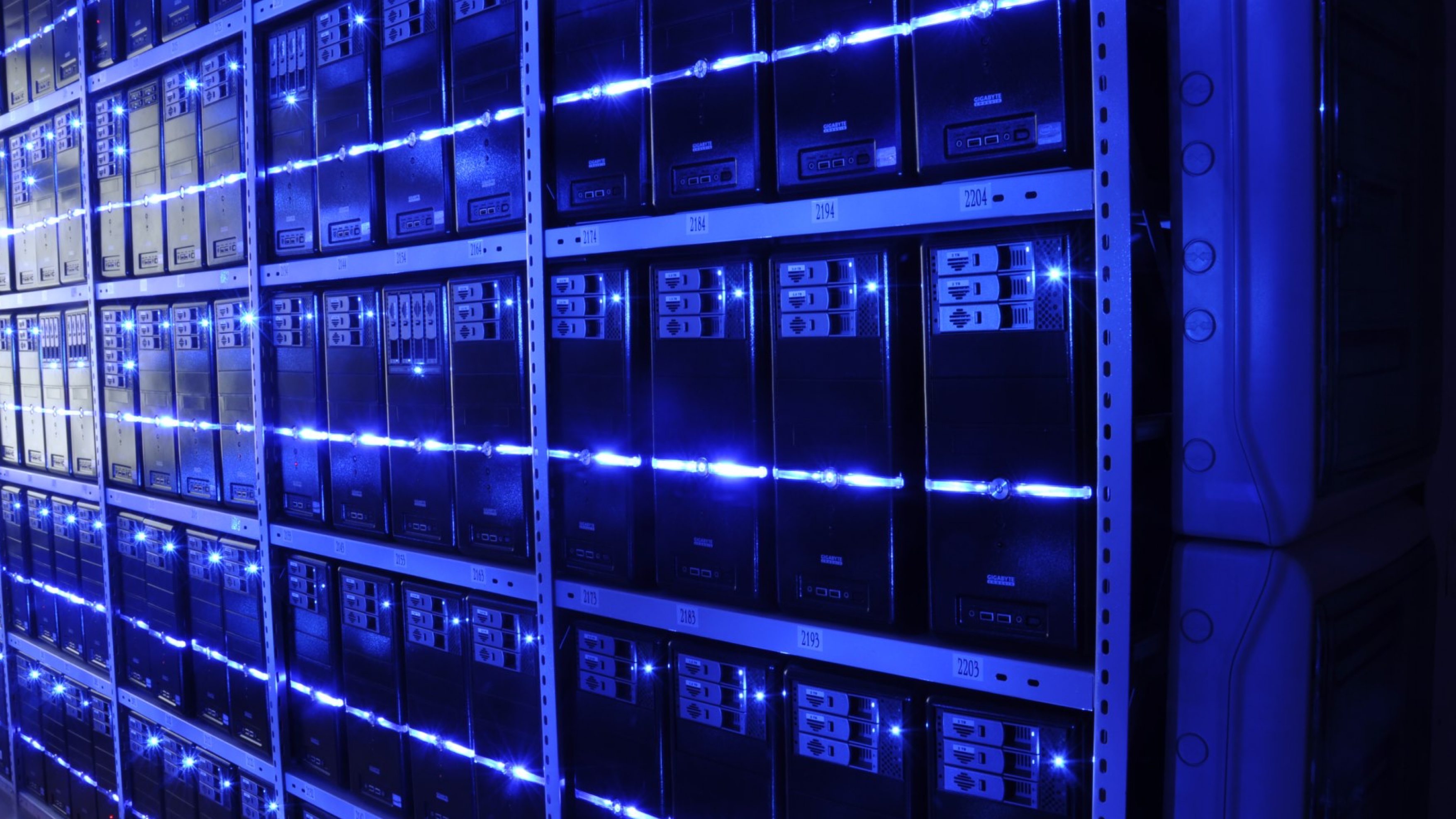
Large language models like ChatGPT require massive data centers that consume gigawatts of electricity - enough to power entire neighborhoods. The reason isn't corporate greed or poor engineering. It's pure math: trillions of calculations per second, billions of parameters to juggle, and physics that turns computation into heat.
My Take
The AI industry is sleepwalking into an energy crisis it refuses to publicly acknowledge. Tech executives talk endlessly about AI safety and alignment while ignoring the elephant in the server room: their creations are environmental disasters on an industrial scale. We're building digital brains that consume as much power as small nations to tell you how to write emails and summarize articles. The cost benefit analysis doesn't add up, and nobody wants to say it out loud. The real scandal isn't that LLMs need lots of power that's physics. The scandal is that companies are racing to put these models everywhere without honest conversations about energy trade offs. Does every website need an AI chatbot? Does every smartphone need on device AI processing? We're automating tasks that humans performed perfectly well with negligible energy cost, then congratulating ourselves for innovation. Meanwhile, utilities are firing up retired coal plants to meet AI data center demand. That's not progress. That's addiction disguised as advancement. The path forward requires brutal honesty about which AI applications justify their energy cost. Medical diagnosis, scientific research, climate modeling these might clear the bar. Generating marketing copy and entertainment slop? Probably not. Until the industry starts publishing real time energy consumption data and accepting hard limits on growth, we're just building a more elaborate way to boil the planet.
What Happens Next
Within 18 months, we'll see the first major AI project cancellations due to grid capacity constraints, not technical failures. A major cloud provider likely in Virginia, Ireland, or Singapore will announce delayed expansions because utilities literally cannot provide enough power. The company won't frame it as an energy problem; they'll call it strategic repositioning or regulatory challenges. But internal documents will tell the truth: the grid maxed out. Nuclear becomes the unlikely hero of the AI story, but not how techno optimists imagine. Small modular reactors (SMRs) won't save the day because they're still years from commercial deployment at scale. Instead, old school utilities will restart mothballed nuclear plants specifically for tech contracts. After Microsoft's Three Mile Island deal, expect similar announcements from Amazon and Google by early 2027. Environmentalists will face an impossible choice: support nuclear power for AI, or watch coal plants fire back up. Most will hold their noses and accept nuclear as the lesser evil. The wildcard scenario nobody's pricing in: energy costs trigger a renaissance in algorithmic efficiency research that actually works. Right now, companies scale models because it's easier than making them smarter per parameter. But if power becomes the limiting factor if utilities start charging AI companies 3 5x normal rates during peak demand suddenly there's massive financial incentive to build models that perform like GPT 4 using GPT 3 levels of computation. We might see breakthrough compression techniques, sparsity methods that activate only relevant parameters, or entirely new architectures that abandon the transformer model's brute force approach. The crisis could force the innovation that abundance prevented.
What History Tells Us
The AI industry's energy trajectory mirrors the cryptocurrency mining boom of 2017 2021, with eerily similar dynamics. Bitcoin mining farms consumed an estimated 150 terawatt hours annually at peak more than entire nations like Argentina. Miners chased cheap electricity to remote regions, overwhelmed local grids, and sparked backlash from communities facing brownouts and rising rates. China ultimately banned mining in 2021, partly due to energy concerns. Several U.S. states now restrict new mining operations. The parallel extends beyond numbers. Both technologies promised revolutionary benefits while externalizing energy costs onto public grids and ratepayers. Both industries insisted efficiency improvements would solve the problem (they didn't scale overwhelmed efficiency gains). Both triggered a global hardware shortage as companies competed for specialized chips. The key difference: AI has far broader corporate and political support than crypto ever achieved, making regulatory restrictions less likely despite comparable energy demands. History suggests tech driven energy crises don't resolve through voluntary industry restraint they end through resource constraints, regulatory intervention, or technological obsolescence.
Market Impact
NVIDIA trades around $900 950 per share as of May 2026, already pricing in massive AI infrastructure demand but the energy constraint narrative could cap further upside. If utilities start rejecting data center expansion requests, demand for H100 and future Blackwell chips plateaus faster than analysts expect. Short term bullish (6 12 months) as existing projects complete, but watch for signs of order pushbacks from hyperscalers. Vistra Energy and Constellation Energy are the surprising AI power play. Both own nuclear assets and are actively negotiating contracts with tech giants. Constellation's Three Mile Island deal sent its stock up 20% when announced. As AI companies get desperate for dedicated power sources, expect utilities with nuclear capacity to command premium rates. Long on VST and CEG. The broader NASDAQ faces an overhang risk nobody's discussing. If energy constraints force AI companies to slow deployment or scale back model sizes, the entire tech sector's AI driven valuation premium evaporates. We're talking potential 15 20% corrections in MSFT, GOOGL, META, and AMZN if growth narratives shift from "AI everywhere" to "AI only where energy permits." This isn't a 2026 risk it's a 2027 2028 risk as infrastructure constraints bite.