 🔬 science
By WNT
Why Barry Island's Water Looks Like Mud Soup
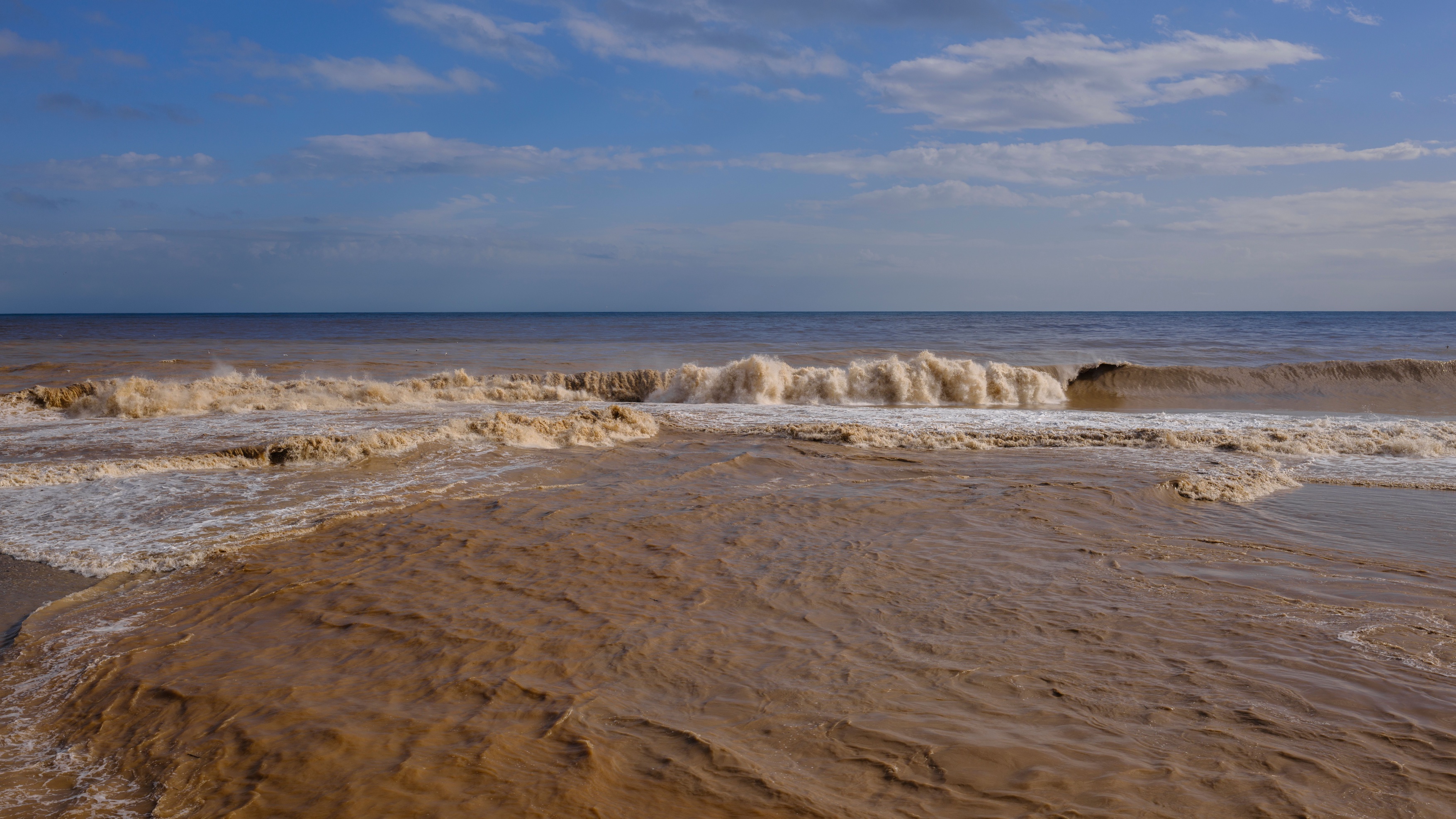
Barry Island's murky brown water isn't dirty - it's physics. The Bristol Channel's massive tides churn up millions of tons of sediment from the seabed, creating a perpetual mud bath that has nothing to do with pollution. Meanwhile, Tenby sparkles just 50 miles west. Here's the surprising science behind Wales' two-tone coast.
Stand on Barry Island beach and the water looks like someone dumped a truckload of coffee grounds into the sea. The brown, opaque waves rolling onto the sand make you wonder if you should even dip a toe in. But here's the kicker: that murky water is probably cleaner than it looks. The brown color isn't sewage or industrial waste, it's geology doing what geology does best, making a mess.
The Bristol Channel, where Barry Island sits, has the second-highest tidal range in the world after the Bay of Fundy in Canada. At spring tide, the water level can swing up to 14 meters (46 feet) between high and low tide. That's like draining and refilling a four-story building twice a day. These colossal tides generate enormous currents that scour the seabed, suspending millions of tons of fine silt, clay particles, and sediment in the water column. The River Severn dumps even more sediment into the channel, carrying material eroded from England's Midlands all the way to the Welsh coast. The result? A permanent suspension of fine particles that makes the water look like chocolate milk, even when bacterial counts are perfectly acceptable for swimming.
According to data from Natural Resources Wales (NRW), Barry Island's Whitmore Bay consistently achieves "Sufficient" or "Good" bathing water classification under European Union standards (which the UK still follows post-Brexit). In 2024, the beach passed bacterial water quality tests throughout the summer season, with only occasional temporary advisories following heavy rainfall events. The beach is monitored for intestinal enterococci and E. coli bacteria from May through September, and the sediment-laden appearance has no correlation with these pathogen levels. In fact, some research suggests that fine sediment can actually bind to pollutants and help filter them out of the water column.
Now drive 80 kilometers west to Tenby in Pembrokeshire, and you're in a different ocean entirely. Tenby's beaches, particularly South Beach and North Beach, regularly achieve "Excellent" water quality ratings and often feature crystal-clear, turquoise water that wouldn't look out of place in the Mediterranean. The difference isn't that Tenby's sewage system is better (though Pembrokeshire has invested heavily in wastewater infrastructure). The difference is geography and geology.
Tenby sits outside the Bristol Channel, facing the Celtic Sea. The seabed here is rockier, with less fine sediment available to suspend. There's no massive river system dumping millions of tons of eroded material into the water. The tidal range, while still significant at around 8 meters, is nearly half that of Barry Island. Most importantly, Tenby's water comes from the open Atlantic, which has had hundreds of kilometers to settle and clarify before reaching the Pembrokeshire coast. The wave action is different too, driven more by Atlantic swells than by tidal surges, and these waves don't generate the same sediment-stirring turbulence as the Bristol Channel's tidal race.
But Tenby isn't immune to murky water. After storms, particularly those coming from the south or southwest, the sea can turn brown and cloudy as wave action churns up sediment from shallower areas. Heavy rainfall causes runoff from agricultural land and overwhelmed storm drains, temporarily degrading water quality. In August 2023, Tenby's North Beach received a temporary "do not swim" advisory following a sewage discharge incident during torrential rain. The beach recovered within 48 hours, but it's a reminder that even picture-perfect beaches face pollution challenges, especially as climate change brings more intense rainfall events.
The science of coastal water clarity comes down to three main factors:
- Sediment load: How much suspended material is in the water, from rivers, seabed erosion, or coastal erosion
- Tidal energy: Stronger tides and currents keep particles suspended longer, preventing them from settling
- Water exchange: How quickly "new" water from the open ocean replaces murky coastal water
- Depth and substrate: Rocky, deeper areas have less fine sediment available to suspend than shallow, muddy areas
- Freshwater input: Rivers bring sediment but also nutrients that can cause algal blooms, adding to turbidity
Barry Island's position in the Bristol Channel means it scores poorly on nearly all these factors. Tenby's Atlantic-facing location gives it advantages across the board. Both beaches can be safe for swimming, but only one will ever look inviting in tourist brochures.
My Take
We need to get smarter about how we talk about beach water quality. The British obsession with "clean" beaches has created a bizarre situation where perfectly safe, ecologically healthy waters get written off because they don't photograph well for Instagram. Barry Island's brown water is a feature of the most powerful tidal system in Europe, not a bug. It's a sign of massive natural forces at work, of sediment transport that has been happening for millennia, of geology that shapes coastlines. Yet tourism suffers because people assume brown water equals sewage.
Meanwhile, we give crystal-clear beaches a free pass even when they have genuine pollution problems. Visibility and bacterial contamination are completely separate issues, but we've conflated them in the public imagination. This matters because it misdirects environmental spending and public concern. Barry Island needs better storm overflow management, like most UK coastal towns, but it doesn't need to "fix" its sediment problem, that's not a problem at all. What it needs is better public education about coastal science, so people understand that murky water in a high-energy tidal environment is perfectly normal and often perfectly safe.
The real scandal isn't Barry's brown water, it's that UK water companies have spent decades underinvesting in sewage infrastructure while paying billions in dividends to shareholders. When raw sewage does hit beaches, whether at Barry or Tenby, that's inexcusable. But let's not confuse natural sediment with actual pollution. The Bristol Channel's chocolate-colored waves have been rolling onto Welsh beaches since long before humans showed up, and they'll be doing it long after we're gone.
What Happens Next
Barry Island faces a PR problem more than an environmental one. As climate change drives more extreme weather and more people holiday domestically rather than flying to Mediterranean resorts, British beaches will see increasing visitor pressure and increasing scrutiny. Barry needs a proactive education campaign, signage that explains the sediment science, maybe even a visitor center with microscope stations showing the harmless silt particles versus actual pollutants. Make the brown water a feature, not a flaw. "Come see the power of Europe's mightiest tides" beats "sorry our beach looks gross" every single time.
Tenby's challenge is different but equally pressing. As the poster child for Welsh coastal tourism, it can't afford sewage discharge incidents, yet Welsh Water's combined sewer systems will continue to overflow during heavy rain until billions get spent on infrastructure upgrades. Pembrokeshire Coast National Park Authority and local councils will likely push for designated bathing water zones with priority sewage investment, similar to schemes in Cornwall. Expect more real-time water quality monitoring, smartphone apps that tell beachgoers when it's safe to swim, and increased political pressure on water companies to hit zero discharges during the summer season.
The wildcard? A major pollution incident at a "clear water" beach that makes national headlines. When that happens and it's a matter of when, not if, the public conversation will finally shift from "does the water look nice" to "is the water actually safe." That's when places like Barry Island, with their consistent bacterial testing records despite murky appearance, might finally get credit for what they've been all along: perfectly decent beaches that just happen to sit in a very energetic bit of ocean.
What History Tells Us
The Bristol Channel's extreme tidal range has shaped human settlement and economic activity for thousands of years. The Romans built ports to exploit these tides for shipping, while medieval monks used tidal mills to grind grain with the channel's powerful currents. In the Industrial Revolution, ports like Cardiff and Barry thrived precisely because the massive tidal range allowed large ships to float in at high tide and dock in deep water, then load coal from the Welsh valleys while sitting on the mud at low tide, no expensive deep-water harbor construction needed. The same geological forces that make Barry's water brown made Wales rich.
The modern obsession with clear water is relatively recent, a post-1960s phenomenon driven by Mediterranean package holidays and later by social media. Victorian beachgoers at Barry Island and Weston-super-Mare never expected clear water, they came for the seaside air, the promenade entertainment, and the novelty of sea bathing, murky water and all. The EU Bathing Water Directive, introduced in 1976 and significantly tightened in 2006, revolutionized beach water quality across Europe by forcing governments to monitor bacterial contamination and invest in sewage treatment. But it said nothing about sediment or visibility, because those aren't health hazards. We've somehow forgotten that distinction in the age of beach selfies and TripAdvisor reviews.