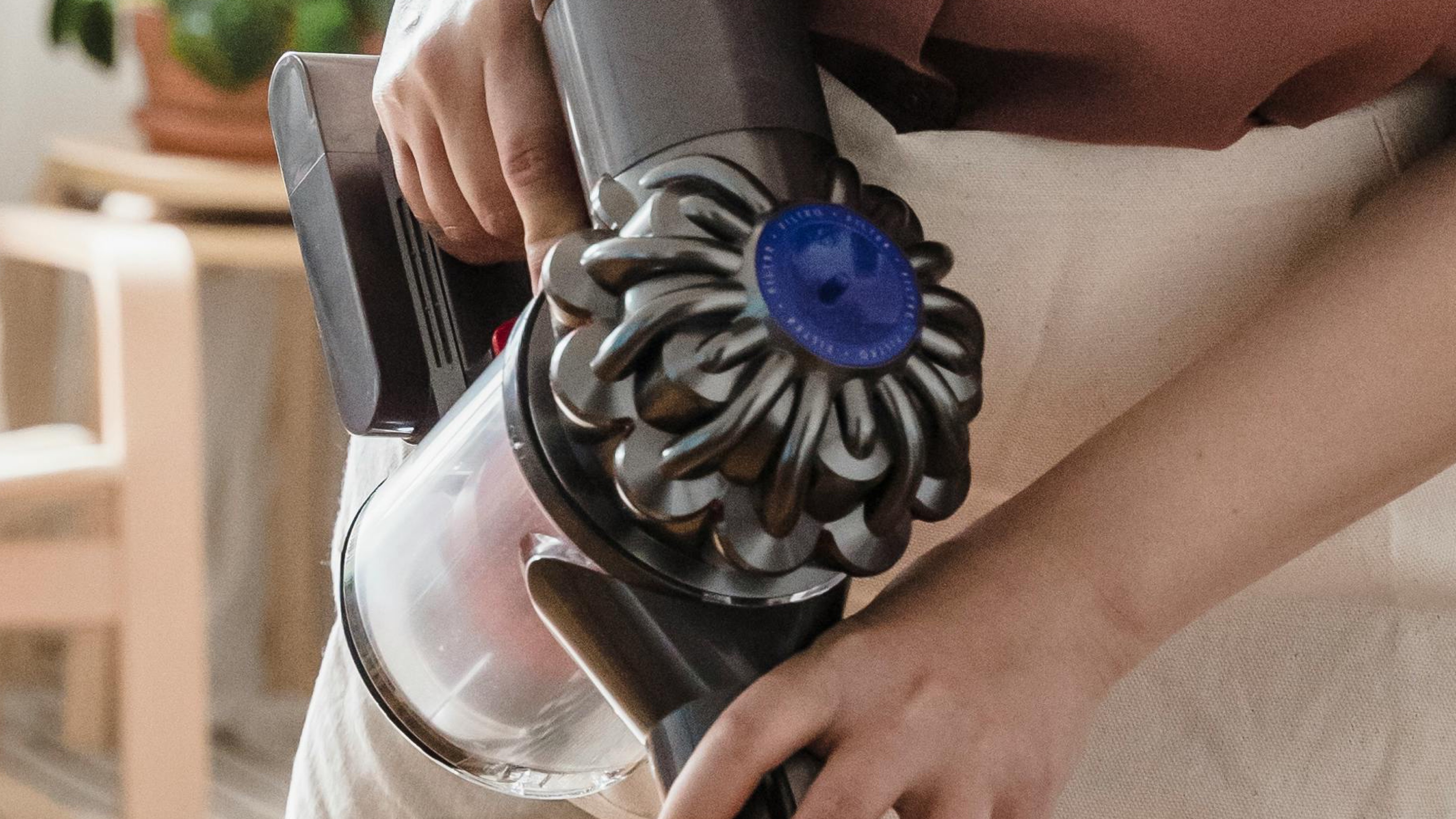
A growing chorus of Dyson vacuum owners are discovering that their expensive cordless cleaners are dying premature deaths, not from worn-out motors or broken plastic, but from capacitors that cook themselves to death. YouTube creator LeftyMaker tore apart his $800 Dyson V15 after it died just two and a half years into regular use, documenting a repair saga that reveals a troubling pattern across Dyson's product line. The problem centers on the motor driver board, which controls the high-speed brushless DC (Direct Current) motor that gives Dyson vacuums their legendary suction. On this board sit a handful of electrolytic capacitors that filter and smooth the power delivery to the motor. These capacitors are mounted directly adjacent to the motor itself, which runs scorching hot during normal operation. Under sustained heat exposure, the capacitors' ESR (Equivalent Series Resistance) climbs dramatically, causing them to fail and brick the entire vacuum. LeftyMaker measured sky-high ESR values on his dead caps before swapping them for $1 Rubycon polymer capacitors rated for 125 degrees Celsius, after which the vacuum sprang back to life. What makes this particularly galling for consumers is Dyson's official repair response. When customers report these symptoms, the company offers no component-level repair or even board replacement. Instead, Dyson recommends purchasing an entirely new vacuum body, which can cost several hundred dollars, essentially the price of a new vacuum minus the battery and accessories. This leaves owners with a Hobson's choice: pay nearly the cost of a new unit for a replacement body, attempt a complex DIY repair that requires nearly complete disassembly, or simply trash the device and move on. The issue appears widespread enough that independent engineers are stepping in. A maker named Hasan has designed and shared plans for a completely custom motor driver board that could potentially outlast and outperform Dyson's original design. The board addresses the heat management problems that plague the stock hardware and represents the kind of community-driven solution that emerges when manufacturers abandon repairability. The fact that someone felt compelled to reverse-engineer and redesign a critical component of an $800 appliance speaks volumes about the original design choices. This fits into a broader pattern of what repair advocates call Cooked Capacitor Syndrome, or CCS. Across consumer electronics from smart plugs to gaming consoles, manufacturers are using cheap electrolytic capacitors in high-heat environments where they're guaranteed to fail within a few years. Whether this represents genuine engineering oversight, cost-cutting run amok, or deliberate planned obsolescence remains a fierce debate. What's undeniable is that these failures occur predictably, affect entire product lines, and generate massive e-waste while forcing consumers into expensive replacements or repairs that shouldn't be necessary in the first place.
 💻 technology
Your $800 Dyson Dies Because of $1 Parts
Dyson's premium handheld vacuums are failing after just a couple of years, and the culprit is a pair of cheap capacitors deliberately placed next to a scorching hot motor. When owners complain, Dyson's solution is simple: buy a whole new vacuum body for hundreds of dollars.
My Take
Let's call this what it is: engineering malpractice dressed up as premium design. Dyson charges luxury prices and markets itself as a technology company, but they're putting dollar-store capacitors next to components that run hotter than a Phoenix parking lot in August. Any first-year electrical engineering student could tell you this is a recipe for failure, which means Dyson's engineers absolutely knew it too. The question isn't whether they understood the problem but whether they cared, and their repair policy answers that question loud and clear. The right-to-repair movement keeps gaining steam precisely because of garbage like this. When your $800 vacuum dies from a $2 repair and the manufacturer tells you to buy a new $600 body instead of mailing you the damn capacitors, you're not running a sustainable business, you're running a racket. The fact that hobbyists on YouTube are designing better motor controllers than a multi-billion dollar company tells you everything about where Dyson's priorities actually lie. They'd rather you bought another vacuum in three years than engineer one that lasts a decade.
What Happens Next
Dyson will ignore this completely until a class-action lawsuit forces their hand, which is probably already brewing in some plaintiff attorney's office right now. These documented failures across multiple model lines create exactly the kind of pattern that trial lawyers dream about. Meanwhile, expect the repair community to rally around Hasan's open-source driver board design. Within six months, you'll see AliExpress vendors selling drop-in replacement boards for $30 that outlast Dyson's originals, complete with better thermal management and probably RGB lighting because why not. The more interesting question is whether this accelerates regulatory action on repairability mandates. The European Union's upcoming eco-design regulations explicitly target this kind of premature failure, and Dyson's capacitor debacle provides a perfect case study for why such rules matter. If Brussels decides to make an example of a high-profile brand, Dyson's repair policies could become legally indefensible within the EU market by 2027. That would force either a global design change or the awkward situation where European customers get repairable vacuums while Americans get planned obsolescence. Either way, the $800 vacuum that dies from $1 parts is about to become a poster child for why we can't have nice things that also last.
What History Tells Us
The capacitor plague of the early 2000s offers an eerie parallel. Between 1999 and 2007, millions of computers, motherboards, and electronics failed due to a widespread use of defective electrolytic capacitors, many traced to faulty electrolyte formulas stolen through industrial espionage. Major manufacturers like Dell, Apple, and HP faced class-action lawsuits and extended warranty programs costing billions. The debacle proved that even sophisticated tech companies will ship products with known component weaknesses when financial pressures override engineering judgment. Today's CCS epidemic follows the same playbook: cheaper components in thermal environments they can't survive, combined with manufacturers who'd rather sell replacements than admit design flaws. The difference is that in 2026, we have YouTube repair channels and online communities documenting these failures in real-time instead of discovering them years later.