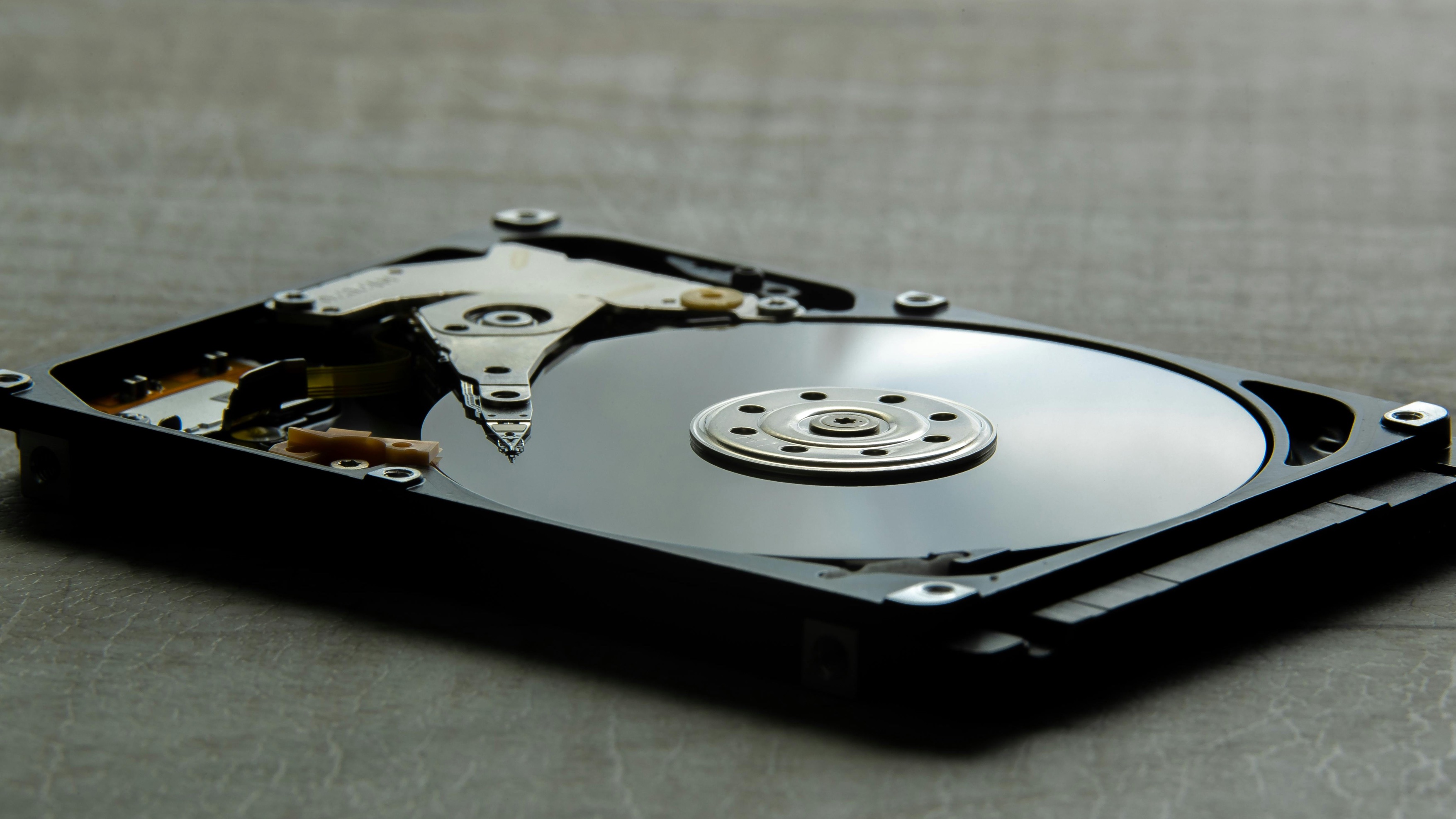
The firmware running inside your hard drive is essentially invisible to most users, a black box of proprietary code that spins platters and manages data without scrutiny. That obscurity just got punctured. A researcher operating under the handle I Code 4 Coffee documented a months long journey reverse engineering hard drive firmware, initially to modify Xbox 360 consoles but stumbling into a broader security landscape that should concern anyone storing sensitive data. The work reveals how accessible these low level systems are to someone with determination and the right tools, despite manufacturers treating drive firmware as locked vaults. The investigation started with surplus hard drives and an SSD (Solid State Drive), all dissected for their internal code. What emerged was a sparse ecosystem of prior research. Unlike router firmware or smartphone operating systems, hard drive firmware attracts little hacker attention, and what documentation exists often predates modern security standards. The researcher relied on firmware dumps extracted using PC 3000, a data recovery tool typically reserved for professional forensics labs, then worked backward to understand how Western Digital, Seagate, and others structure their code. The process exposed vendor specific backdoor commands, undocumented diagnostic interfaces, and RS 232 serial ports that theoretically shouldn't exist on consumer drives. These findings matter because hard drive firmware sits below your operating system, below antivirus software, below every security layer you think protects your data. Malicious firmware could log keystrokes, exfiltrate files, or brick a drive on command without leaving traces in Windows or macOS. Intelligence agencies have exploited this for years. The NSA (National Security Agency) reportedly used hard drive firmware implants in espionage operations, as revealed in 2015 leaks about programs targeting drives from major manufacturers. What was once nation state tradecraft is now documented on GitHub, complete with technical artifacts and proof of concept code. The Xbox 360 angle adds an ironic twist. Microsoft designed the console's security around trusted hard drives, assuming firmware couldn't be easily modified. By rewriting drive firmware, attackers bypass encryption and run unsigned code, effectively jailbreaking the system at a layer Microsoft never hardened. This same vulnerability exists in enterprise storage arrays, network attached storage devices, and the laptop sitting on your desk. The difference is scale and motivation. Few people care enough about Xbox hacking to weaponize these techniques broadly, but the methodology is now public. Manufacturers issue firmware updates occasionally, usually to fix performance bugs or compatibility issues. Security patches for firmware vulnerabilities are rare, and applying them requires technical knowledge most IT departments lack, let alone home users. The researcher's documentation includes JTAG (Joint Test Action Group) interfaces, a hardware debugging standard that provides another entry point for firmware modification. JTAG hacking requires physical access and specialized equipment, limiting its threat profile, but insider threats and supply chain attacks remain realistic scenarios. The code is out there. The tools are documented. The question is who starts using them next.
 💻 technology
Your Hard Drive's Secret Code Is Wide Open
A hacker reverse-engineered hard drive firmware to exploit Xbox 360 consoles, exposing how little security exists in the code running your storage devices. Most users never touch this layer, but researchers found backdoor commands and diagnostic ports that could rewrite how drives behave.
My Take
We've spent two decades hardening operating systems and network security while ignoring the firmware layer underneath. That's like installing a steel door on a house with no foundation. Hard drive firmware is written by hardware vendors with zero accountability, rarely audited, and never scrutinized by end users. This research proves what security professionals have whispered for years: the storage layer is a soft target. If nation-states already exploit this, how long until ransomware groups start bricking drives with firmware attacks that no backup strategy can reverse? The Xbox 360 use case is almost quaint compared to the implications. Imagine a targeted attack that rewrites firmware on drives in a corporate data center, lying dormant until triggered remotely. No antivirus catches it. No forensic tool detects it. You'd have to physically inspect chips under a microscope to find the infection. We need mandatory firmware signing, public audits of drive code, and automatic update mechanisms that don't require a CompTIA certification to execute. Until then, your hard drive is running code you've never seen, written by people you'll never meet, with access to everything you own.
What Happens Next
Within six months, at least one major manufacturer will quietly issue firmware updates labeled as 'performance improvements' that actually patch the backdoor commands this research exposed. They won't announce it as a security fix because that would require admitting the vulnerabilities existed. Meanwhile, expect a wave of proof of concept exploits targeting specific drive models, particularly older Western Digital and Seagate units still in service at enterprises that defer hardware upgrades. The real wildcard is whether ransomware operators adopt firmware attacks as a scorched earth tactic, threatening to brick drives unless paid. That would force insurers to reclassify firmware attacks as uninsurable catastrophic risk, fundamentally changing how we price cybersecurity. If I'm wrong and manufacturers stay silent, we'll see this same research rediscovered in 2028 by someone with worse intentions.
What History Tells Us
The NSA's hard drive firmware implants, revealed in 2015 by Kaspersky Lab researchers, targeted drives from Western Digital, Seagate, Toshiba, and others across dozens of countries. The agency's Equation Group used these implants to persist on systems even after complete hard drive wipes, effectively creating undetectable espionage platforms. Those operations date back to at least 2001, meaning firmware-level attacks have been operational for a quarter-century while the security industry focused on higher-layer defenses. The parallel today is chilling: what spies pioneered in secrecy is now open-source weekend project material.
Market Impact
Western Digital (WDC), currently trading around $42, down roughly 8% year to date, faces the most immediate exposure if this research gains traction in enterprise security circles. Seagate Technology (STX), hovering near $89, could see similar pressure as IT departments reassess storage vendor risk. The broader cybersecurity sector stands to benefit. Palo Alto Networks (PANW), trading above $340 after a 15% climb this year, and CrowdStrike (CRWD), around $325, could market firmware level endpoint protection as the next frontier. Historically, when firmware vulnerabilities go public (like Spectre/Meltdown in 2018), hardware stocks dip 3 7% on disclosure day before recovering within weeks. The real winner here is Pure Storage (PSTX), currently around $65, whose all flash arrays with cryptographically signed firmware suddenly look prescient. If a major breach leveraging these techniques hits headlines, expect a single day 10 12% pop in PSTX as enterprises panic buy secure storage alternatives.