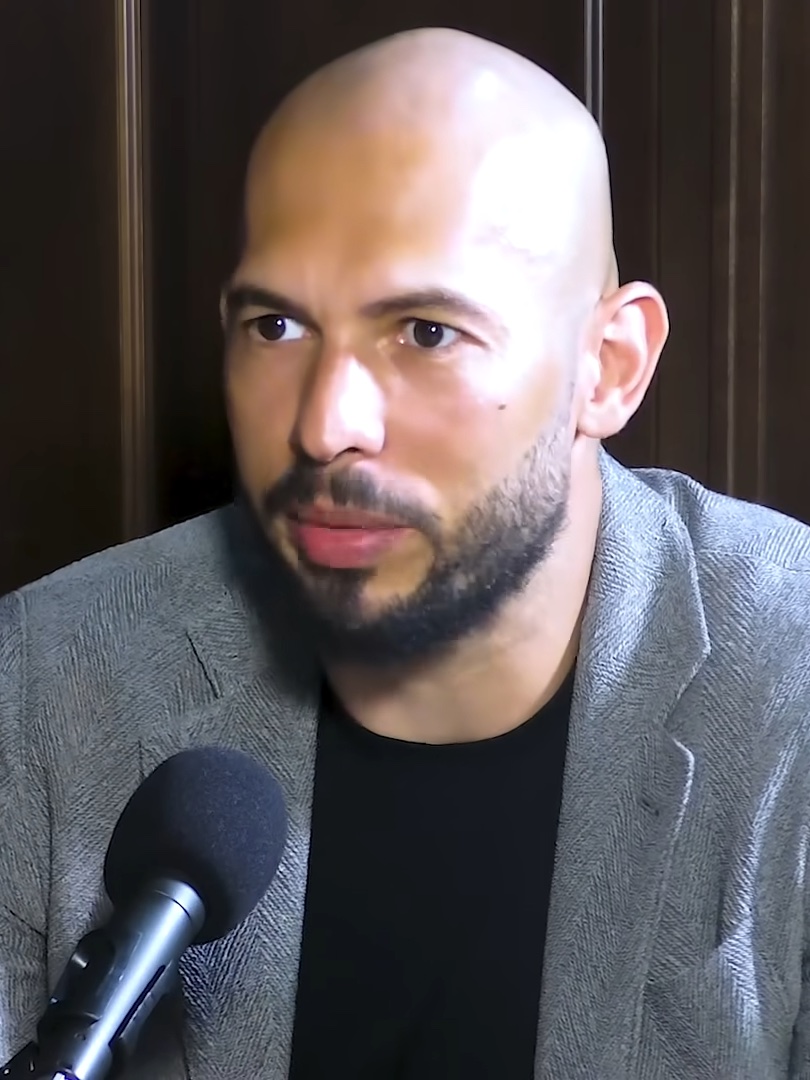
Walk into a secondary school classroom anywhere in the English-speaking world right now and you'll hear it. Boys parroting Andrew Tate's talking points. Fourteen-year-olds using terms like "alpha male" and "high-value man" without irony. Female teachers facing verbal abuse and physical intimidation. One in four girls reporting they feel unsafe at school. This isn't some fringe internet phenomenon anymore. It's the daily reality educators are grappling with in 2026. The numbers tell a grim story. In the UK, 79 percent of 16 and 17-year-old boys have consumed Andrew Tate content, more than the 58 percent who have heard of the Prime Minister (according to a 2023 poll). In Australia, the UK, and the US, 63 percent of young men aged 16-25 regularly engage with masculinity influencers online. A 2025 Common Sense Media survey found 73 percent of American adolescent boys regularly encounter masculinity-related content, with nearly one in four experiencing high levels of exposure. And here's the kicker: research shows that fake male accounts on social media get targeted with extremist misogynistic content within 23 minutes of scrolling, regardless of what they were looking for. But the real story broke wide open in August 2026 when Reset Tech and Equimundo released "The Grift Economy," an 18-month investigation that exposed what everyone suspected but couldn't quite articulate. The manosphere isn't about ideology. It's about money. Vast, obscene amounts of money extracted from confused, lonely teenage boys who are being sold fake solutions to real problems. Andrew Tate's platform The Real World originally charged $49.99 per month and increased to $147 per month in 2025, with reports of more than 155,000 members. The report analyzed 216 looksmaxxing influencers across TikTok, Instagram, and Facebook and found a combined 14.6 billion views. These aren't underground figures anymore. They're running a structured, three-stage commercial pipeline: recruitment through relatable content about self-improvement, grievance injection that blames women and feminism for men's struggles, and finally monetization through courses, supplements, crypto schemes, and coaching programs that promise dominance and wealth but deliver neither. The real-world damage is stacking up fast. In August 2026, Australian teachers went public about the crisis in their classrooms. They reported Nazi salutes, Jeffrey Epstein jokes, and organized campaigns of harassment against female staff. In March 2025, a UK court heard that Kyle Clifford watched Andrew Tate videos hours before murdering his ex-girlfriend, her sister, and her mother with a crossbow and knife in July 2024. Tate has more than 10 million followers on X (formerly Twitter), where Elon Musk restored his account after buying the platform in 2022. While banned from Instagram and TikTok for his misogynistic tirades, his violent vision of masculinity spreads unchecked on X and gets repackaged by countless smaller influencers across every platform. Schools are scrambling to respond. In March 2026, Monash University and Australia's National Research Organisation for Women's Safety released an introductory guide for teachers on combating the manosphere's influence. The resource warns that influencers are explicitly telling boys that schools are part of the "woke agenda" indoctrinating them, that teachers can't be trusted, and that university is a waste of time. A 2025 survey found that 90 percent of secondary school teachers and 68 percent of primary teachers said their schools would benefit from dedicated teaching materials to address online misogyny. In June 2026, elite British boarding school Harrow School, founded in 1572, is the alma mater of seven British Prime Ministers including Winston Churchill. Even the most traditional bastions of male education recognize the threat. The influencers themselves operate with calculated cynicism. They target boys during periods of vulnerability and identity formation, offering an "idealized and celebratory version of masculinity" that frames women as obstacles and feminism as oppression. They sell simplistic solutions to complex problems: buy this course, take these supplements, follow this "grind mindset," and you'll get rich and dominant. Research from the University of Sydney in February 2026 found that masculinity influencers on Instagram and TikTok are pushing unproven testosterone tests and treatments to healthy young men, normalizing unnecessary medical interventions with serious health risks including heart problems. The posts analyzed had a combined audience of 6.8 million followers and generated more than 650,000 likes. The content reframes normal experiences like fatigue, stress, or aging as testosterone deficiency requiring intervention, all while being closely linked to the broader manosphere ecosystem that profits from male insecurity.
 🌍 world
The Manosphere Grift: How Influencers Are Selling Misogyny to Teenage Boys for Profit
The manosphere is not a movement. It's a multibillion-dollar grift that's radicalizing teenage boys into misogyny, one TikTok video at a time. From classrooms in Australia to schools in the UK, teachers are reporting Nazi salutes, sexual harassment, and open contempt for women. And the influencers profiting from this aren't champions of masculinity. They're salesmen peddling fake belonging to lonely kids.
Fact checked - 15 claims 29 Aug 2026 · 11 with sources
My Take
Here's what makes me furious: these influencers know exactly what they're doing. They're not confused about masculinity or genuinely trying to help young men navigate a changing world. They're predators running a protection racket. They create the anxiety, then sell the cure. They tell boys that society hates them, women despise them, and the system is rigged against them, then conveniently offer a $99-per-month membership that promises to fix everything. It's the oldest con in the book, just with better production values and algorithmic amplification. And the platforms? Complicit. Absolutely complicit. When your algorithm can route a teenage boy from a gym workout video to violent misogyny in under half an hour, that's not a bug. That's the business model. TikTok, Instagram, YouTube, and especially X under Musk's ownership are profiting from the radicalization of children. They take their cut of every supplement sale, every course enrollment, every crypto scheme promoted by these grifters. The regulatory tools to stop this exist in the UK, EU, Australia, and Brazil, according to the Grift Economy report. What's missing isn't policy. It's the political will to enforce it, because tech companies have successfully framed any intervention as censorship rather than what it actually is: consumer protection for minors. The saddest part? The boys falling for this aren't monsters. They're lonely. They're anxious about their futures. They're struggling to figure out what healthy masculinity looks like in 2026. Those are legitimate problems that deserve real solutions, not snake oil sold by alleged human traffickers. We're failing an entire generation of young men by allowing grifters to fill the void where positive male role models and genuine community should be.
What Happens Next
The crisis will get worse before it gets better. The Grift Economy report estimates this is now a multibillion-dollar industry, and those profit margins guarantee more influencers will flood the market. Expect to see more violent incidents linked to manosphere content, more teachers leaving the profession because they can't handle the abuse, and more girls dropping out of STEM classes or avoiding certain schools entirely because they don't feel safe. Schools in Victoria, Australia have already created a dedicated portfolio to address the manosphere's influence, and other jurisdictions will be forced to follow. The real battleground is algorithmic regulation. If platforms like TikTok, Instagram, and YouTube can be forced to change their recommendation systems to stop funneling boys from innocent content to extremist misogyny in minutes, the pipeline breaks. The UK, EU, Australia, and Brazil all have regulatory frameworks in place. Enforcement actions in late 2026 and 2027 will determine whether tech companies face real consequences or just pay token fines while continuing to profit. Watch for coordinated action from education departments and consumer protection agencies reframing this as fraud rather than free speech. For individual families, the reckoning is happening right now. Parents who've ignored their sons' online consumption are about to discover what their kids have been learning. Schools that dismissed this as moral panic are implementing emergency interventions. The question isn't whether the manosphere will collapse, it's how much damage it does to how many young people before society finally treats it like the predatory industry it is. If we're lucky, the next generation of boys will look back on this era with the same bewildered disgust we reserve for multi-level marketing schemes and pick-up artist bootcamps. If we're not, we're raising a cohort of young men who genuinely believe women are their enemies.
What History Tells Us
The manosphere is just the latest iteration of a very old business model: exploiting male insecurity for profit. In the 1990s, pickup artist gurus sold expensive seminars promising to teach "the game" of seducing women. In the 2000s, men's rights activists built online communities around grievance against feminism. What's different now is scale and speed. Social media algorithms can radicalize thousands of boys simultaneously, and the financial ecosystem has evolved from one-time seminar fees to subscription models generating perpetual revenue. The terminology has changed ("alpha males" replacing "pickup artists," "the grind" replacing "self-improvement bootcamps") but the fundamental con remains identical: convince men they're failing at masculinity, then sell them the solution. What makes 2026's version particularly dangerous is that it targets children, not adults, and operates at a scale previous grifters could only dream of.